


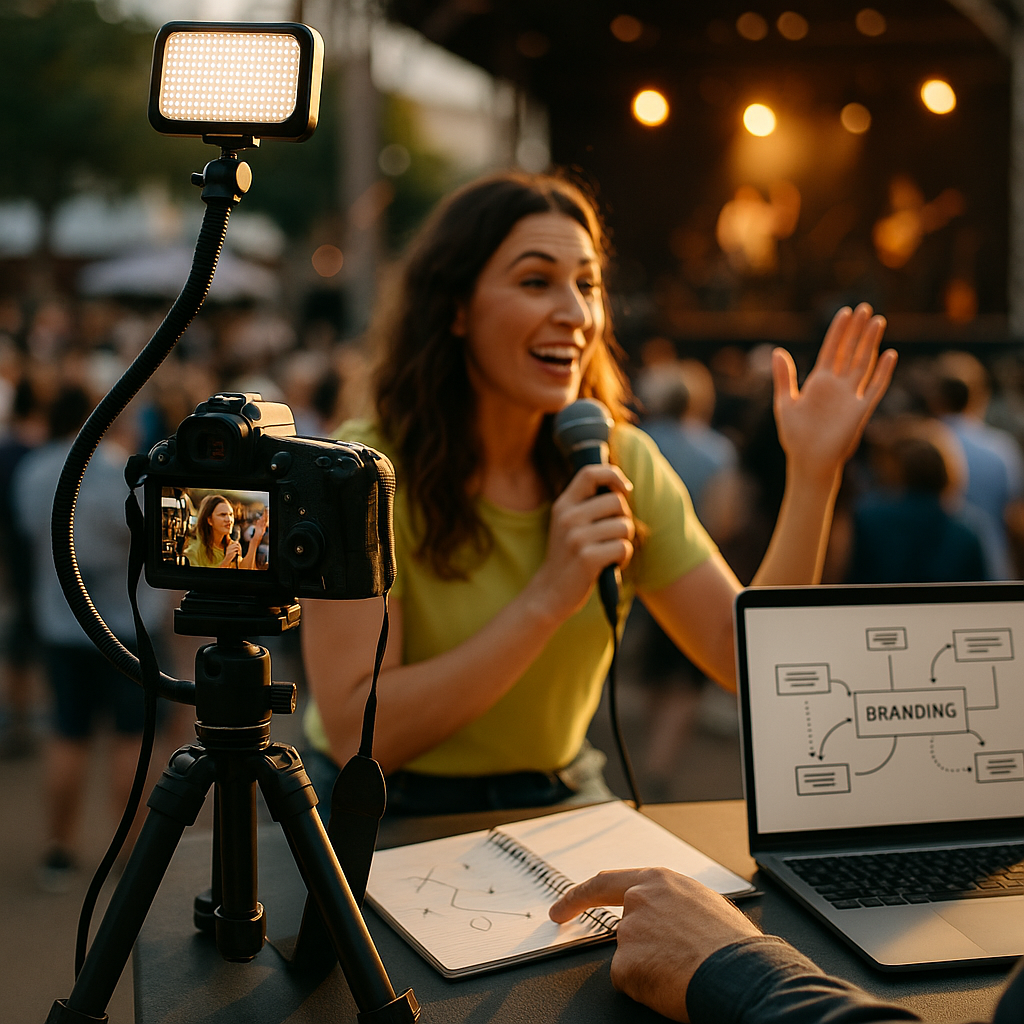
Twitch’s biggest single-day concurrent viewership numbers now rival cable news events. Amazon’s live shopping streams sell out inventory in minutes. And YouTube’s live creator premieres are pulling audiences who could just as easily watch the video an hour later, on-demand, whenever they want. They’re choosing not to. That’s the story marketers need to understand: appointment viewing, the thing streaming was supposed to kill, is back, and it’s happening on creator platforms, not broadcast TV.
For a decade, the entire content industry optimized for on-demand. Binge it, skip it, watch it at 2am in bed. Algorithms rewarded evergreen content because evergreen content kept generating views long after publish day. Brands followed the money and built always-on content strategies. So why are creators now deliberately scheduling live moments, and why are audiences showing up?
The Data Behind the Shift
Live streaming hours watched have climbed steadily across Twitch, YouTube Live, and TikTok LIVE for several consecutive years, and the trend isn’t slowing. eMarketer has tracked rising time-spent figures for live formats even as short-form on-demand growth plateaus in mature markets. Meanwhile, live shopping, the clearest commercial proof point, continues to outperform static commerce content in conversion rate across nearly every category tested.
This isn’t nostalgia. It’s economics. Live content creates urgency that on-demand structurally cannot replicate. When a creator says “link drops at 8pm, first 200 people get the discount code,” that’s not a content strategy — that’s a retail event with a countdown clock.
Scarcity isn’t a marketing trick anymore. It’s the entire mechanism making live creator events outperform their on-demand counterparts on engagement and conversion.
Consider what’s happened to attention itself. Audiences are exhausted by infinite scroll, and increasingly skeptical of algorithmically optimized, endlessly available content. Our coverage of personalization fatigue found something similar: over-optimization breeds disengagement, not loyalty. Live events are the counter-programming. They’re finite, unrepeatable, and require presence. That scarcity is precisely what makes them valuable to brands trying to cut through.
Why On-Demand Stopped Working as Hard
On-demand content isn’t dying. But its marginal value per dollar has dropped. When every brand and creator has an always-on content engine, the differentiation collapses. Feeds are saturated. Ad-free tiers on major streaming platforms are shrinking the addressable reach of pre-roll and mid-roll formats altogether, a trend we broke down in detail in our media plan analysis. If your reach is shrinking on the passive-viewing side, live becomes one of the few remaining channels where you can still guarantee a concentrated audience at a specific moment.
There’s also a trust dimension. Kantar’s research on brand content strategy has repeatedly shown consumers rewarding fewer, higher-quality moments over content volume — a theme Kantar’s narrative platform data makes explicit. Live events are, by definition, high-effort and low-volume. You can’t spam a livestream the way you can spam a content calendar. That scarcity signals authenticity to an audience that’s grown allergic to overproduced, AI-assisted content, a skepticism our reporting on AI-generated ad trust erosion covers extensively.
What “Live” Actually Means Now
It’s worth being precise here, because “live creator events” covers a wider category than most brand briefs acknowledge:
- Live shopping streams — QVC’s format, rebuilt for TikTok Shop and Amazon Live, with creator hosts instead of anchors.
- Gaming and IRL streams — Twitch remains the category leader, but YouTube Live has closed the gap significantly with major creator migrations.
- Premiere events — YouTube’s Premiere feature lets creators schedule a synchronized watch moment for pre-recorded content, artificially recreating appointment viewing even when the video already exists.
- Ticketed virtual events — Paid livestreams, Q&As, and creator-hosted summits, often bundled with community platforms like Discord or Patreon.
- Real-world creator meetups — VidCon, Twitch fan festivals, and brand-sponsored creator tours that generate live social content as a byproduct.
Each of these has a different ROI profile. Brands need to stop treating “go live with a creator” as a single line item and start briefing against the specific mechanic that fits the objective.
What This Means for Budget Allocation
Here’s the uncomfortable part for planners used to buying against reach and frequency: live events are harder to forecast and harder to guarantee. You can’t buy impressions in advance the way you can with programmatic CTV inventory, a space that’s ballooned in the last year as documented in our CTV inventory growth coverage. Live is inherently variable. A creator’s stream might pull 4,000 viewers or 40,000 depending on factors outside your control.
So how do you justify the spend to finance?
The answer is shifting measurement away from guaranteed reach and toward engagement depth and conversion velocity. Live shopping data from platforms like TikTok Shop shows conversion rates during live windows running multiples higher than static product pages. That’s the number that matters to a CFO, not concurrent viewer count.
If your measurement framework still treats a live event like a video ad, you’re grading it on the wrong curve. Live succeeds or fails on conversion velocity and community signal, not impressions.
This connects to a broader measurement shift happening across the industry. Kantar’s recent work on decision intelligence in brand measurement points to the same conclusion: brands are moving away from vanity reach metrics toward signals that predict actual business outcomes. Live events, done well, generate exactly that kind of signal, because the audience that shows up in real time is self-selecting for high intent.
The Compliance Angle Nobody’s Talking About Enough
Live is unscripted by nature, which is exactly why brands love it and exactly why legal teams get nervous. There’s no take-two on a livestream. A creator misstates pricing, forgets a disclosure, or says something off-brand, and it’s already out, already clipped, already screenshotted.
This isn’t a reason to avoid live formats. It’s a reason to build a tighter pre-brief and disclosure process before the event goes live, not after. The FTC’s endorsement guidance applies just as much to live commerce as to a static post, and regulators haven’t shown any leniency for “it was live, we couldn’t control it” as an excuse. Review the FTC’s endorsement guidelines before any live shopping campaign, and build disclosure cues directly into the creator’s on-screen overlay, not just a verbal mention that gets lost in the stream’s energy.
The EU’s regulatory environment adds another layer. Our breakdown of how the Digital Services Act is reshaping influencer marketing is directly relevant here: live commercial content triggers the same transparency obligations as recorded posts, and the real-time nature of the format makes after-the-fact correction far harder. Brief legal into the live event planning process early, not as a final sign-off step.
Operationally, What Should Brands Actually Do?
A few practical moves for teams building live creator activations into next year’s plan:
- Treat live as a distinct budget line, not a sub-line of “content production.” The production requirements (platform tools, moderation staffing, real-time customer service) are different enough to warrant separate planning.
- Pre-negotiate usage rights for clips. The real value of a live event often comes from the on-demand highlight reel it generates afterward, so don’t leave that in a grey area.
- Staff for real-time moderation and community management. A live chat with no brand presence is a missed opportunity and, in a crisis moment, a real risk.
- Build measurement around conversion windows, not total reach. Track how many viewers converted during the live window versus in the 48 hours after.
- Pick creators with proven live hosting skill, not just follower count. Hosting a live audience is a genuinely different skill from producing polished on-demand content, and not every creator with a large following can do it well.
That last point matters more than most briefs account for. The same rigor brands apply when evaluating creator rosters for pricing power and roster fit should extend to evaluating live hosting capability specifically. Some creators built entire followings on tightly edited, algorithm-optimized content and have never hosted an unscripted hour of live interaction. That’s a different casting decision.
Is This Sustainable, or a Cyclical Blip?
Fair question. Attention trends are cyclical, and it’s tempting to file “live is back” alongside every other “X is dead, actually it’s back” content cycle marketing loves to declare.
But the structural drivers here look durable. Ad-free tier growth isn’t reversing. Content saturation isn’t reversing. AI-generated content skepticism, as covered in our reporting on the AI content detection arms race, is intensifying, not fading, as detection tools and audience literacy both improve. All three of those forces point toward continued demand for verifiably real, unrepeatable, human moments. Live creator events check that box in a way that on-demand content, however well-produced, structurally cannot.
That doesn’t mean every brand needs a live strategy tomorrow. It means the brands that build live competency now, rather than treating it as a one-off activation, will have a real operational advantage when the format matures further.
FAQs
Frequently Asked Questions
What exactly counts as a “live creator event” for brand planning purposes?
It spans live shopping streams (TikTok Shop, Amazon Live), gaming and IRL livestreams on Twitch or YouTube Live, scheduled video premieres, ticketed virtual Q&As, and in-person creator meetups. Each requires a different brief, budget, and measurement approach.
How should brands measure ROI on a live creator event differently than on-demand content?
Prioritize conversion velocity during the live window, real-time chat engagement, and post-event highlight clip performance over raw concurrent viewer counts or impressions. Live success is about intent and action, not passive reach.
Are FTC disclosure rules different for live streams versus recorded content?
No, the same endorsement guidelines apply, but enforcement risk is higher because there’s no opportunity to edit before publishing. Brands should build disclosure overlays into the live production itself rather than relying on verbal mentions.
Why are audiences choosing live formats when on-demand content is more convenient?
Scarcity and authenticity. Audiences increasingly distrust overproduced, algorithm-optimized content and are drawn to unscripted, unrepeatable moments that feel harder to fake, particularly as AI-generated content becomes more prevalent and detectable.
What’s the biggest operational mistake brands make with live creator activations?
Treating live as a sub-line item of general content production rather than a distinct discipline requiring dedicated moderation staffing, legal pre-briefing, and conversion-based measurement frameworks.
Next step: Audit your current creator roster for live-hosting capability specifically, not just follower count or edited-content quality, before committing budget to a live activation next quarter.
Top Influencer Marketing Agencies
The leading agencies shaping influencer marketing in 2026
Agencies ranked by campaign performance, client diversity, platform expertise, proven ROI, industry recognition, and client satisfaction. Assessed through verified case studies, reviews, and industry consultations.
Moburst

-
2

The Shelf
Boutique Beauty & Lifestyle Influencer AgencyA data-driven boutique agency specializing exclusively in beauty, wellness, and lifestyle influencer campaigns on Instagram and TikTok. Best for brands already focused on the beauty/personal care space that need curated, aesthetic-driven content.Clients: Pepsi, The Honest Company, Hims, Elf Cosmetics, Pure LeafVisit The Shelf → -
3

Audiencly
Niche Gaming & Esports Influencer AgencyA specialized agency focused exclusively on gaming and esports creators on YouTube, Twitch, and TikTok. Ideal if your campaign is 100% gaming-focused — from game launches to hardware and esports events.Clients: Epic Games, NordVPN, Ubisoft, Wargaming, Tencent GamesVisit Audiencly → -
4

Viral Nation
Global Influencer Marketing & Talent AgencyA dual talent management and marketing agency with proprietary brand safety tools and a global creator network spanning nano-influencers to celebrities across all major platforms.Clients: Meta, Activision Blizzard, Energizer, Aston Martin, WalmartVisit Viral Nation → -
5

The Influencer Marketing Factory
TikTok, Instagram & YouTube CampaignsA full-service agency with strong TikTok expertise, offering end-to-end campaign management from influencer discovery through performance reporting with a focus on platform-native content.Clients: Google, Snapchat, Universal Music, Bumble, YelpVisit TIMF → -
6

NeoReach
Enterprise Analytics & Influencer CampaignsAn enterprise-focused agency combining managed campaigns with a powerful self-service data platform for influencer search, audience analytics, and attribution modeling.Clients: Amazon, Airbnb, Netflix, Honda, The New York TimesVisit NeoReach → -
7

Ubiquitous
Creator-First Marketing PlatformA tech-driven platform combining self-service tools with managed campaign options, emphasizing speed and scalability for brands managing multiple influencer relationships.Clients: Lyft, Disney, Target, American Eagle, NetflixVisit Ubiquitous → -
8

Obviously
Scalable Enterprise Influencer CampaignsA tech-enabled agency built for high-volume campaigns, coordinating hundreds of creators simultaneously with end-to-end logistics, content rights management, and product seeding.Clients: Google, Ulta Beauty, Converse, AmazonVisit Obviously →