


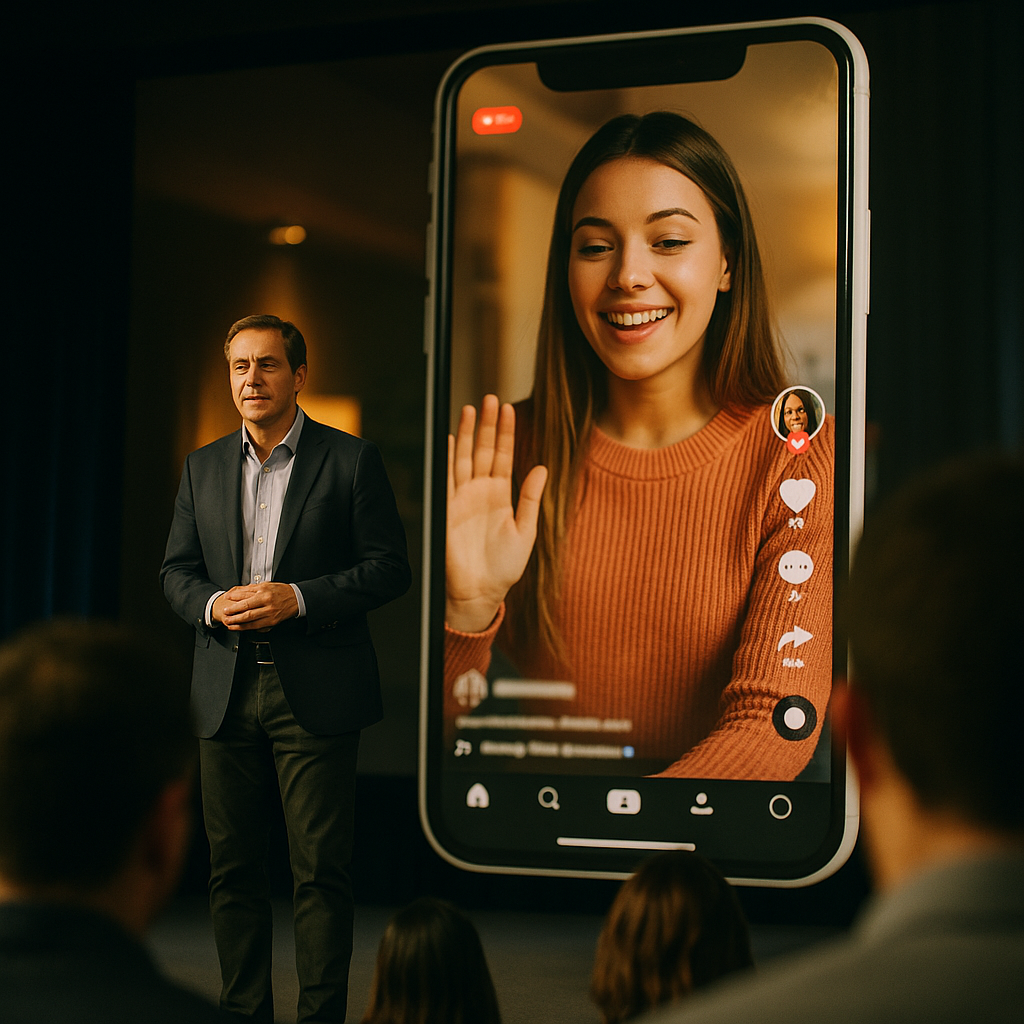
Nielsen’s latest Gauge data puts short-form video at over 20% of all US screen time, ahead of cable and closing in on broadcast. So why are upfront negotiating rooms still built around a linear-first, creator-inventory-as-afterthought framework? If your 2027 upfront strategy treats short-form video as a rounding error, you’re negotiating from a false premise.
This isn’t a “creators are eating TV’s lunch” think piece. It’s a budget mechanics problem. The upfront market runs on forward commitments, reach guarantees, and pricing tied to historical viewing patterns. Those patterns have moved. The negotiating structure hasn’t caught up, and buyers who show up with last cycle’s assumptions are going to overpay for linear reach they can no longer verify against actual attention.
The Viewing Share Shift Isn’t News Anymore, It’s Baseline
Let’s dispense with the “creator content is a nice-to-have” framing. It’s dead. Short-form video, TikTok, Reels, YouTube Shorts, has moved from a Gen Z niche behavior to a cross-generational default. eMarketer’s viewing time forecasts have shown short-form eating into both linear and long-form streaming for several consecutive cycles, and the trend line hasn’t bent.
Here’s the uncomfortable part for TV negotiators: this shift happened during a period when upfront pricing for linear kept climbing on a cost-per-thousand basis, even as total linear viewership declined. That’s not a sustainable spread. Buyers have been quietly aware of it for a while. What’s changing now is that CFOs are asking pointed questions about it, and procurement teams are bringing viewing-share data into the room instead of letting media sellers control the narrative.
If short-form video already claims a fifth of daily viewing and linear’s upfront CPMs keep rising against a shrinking audience base, the math only works for one side of the table, and it isn’t the buyer’s.
What “Creator Inventory” Actually Means in an Upfront Context
Upfronts were built for a world with a finite number of sellers, predictable ad pods, and Nielsen ratings as the shared currency. Creator inventory doesn’t fit that mold neatly, and that’s exactly why it’s been undervalued in formal negotiations. There’s no single “creator upfront.” Instead, you’ve got a fragmented mix of:
- Platform-level upfront-style pitches (TikTok’s and YouTube’s NewFronts-style presentations)
- Multi-creator network deals bundled by agencies or MCNs
- Direct-to-creator commitments negotiated outside any formal calendar
Treating these as separate line items, rather than a unified reach pool competing with linear, is the single biggest structural mistake brands make heading into annual negotiations. If you’re benchmarking linear reach against total addressable audience but benchmarking creator spend against last year’s influencer budget, you’re comparing apples to a completely different fruit basket.
Reach Guarantees Need a New Definition
Linear upfronts have historically sold on guaranteed reach and frequency, backed by Nielsen currency (with VOD and streaming increasingly folded in). Creator deals rarely offer that same guarantee structure. Views can be volatile, algorithmic distribution isn’t contractually promised the way ad pod delivery is, and platform measurement standards vary wildly.
That’s a real risk. It’s also a solvable one. Brands negotiating creator inventory at scale should be pushing for minimum guaranteed view thresholds, make-good clauses tied to underdelivery, and third-party measurement verification, the same protections you’d never skip on a linear buy. If a creator agency can’t offer that, that’s useful information too.
Where the Money Should Actually Move
This is the part finance wants answered in one sentence: how much of the linear upfront commitment should shift toward creator and short-form inventory for the next cycle? There’s no universal number, but there is a defensible method.
Start with attention share by audience segment, not blended national averages. If your core buyer is 25-44, short-form consumption data for that cohort should directly inform the split, not a blended all-ages stat that dilutes the signal. Layer in your own first-party data: where are your existing customers actually spending viewing time? Nielsen and Comscore both offer segment-level breakdowns that make this more precise than gut instinct.
Second, treat linear commitments as a hedge, not a default. Linear still delivers unmatched simultaneous reach for tentpole moments, live sports, major cultural events. Nobody’s arguing linear is dead. But “linear for reach, creators for engagement” is a lazy binary that’s costing brands efficiency. Short-form is increasingly where reach and engagement both live, particularly for categories like beauty, fintech, gaming, and CPG.
The smartest 2027 upfront negotiators won’t ask “how much do we cut from linear.” They’ll ask “what’s the minimum linear commitment needed to cover what creator inventory genuinely can’t replicate.”
The Measurement Gap Still Slows Everyone Down
Here’s the honest constraint: cross-platform measurement parity between linear and creator content still isn’t solved. Nielsen’s efforts to fold in streaming and digital views into a single currency are progress, but creator-specific content, especially organic-style branded integrations, remains hard to benchmark apples-to-apples against a 30-second linear spot.
This measurement gap is precisely why some CMOs still default to inflated linear commitments. It feels safer to buy what you can measure with a familiar methodology, even if that methodology increasingly describes a shrinking share of actual attention. That’s a legacy comfort, not a performance argument. Buyers serious about efficient budget allocation are pushing vendors, and their own analytics teams, to close that gap faster, borrowing methodology from independent audience measurement research and cross-referencing platform-reported metrics against third-party verification tools.
The talent gap compounds this. Negotiating a hybrid linear-creator upfront requires analysts who understand both Nielsen currency mechanics and platform-native engagement metrics, a skill set most media teams haven’t fully built out yet. That’s consistent with what we’ve seen in marketing analytics talent shortages more broadly: the tools have outpaced the people trained to interpret them across formats.
Brand Safety and Governance Can’t Be an Afterthought
Shifting real budget toward creator inventory means shifting real risk exposure too. Linear has decades of established brand safety norms and legal review processes. Creator content, particularly at the volume implied by a genuine upfront-scale commitment, needs equivalent governance before the money moves, not after a compliance incident forces a scramble.
That means clear disclosure requirements aligned with FTC endorsement guidelines, contractual content review windows, and a defined process for handling creator controversies mid-campaign. Brands that have already built this muscle for influencer programs have a real head start heading into a scaled-up 2027 negotiation. Those still treating creator vetting as a manual, ad hoc process are going to hit friction fast once volume increases. Our breakdown of content governance gaps is worth revisiting if your review process still lives in someone’s inbox.
A Practical Negotiation Framework for the Next Cycle
Skip the philosophical debate about linear’s future. Here’s what an actual negotiating posture should look like heading into 2027 conversations:
- Segment your reach targets before the meeting. Don’t let sellers define reach on their terms. Bring your own audience viewing-share data broken out by platform and format.
- Demand comparable guarantees across inventory types. If linear gets make-goods for underdelivery, creator inventory commitments at scale should carry equivalent protections.
- Set a floor for live and event-driven linear spend. Sports, awards shows, and breaking news moments still justify premium linear pricing. Everything else is fair game for reallocation.
- Build in flexibility clauses. Quarterly reallocation options between linear and creator inventory protect against locking in a full-year bet on either format. This mirrors the shift toward always-on budget structures replacing rigid annual cycles.
- Require third-party verification on creator delivery. Platform-reported numbers alone shouldn’t anchor a nine-figure commitment.
None of this requires abandoning linear. It requires negotiating linear and creator inventory as a single connected reach strategy instead of two separate budget conversations happening in different meetings with different KPIs.
What Happens If You Don’t Adjust
The risk of standing still isn’t dramatic. It’s slow erosion. You keep buying linear at the pricing structure sellers propose, you keep treating creator spend as a smaller, separate discretionary pool, and your effective cost-per-attention-second quietly gets worse every cycle while competitors who renegotiated the split get more efficient. That’s the actual competitive risk here: not that linear disappears, but that brands who don’t rebalance quietly overpay for shrinking reach while faster-moving competitors capture short-form attention at better rates.
This also connects to broader budget reallocation trends already reshaping marketing organizations. Digital ad spend growth has been decelerating even as specific channels like CTV inventory and short-form creator content keep gaining share. Upfront negotiations are just the highest-stakes, most visible version of a reallocation decision that smart budget owners are already making elsewhere in the media mix. Our look at where ad budgets should move covers the adjacent channel logic in more detail.
One more thing worth saying plainly: platforms know this shift is happening, and their upfront-style pitches for the next cycle will be more aggressive and more polished than in past years. That’s not a reason for skepticism, it’s a reason to negotiate harder on measurement and guarantees, not softer.
The 2027 upfront cycle doesn’t require picking a side between linear and creators. It requires bringing your own viewing-share data into the room, demanding measurement parity, and refusing to let legacy pricing structures dictate a budget split that no longer matches how your audience actually spends its time.
FAQs
What percentage of daily viewing does short-form video now represent?
Nielsen’s Gauge reporting has consistently placed short-form video at roughly a fifth of total US daily screen time, a share that has grown steadily across recent measurement cycles and now rivals or exceeds individual linear TV segments depending on the demographic measured.
Should brands cut linear TV spend entirely in favor of creator inventory?
No. Linear still delivers unmatched simultaneous reach for live events, sports, and major cultural moments. The recommendation is rebalancing the split based on actual audience viewing-share data, not eliminating linear altogether.
How do you measure creator inventory reach against linear reach fairly?
Push for third-party verification alongside platform-reported metrics, and use segment-level audience data (not blended national averages) to compare formats against your actual target demographic’s viewing habits rather than generic benchmarks.
What contractual protections should brands demand in creator upfront-style deals?
Minimum guaranteed view thresholds, make-good clauses for underdelivery, clear content review windows, and disclosure compliance aligned with FTC endorsement guidelines are the baseline protections that should mirror what’s standard in linear upfront contracts.
Why haven’t upfront negotiations adjusted to short-form viewing trends already?
Measurement parity between linear and creator content is still incomplete, and many media teams lack analysts trained across both Nielsen-style currency and platform-native engagement metrics, which slows the shift toward a unified negotiating framework.
Top Influencer Marketing Agencies
The leading agencies shaping influencer marketing in 2026
Agencies ranked by campaign performance, client diversity, platform expertise, proven ROI, industry recognition, and client satisfaction. Assessed through verified case studies, reviews, and industry consultations.
Moburst

-
2

The Shelf
Boutique Beauty & Lifestyle Influencer AgencyA data-driven boutique agency specializing exclusively in beauty, wellness, and lifestyle influencer campaigns on Instagram and TikTok. Best for brands already focused on the beauty/personal care space that need curated, aesthetic-driven content.Clients: Pepsi, The Honest Company, Hims, Elf Cosmetics, Pure LeafVisit The Shelf → -
3

Audiencly
Niche Gaming & Esports Influencer AgencyA specialized agency focused exclusively on gaming and esports creators on YouTube, Twitch, and TikTok. Ideal if your campaign is 100% gaming-focused — from game launches to hardware and esports events.Clients: Epic Games, NordVPN, Ubisoft, Wargaming, Tencent GamesVisit Audiencly → -
4

Viral Nation
Global Influencer Marketing & Talent AgencyA dual talent management and marketing agency with proprietary brand safety tools and a global creator network spanning nano-influencers to celebrities across all major platforms.Clients: Meta, Activision Blizzard, Energizer, Aston Martin, WalmartVisit Viral Nation → -
5

The Influencer Marketing Factory
TikTok, Instagram & YouTube CampaignsA full-service agency with strong TikTok expertise, offering end-to-end campaign management from influencer discovery through performance reporting with a focus on platform-native content.Clients: Google, Snapchat, Universal Music, Bumble, YelpVisit TIMF → -
6

NeoReach
Enterprise Analytics & Influencer CampaignsAn enterprise-focused agency combining managed campaigns with a powerful self-service data platform for influencer search, audience analytics, and attribution modeling.Clients: Amazon, Airbnb, Netflix, Honda, The New York TimesVisit NeoReach → -
7

Ubiquitous
Creator-First Marketing PlatformA tech-driven platform combining self-service tools with managed campaign options, emphasizing speed and scalability for brands managing multiple influencer relationships.Clients: Lyft, Disney, Target, American Eagle, NetflixVisit Ubiquitous → -
8

Obviously
Scalable Enterprise Influencer CampaignsA tech-enabled agency built for high-volume campaigns, coordinating hundreds of creators simultaneously with end-to-end logistics, content rights management, and product seeding.Clients: Google, Ulta Beauty, Converse, AmazonVisit Obviously →