


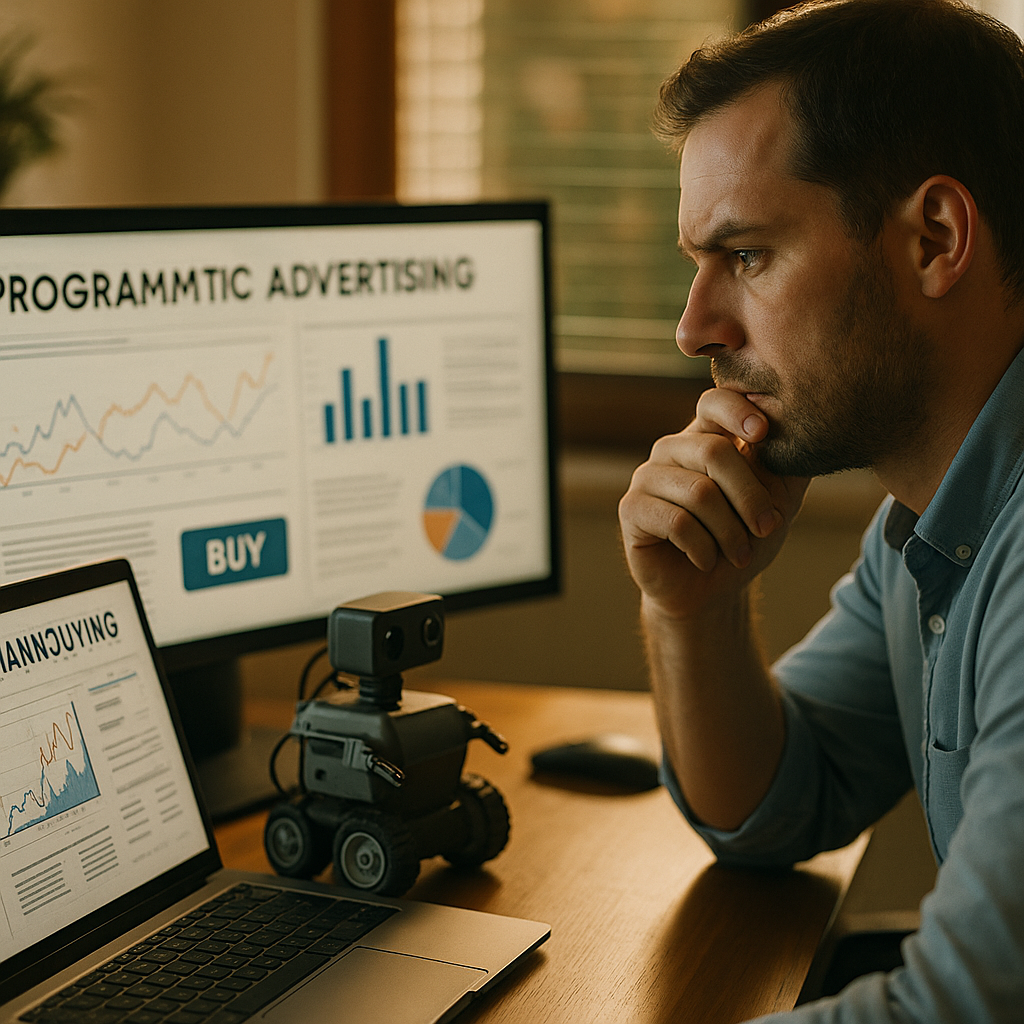
Ninety-one percent of programmatic impressions could be bought without a human touching a dashboard within the next two years, according to early projections circulating among trading desks. That’s not a typo. It’s the trajectory of autonomous programmatic buying, and it’s forcing every media buyer to ask an uncomfortable question: what exactly are you still needed for?
Magnite and MediaOcean have both shipped agentic decisioning tools that promise to bid, optimize, and reallocate budget without waiting for a human sign-off. The pitch is seductive. Faster decisions, lower overhead, fewer wasted impressions. But “autonomous” is doing a lot of marketing work in that sentence, and brands writing seven-figure checks deserve a harder look before they hand over the keys.
What “Agentic Decisioning” Actually Means Here
Strip away the vendor language and agentic decisioning tools are reinforcement-learning systems layered on top of existing programmatic infrastructure. They ingest bid-level signals, campaign KPIs, and inventory quality data, then make real-time adjustments to bids, pacing, and audience targeting without a trader manually approving each move.
Magnite’s approach, built into its SSP-side tooling, leans heavily on supply-path signals: it’s optimizing which exchanges and publishers to route demand through based on historical win rates and post-bid quality. MediaOcean, operating more on the agency and DSP-orchestration side, is positioning its agentic layer as a cross-channel budget allocator, one that can theoretically shift spend between CTV, display, and social inventory based on real-time performance signals pulled from connected platforms.
Neither is fully “set it and forget it.” Both still require guardrails, budget caps, and brand safety parameters set by a human before the agent starts acting. The autonomy is bounded, not absolute. Anyone selling you otherwise is overselling the product.
The real shift isn’t from human to machine control. It’s from human-executed decisions to human-supervised decisions, made at a speed and scale no trading desk could match manually.
The Case for Letting the Machine Drive
There’s real evidence behind the efficiency claims. eMarketer has repeatedly flagged programmatic waste, ranging from ad fraud to mistargeted impressions, as a persistent drag on media ROI, and much of that waste stems from human latency: a trader checking dashboards twice a day simply can’t react to a bid landscape that shifts every few milliseconds.
Agentic systems close that gap. They can:
- Reallocate budget across supply paths within minutes of detecting quality drops, not days
- Run thousands of micro-experiments on bid pricing simultaneously, something no human team can replicate at scale
- Flag anomalies (sudden CPM spikes, suspicious traffic patterns) faster than manual QA checks
- Free up trading teams to focus on strategy, negotiation, and creative testing instead of pacing spreadsheets
For high-volume, always-on programs, that speed advantage compounds. A brand running CTV and open exchange display at scale isn’t just saving labor hours, it’s capturing inventory windows a human buyer would have missed entirely. This mirrors what we’ve seen in automated pacing tools more broadly: the efficiency gains are real when the guardrails are tight.
Where Human-Managed Campaigns Still Win
Here’s the part vendors don’t lead with: agentic tools optimize for the metrics you give them. If your KPI is CPM efficiency, the agent will chase cheap inventory relentlessly, sometimes at the expense of brand context, viewability, or audience quality that a human strategist would catch on inspection.
Human-managed campaigns still outperform on a few dimensions that resist full automation:
- Nuanced brand safety judgment. Keyword and category exclusion lists catch the obvious problems. They miss sarcasm, breaking news context, or culturally sensitive moments that a human trader would flag on sight.
- Negotiated deals and PMPs. Private marketplace relationships still depend on human trust and negotiation, something no agent bids its way into.
- Cross-functional judgment calls. Should this budget shift toward influencer-driven CTV inventory because a creator partnership is landing? An agent doesn’t know about your creator calendar unless someone tells it, and even then, it may not weigh the qualitative upside correctly.
- Crisis response. When a brand needs to pull spend fast because of a PR situation, you want a human with authority making that call, not an algorithm waiting on a threshold trigger.
This is where the “human-managed vs. autonomous” framing gets misleading. The best-performing setups right now aren’t fully one or the other. They’re hybrid, with agentic tools executing tactical decisions inside strategic guardrails a human team sets and revisits weekly.
The Governance Gap Nobody’s Pricing In
Autonomous bidding systems raise the same governance questions we’ve seen across every agentic marketing tool rollout: who’s accountable when the agent makes a bad call, and how much override authority does your team actually retain? Our AI vendor scorecard framework for governance and override controls applies directly here. Before signing with Magnite or MediaOcean’s agentic products, ask for:
- Documented override latency: how fast can a human pause or reverse an agent decision?
- Audit logs showing exactly why the agent made a specific bid or reallocation
- Clear data lineage on what signals feed the model, and whether third-party data is involved
- SLAs around anomaly detection and escalation, not just performance
Most vendors will hand you a performance case study. Fewer will hand you an audit trail unprompted. Ask anyway.
There’s also an interoperability problem worth flagging. If Magnite’s agent is optimizing supply paths while MediaOcean’s agent is separately optimizing channel mix, and neither system talks to the other in real time, you can end up with two autonomous layers working against each other. This is the same fragmentation issue explored in why marketing AI tools still fail to integrate, and it’s especially acute in programmatic, where the DSP, SSP, and measurement layers are rarely built by the same vendor.
Measuring Whether It’s Actually Working
Efficiency gains mean nothing if you can’t attribute them accurately. Agentic buying platforms will report favorable performance data by default, because that’s what justifies renewal. Brands need independent verification, ideally through incrementality testing rather than platform-reported ROAS.
Tools built for this kind of independent measurement, the kind covered in our incrementality testing comparison, are increasingly non-negotiable when an agent is making thousands of micro-decisions you can’t manually audit. If Magnite’s platform claims a 14% CPM efficiency gain, run a holdout test. Don’t take the dashboard’s word for it.
Similarly, when evaluating any vendor’s ROAS claims, apply the same due-diligence rigor outlined in our ROAS claims due-diligence checklist. Agentic tools are still, at the end of the day, vendors with a renewal target to hit.
So, Who Should Actually Adopt This Now?
Not every brand needs full agentic programmatic buying today. It makes the most sense for:
- High-volume advertisers running always-on campaigns across CTV, display, and native at meaningful scale, where speed advantages compound quickly
- Teams with mature measurement infrastructure already in place to independently verify agent-reported performance
- Organizations with clear override protocols and someone empowered to pull the plug fast if something goes sideways
It makes less sense for brands running smaller, high-consideration campaigns where every impression carries brand risk, or for teams that don’t yet have the measurement muscle to validate what the agent claims it’s doing. Sequencing matters. If your identity and data infrastructure isn’t solid, an agentic buying layer built on top of it will just automate bad decisions faster.
Industry data from eMarketer’s programmatic ad spend research consistently shows advertisers underestimate the operational maturity needed before automation pays off. The same pattern applies here: agentic decisioning rewards brands that already have clean data and clear KPIs, and punishes brands that don’t.
The Bottom Line for Trading Desks
Magnite and MediaOcean aren’t replacing your media team. They’re replacing the parts of the job that were already mechanical: pacing checks, bid adjustments, supply-path shuffling. What’s left for humans is arguably more valuable, strategic judgment, brand context, negotiation, and crisis response, but it’s also harder to measure and easier to underfund once the “autonomous” narrative takes hold internally.
Treat these tools as a force multiplier for your trading team, not a replacement for it. Build the override protocols and independent measurement first. Then let the agent drive.
Frequently Asked Questions
What is agentic decisioning in programmatic advertising?
Agentic decisioning refers to AI systems that make real-time bidding, pacing, and budget allocation decisions within programmatic media buying without requiring manual approval for each action. They operate within human-set guardrails like budget caps and brand safety rules.
How does Magnite’s agentic tool differ from MediaOcean’s?
Magnite’s agentic tooling focuses primarily on supply-side optimization, routing demand across exchanges and publishers based on quality signals. MediaOcean’s approach centers on cross-channel budget orchestration across DSPs and channels like CTV, display, and social.
Can autonomous programmatic buying fully replace human media buyers?
No. Current agentic tools handle tactical, high-frequency decisions well but still depend on human oversight for brand safety judgment, negotiated deals, crisis response, and strategic budget shifts tied to broader marketing context.
What should brands ask vendors before adopting agentic buying tools?
Brands should request documented override latency, audit logs explaining bid decisions, clear data lineage on model inputs, and SLAs for anomaly detection and escalation before signing any agentic decisioning contract.
How can brands verify agentic tools are actually improving ROI?
Independent incrementality testing and holdout experiments are more reliable than platform-reported ROAS. Brands should treat vendor performance dashboards as a starting point, not a final answer.
Frequently Asked Questions
Top Influencer Marketing Agencies
The leading agencies shaping influencer marketing in 2026
Agencies ranked by campaign performance, client diversity, platform expertise, proven ROI, industry recognition, and client satisfaction. Assessed through verified case studies, reviews, and industry consultations.
Moburst

-
2

The Shelf
Boutique Beauty & Lifestyle Influencer AgencyA data-driven boutique agency specializing exclusively in beauty, wellness, and lifestyle influencer campaigns on Instagram and TikTok. Best for brands already focused on the beauty/personal care space that need curated, aesthetic-driven content.Clients: Pepsi, The Honest Company, Hims, Elf Cosmetics, Pure LeafVisit The Shelf → -
3

Audiencly
Niche Gaming & Esports Influencer AgencyA specialized agency focused exclusively on gaming and esports creators on YouTube, Twitch, and TikTok. Ideal if your campaign is 100% gaming-focused — from game launches to hardware and esports events.Clients: Epic Games, NordVPN, Ubisoft, Wargaming, Tencent GamesVisit Audiencly → -
4

Viral Nation
Global Influencer Marketing & Talent AgencyA dual talent management and marketing agency with proprietary brand safety tools and a global creator network spanning nano-influencers to celebrities across all major platforms.Clients: Meta, Activision Blizzard, Energizer, Aston Martin, WalmartVisit Viral Nation → -
5

The Influencer Marketing Factory
TikTok, Instagram & YouTube CampaignsA full-service agency with strong TikTok expertise, offering end-to-end campaign management from influencer discovery through performance reporting with a focus on platform-native content.Clients: Google, Snapchat, Universal Music, Bumble, YelpVisit TIMF → -
6

NeoReach
Enterprise Analytics & Influencer CampaignsAn enterprise-focused agency combining managed campaigns with a powerful self-service data platform for influencer search, audience analytics, and attribution modeling.Clients: Amazon, Airbnb, Netflix, Honda, The New York TimesVisit NeoReach → -
7

Ubiquitous
Creator-First Marketing PlatformA tech-driven platform combining self-service tools with managed campaign options, emphasizing speed and scalability for brands managing multiple influencer relationships.Clients: Lyft, Disney, Target, American Eagle, NetflixVisit Ubiquitous → -
8

Obviously
Scalable Enterprise Influencer CampaignsA tech-enabled agency built for high-volume campaigns, coordinating hundreds of creators simultaneously with end-to-end logistics, content rights management, and product seeding.Clients: Google, Ulta Beauty, Converse, AmazonVisit Obviously →