


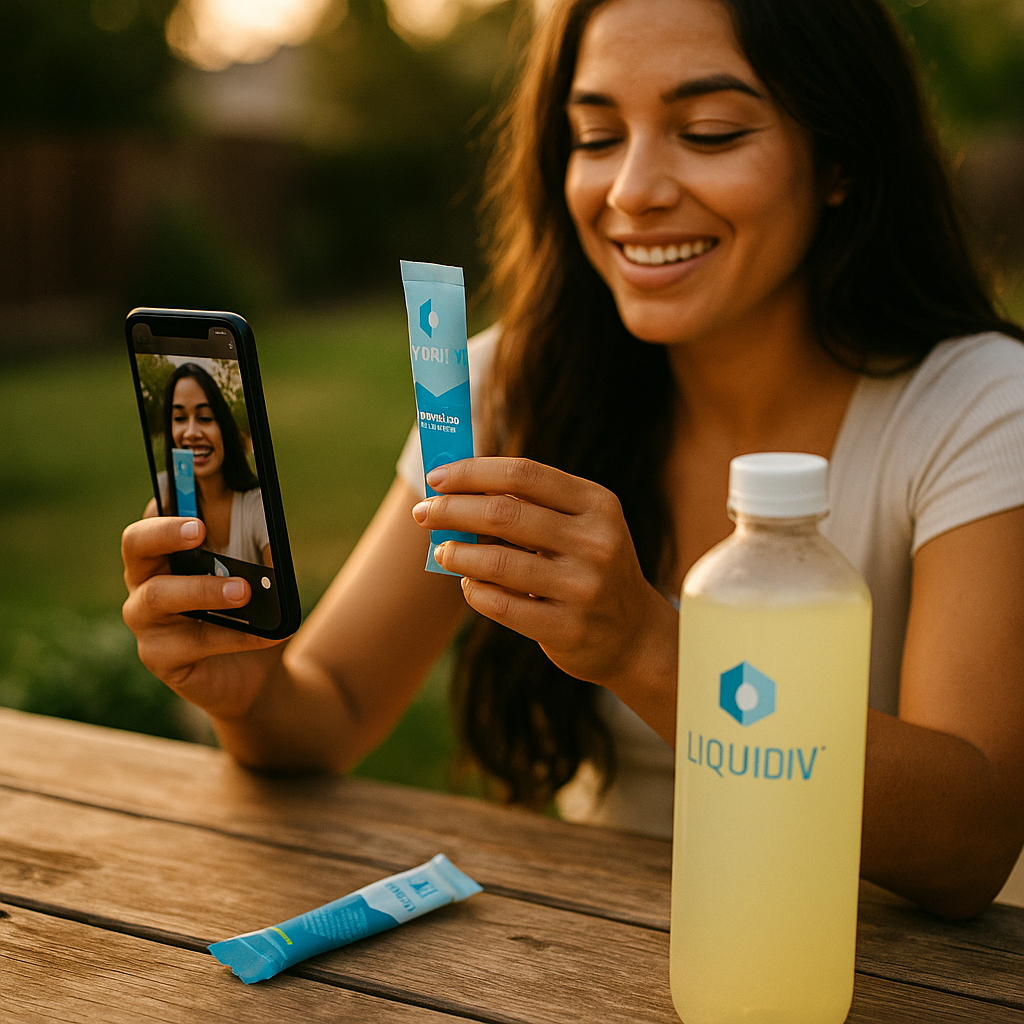
Seventy-one percent of consumers say they trust recommendations from people with small followings more than celebrities. That single data point explains why Liquid I.V., once the poster child of oversaturated macro-influencer marketing, tore up its playbook. When the “de-influencing” wave hit wellness and hydration brands hard, Liquid I.V. didn’t double down on bigger names. It went small. Deliberately, systematically small.
This is the story of how a brand facing category-wide skepticism used nano-creator seeding to rebuild something money can’t buy directly: trust.
The De-Influencing Reckoning Nobody Saw Coming
Rewind to the de-influencing moment. TikTok creators started publicly torching the products they’d once shilled, calling out overhyped skincare, supplements, and yes, hydration mixes. Liquid I.V. got named repeatedly. The brand had spent years building reach through paid macro partnerships and celebrity-adjacent creators, the kind of deals that guarantee impressions but say nothing about genuine product belief.
The backlash wasn’t really about Liquid I.V. specifically. It was about a marketing pattern consumers had grown tired of: polished creators reading scripted copy for products they’d never buy with their own money. But Liquid I.V. sat squarely in the blast radius because hydration and wellness supplements were exactly the category getting torched hardest.
When an entire category loses credibility at once, spending more on the same channel only accelerates the distrust. Liquid I.V.’s leadership recognized that the fix wasn’t reach. It was proof.
Sales didn’t collapse overnight, but sentiment did. Comment sections turned skeptical. Screenshots of old sponsored posts got recirculated as “receipts.” For a brand built on emotional trust around something as intimate as what you put in your body, that shift mattered more than any single quarter’s revenue number.
Why Macro Deals Became the Liability, Not the Asset
Macro influencer deals work on a simple premise: pay for reach, and conversion follows. That math holds when audiences trust the endorsement. It breaks the moment audiences start assuming every post is paid theater.
Liquid I.V.’s internal data reportedly showed a widening gap between impression volume and actual sentiment quality. Engagement rates on macro posts stayed technically healthy, but comment sentiment skewed cynical. “How much did they pay you” became a recurring top comment. That’s not a targeting problem. That’s a trust problem, and no amount of reach fixes a trust problem.
Marketers who lived through this cycle with other brands will recognize the pattern. It’s similar to what played out when an authenticity-first campaign backfired for other consumer brands that misjudged audience skepticism. The lesson repeats: audiences increasingly discount messages that feel manufactured, regardless of production value.
- Macro creators cost 10-50x more per post than nano creators, per eMarketer benchmarks, with no proportional trust return once category skepticism sets in.
- A single celebrity misstep or perceived inauthenticity can taint an entire campaign wave, since so much spend concentrates in few relationships.
- Macro content rarely reflects genuine day-to-day usage, which is precisely what skeptical consumers say they want to see.
The Nano-Seeding Pivot: What Actually Changed
Instead of chasing fewer, bigger names, Liquid I.V. shifted budget toward waves of nano-creator seeding: sending product to hundreds, then thousands, of creators with sub-10,000 followers, with no script and often no formal payment beyond product and shipping.
The mechanics matter here. This wasn’t a one-time gifting stunt. It was structured in waves, timed to specific moments (allergy season, hangover-adjacent weekends, back-to-school stress, travel-heavy holidays) so that organic mentions kept surfacing at points when the product was contextually relevant, not just when a campaign calendar said “post now.”
Nano creators, by definition, have smaller but tighter communities. Their followers are often friends, classmates, coworkers, people who know them offline. That proximity is exactly why their recommendations read as credible. Nobody’s coworker is running a six-figure brand deal. When she posts a Liquid I.V. packet in her gym bag, it reads as behavior, not billboard.
Trust doesn’t scale the way reach scales. You can buy reach in a single afternoon. You rebuild trust one believable post at a time, across thousands of small, low-stakes moments.
How the Seeding Waves Were Actually Run
Operationally, this required infrastructure most brands underestimate. Sending product to a handful of macro creators is a white-glove process. Sending product to thousands of nano creators demands logistics closer to a fulfillment operation than a marketing campaign.
Liquid I.V.’s approach reportedly included:
- Interest-based discovery over follower thresholds. Creators were selected for topical relevance, fitness, travel, parenting, service industry work, rather than raw follower count. This mirrors the discovery logic covered in Unilever’s creator discovery approach, where relevance beats vanity metrics every time.
- No mandatory script. Creators got product and general context, not talking points. This preserved the authenticity that scripted macro content had lost.
- Tiered, ongoing waves rather than a single drop. New cohorts got seeded on a rolling basis tied to seasonal use cases, similar to the tiered influencer structures used successfully by destination marketing organizations managing large creator pools with limited budgets.
- Light-touch usage rights. Rather than locking every creator into paid usage agreements, the brand let organic posts stay organic, only escalating a small subset into paid amplification once performance data justified it.
This last point deserves attention. Not every nano post got boosted. Liquid I.V. reportedly used performance signals, engagement rate relative to follower count, comment sentiment, saves and shares, to identify which organic posts were resonating, then layered paid spend behind those specific pieces of content. That’s a fundamentally different budget allocation model than paying upfront for guaranteed macro placement.
Did It Actually Move the Needle?
Skeptics will rightly ask: nano-seeding sounds nice, but does it convert? The honest answer is that it converts differently, and measuring it requires different KPIs than a macro campaign dashboard.
Rather than tracking a handful of high-cost placements against direct conversion, Liquid I.V.’s model reportedly leaned on aggregate share-of-voice and sentiment tracking across thousands of small posts. Individually, a nano post from a creator with 3,000 followers won’t move a sales dashboard. In aggregate, thousands of them shift brand perception at a category level, which is exactly the metric that mattered given the origin of the crisis.
This mirrors a broader industry trend. According to Statista consumer trust research, peer recommendations consistently outrank branded and celebrity content in purchase-influence surveys. Brands like Rare Beauty have leaned on similar logic, building creator cohort strategies that outperformed celebrity marketing by prioritizing believable volume over singular star power.
There’s also a cost-efficiency story marketers can’t ignore. A single macro deal budget can fund seeding waves reaching hundreds of nano creators. Even at modest individual conversion rates, the aggregate reach-to-cost ratio often outperforms concentrated macro spend, particularly once you factor in the risk mitigation value of not being dependent on one creator’s reputation.
What Other Brands Should Steal From This Playbook
Marketers evaluating their own creator mix after category-wide trust hits should treat this less as a Liquid I.V. case study and more as a template. A few operational takeaways worth stealing directly:
- Diversify creator risk the way you’d diversify a media buy. Concentrating spend in a handful of macro relationships creates single points of failure, both reputational and performance-related.
- Build seeding into always-on operations, not campaign spikes. Rolling waves tied to real-world moments outperform one-off product drops timed to a launch calendar.
- Measure sentiment, not just reach. Comment tone, save rates, and share behavior tell you more about trust recovery than impressions ever will.
- Let performance data decide paid amplification. Don’t pre-commit ad spend to every creator relationship. Watch what organically resonates, then fund it.
Brands scaling supply chains to support this kind of always-on creator content should also look at how real-time content supply chain models handle the operational load of managing thousands of small creator relationships without collapsing under logistics.
FAQs
What is nano-creator seeding?
Nano-creator seeding is the practice of sending free product to creators with small, highly engaged followings (typically under 10,000 followers) in exchange for organic, unscripted content rather than paid, contracted posts.
Why did Liquid I.V. move away from macro-influencer deals?
A category-wide de-influencing backlash made audiences skeptical of scripted, paid endorsements from large creators. Liquid I.V. shifted toward nano creators whose smaller, closer-knit audiences perceived their recommendations as more genuine.
Is nano-creator seeding cheaper than macro influencer marketing?
Generally, yes. Nano creators typically receive product rather than large fees, allowing brands to reach thousands of creators for a fraction of the cost of a handful of macro or celebrity partnerships.
How do brands measure success from nano-seeding campaigns?
Instead of relying solely on direct conversion from individual posts, brands typically track aggregate sentiment, share-of-voice, comment tone, and engagement-to-follower ratios across large creator cohorts.
Can nano-creator strategies work for every category?
They work best in categories where personal, everyday usage builds credibility, like wellness, food and beverage, and beauty. Categories dependent on aspirational or high-production storytelling may still need a blended approach with macro or celebrity talent.
The takeaway: If your category just took a trust hit, don’t respond by buying more reach. Rebuild belief in small, believable increments, then let your data tell you where to double down.
FAQs
What is nano-creator seeding?
Nano-creator seeding is the practice of sending free product to creators with small, highly engaged followings (typically under 10,000 followers) in exchange for organic, unscripted content rather than paid, contracted posts.
Why did Liquid I.V. move away from macro-influencer deals?
A category-wide de-influencing backlash made audiences skeptical of scripted, paid endorsements from large creators. Liquid I.V. shifted toward nano creators whose smaller, closer-knit audiences perceived their recommendations as more genuine.
Is nano-creator seeding cheaper than macro influencer marketing?
Generally, yes. Nano creators typically receive product rather than large fees, allowing brands to reach thousands of creators for a fraction of the cost of a handful of macro or celebrity partnerships.
How do brands measure success from nano-seeding campaigns?
Instead of relying solely on direct conversion from individual posts, brands typically track aggregate sentiment, share-of-voice, comment tone, and engagement-to-follower ratios across large creator cohorts.
Can nano-creator strategies work for every category?
They work best in categories where personal, everyday usage builds credibility, like wellness, food and beverage, and beauty. Categories dependent on aspirational or high-production storytelling may still need a blended approach with macro or celebrity talent.
Top Influencer Marketing Agencies
The leading agencies shaping influencer marketing in 2026
Agencies ranked by campaign performance, client diversity, platform expertise, proven ROI, industry recognition, and client satisfaction. Assessed through verified case studies, reviews, and industry consultations.
Moburst

-
2

The Shelf
Boutique Beauty & Lifestyle Influencer AgencyA data-driven boutique agency specializing exclusively in beauty, wellness, and lifestyle influencer campaigns on Instagram and TikTok. Best for brands already focused on the beauty/personal care space that need curated, aesthetic-driven content.Clients: Pepsi, The Honest Company, Hims, Elf Cosmetics, Pure LeafVisit The Shelf → -
3

Audiencly
Niche Gaming & Esports Influencer AgencyA specialized agency focused exclusively on gaming and esports creators on YouTube, Twitch, and TikTok. Ideal if your campaign is 100% gaming-focused — from game launches to hardware and esports events.Clients: Epic Games, NordVPN, Ubisoft, Wargaming, Tencent GamesVisit Audiencly → -
4

Viral Nation
Global Influencer Marketing & Talent AgencyA dual talent management and marketing agency with proprietary brand safety tools and a global creator network spanning nano-influencers to celebrities across all major platforms.Clients: Meta, Activision Blizzard, Energizer, Aston Martin, WalmartVisit Viral Nation → -
5

The Influencer Marketing Factory
TikTok, Instagram & YouTube CampaignsA full-service agency with strong TikTok expertise, offering end-to-end campaign management from influencer discovery through performance reporting with a focus on platform-native content.Clients: Google, Snapchat, Universal Music, Bumble, YelpVisit TIMF → -
6

NeoReach
Enterprise Analytics & Influencer CampaignsAn enterprise-focused agency combining managed campaigns with a powerful self-service data platform for influencer search, audience analytics, and attribution modeling.Clients: Amazon, Airbnb, Netflix, Honda, The New York TimesVisit NeoReach → -
7

Ubiquitous
Creator-First Marketing PlatformA tech-driven platform combining self-service tools with managed campaign options, emphasizing speed and scalability for brands managing multiple influencer relationships.Clients: Lyft, Disney, Target, American Eagle, NetflixVisit Ubiquitous → -
8

Obviously
Scalable Enterprise Influencer CampaignsA tech-enabled agency built for high-volume campaigns, coordinating hundreds of creators simultaneously with end-to-end logistics, content rights management, and product seeding.Clients: Google, Ulta Beauty, Converse, AmazonVisit Obviously →