


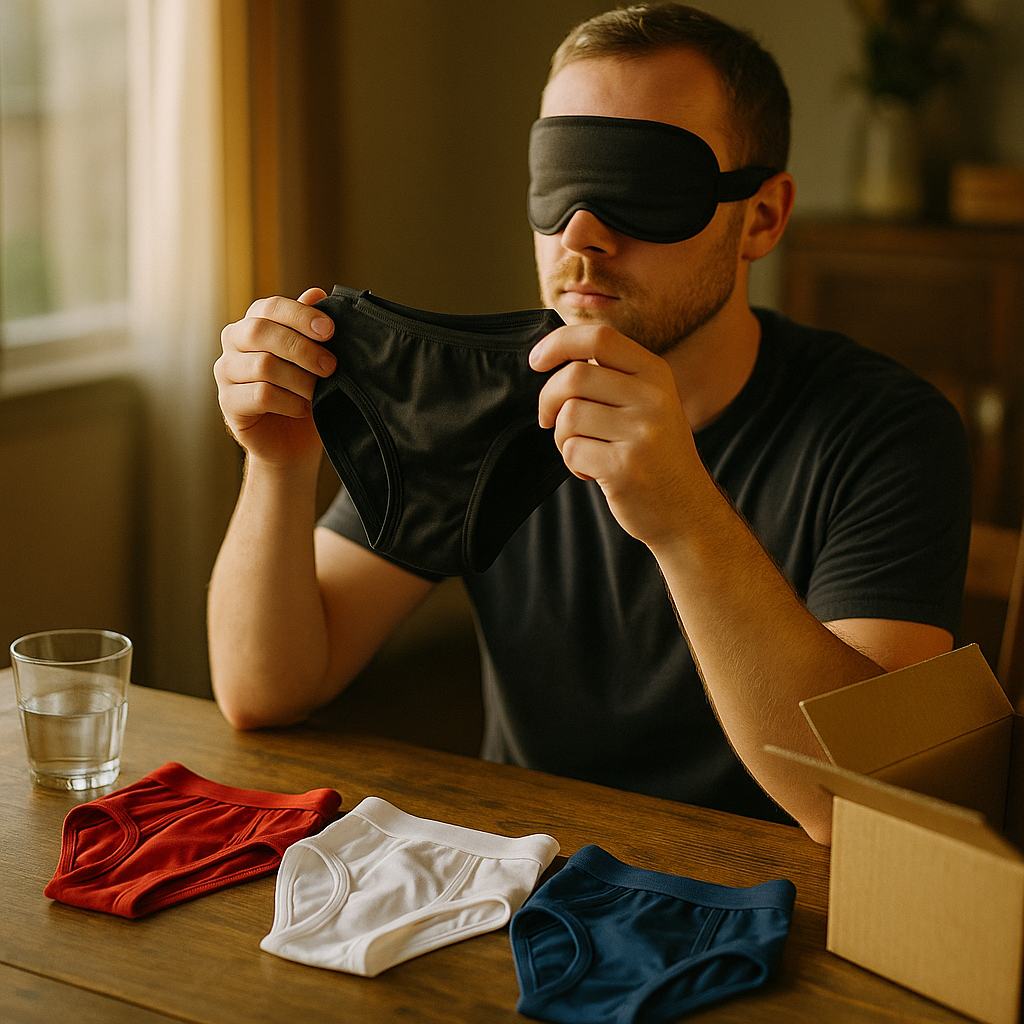
Only 34% of consumers trust brand claims in advertising, according to research widely cited across the industry, yet they’ll believe a stranger’s unscripted reaction on camera almost every time. That gap is exactly why the blind taste-test format keeps resurfacing in CPG marketing — and why brands still botch it. Done right, comparative trials turn skepticism into your best sales asset.
Why the Blind Taste-Test Format Still Works
The format is old. Pepsi ran blind taste tests on street corners back in the 1970s. But the mechanics haven’t aged — they’ve just moved to vertical video. A creator hands two unmarked cups, cans, or bites to a stranger, records the reaction, reveals the brands. No script, no filter, just a face processing surprise in real time.
What makes it durable is structural, not nostalgic. The format contains its own proof. Viewers don’t have to trust the brand’s claim because they watched the claim get tested. That’s a fundamentally different trust mechanism than a testimonial or a demo, and it’s why comparative trial content consistently outperforms standard product reviews on watch-through rate.
A blind taste test doesn’t ask viewers to believe you — it lets them watch belief get formed, live, by someone with nothing to gain.
The Credibility Math Behind Comparative Trials
Marketers underestimate how much the “blind” part is doing. Remove it, and you have a reaction video — fine, but forgettable. Keep it, and you’ve built an experiment with a control condition. That’s the difference between “this creator likes our product” and “this product won under conditions where liking couldn’t be faked.”
For CPG categories especially — beverages, snacks, condiments, pet food, skincare with sensory components — this matters because so much purchase decision-making happens on taste, texture, or scent memory that consumers can’t fully articulate. A blind test externalizes that internal, hard-to-trust judgment and makes it watchable.
This is also why the format pairs so well with myth-busting creator videos — both rely on the same psychological lever: letting proof happen on camera instead of asserting it in copy.
Where It Fits in the Funnel
- Top of funnel: Novelty and drama of the reveal drive shares and organic reach.
- Mid funnel: Comparative framing against a named competitor accelerates consideration for switchers.
- Bottom of funnel: Repurposed clips as UGC-style ads lift conversion on retargeting, since the “proof” element reduces last-mile doubt.
Writing the Brief: What Actually Needs to Be Specified
Most blind taste-test content fails not because the concept is weak but because the brief leaves too much to chance — or too little. Over-scripting kills the authenticity the format depends on. Under-specifying invites legal risk and inconsistent output. The brief needs to control variables, not performances.
Here’s what a solid brief actually locks down:
- Sample selection criteria: Who counts as a valid tester? Random strangers, existing customers of the competitor, category enthusiasts? Define it and document it — this becomes your defense if a claim gets challenged later.
- Blinding procedure: How are products concealed? Identical cups, unmarked packaging, numbered labels. Sloppy blinding is the fastest way to get called out in the comments.
- Comparison set: Name the competitor or keep it generic (“Brand X”)? Naming drives more engagement but raises compliance stakes — more on that below.
- Reaction capture instructions: Tell creators what to film (first bite, pause before speaking, reveal moment) without telling them what to say.
- Reveal sequencing: Does the creator guess before reveal? This single beat is often the highest-retention moment in the whole video.
- Disclosure language: Where and how the paid partnership disclosure appears, matching platform and FTC requirements.
Leave performance style, tone, and personality entirely to the creator. That’s not a nice-to-have — it’s the mechanism that makes the format believable in the first place.
Sample Size Isn’t Just a Science Term — It’s a Legal One
One creator’s reaction is anecdote. Three creators’ reactions, filmed under the same protocol, start to look like evidence — and evidence is exactly what regulators expect if you’re going to imply a broader claim like “consumers prefer us.” The FTC’s endorsement guidelines are unambiguous here: comparative claims need substantiation, and a single cherry-picked reaction video doesn’t meet that bar if you’re amplifying it as proof of general preference.
The practical fix is simple. Run the test with a batch of creators or testers — five, ten, whatever your budget allows — under identical blinding conditions, and disclose the sample honestly (“we asked 12 people” beats implying “everyone prefers us”). This isn’t just risk mitigation. It’s also better content: a compilation of consistent reactions across different people is more persuasive than one cherry-picked clip, because it starts to resemble a real study rather than a stunt.
Treat your comparative trial like a mini research study, not a stunt — the brief should specify sample size and blinding protocol as rigorously as it specifies hashtags.
Naming Competitors: Worth the Risk?
Naming a specific competitor multiplies engagement — audiences love a direct fight — but it also multiplies legal exposure. Lanham Act claims in the US center on false or misleading comparative advertising, and a botched blind test that gets challenged publicly can do more brand damage than the campaign was worth. Brands with strong legal review cycles can go named. Brands moving fast or testing the format for the first time should default to “leading brand” framing until the format’s proven and process is airtight.
Either way, loop legal in at the brief stage, not after the video’s shot. Retrofitting compliance into a taste-test video that’s already filmed named packaging is expensive and often impossible without a reshoot.
Creator Selection: Skepticism Is the Casting Requirement
This format has one non-negotiable casting rule: the creator (or the testers they film) cannot appear to be a superfan. A visibly brand-loyal creator instantly collapses the “blind” premise in the viewer’s mind — everyone assumes they knew, or wanted a particular answer. The most effective taste-test content actually features creators who are known skeptics of the category, or who’ve publicly used a competitor’s product before.
This is the same trust logic behind two-creator debate videos — audiences extend credibility to people who look like they have something to lose, not something to gain. Brief your talent selection around that principle, not just follower count or past brand deal history.
Format Variations Worth Testing
- Street-test compilation: Multiple strangers, same protocol, cut together — best for top-of-funnel reach and social proof.
- Single-creator deep dive: One known skeptic runs a longer, more analytical comparison — better for consideration-stage content and YouTube.
- Employee-blind test: Turning the format inward, testing your own team, which builds a different kind of transparency credibility — similar in spirit to the honesty play in factory walkthrough briefs.
- Repeat/longitudinal test: Same testers, retested weeks later, useful for shelf-stable or subscription CPG products trying to prove consistency claims.
Measuring What the Format Is Actually Good At
Don’t measure a blind taste test purely on view count — that rewards the wrong creative decisions and tempts teams toward staged drama over real testing. Track instead:
- Watch-through to reveal moment — if viewers drop off before the reveal, the buildup is too slow or the blinding wasn’t visually convincing.
- Comment sentiment specifically about authenticity — “this is fake” comments are the format’s early warning system.
- Save and share rate versus like rate — taste tests tend to over-index on shares when the reveal is genuinely surprising.
- Conversion lift in retargeting when repurposed as a paid asset, compared against your standard UGC benchmark.
Platforms like Sprout Social and native analytics from TikTok Ads Manager both surface watch-through curves — use them to pinpoint exactly where the reveal beat needs tightening in future briefs.
Comparative trial content also has an unusually long shelf life for repurposing. A well-executed reveal clip works as an organic post, a paid ad, a retail media asset, and a sales enablement clip for retail buyer conversations — one shoot, four use cases.
Common Ways Brands Get This Wrong
Three failure patterns show up repeatedly. First, obvious rigging — mismatched cup sizes, a tester who clearly recognizes the packaging, reveal timing that feels too convenient. Second, treating the disclosure as an afterthought, tucked into a description box instead of stated on camera, which invites both FTC scrutiny and audience backlash. Third, running the test once and amplifying it as if it proves a category-wide claim, which is the fastest way to invite a competitor’s legal team into your notifications.
The fix for all three is the same: build rigor into the brief before production, not damage control after publish. Treat the format with the same seriousness you’d apply to a before-and-after compliance brief, because the underlying risk — implied claims without adequate substantiation — is nearly identical.
For a broader view on how comparative and format-driven trends are shifting, eMarketer’s research on creator content trends and HubSpot’s marketing benchmarks are useful references when building the business case internally.
Next Step
Before your next taste-test shoot, write the blinding protocol and sample size into the brief itself — not the production notes — and get legal sign-off on comparative language before a single cup gets poured. That one sequencing change prevents the majority of compliance headaches this format creates.
FAQs
What is a blind taste-test format in influencer marketing?
It’s a content format where creators or testers sample unmarked or disguised versions of competing products on camera, react without knowing the brands, then discover which is which. The unscripted reveal builds credibility because viewers watch the judgment form in real time.
Is blind taste-test content FTC compliant?
It can be, if disclosures are clear and on-screen, and any comparative claim is substantiated with a reasonable sample rather than a single cherry-picked reaction. Brands should review the FTC’s endorsement guidance before naming competitors directly.
How many testers do I need for credible results?
There’s no universal legal minimum, but relying on one reaction and presenting it as representative is risky. Most brands run five to twelve testers under identical blinding conditions and disclose the sample size honestly in captions or on-screen text.
Should I name the competitor in the video?
Naming drives higher engagement but increases legal exposure under comparative advertising rules. Brands without a fast legal review process should default to generic framing (“leading brand”) until the format is proven internally.
What KPIs matter most for this format?
Watch-through rate to the reveal moment, share-to-like ratio, authenticity-related comment sentiment, and conversion lift when the clip is repurposed as a paid retargeting asset.
Top Influencer Marketing Agencies
The leading agencies shaping influencer marketing in 2026
Agencies ranked by campaign performance, client diversity, platform expertise, proven ROI, industry recognition, and client satisfaction. Assessed through verified case studies, reviews, and industry consultations.
Moburst

-
2

The Shelf
Boutique Beauty & Lifestyle Influencer AgencyA data-driven boutique agency specializing exclusively in beauty, wellness, and lifestyle influencer campaigns on Instagram and TikTok. Best for brands already focused on the beauty/personal care space that need curated, aesthetic-driven content.Clients: Pepsi, The Honest Company, Hims, Elf Cosmetics, Pure LeafVisit The Shelf → -
3

Audiencly
Niche Gaming & Esports Influencer AgencyA specialized agency focused exclusively on gaming and esports creators on YouTube, Twitch, and TikTok. Ideal if your campaign is 100% gaming-focused — from game launches to hardware and esports events.Clients: Epic Games, NordVPN, Ubisoft, Wargaming, Tencent GamesVisit Audiencly → -
4

Viral Nation
Global Influencer Marketing & Talent AgencyA dual talent management and marketing agency with proprietary brand safety tools and a global creator network spanning nano-influencers to celebrities across all major platforms.Clients: Meta, Activision Blizzard, Energizer, Aston Martin, WalmartVisit Viral Nation → -
5

The Influencer Marketing Factory
TikTok, Instagram & YouTube CampaignsA full-service agency with strong TikTok expertise, offering end-to-end campaign management from influencer discovery through performance reporting with a focus on platform-native content.Clients: Google, Snapchat, Universal Music, Bumble, YelpVisit TIMF → -
6

NeoReach
Enterprise Analytics & Influencer CampaignsAn enterprise-focused agency combining managed campaigns with a powerful self-service data platform for influencer search, audience analytics, and attribution modeling.Clients: Amazon, Airbnb, Netflix, Honda, The New York TimesVisit NeoReach → -
7

Ubiquitous
Creator-First Marketing PlatformA tech-driven platform combining self-service tools with managed campaign options, emphasizing speed and scalability for brands managing multiple influencer relationships.Clients: Lyft, Disney, Target, American Eagle, NetflixVisit Ubiquitous → -
8

Obviously
Scalable Enterprise Influencer CampaignsA tech-enabled agency built for high-volume campaigns, coordinating hundreds of creators simultaneously with end-to-end logistics, content rights management, and product seeding.Clients: Google, Ulta Beauty, Converse, AmazonVisit Obviously →