


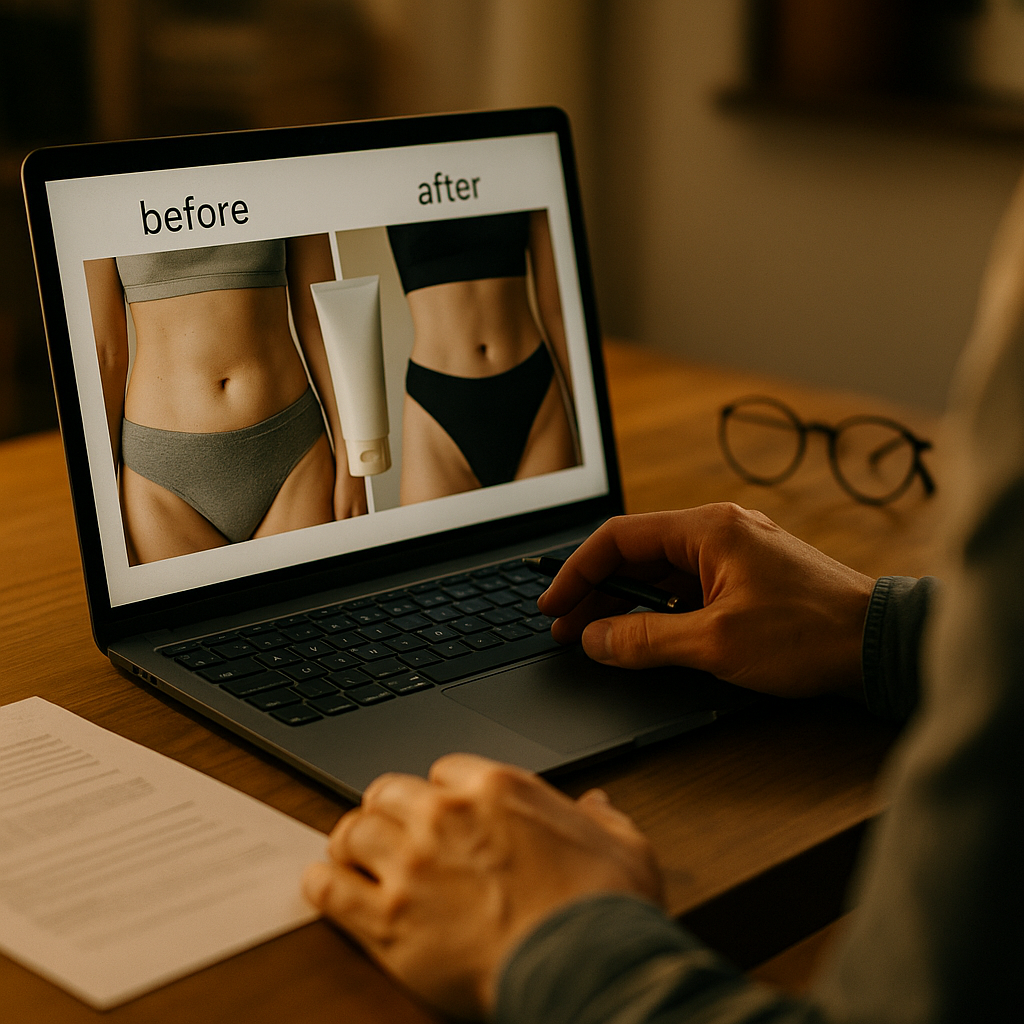
Before-and-after content pulls 30-40% higher view-through than standard product demos, according to internal benchmarks from several mid-size agencies tracking transformation formats this year. It’s the highest-performing genre on TikTok Shop and Instagram Reels right now. It’s also one of the FTC’s favorite categories to scrutinize. The before-and-after format update reshaping briefs in 2026 isn’t about better editing tricks. It’s about building disclosure into the transformation itself, so compliance and retention stop fighting each other.
Why This Format Keeps Winning (and Keeps Getting Flagged)
Transformation content works because it delivers a payoff. Viewers watch skincare, fitness, cleaning, and home-organization creators specifically to see the reveal. That anticipation drives completion rates most other formats can’t touch. But the same structure that makes it compelling — a dramatic before, a satisfying after — is exactly what regulators worry gets manipulated. Lighting changes. Filters. Selective time frames. Undisclosed edits. The FTC has been explicit that “before and after” claims carry a higher evidentiary bar than ordinary testimonials, because the visual itself is making an implied performance claim.
Brands that treat this as a legal afterthought are leaving money on the table twice: once when creative gets watered down out of fear, and again when a flagged post gets pulled mid-campaign, killing the view-through curve you were counting on for retargeting.
The best-performing before-and-after content right now doesn’t hide the disclosure — it builds the disclosure into the narrative arc, so compliance reads as authenticity rather than fine print.
What Changed in the Format
The old playbook was simple: shoot the before, shoot the after, cut between them, drop a caption disclaimer somewhere in the description. That’s no longer enough, and honestly it never really worked well for retention either. Viewers skip captions. Algorithms don’t read fine print. The update brands are adopting now treats disclosure as a scene, not a footnote.
- Verbal disclosure inside the “before” segment. Creators state the timeframe, product usage frequency, and any conditions (lighting, filters, professional styling) out loud, on camera, before the transformation plays.
- On-screen text that persists through the cut. Instead of a disclaimer that flashes for two seconds, brands are briefing supers that stay visible across both segments — “Results after 6 weeks, individual results vary” pinned in the same corner throughout.
- Timestamped or dated proof. Some creators now show a phone lock screen or calendar app on both ends to visually anchor the timeframe, which doubles as a trust signal for skeptical viewers.
- No cut-away edits during the after reveal. Single unbroken shots or match cuts are replacing hard jump cuts, reducing the perception (and the reality) of manipulation.
This mirrors what’s happening in adjacent formats. The shift toward embedding compliance language into the story beat rather than bolting it on afterward shows up in split-screen reaction videos that stay FTC compliant, and it’s the same logic driving updates to confessional testimonial briefs that convert and stay compliant. Disclosure that feels native to the format outperforms disclosure that feels legally bolted on — both in watch time and in regulator scrutiny.
The View-Through Math Nobody Talks About
Here’s the thing brand teams underestimate: compliant disclosure, done well, can actually improve view-through instead of hurting it. When a creator says “I used this three times a week for six weeks, no filter, same lighting” before showing the after, that’s not just a legal cover. It’s a credibility beat. Viewers who’ve been burned by fake transformation content are primed to distrust the reveal. A specific, verbal, upfront disclosure disarms that skepticism in real time.
Compare that to a vague caption disclaimer nobody reads. It protects the brand on paper but does nothing for trust, and trust is what keeps someone watching past the three-second mark.
Data from Sprout Social’s creator content benchmarks consistently shows that specificity — numbers, timeframes, named conditions — correlates with longer average watch time across UGC-style video. Vague claims get skipped. Specific claims get watched to the end, because the viewer is checking whether the promise matches the payoff.
Briefing the Format Without Killing the Drama
Marketers worry that adding disclosure kills the “wow” of the reveal. It doesn’t, if you sequence it right. The disclosure belongs in the setup, not the payoff. Front-load the context so the after-shot can still land clean.
- Open with the disclosure as narrative, not legal text. “Okay so it’s been four weeks, same routine, no makeup, let’s see” reads as normal conversational speech, not a warning label.
- Lock the visual conditions before shooting starts. Brief creators to use the same camera, same lighting setup, same distance for both segments. This isn’t just compliance — it’s what makes the after shot believable, which is what makes it shareable.
- Require a visible timestamp or reference object. A watch, a calendar, a dated receipt in frame. Small detail, huge trust dividend.
- Script the caption to reinforce, not duplicate, the verbal disclosure. If the creator already said “results after six weeks” on camera, the caption should add context (product name, link, individual results disclaimer) rather than repeat it.
- Build in a results-vary line that doesn’t sound corporate. “This is just what worked for me” does the same legal job as “individual results may vary” but sounds like a person talking.
This structure borrows heavily from what’s already working in day-in-the-life briefs that weave products in, not bolt them on — the idea that disclosure and product mention should feel like part of how a real person talks, not an insert shot into an otherwise natural video.
Where Brands Still Get This Wrong
A few recurring mistakes show up across categories, from beauty to home renovation to fitness:
- Treating “results not typical” as a compliance checkbox. The FTC has penalized brands even when this language was present, because the visual and verbal claims overwhelmed the disclaimer’s actual weight. A tiny gray caption doesn’t offset a dramatic 60-second transformation.
- Letting creators choose their own timeframe language loosely. “Over time” or “after a while” is legally weaker and less persuasive than a specific number. Brief the exact timeframe and require the creator to say it.
- Ignoring editing software defaults. Many editing apps auto-apply skin smoothing or color correction. Creators may not even realize it’s on. Briefs should explicitly instruct disabling beautification filters for before-and-after content, and this should be spot-checked, not assumed.
- Using paid ad boosts on organic before-and-after posts without re-reviewing them under advertising standards. Content that’s fine as an organic post carries different scrutiny once it’s boosted as an ad, particularly under rules referenced by the FTC’s endorsement guidelines.
Platform-Specific Wrinkles
TikTok Shop’s affiliate content policies have tightened around health, beauty, and wellness transformation claims specifically, requiring more explicit substantiation for anything implying a physical result. Instagram and Meta’s ad review, guided by Meta’s advertising standards, flags before-and-after creative disproportionately for manual review, which can slow down campaign launch timelines if creative isn’t pre-cleared. Build review buffer time into your production calendar. Two extra days beats a rejected ad set the night before launch.
YouTube Shorts and long-form reviews carry lower immediate enforcement risk but higher reputational risk if a transformation claim gets debunked by a third party later. Comment sections are unforgiving, and a viral “this was faked” callout can undo months of brand trust building faster than any regulator action.
Measuring What Actually Matters
View-through rate is the headline metric, but pair it with completion rate segmented by disclosure placement. Run an A/B test: verbal disclosure in the first three seconds versus disclosure woven in at the midpoint, right before the reveal. Early data from agency partners running these splits suggests front-loaded disclosure slightly outperforms midpoint placement on completion, likely because it removes viewer skepticism before it has a chance to build.
Track save rate and share rate too. Compliant, well-disclosed transformation content tends to get saved and shared more, because it reads as trustworthy rather than promotional. That’s the compounding value regulators don’t factor into their risk models but that should absolutely factor into yours. For more on how disclosure-forward formats build long-term trust rather than just short-term view counts, the approach outlined in myth-busting videos that build category authority applies almost directly here: specificity and transparency are becoming ranking signals for audience trust, not just legal shields.
Run one A/B test this quarter: front-load your disclosure language on half your before-and-after briefs and compare completion rates against your current template. The data will make the compliance conversation with legal a lot easier.
Frequently Asked Questions
What does the FTC actually require for before-and-after content?
The FTC requires that any material connection between the brand and creator be clearly disclosed, and that before-and-after visuals accurately represent typical results, with disclaimers prominent enough that an average viewer wouldn’t miss them. Vague or buried disclaimers generally don’t satisfy this standard.
Does verbal disclosure count the same as written disclosure?
Verbal disclosure can satisfy FTC requirements if it’s clear, timed appropriately, and not rushed or buried under other audio. Many brands now use both verbal and on-screen text together for redundancy, since platforms may mute audio by default.
Can editing or filters legally void a before-and-after claim?
Yes. If filters, lighting changes, or professional retouching create a misleading impression of results, the content can be considered deceptive regardless of disclaimer language. Briefs should explicitly restrict beautification filters on both segments.
How does disclosure affect view-through rate?
Specific, upfront disclosure tends to improve completion and view-through by building viewer trust before the reveal, while vague or hidden disclaimers do little for trust and only exist for legal cover.
Are paid boosts on organic transformation content reviewed differently?
Yes. Once organic content is boosted as a paid ad, it typically falls under stricter advertising review standards on platforms like Meta, and may require additional substantiation or pre-clearance.
Top Influencer Marketing Agencies
The leading agencies shaping influencer marketing in 2026
Agencies ranked by campaign performance, client diversity, platform expertise, proven ROI, industry recognition, and client satisfaction. Assessed through verified case studies, reviews, and industry consultations.
Moburst

-
2

The Shelf
Boutique Beauty & Lifestyle Influencer AgencyA data-driven boutique agency specializing exclusively in beauty, wellness, and lifestyle influencer campaigns on Instagram and TikTok. Best for brands already focused on the beauty/personal care space that need curated, aesthetic-driven content.Clients: Pepsi, The Honest Company, Hims, Elf Cosmetics, Pure LeafVisit The Shelf → -
3

Audiencly
Niche Gaming & Esports Influencer AgencyA specialized agency focused exclusively on gaming and esports creators on YouTube, Twitch, and TikTok. Ideal if your campaign is 100% gaming-focused — from game launches to hardware and esports events.Clients: Epic Games, NordVPN, Ubisoft, Wargaming, Tencent GamesVisit Audiencly → -
4

Viral Nation
Global Influencer Marketing & Talent AgencyA dual talent management and marketing agency with proprietary brand safety tools and a global creator network spanning nano-influencers to celebrities across all major platforms.Clients: Meta, Activision Blizzard, Energizer, Aston Martin, WalmartVisit Viral Nation → -
5

The Influencer Marketing Factory
TikTok, Instagram & YouTube CampaignsA full-service agency with strong TikTok expertise, offering end-to-end campaign management from influencer discovery through performance reporting with a focus on platform-native content.Clients: Google, Snapchat, Universal Music, Bumble, YelpVisit TIMF → -
6

NeoReach
Enterprise Analytics & Influencer CampaignsAn enterprise-focused agency combining managed campaigns with a powerful self-service data platform for influencer search, audience analytics, and attribution modeling.Clients: Amazon, Airbnb, Netflix, Honda, The New York TimesVisit NeoReach → -
7

Ubiquitous
Creator-First Marketing PlatformA tech-driven platform combining self-service tools with managed campaign options, emphasizing speed and scalability for brands managing multiple influencer relationships.Clients: Lyft, Disney, Target, American Eagle, NetflixVisit Ubiquitous → -
8

Obviously
Scalable Enterprise Influencer CampaignsA tech-enabled agency built for high-volume campaigns, coordinating hundreds of creators simultaneously with end-to-end logistics, content rights management, and product seeding.Clients: Google, Ulta Beauty, Converse, AmazonVisit Obviously →