


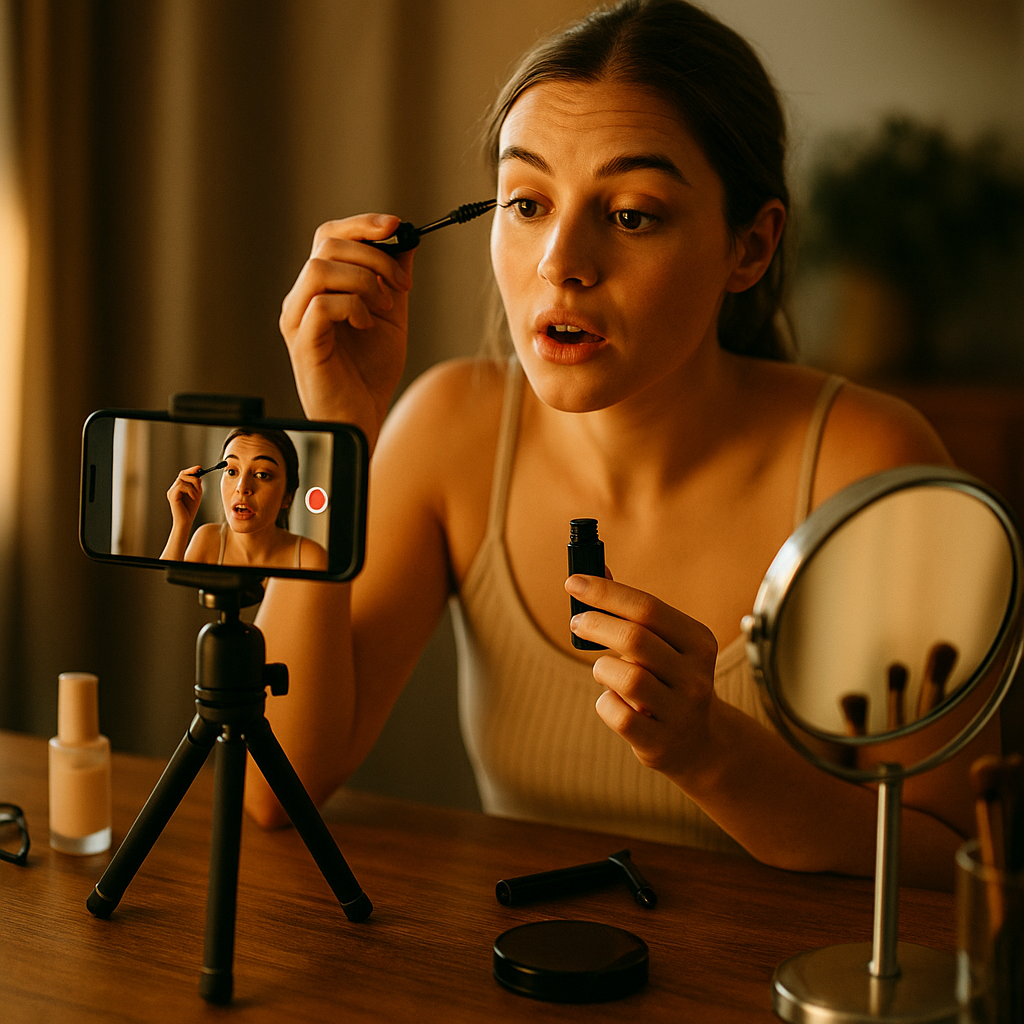
Sixty-one percent of consumers say they can spot a paid GRWM within the first eight seconds, according to creator-economy research circulating this year, and most scroll past the second they do. The GRWM brief isn’t dead. But the version that scripts “and that’s why I love this product” into a bathroom mirror monologue absolutely is. If your GRWM content still reads as an ad read, the brief is the problem, not the format.
Why the Classic GRWM Brief Stopped Working
Get Ready With Me content used to be the easiest sell in influencer marketing. Low production cost, high intimacy, built-in trust from the “just us chatting while I do my makeup” vibe. Brands leaned on it hard between roughly 2019 and 2023. Then audiences got fluent in the format’s tells: the suspiciously smooth pivot to product benefits, the “I’ve been using this for three weeks and honestly” line that shows up in every single sponsored post, the branded packaging placed just so in frame.
Once a format becomes predictable, it stops feeling authentic. That’s not an opinion, it’s a pattern marketers have watched play out across every trust-based format, from testimonials to unboxings. The FTC’s disclosure guidance made “sponsored” language mandatory, which is right and necessary, but it also gave creators a script crutch. Say the magic words, insert the product beat, move on. Audiences learned to tune out that rhythm the same way they learned to skip pre-roll ads.
The moment a sponsored format develops a recognizable cadence, completion rates drop, because the brain pattern-matches “ad” before the message even lands.
What “Reinvented” Actually Means Here
It doesn’t mean disclosure gets softer. It means the product stops being a bullet point in a script and becomes part of the actual decision-making the creator is narrating. Think about how people really talk while getting ready: they’re indecisive, they compare options, they complain about a product that didn’t work last week, they ask their roommate a question off-camera. That mess is the credibility. A reinvented brief protects the mess instead of scripting it out.
Practically, this means writing briefs around narrative beats, not talking points. Instead of “mention the SPF benefit at 0:15,” you write “creator hits a decision point about sun protection while explaining her routine change for the season.” The product becomes the answer to a problem the creator is already voicing, not an interruption to insert.
The Three-Beat Structure That Replaces the Ad Read
Most GRWM content that still works follows a loose three-beat arc, whether the creator realizes it or not:
- The friction beat: something isn’t working, is running low, or needs replacing. This is where believability lives.
- The trial beat: the product shows up as a response to that friction, demonstrated in real use, not described in adjectives.
- The verdict beat: an honest, even mildly critical reaction. “It’s a little pricier than my old one but the finish lasts longer” beats “I’m obsessed” every time.
Brief for the beats, not the copy. Give creators the claims they’re legally allowed to make and the disclosure requirements they must hit, then let them build their own sentences around the friction-trial-verdict arc. This is the same principle covered in our guide to briefing GRWM content that doesn’t sound scripted, and it holds up across categories from beauty to home goods to supplements.
Where Compliance Fits Without Killing the Vibe
Disclosure and authenticity aren’t actually in tension, brands just brief them like they are. The FTC requires clear, unmissable disclosure of material connections, not stilted language. “PR gifted, my honest thoughts” at the top of a video satisfies the requirement and doesn’t break the tone. What kills the vibe is forcing disclosure language into the middle of a sentence where it reads like a legal insert.
Put disclosure at a structural boundary, the open or the caption, and let the narrative beats run clean. Creators who’ve done hundreds of these know the placement that works for their specific audience. Trust that. Review the language, not the delivery. For more on how this plays out in adjacent formats, our piece on reaction videos that stay FTC compliant breaks down disclosure placement in a similarly conversational format, and the FTC’s own guidance is worth bookmarking for your legal team regardless of format.
Scripting Without Sounding Scripted: A Practical Brief Template
Here’s a structure that’s been tested across beauty, wellness, and lifestyle campaigns this year, adaptable to most GRWM use cases:
- Context line: what’s happening today (getting ready for an event, a normal Tuesday, a trip) that gives the routine a reason to exist.
- Friction prompt: a real or plausible problem the creator has had with this category, not necessarily with a competitor by name.
- Product entry point: the moment the product shows up, described as an action (“reaches for,” “swaps in,” “tries instead of”) not a pitch.
- Required claims: the specific, legally cleared statements that must appear verbatim or near-verbatim (ingredient claims, efficacy claims, pricing if applicable).
- Verdict space: explicit permission for the creator to include a caveat, a mixed reaction, or a “we’ll see how it holds up” line.
- Disclosure placement: where the paid partnership language goes, non-negotiable but isolated from the narrative flow.
Notice what’s missing: a script. You’re briefing a shape, not a transcript. Brands that hand creators word-for-word scripts for GRWM content consistently see lower completion rates, because viewers register the stiffness even when they can’t name it. Sprout Social’s ongoing research into content authenticity backs this up: audiences reward specificity and imperfection over polish in creator content, particularly in beauty and lifestyle categories.
What This Looks Like With a Real Product
Say you’re briefing a serum launch. The old brief: “Creator applies serum, mentions hyaluronic acid content, states price, includes discount code, tags brand.” The reinvented brief: “Creator is mid-routine when she reaches for something to address dullness from lack of sleep (context: red-eye flight, big meeting, whatever fits her life). She tries the serum as a new addition, not a replacement for her holy grail. Required claim: contains 2% hyaluronic acid, clinically shown to improve hydration in 4 weeks per brand study. She’s allowed to say it feels different from what she’s used to, good or neutral. Discount code goes in caption only.”
Same claims, same compliance requirements, completely different viewer experience. One reads as copy. The other reads as a person’s actual Tuesday.
Measuring Whether It Worked
Completion rate is your first signal. If viewers drop off at the same timestamp across multiple creators, that’s usually where the ad read kicks in, brief revision needed. Comment sentiment matters more than comment volume here: “wait what serum is that” beats a hundred generic fire emojis. Save rate is a strong secondary signal for GRWM specifically, since routine content gets saved for reference far more than it gets shared.
Compare performance against your other narrative-driven formats. If your day-in-the-life content or confessional testimonial briefs are outperforming GRWM on trust metrics, that’s a signal your GRWM briefs still have too much residual script in them. These formats share DNA, they all live or die on whether the product feels earned rather than inserted.
If completion rate drops sharply at the exact second the product appears on screen, your brief scripted the pitch instead of the problem.
Platform-side data supports this shift too. eMarketer has tracked declining engagement on overtly promotional creator content across the past two years, even as overall influencer spend climbs, which tells you the audience tolerance for polish is shrinking faster than budgets are. HubSpot’s creator marketing benchmarks echo the same trend: unscripted-feeling content converts at meaningfully higher rates in awareness and consideration stages, even when the underlying claims are identical to scripted versions.
A Note on Scale
The obvious objection: this approach is harder to brief at scale than a fill-in-the-blank script. True. But it’s not harder to template, it’s harder to write the first time. Once you’ve built beat-based briefs for one category, they adapt fast across SKUs and creators. Agencies running high-volume GRWM programs are already building beat libraries the same way they used to build script libraries, just with more room for creator voice inside each beat.
FAQs
Frequently Asked Questions
What makes a GRWM brief read as an ad instead of authentic content?
Scripted product benefit language, unnatural pivots to the product, and disclosure language buried mid-sentence are the biggest tells. Audiences pattern-match these cues within seconds, which is why completion rates drop sharply once viewers sense a pitch.
Can a compliant GRWM video still feel unscripted?
Yes. FTC disclosure rules govern where and how you disclose a paid partnership, not the tone of the surrounding content. Placing disclosure at a structural point, like the video open or caption, keeps compliance intact while letting the narrative stay conversational.
How do I brief required claims without sounding like copy?
Give creators the exact legally cleared claim language they must include, then let them build their own sentence structure around it. Briefing the claim as a fact to work into their own words performs better than scripting the full line.
What metrics show whether a GRWM brief is working?
Watch completion rate drop-off points, comment sentiment (specific questions versus generic reactions), and save rate. A steep drop-off at the product reveal timestamp usually signals the brief still reads as promotional.
Does this approach work outside beauty and skincare?
Yes. The friction-trial-verdict structure applies to any category where a creator narrates a routine or decision, including home goods, supplements, tech accessories, and fashion.
Next time you write a GRWM brief, delete every line of dialogue and replace it with a beat. Give the creator the claim, the disclosure requirement, and permission to be honest, then get out of the way.
Top Influencer Marketing Agencies
The leading agencies shaping influencer marketing in 2026
Agencies ranked by campaign performance, client diversity, platform expertise, proven ROI, industry recognition, and client satisfaction. Assessed through verified case studies, reviews, and industry consultations.
Moburst

-
2

The Shelf
Boutique Beauty & Lifestyle Influencer AgencyA data-driven boutique agency specializing exclusively in beauty, wellness, and lifestyle influencer campaigns on Instagram and TikTok. Best for brands already focused on the beauty/personal care space that need curated, aesthetic-driven content.Clients: Pepsi, The Honest Company, Hims, Elf Cosmetics, Pure LeafVisit The Shelf → -
3

Audiencly
Niche Gaming & Esports Influencer AgencyA specialized agency focused exclusively on gaming and esports creators on YouTube, Twitch, and TikTok. Ideal if your campaign is 100% gaming-focused — from game launches to hardware and esports events.Clients: Epic Games, NordVPN, Ubisoft, Wargaming, Tencent GamesVisit Audiencly → -
4

Viral Nation
Global Influencer Marketing & Talent AgencyA dual talent management and marketing agency with proprietary brand safety tools and a global creator network spanning nano-influencers to celebrities across all major platforms.Clients: Meta, Activision Blizzard, Energizer, Aston Martin, WalmartVisit Viral Nation → -
5

The Influencer Marketing Factory
TikTok, Instagram & YouTube CampaignsA full-service agency with strong TikTok expertise, offering end-to-end campaign management from influencer discovery through performance reporting with a focus on platform-native content.Clients: Google, Snapchat, Universal Music, Bumble, YelpVisit TIMF → -
6

NeoReach
Enterprise Analytics & Influencer CampaignsAn enterprise-focused agency combining managed campaigns with a powerful self-service data platform for influencer search, audience analytics, and attribution modeling.Clients: Amazon, Airbnb, Netflix, Honda, The New York TimesVisit NeoReach → -
7

Ubiquitous
Creator-First Marketing PlatformA tech-driven platform combining self-service tools with managed campaign options, emphasizing speed and scalability for brands managing multiple influencer relationships.Clients: Lyft, Disney, Target, American Eagle, NetflixVisit Ubiquitous → -
8

Obviously
Scalable Enterprise Influencer CampaignsA tech-enabled agency built for high-volume campaigns, coordinating hundreds of creators simultaneously with end-to-end logistics, content rights management, and product seeding.Clients: Google, Ulta Beauty, Converse, AmazonVisit Obviously →