


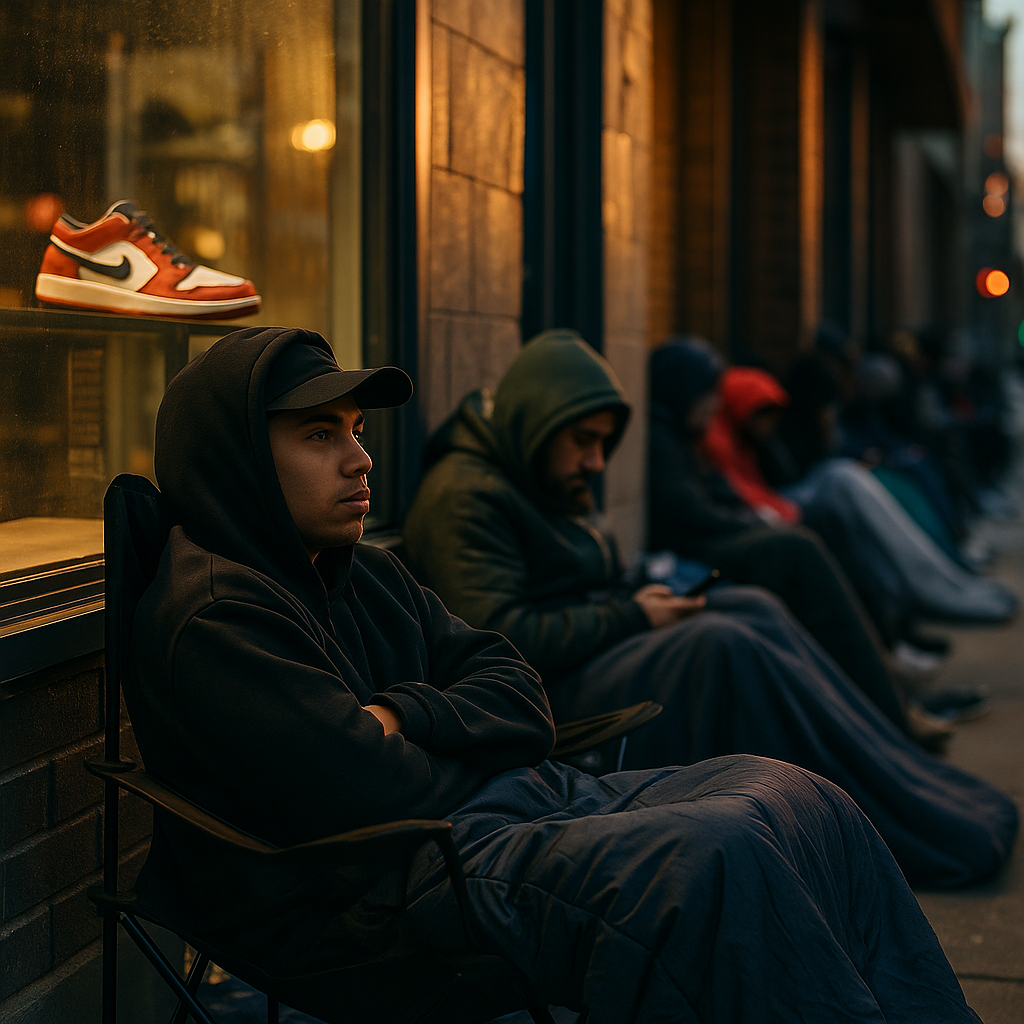
Sneaker resale site StockX estimates that hyped drops can resell for 3-10x retail within hours — but only if the anticipation was real to begin with. That’s the whole premise behind the overnight wait-in-line format: brands directing creators to document the queue, the cold pavement, the countdown clock before a limited drop even opens. It’s raw, it’s unscripted-feeling, and when briefed correctly, it converts better than any polished product shot ever will.
The format isn’t new. Streetwear brands and sneaker resellers have been filming line culture for over a decade. What’s changed is who’s directing it, how it’s distributed, and how brands are measuring its return. In 2026, the overnight wait-in-line format has moved from grassroots documentation to a deliberate briefing category — one that agencies now build into launch calendars alongside paid media and PR.
Why Waiting in Line Still Works When Everything Else Feels Staged
Scarcity sells. That’s marketing 101. But scarcity only sells if the audience believes it’s real, and audiences in 2026 are exceptionally good at smelling manufactured urgency. A countdown timer on a landing page is easy to dismiss. A creator standing outside a store at 4 a.m., wrapped in a blanket, filming the line stretch around the block? That’s harder to fake, and harder to ignore.
The wait-in-line format works because it does something most branded content can’t: it shows time passing. Viewers watch boredom turn into excitement turn into chaos. That arc — the slow build, the payoff — is inherently watchable. It’s the same narrative structure behind countdown drop briefs, just extended into a live, physical space instead of a digital ticker.
Audiences don’t trust hype copy anymore. They trust duration — the visible proof that someone chose to sacrifice sleep for a product, which no ad script can replicate.
There’s also a psychological transfer effect. When a viewer sees a stranger commit hours of discomfort to a drop, it recalibrates their own sense of the product’s value. Nobody waits eight hours for something mediocre. That’s the implicit argument the format makes, without a single word of sales copy.
What Brands Actually Need to Brief
Here’s where most brands get it wrong: they either over-produce the moment (matching hoodies, branded signage, a “surprise” appearance from the founder) or under-brief it entirely, hoping the creator improvises something usable. Neither works well. The format demands a middle path — enough structure to guarantee usable footage, enough looseness to preserve the authenticity that makes it valuable.
A solid brief for this format should specify:
- Arrival window and check-in beats. Ask for footage at set intervals — arrival, midpoint, final hour, doors opening — rather than leaving pacing entirely up to the creator.
- Environmental context. Wide shots of the line length, weather conditions, nearby landmarks. This is what makes the footage verifiable, not staged.
- Conversation prompts, not scripts. Give creators questions to ask fellow line-waiters (“Why this drop? How long have you camped?”) instead of dialogue to recite.
- A clear payoff shot list. Doors opening, first purchase, reaction to sellout — brands need to know what “success” footage looks like before the night starts.
- Disclosure language, agreed in advance. If the creator is compensated or given early access, that needs on-screen or caption disclosure per FTC guidelines.
Skip the shot list and you’ll get either unusable rambling footage or, worse, a creator who leaves after two hours because nobody told them the brand needed the sunrise shot.
Choosing the Right Creator for the Line
Not every creator should be handed this brief. The format rewards people who are comfortable with dead air, small talk with strangers, and filming themselves looking tired and un-glamorous. Beauty and lifestyle creators who rely on constant polish often struggle here — the format actively punishes over-produced energy.
Micro and mid-tier creators tend to outperform mega-influencers in this specific format. Audiences expect celebrities to get early access; watching them “wait in line” reads as performative. A smaller creator genuinely queuing up reads as commitment. This mirrors what’s worked in the micro-vlog commute format — proximity and ordinariness beat production value when the goal is believability.
Look for creators who already document queues, drops, or resale culture organically. Sneaker and collectible niches have an entire subgenre of “line diary” content. Tapping someone who already has that muscle memory saves you a briefing headache and produces better pacing instinctively.
Platform Mechanics: Where This Format Actually Performs
TikTok and Instagram Reels remain the primary home for wait-in-line content, largely because both platforms reward serialized posting. A creator can post an arrival clip at 11 p.m., a midpoint update at 2 a.m., and a payoff clip at 8 a.m. — three separate pieces of content from one overnight commitment, each one re-hooking the algorithm.
Livestreaming adds another layer. Platforms with strong live features let creators broadcast the wait in real time, turning the format into a shared countdown experience for the audience rather than a recap. According to eMarketer, live shopping and live social commerce continue to grow across major platforms, and overnight drop coverage is a natural fit for that format — viewers can watch the line grow, then transition straight into a live purchase moment when doors open.
Don’t ignore YouTube Shorts and long-form recap videos either. A 12-minute “I waited overnight for [drop]” vlog performs well as evergreen search content long after the drop sells out, especially for sneaker, tech, and collectible categories where resale interest sustains search volume for months.
Measuring ROI Beyond Vanity Views
Views are the easy metric. They’re also the least useful one for proving this format’s business value. Brands should be tracking:
- Pre-drop reservation or waitlist signups tied to specific creator posting windows.
- Drop-day conversion rate compared against previous launches without documented anticipation content.
- Resale market signals — if resale listings spike immediately post-drop, that’s a strong proxy for perceived scarcity value.
- Comment sentiment around authenticity. Comments questioning whether the wait was “staged” are a red flag your brief leaned too produced.
- Earned pickup — did local news, aggregator accounts, or other creators reshare the line footage without prompting?
That last metric matters more than most brands realize. Overnight line content has a strong track record of being reshared by third-party hype accounts, which is essentially free distribution that branded content almost never earns.
If nobody outside your paid creator roster reshares the footage, the anticipation probably wasn’t as real as the brief implied.
Compliance and Duty-of-Care Considerations
This format carries operational risk that countdown timers and studio shoots simply don’t. You’re asking someone to be outside, alone or in a group, for six-plus hours, often overnight. Brands and agencies need a real duty-of-care plan, not an afterthought clause in the contract.
At minimum, brief documents should address:
- Safety logistics — lighting, security presence, weather contingencies, and a check-in protocol with the creator’s talent manager or agency contact.
- Compensation structure that accounts for overnight hours, not just a flat content fee.
- Clear disclosure requirements if the brand provided line position, early access, or compensation, consistent with FTC endorsement guidance.
- A backup plan if turnout is low. Sparse lines make for weak content and, if oversold as “chaos,” can trigger authenticity backlash.
Brands that skip this planning tend to find out the hard way — either through a safety incident or through backlash when someone edits together footage exposing gaps between “documented anticipation” and reality. The format’s power depends entirely on trust; a single exposed staging trick undoes a dozen good posts. This is the same trust logic behind formats like the customer-handoff format — audiences reward what they can’t easily fake, and punish brands hard when they try.
Where It Fits in a Broader Launch Strategy
The overnight wait-in-line format shouldn’t operate in isolation. It works best as the emotional peak of a longer anticipation arc that might include teaser content, countdown-style briefs, and creator debate or reaction content once the drop hits. Pair it with structured pre-drop content — like the beat-by-beat pacing used in countdown drop briefs — and you get a full funnel: awareness, anticipation, proof, and payoff, each stage backed by a different content format rather than one overworked asset.
Brands running frequent limited drops (sneakers, collectibles, restocked skincare, gaming hardware) should treat this format as a repeatable module in their creator ops playbook, not a one-off stunt. Build a standard brief template, a pre-vetted list of creators comfortable with overnight logistics, and a safety checklist. Once that infrastructure exists, activating it for the next drop takes days, not weeks.
Frequently Asked Questions
What is the overnight wait-in-line format in influencer marketing?
It’s a content format where brands direct creators to document the hours leading up to a limited product drop, typically by filming themselves waiting in a physical line overnight. The goal is to capture real anticipation as proof of scarcity and demand.
Which brands benefit most from this format?
Brands with genuinely limited inventory and recurring drop cycles benefit most — sneakers, streetwear, collectibles, gaming hardware, and limited-run beauty or food products. It works poorly for products without real scarcity, since audiences quickly sense manufactured urgency.
How many creators should a brand brief for one drop?
Most agencies brief three to eight creators per drop, staggered across different store locations or queue positions, so the resulting content shows breadth rather than one isolated line. This also reduces risk if one creator’s footage underperforms or logistics fall through.
What’s the biggest mistake brands make with this format?
Over-producing the moment — branded signage, matching outfits, scripted dialogue — which undermines the authenticity the format depends on. The second-biggest mistake is under-briefing, leaving creators without a shot list and ending up with unusable footage.
How do you measure success beyond views and likes?
Track pre-drop waitlist signups, drop-day conversion versus past launches, resale market activity, and unprompted reshares from third-party accounts. Comment sentiment around authenticity is also a useful signal for whether the anticipation felt genuine.
What safety and compliance issues should brands plan for?
Overnight logistics carry real duty-of-care risk: lighting, security, weather, and creator check-ins should all be planned in advance. Brands must also ensure any compensation or early-access arrangement is disclosed per FTC endorsement guidelines.
Next step: before your next limited drop, build a standing overnight-format brief template with a shot list, safety checklist, and disclosure language baked in — so the next activation takes days to launch, not weeks.
Frequently Asked Questions
What is the overnight wait-in-line format in influencer marketing?
It’s a content format where brands direct creators to document the hours leading up to a limited product drop, typically by filming themselves waiting in a physical line overnight. The goal is to capture real anticipation as proof of scarcity and demand.
Which brands benefit most from this format?
Brands with genuinely limited inventory and recurring drop cycles benefit most — sneakers, streetwear, collectibles, gaming hardware, and limited-run beauty or food products. It works poorly for products without real scarcity, since audiences quickly sense manufactured urgency.
How many creators should a brand brief for one drop?
Most agencies brief three to eight creators per drop, staggered across different store locations or queue positions, so the resulting content shows breadth rather than one isolated line. This also reduces risk if one creator’s footage underperforms or logistics fall through.
What’s the biggest mistake brands make with this format?
Over-producing the moment — branded signage, matching outfits, scripted dialogue — which undermines the authenticity the format depends on. The second-biggest mistake is under-briefing, leaving creators without a shot list and ending up with unusable footage.
How do you measure success beyond views and likes?
Track pre-drop waitlist signups, drop-day conversion versus past launches, resale market activity, and unprompted reshares from third-party accounts. Comment sentiment around authenticity is also a useful signal for whether the anticipation felt genuine.
What safety and compliance issues should brands plan for?
Overnight logistics carry real duty-of-care risk: lighting, security, weather, and creator check-ins should all be planned in advance. Brands must also ensure any compensation or early-access arrangement is disclosed per FTC endorsement guidelines.
Top Influencer Marketing Agencies
The leading agencies shaping influencer marketing in 2026
Agencies ranked by campaign performance, client diversity, platform expertise, proven ROI, industry recognition, and client satisfaction. Assessed through verified case studies, reviews, and industry consultations.
Moburst

-
2

The Shelf
Boutique Beauty & Lifestyle Influencer AgencyA data-driven boutique agency specializing exclusively in beauty, wellness, and lifestyle influencer campaigns on Instagram and TikTok. Best for brands already focused on the beauty/personal care space that need curated, aesthetic-driven content.Clients: Pepsi, The Honest Company, Hims, Elf Cosmetics, Pure LeafVisit The Shelf → -
3

Audiencly
Niche Gaming & Esports Influencer AgencyA specialized agency focused exclusively on gaming and esports creators on YouTube, Twitch, and TikTok. Ideal if your campaign is 100% gaming-focused — from game launches to hardware and esports events.Clients: Epic Games, NordVPN, Ubisoft, Wargaming, Tencent GamesVisit Audiencly → -
4

Viral Nation
Global Influencer Marketing & Talent AgencyA dual talent management and marketing agency with proprietary brand safety tools and a global creator network spanning nano-influencers to celebrities across all major platforms.Clients: Meta, Activision Blizzard, Energizer, Aston Martin, WalmartVisit Viral Nation → -
5

The Influencer Marketing Factory
TikTok, Instagram & YouTube CampaignsA full-service agency with strong TikTok expertise, offering end-to-end campaign management from influencer discovery through performance reporting with a focus on platform-native content.Clients: Google, Snapchat, Universal Music, Bumble, YelpVisit TIMF → -
6

NeoReach
Enterprise Analytics & Influencer CampaignsAn enterprise-focused agency combining managed campaigns with a powerful self-service data platform for influencer search, audience analytics, and attribution modeling.Clients: Amazon, Airbnb, Netflix, Honda, The New York TimesVisit NeoReach → -
7

Ubiquitous
Creator-First Marketing PlatformA tech-driven platform combining self-service tools with managed campaign options, emphasizing speed and scalability for brands managing multiple influencer relationships.Clients: Lyft, Disney, Target, American Eagle, NetflixVisit Ubiquitous → -
8

Obviously
Scalable Enterprise Influencer CampaignsA tech-enabled agency built for high-volume campaigns, coordinating hundreds of creators simultaneously with end-to-end logistics, content rights management, and product seeding.Clients: Google, Ulta Beauty, Converse, AmazonVisit Obviously →