


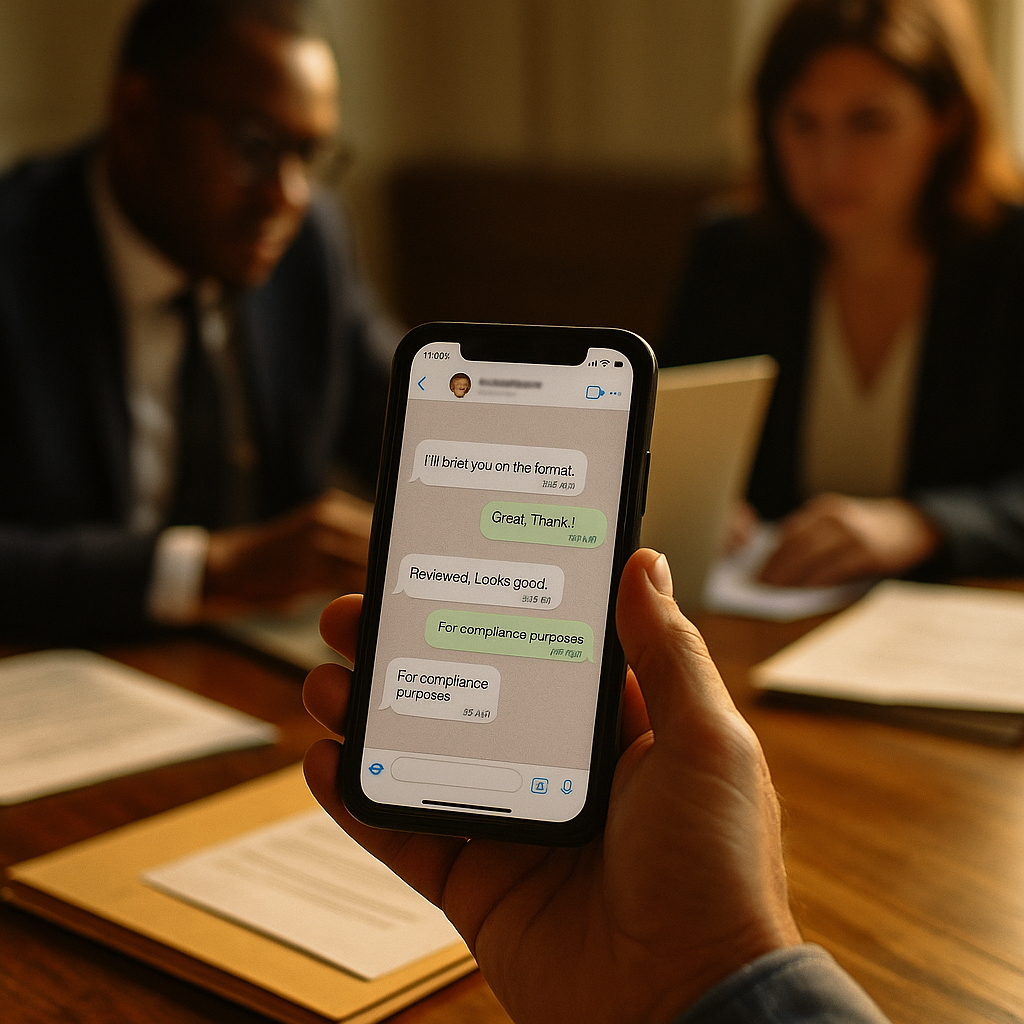
Screenshot a real group chat and you’ll usually find chaos: memes, three unanswered questions, someone asking “did you buy it or not.” That mess is exactly why the group chat screenshot format is converting better than polished testimonials. It looks like proof, not a pitch. Brands that fake the mess badly are getting called out in the comments within hours.
Why This Format Works When Everything Else Feels Like an Ad
Think about the last purchase decision you actually trusted. Odds are it wasn’t a review site or a paid post. It was a friend texting “get this one, don’t get the other one.” The group chat screenshot format recreates that exact moment on purpose, using creators to simulate the peer recommendation that consumers already trust more than branded content.
The mechanics are simple: a creator posts a screenshot (real or staged) of a group chat where friends debate, recommend, or rave about a product. Sometimes it’s paired with a voiceover reacting to the thread. Sometimes it’s just the image with a caption like “sending this to the group chat rn.” Either way, it borrows the credibility of private conversation and puts it in a public feed.
Consumers trust peer recommendations at rates that outperform branded advertising by a wide margin — the group chat format is one of the only ad formats that visually looks like the thing people already trust.
According to eMarketer, trust in influencer content continues to hinge less on follower count and more on perceived authenticity signals. A screenshot format hits that signal directly because it doesn’t perform like an ad. It performs like evidence.
What Makes a Group Chat Screenshot Feel Real (Or Fake)
Here’s the tension every brand strategist needs to sit with: the moment a group chat screenshot looks too clean, it dies. Real group chats have typos. They have someone who takes ten minutes to respond. They have a friend who disagrees before coming around. If your creator brief produces a screenshot where three people enthusiastically agree on the same product with zero friction, audiences will smell the brand deal instantly.
The format’s power comes from imperfection. That’s uncomfortable for brand teams used to reviewing every asset for polish. But over-editing a group chat screenshot is the single fastest way to kill its ROI.
- Include disagreement or hesitation. One friend questioning the price or asking “is this worth it” makes the eventual recommendation land harder.
- Use natural texting cadence. Lowercase, abbreviations, delayed responses — the small stuff sells the format.
- Avoid brand-perfect language. If the copy in the chat bubble sounds like it came from a product page, cut it.
- Keep the thread short. Three to six messages. Long fabricated threads read as scripted.
This same tension shows up in other creator-led authenticity formats. The one-take challenge demo trend works for the same reason: imperfection reads as proof. Polish reads as paid.
Briefing Creators Without Sounding Like a Script Doctor
Most brands get this format wrong at the brief stage. They write dialogue. They hand creators a “sample chat” with lines already filled in, and creators either follow it too literally (killing authenticity) or ignore it entirely (killing brand messaging). Neither outcome serves the campaign.
The better approach: brief the emotional arc, not the exact words.
- Define the trigger. What prompted the chat? A friend asking for a recommendation, a shared frustration, a “what did you end up buying” moment.
- Define the objection. Every good group chat has friction. Brief creators to include at least one skeptical voice.
- Define the resolution. How does the group land on the product? Usually it’s someone sharing a result, a link, or a screenshot of their own order confirmation.
- Leave dialogue to the creator. They know how their audience actually texts. A 45-year-old brand manager writing Gen Z slang is a recipe for cringe.
This mirrors the brief structure used for overheard conversation ads, another format that depends on sounding unscripted while still hitting brand messaging beats. The throughline across both: brief the shape of the conversation, not the transcript.
The Compliance Question Nobody Wants to Ask
Here’s where legal and marketing teams need to actually talk to each other before this format ships. A fabricated group chat screenshot, presented as if it’s a real conversation between friends, without disclosure, is functionally an undisclosed testimonial. The FTC’s endorsement guidance is clear that material connections between brands and creators need disclosure, regardless of format. A screenshot doesn’t get a pass just because it looks like a private message.
This is the same compliance terrain covered in blind taste-test briefs and waiting-room testimonial formats: any format that borrows the visual language of “real life” still needs a disclosure layer that doesn’t kill the format’s authenticity.
Practical fixes that don’t tank performance:
- Add #ad or #partner in the caption, not buried in a hashtag pile.
- Have the creator verbally disclose in a voiceover if one is used (“okay so this brand sent me this and my group chat lost it”).
- Avoid implying the screenshot is a real, unprompted conversation if it was scripted or staged. Frame it as a recreation when asked.
Brands operating in the UK should also check guidance from the ICO around data and messaging privacy expectations, particularly if any screenshot implies real personal data or third-party identities without consent.
Where It Performs Best (And Where It Falls Flat)
This format isn’t universal. It works exceptionally well for:
- Beauty and skincare, where peer recommendation already drives most purchase decisions.
- Low-consideration impulse products under $50, where a friend’s quick “get it” is enough to trigger a purchase.
- Gen Z and younger millennial audiences, who already communicate primarily through group chats and screenshots as social currency.
It performs worse for high-consideration purchases like financial products, B2B software, or anything requiring a longer sales cycle. Nobody’s group chat is debating enterprise CRM software with the same energy as a $28 lip oil. Match the format to purchase psychology, not just platform trends.
It also loses steam fast if overused. Once an audience sees the fifth “OMG my group chat is obsessed” post from the same brand, the format collapses into the same fatigue that killed over-polished testimonials. Rotate it with other trust-driving formats like product swap briefs or gift exchange reaction videos to keep the creative feeling fresh rather than templated.
Measuring It Like an Operator, Not a Vibes Check
The temptation with any “authentic-feeling” format is to lean on qualitative sentiment and skip the hard numbers. Don’t. Treat group chat screenshot content the same way you’d treat any paid creator asset in your funnel.
Track these specifically:
- Save rate, which tends to spike on this format because people screenshot the screenshot to send to their own friends.
- Comment sentiment, watching specifically for “wait is this fake” callouts, which signal the format tipped into inauthenticity.
- Click-through on linked product, benchmarked against your standard UGC baseline.
- Repeat exposure fatigue, measured by declining engagement rate across sequential posts using the same format from the same creator.
Tools like Sprout Social and platform-native analytics from TikTok Ads Manager can isolate save-and-share behavior separately from likes, which is the real signal here. A high like count with low saves means the format looked good but didn’t drive the peer-to-peer forwarding that makes it worth the budget.
Next Step
Brief three creators on the same product using the group chat format, but require one to include visible friction or disagreement in the thread. Compare save rates and comment sentiment against your standard testimonial content before scaling the format across your full creator roster.
FAQs
Is the group chat screenshot format considered a testimonial under FTC rules?
Yes, if it implies a genuine peer recommendation and the brand has a material connection to the creator, it needs clear disclosure regardless of how the content is styled.
Should the screenshot be a real conversation or scripted?
Either works, but scripted content should be briefed around emotional beats rather than exact dialogue, and creators should avoid presenting staged content as an unprompted real exchange.
What products perform best with this format?
Low-consideration, impulse-friendly products like beauty, skincare, snacks, and apparel tend to outperform high-consideration purchases like financial services or enterprise software.
How do I know if the format is losing effectiveness?
Watch for declining save rates, rising “is this fake” comments, and engagement drop-off across repeated posts using the same visual template from the same creator.
Can this format work alongside other creator content styles?
Yes, rotating it with formats like overheard conversation ads or product swap videos prevents audience fatigue and keeps the creative feeling native rather than templated.
FAQPage Schema
Top Influencer Marketing Agencies
The leading agencies shaping influencer marketing in 2026
Agencies ranked by campaign performance, client diversity, platform expertise, proven ROI, industry recognition, and client satisfaction. Assessed through verified case studies, reviews, and industry consultations.
Moburst

-
2

The Shelf
Boutique Beauty & Lifestyle Influencer AgencyA data-driven boutique agency specializing exclusively in beauty, wellness, and lifestyle influencer campaigns on Instagram and TikTok. Best for brands already focused on the beauty/personal care space that need curated, aesthetic-driven content.Clients: Pepsi, The Honest Company, Hims, Elf Cosmetics, Pure LeafVisit The Shelf → -
3

Audiencly
Niche Gaming & Esports Influencer AgencyA specialized agency focused exclusively on gaming and esports creators on YouTube, Twitch, and TikTok. Ideal if your campaign is 100% gaming-focused — from game launches to hardware and esports events.Clients: Epic Games, NordVPN, Ubisoft, Wargaming, Tencent GamesVisit Audiencly → -
4

Viral Nation
Global Influencer Marketing & Talent AgencyA dual talent management and marketing agency with proprietary brand safety tools and a global creator network spanning nano-influencers to celebrities across all major platforms.Clients: Meta, Activision Blizzard, Energizer, Aston Martin, WalmartVisit Viral Nation → -
5

The Influencer Marketing Factory
TikTok, Instagram & YouTube CampaignsA full-service agency with strong TikTok expertise, offering end-to-end campaign management from influencer discovery through performance reporting with a focus on platform-native content.Clients: Google, Snapchat, Universal Music, Bumble, YelpVisit TIMF → -
6

NeoReach
Enterprise Analytics & Influencer CampaignsAn enterprise-focused agency combining managed campaigns with a powerful self-service data platform for influencer search, audience analytics, and attribution modeling.Clients: Amazon, Airbnb, Netflix, Honda, The New York TimesVisit NeoReach → -
7

Ubiquitous
Creator-First Marketing PlatformA tech-driven platform combining self-service tools with managed campaign options, emphasizing speed and scalability for brands managing multiple influencer relationships.Clients: Lyft, Disney, Target, American Eagle, NetflixVisit Ubiquitous → -
8

Obviously
Scalable Enterprise Influencer CampaignsA tech-enabled agency built for high-volume campaigns, coordinating hundreds of creators simultaneously with end-to-end logistics, content rights management, and product seeding.Clients: Google, Ulta Beauty, Converse, AmazonVisit Obviously →