


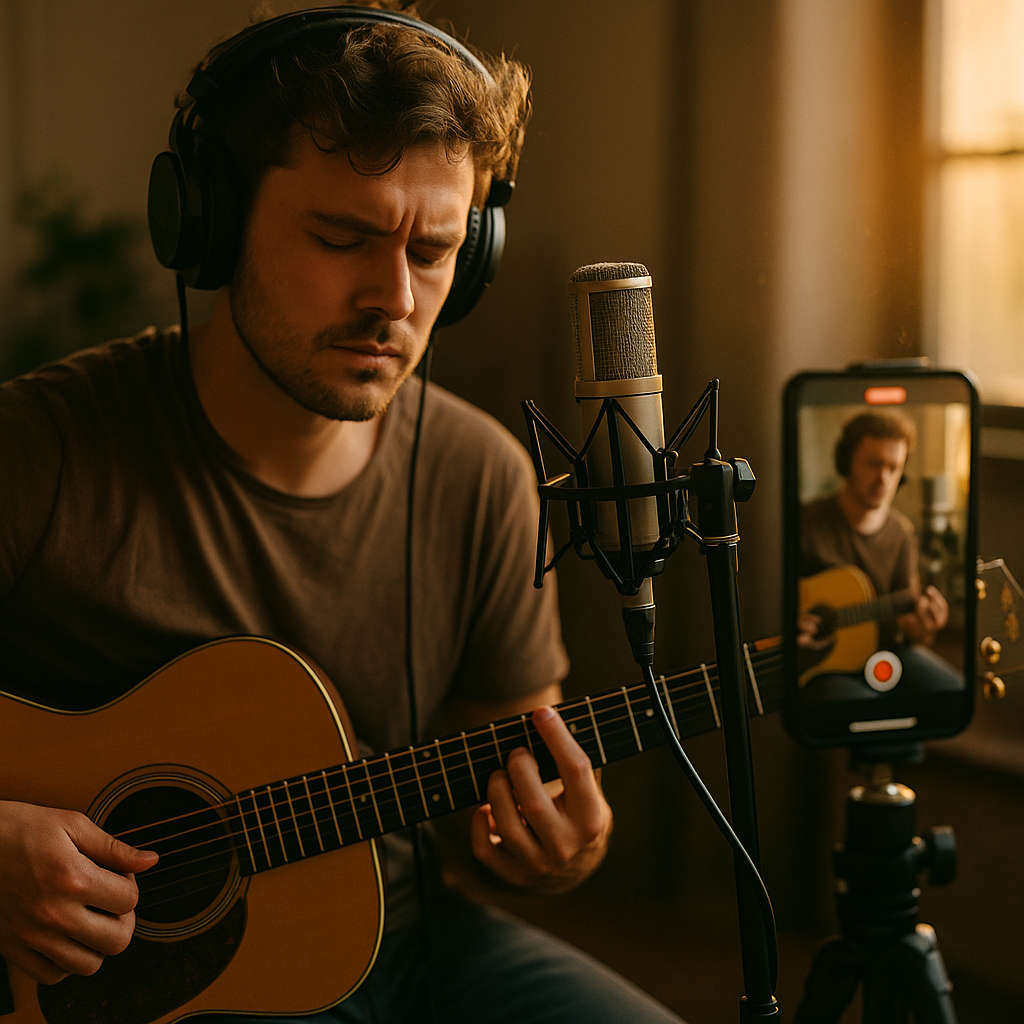
Skip rates on polished vertical ads are climbing past 45% on some platforms, according to recent eMarketer creative benchmarks. Meanwhile, single-take, unedited demos are quietly outperforming their heavily cut counterparts on watch-through and comment engagement. The one-take challenge format isn’t a gimmick. It’s a deliberate constraint that forces creators to prove a product works in real time, no editing safety net included.
Why Cuts Are Killing Trust
Every jump cut is an opportunity for a viewer to wonder what got trimmed. Did the sunscreen actually blend that fast? Did the stain really disappear, or did someone swap the shirt off-camera? Audiences raised on decade of filtered content have developed a reflexive skepticism toward anything that looks too clean. A 2024 Sprout Social consumer report found that authenticity now outranks production quality as the top driver of trust in branded content, and that gap has only widened since.
The one-take format removes the ambiguity. No cutaways, no b-roll insert, no “after 3 uses” text overlay hiding a week of retouching. The camera rolls, the creator talks, the product does (or doesn’t) do what it claims. That single unbroken shot becomes the receipt.
An unedited take isn’t just a stylistic choice — it functions as implicit proof, signaling to viewers that nothing was hidden between frames.
What Exactly Is a One-Take Challenge?
The format is simple on paper: a creator films a product demo start to finish in a single continuous shot, no cuts, no splices, ideally no visible editing at all. Some brands add a “challenge” layer — a timer, a difficulty constraint, a live reaction requirement — to sharpen the stakes and make the format shareable beyond the initial audience.
Think of a kitchen gadget brand asking a creator to chop, blend, and plate a dish in one take under five minutes. Or a skincare brand having a creator apply and remove makeup live to show a cleansing balm’s actual performance. The demo lives or dies in real time. That’s the point.
- Continuous shot requirement: no hidden cuts disguised as camera angle changes.
- Visible timestamp or timer: optional but useful for credibility, especially with productivity or speed claims.
- Natural imperfection: fumbles, pauses, and real reactions stay in. Editing them out defeats the format.
- Clear disclosure: paid partnership tags still apply, per FTC endorsement guidelines, regardless of how “raw” the footage looks.
The ROI Case, Not Just the Vibes Case
Brand marketers don’t greenlight formats on vibes alone, and they shouldn’t here either. The measurable case for one-take demos comes down to three things: completion rate, comment sentiment, and cost-per-acquisition on retargeted audiences who’ve already seen the raw version.
Unedited content tends to hold attention longer because viewers are waiting to see if something goes wrong. That tension is free engagement. It also tends to generate comment threads litigated around authenticity — “did she really not cut that?” — which functions as organic social proof you can’t buy with a media budget.
From a production standpoint, one-take formats are also cheaper. No editor, no multi-angle setup, sometimes no reshoot budget at all if the brief is tight enough that the first or second take works. That’s a real line-item savings for brands running high-volume creator programs where editing costs stack up fast across dozens of deliverables.
Briefing It Without Killing the Authenticity
Here’s the tension every brand strategist has to manage: you need enough direction to protect the brand and the claim, but not so much that the creator’s performance feels scripted. A stilted, over-rehearsed one-take demo reads worse than a jump-cut ad, because the whole premise of the format is spontaneity.
The brief should specify the outcome, not the delivery. Tell the creator what the demo needs to prove — speed, ease of use, taste, texture, results — and let them find their own words. Give them creative latitude on framing and location. Lock down only what’s legally or factually necessary: accurate product claims, required disclosures, and any safety notes if the demo involves food, tools, or skin contact.
This is similar in spirit to the discipline brands use in blind taste-test briefs, where the format’s credibility depends on genuinely unscripted reactions. The brief constrains structure, not honesty.
Where One-Take Demos Can Go Wrong
Not every product fits this format, and pretending otherwise is how brands end up with a viral fail for the wrong reasons. A few failure patterns worth flagging before you greenlike a campaign:
- Products with variable performance: if the result depends heavily on skin type, hair texture, or environmental conditions, a single take from one creator risks overpromising universally.
- Complex multi-step products: a skincare routine with a 20-minute wait between steps doesn’t compress into one honest take without editing tricks, which defeats the format’s premise.
- Creators who over-rehearse: some creators, trying to protect the brand, will run the demo five times off-camera until it’s flawless, then film a “first take” that isn’t. That’s not authenticity, that’s theater with extra steps.
- No fallback plan: if the one take genuinely fails on camera, does the brand have a protocol? Reshoot, reframe as a “what we learned” post, or scrap it? Decide before filming day, not after.
The format only works if failure is an acceptable outcome. If your legal and brand teams can’t tolerate an imperfect take reaching an audience, don’t run this challenge.
Setting Creators Up to Succeed on Camera
Directing a no-cuts demo is a different skill than directing a traditional ad. The creator needs to internalize the demo sequence well enough to narrate it naturally, without a script crutch, while also handling whatever the product throws at them. That takes rehearsal, just not the kind that ends up on camera.
Smart brands run a “dry run” the creator doesn’t publish: same steps, same product, off-camera, purely to build muscle memory. Then the actual filmed take captures genuine familiarity without genuine repetition-induced flatness. It’s a subtle distinction, but it’s the difference between a demo that feels alive and one that feels like a rehearsed monologue wearing a raw-footage costume.
Lighting and audio still matter, even in an unedited format. A one-take demo shot in bad light with muffled audio just looks like a bad video, not an authentic one. Brands should brief basic technical minimums (natural light, external mic if available, stable framing) without dictating shot composition down to the degree that it starts to feel like a storyboard.
This tension between raw and polished isn’t new. It echoes the balance brands strike in studio-to-street formats, where credibility and production value have to coexist rather than compete.
Measuring What Actually Matters
Standard creative KPIs apply, but weight them differently for this format. Watch-through rate matters more than usual, since the entire value proposition is “stick around to see if it works.” Comment sentiment analysis matters more than click-through, because the discourse around authenticity is often where the real brand lift happens.
Track duet and stitch volume too, if the platform supports it. One-take challenges are inherently remixable: other creators love reacting to, replicating, or debunking a claim shown in real time. That secondary wave of content is often bigger than the original post, and it’s where a lot of unpaid organic reach comes from. Platforms like TikTok and Instagram Reels both reward this kind of derivative engagement in their distribution algorithms, per public guidance from Meta for Business.
Compare this against a control group of edited demo content running the same product claim. If the one-take version isn’t outperforming on completion rate or sentiment, the format isn’t the right fit for that product, and no amount of creative direction will fix that.
Compliance Still Applies, Raw Footage or Not
It’s tempting to treat unedited content as lower-risk from a legal standpoint, since nothing was manipulated. That’s a mistake. Disclosure requirements under FTC guidance apply regardless of production style, and unscripted claims made live on camera can actually be riskier if a creator improvises a statement that oversteps approved product claims.
Brief creators clearly on what they can and can’t say about efficacy, especially in regulated categories like beauty, supplements, or health tech. A spontaneous “this literally cured my eczema” comment during an authentic one-take demo is still a claim the brand is on the hook for. Build a short list of approved language around results, and make sure creators know the boundary before the camera starts rolling, not after a moment goes viral for the wrong reason.
This is the same discipline applied in ingredient deep-dive videos, where authority and accuracy have to coexist without slowing down the creator’s natural delivery.
FAQs
Frequently Asked Questions
What makes the one-take challenge format different from a standard UGC demo?
The core difference is the absence of edits. A standard UGC demo can include cuts, retakes spliced together, or b-roll that smooths over weak moments. A one-take format requires a single continuous shot, which removes the ability to hide gaps or manipulate pacing, making the demo function as its own proof.
Is the one-take format suitable for every product category?
No. It works best for products with fast, visible, single-session results, like food, cleaning products, or quick-use gadgets. Products requiring long wait times, multi-day results, or highly variable individual outcomes are harder to demo honestly in one continuous take without misleading viewers.
How do brands protect against a demo failing on camera?
Set expectations in advance. Decide whether a failed take gets reshot, reframed as an honest “here’s what happened” post, or scrapped entirely. Brands that can’t tolerate an imperfect outcome reaching an audience shouldn’t run this format, since the entire premise depends on real, unedited risk.
Do FTC disclosure rules still apply to unedited creator content?
Yes. Disclosure obligations under FTC guidance apply regardless of whether content is edited or raw. Creators still need clear, conspicuous paid partnership disclosures, and any claims made live on camera must stay within approved product language to avoid regulatory or legal exposure.
What metrics best measure a one-take demo’s performance?
Watch-through rate and comment sentiment tend to matter more than click-through for this format, since the value proposition is built around suspense and credibility. Duet, stitch, and remix volume are also strong indicators, as one-take content often generates a secondary wave of organic reactive content.
Next step: before greenlighting a one-take challenge, run a small pilot with two or three creators, compare completion and sentiment data against your existing edited-demo benchmark, and only scale the format for products that hold up to real-time, no-safety-net scrutiny.
Top Influencer Marketing Agencies
The leading agencies shaping influencer marketing in 2026
Agencies ranked by campaign performance, client diversity, platform expertise, proven ROI, industry recognition, and client satisfaction. Assessed through verified case studies, reviews, and industry consultations.
Moburst

-
2

The Shelf
Boutique Beauty & Lifestyle Influencer AgencyA data-driven boutique agency specializing exclusively in beauty, wellness, and lifestyle influencer campaigns on Instagram and TikTok. Best for brands already focused on the beauty/personal care space that need curated, aesthetic-driven content.Clients: Pepsi, The Honest Company, Hims, Elf Cosmetics, Pure LeafVisit The Shelf → -
3

Audiencly
Niche Gaming & Esports Influencer AgencyA specialized agency focused exclusively on gaming and esports creators on YouTube, Twitch, and TikTok. Ideal if your campaign is 100% gaming-focused — from game launches to hardware and esports events.Clients: Epic Games, NordVPN, Ubisoft, Wargaming, Tencent GamesVisit Audiencly → -
4

Viral Nation
Global Influencer Marketing & Talent AgencyA dual talent management and marketing agency with proprietary brand safety tools and a global creator network spanning nano-influencers to celebrities across all major platforms.Clients: Meta, Activision Blizzard, Energizer, Aston Martin, WalmartVisit Viral Nation → -
5

The Influencer Marketing Factory
TikTok, Instagram & YouTube CampaignsA full-service agency with strong TikTok expertise, offering end-to-end campaign management from influencer discovery through performance reporting with a focus on platform-native content.Clients: Google, Snapchat, Universal Music, Bumble, YelpVisit TIMF → -
6

NeoReach
Enterprise Analytics & Influencer CampaignsAn enterprise-focused agency combining managed campaigns with a powerful self-service data platform for influencer search, audience analytics, and attribution modeling.Clients: Amazon, Airbnb, Netflix, Honda, The New York TimesVisit NeoReach → -
7

Ubiquitous
Creator-First Marketing PlatformA tech-driven platform combining self-service tools with managed campaign options, emphasizing speed and scalability for brands managing multiple influencer relationships.Clients: Lyft, Disney, Target, American Eagle, NetflixVisit Ubiquitous → -
8

Obviously
Scalable Enterprise Influencer CampaignsA tech-enabled agency built for high-volume campaigns, coordinating hundreds of creators simultaneously with end-to-end logistics, content rights management, and product seeding.Clients: Google, Ulta Beauty, Converse, AmazonVisit Obviously →