


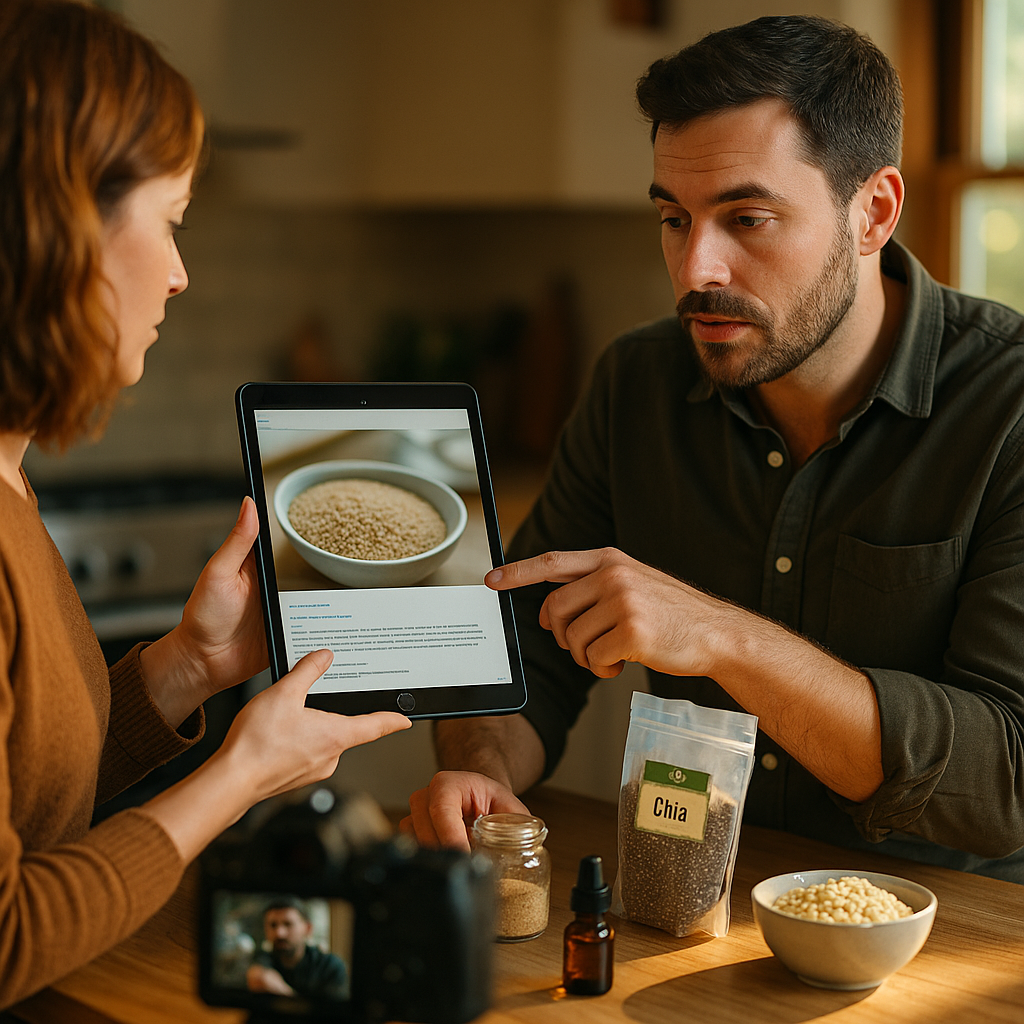
Search interest in ingredient-specific terms — “niacinamide before or after retinol,” “what is hyaluronic acid actually doing” — has quietly outgrown branded product searches on YouTube and TikTok. Brands still briefing broad “tell them why our product is great” videos are leaving that demand on the table. The ingredient deep-dive format fixes this by directing creators to own one component, one claim, one explainer at a time.
This isn’t a repackaged tutorial or a myth-busting video wearing a lab coat. It’s a distinct content architecture, and getting the brief right determines whether a creator becomes a category authority or just another face reading a spec sheet.
Why Single-Component Content Outperforms Full-Product Reviews
Full-product reviews compete against every other product review. An ingredient explainer competes against almost nothing, because most brands never bother making one.
Think about it from a discovery standpoint. Someone searching “retinol vs bakuchiol” isn’t ready to buy your serum yet. They’re building a mental model of the category. Whoever answers that question with clarity and credibility gets remembered when the purchase decision actually happens. That’s the entire premise behind ingredient-led content: you’re not selling a formula, you’re teaching the category, and your product happens to be the applied example.
Brands that consistently show up in “how does X ingredient work” searches build a trust asset that outlasts any single product cycle — because the content stays relevant even after the SKU changes.
This matters more in categories where regulatory scrutiny is high: skincare, supplements, functional food and beverage, pet nutrition. Consumers in these categories are actively skeptical of brand claims. An education-first content approach tends to convert better precisely because it doesn’t feel like a pitch.
What the Format Actually Looks Like
Structurally, an ingredient deep-dive has four beats, and creators need to hit all four or the video collapses into vague enthusiasm:
- The claim: what does this ingredient supposedly do, stated plainly, no hedging.
- The mechanism: how it actually works, in language a non-expert can follow.
- The caveat: where the claim breaks down, who it doesn’t work for, what dosage or concentration matters.
- The application: how this shows up in a real product, ideally yours, but framed as one example among options.
Skip the caveat and you’ve made an ad. Skip the mechanism and you’ve made a testimonial. The format only works when all four beats are present, in that order.
Compare this to adjacent formats your team may already run. It shares DNA with myth-busting creator videos, but myth-busting starts from a false claim and corrects it. Ingredient deep-dives start from a real component and explain it — no defensive posture required. It also overlaps with expert takeover content, since credentialed voices (dermatologists, RDs, chemists) often anchor the explainer. But you don’t need a licensed expert for every video. A well-briefed creator with strong research habits can carry a mid-funnel ingredient explainer just fine.
Briefing for Authority, Not Just Compliance
Most briefs for this format fail in one of two directions: too clinical, or too promotional. Neither builds authority.
Too clinical means the creator reads like a textbook and loses the viewer at second twelve. Too promotional means every mechanism explanation somehow concludes “and that’s why our product is the best.” Viewers can smell that from a mile away, and it undermines the exact trust you’re trying to build.
Here’s what an effective ingredient deep-dive brief should specify:
- Source requirements: require creators to cite where their information comes from — a study, a formulation chemist, an ingredient supplier’s technical sheet. Vague “I read somewhere” framing kills credibility instantly.
- Concentration and dosage specificity: “vitamin C is good for your skin” is useless. “L-ascorbic acid needs to be formulated below pH 3.5 to penetrate effectively” is a video people save and share.
- A stated limitation: every ingredient has a population it doesn’t work well for, or a condition under which it underperforms. Require the creator to name it.
- Product mention placement: push the branded application to the final third of the video, not the opening hook.
- Disclosure language: standard paid partnership disclosure still applies per FTC endorsement guidance, even when the content reads as educational.
That last point trips up more legal and compliance teams than you’d expect. Educational framing doesn’t exempt a paid ingredient explainer from disclosure requirements. If money or product changed hands, the disclosure rules linked in FTC-compliant before-and-after briefs apply here too — the content type doesn’t change the obligation.
Choosing the Right Creator for the Ingredient, Not Just the Niche
Follower count is the wrong first filter for this format. What you actually need is a creator with demonstrated comfort translating technical information into plain language — check their existing catalog for evidence of this before you ever discuss a brief.
A beauty creator who’s done five “what does this acid actually do” videos already understands pacing, sourcing, and how to avoid sounding like a pharma rep. A creator who’s only done GRWM and haul content might struggle with the mechanism beat, even if their engagement rate is excellent elsewhere. This is a case where demonstrated format fluency matters more than raw reach.
Nano and micro creators with a tight niche focus — a registered dietitian with 40K followers, a cosmetic chemist with 60K — often outperform larger generalist creators on this specific format. Their audience already trusts them for exactly this kind of content, and audience trust signals tend to correlate more strongly with completion rate than follower count does.
Sequencing: The Series Beats the One-Off
A single ingredient video is a nice asset. A series is a content moat.
Brands that treat ingredient deep-dives as an ongoing series — one component per episode, consistent structure, recognizable intro — start ranking for a cluster of related search terms instead of one. If your product has six active ingredients, that’s six videos minimum, and each one reinforces the others. Someone who watched your niacinamide explainer is a warm audience for your ceramide explainer three weeks later.
This sequencing logic mirrors what works in countdown and launch sequence briefs — momentum compounds when the format stays consistent and the release cadence is predictable. Viewers start to anticipate the next installment, which is a very different relationship than the one-off ad-read model most brands default to.
A practical cadence: one ingredient explainer every two to three weeks, cross-posted to YouTube Shorts, TikTok, and Instagram Reels with platform-native pacing adjustments. Keep the visual template — lower thirds, source citation card, product reveal — identical across the series so viewers recognize it as a franchise, not a one-off collab.
Measuring What Actually Matters Here
Standard engagement metrics undersell this format. Ingredient deep-dives are built for a longer measurement window than a typical campaign post.
Track these instead of just views and likes:
- Save rate: educational content gets saved for reference far more than promotional content. A strong save rate is your clearest signal of perceived authority.
- Search lift: monitor branded search volume for the specific ingredient term in the weeks following publication. This is where search behavior data becomes useful for attributing mid-funnel impact.
- Comment sentiment quality: are people asking follow-up questions about the ingredient, or just posting emoji reactions? Question-asking comments indicate genuine engagement with the education, not passive scrolling.
- Watch-through on the caveat section: if viewers drop off right when you introduce the limitation, your caveat is either too long or poorly placed.
Views-per-dollar is the wrong lens for this format entirely. You’re not buying reach, you’re buying a durable piece of category infrastructure that keeps generating search traffic and trust long after the campaign budget is spent.
Where This Format Breaks
It doesn’t work for every category. If your product’s core ingredient is a proprietary blend you can’t fully disclose, the format falls apart at the mechanism beat — you can’t explain what you’re legally not allowed to detail. It also underperforms in categories where purchase decisions are driven by emotion or aesthetics rather than function (fragrance, for instance, resists this kind of technical breakdown).
And it requires patience from stakeholders used to campaign-length thinking. A three-video ingredient series won’t move a quarterly sales number the way a discount-code push will. It moves search rankings, brand recall, and consideration — slower metrics, real ones.
Start with your single best-performing, most defensible ingredient claim, brief one creator against the four-beat structure above, and measure save rate and search lift over six weeks before scaling to a full series.
FAQs
What makes an ingredient deep-dive different from a product review?
A product review evaluates the whole formula and the buying decision. An ingredient deep-dive isolates one component, explains its mechanism and limitations, and only mentions the product as an applied example near the end. The intent is category education, not immediate conversion.
Do creators need scientific credentials to make these videos?
Not necessarily. A well-briefed creator with strong research habits and clear sourcing can carry this format. Credentialed experts add authority for highly technical claims, but the brief’s requirement for cited sources matters more than the creator’s title.
How do FTC disclosure rules apply to educational-style content?
Disclosure requirements apply based on whether compensation or free product was exchanged, not on how educational the content feels. Paid ingredient explainers still need clear, upfront disclosure per FTC endorsement guidelines.
How long should an ingredient deep-dive video run?
Most effective versions run 45 to 90 seconds for short-form platforms, long enough to cover claim, mechanism, and caveat without losing the viewer. Long-form YouTube versions can extend to three or four minutes if the topic warrants deeper explanation.
What’s the biggest mistake brands make when briefing this format?
Skipping the caveat. Briefs that only ask creators to explain benefits, without requiring a stated limitation or edge case, produce content that reads as promotional rather than educational, which undercuts the trust the format is designed to build.
FAQs
What makes an ingredient deep-dive different from a product review?
A product review evaluates the whole formula and the buying decision. An ingredient deep-dive isolates one component, explains its mechanism and limitations, and only mentions the product as an applied example near the end. The intent is category education, not immediate conversion.
Do creators need scientific credentials to make these videos?
Not necessarily. A well-briefed creator with strong research habits and clear sourcing can carry this format. Credentialed experts add authority for highly technical claims, but the brief’s requirement for cited sources matters more than the creator’s title.
How do FTC disclosure rules apply to educational-style content?
Disclosure requirements apply based on whether compensation or free product was exchanged, not on how educational the content feels. Paid ingredient explainers still need clear, upfront disclosure per FTC endorsement guidelines.
How long should an ingredient deep-dive video run?
Most effective versions run 45 to 90 seconds for short-form platforms, long enough to cover claim, mechanism, and caveat without losing the viewer. Long-form YouTube versions can extend to three or four minutes if the topic warrants deeper explanation.
What’s the biggest mistake brands make when briefing this format?
Skipping the caveat. Briefs that only ask creators to explain benefits, without requiring a stated limitation or edge case, produce content that reads as promotional rather than educational, which undercuts the trust the format is designed to build.
Top Influencer Marketing Agencies
The leading agencies shaping influencer marketing in 2026
Agencies ranked by campaign performance, client diversity, platform expertise, proven ROI, industry recognition, and client satisfaction. Assessed through verified case studies, reviews, and industry consultations.
Moburst

-
2

The Shelf
Boutique Beauty & Lifestyle Influencer AgencyA data-driven boutique agency specializing exclusively in beauty, wellness, and lifestyle influencer campaigns on Instagram and TikTok. Best for brands already focused on the beauty/personal care space that need curated, aesthetic-driven content.Clients: Pepsi, The Honest Company, Hims, Elf Cosmetics, Pure LeafVisit The Shelf → -
3

Audiencly
Niche Gaming & Esports Influencer AgencyA specialized agency focused exclusively on gaming and esports creators on YouTube, Twitch, and TikTok. Ideal if your campaign is 100% gaming-focused — from game launches to hardware and esports events.Clients: Epic Games, NordVPN, Ubisoft, Wargaming, Tencent GamesVisit Audiencly → -
4

Viral Nation
Global Influencer Marketing & Talent AgencyA dual talent management and marketing agency with proprietary brand safety tools and a global creator network spanning nano-influencers to celebrities across all major platforms.Clients: Meta, Activision Blizzard, Energizer, Aston Martin, WalmartVisit Viral Nation → -
5

The Influencer Marketing Factory
TikTok, Instagram & YouTube CampaignsA full-service agency with strong TikTok expertise, offering end-to-end campaign management from influencer discovery through performance reporting with a focus on platform-native content.Clients: Google, Snapchat, Universal Music, Bumble, YelpVisit TIMF → -
6

NeoReach
Enterprise Analytics & Influencer CampaignsAn enterprise-focused agency combining managed campaigns with a powerful self-service data platform for influencer search, audience analytics, and attribution modeling.Clients: Amazon, Airbnb, Netflix, Honda, The New York TimesVisit NeoReach → -
7

Ubiquitous
Creator-First Marketing PlatformA tech-driven platform combining self-service tools with managed campaign options, emphasizing speed and scalability for brands managing multiple influencer relationships.Clients: Lyft, Disney, Target, American Eagle, NetflixVisit Ubiquitous → -
8

Obviously
Scalable Enterprise Influencer CampaignsA tech-enabled agency built for high-volume campaigns, coordinating hundreds of creators simultaneously with end-to-end logistics, content rights management, and product seeding.Clients: Google, Ulta Beauty, Converse, AmazonVisit Obviously →