


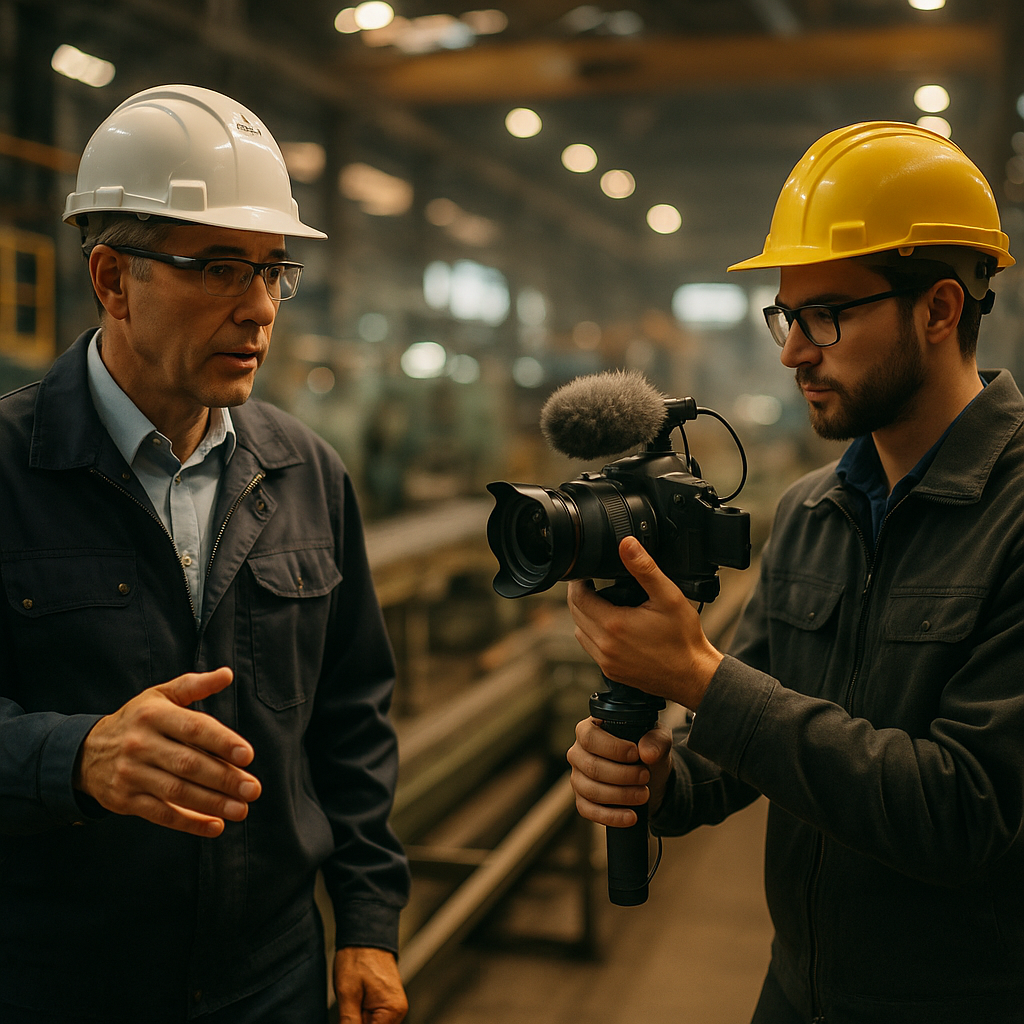
Consumers now assume every product claim is padded. A 2024 Edelman Trust Barometer report found only 62% of consumers trust brands to be honest about how products are made. So what actually rebuilds that trust? Showing them. The factory floor walkthrough format hands creators a camera and lets them document real production lines, not staged B-roll. Done right, it’s the single most persuasive content type most brands aren’t using yet.
Why Factory Content Outperforms Polished Ads
Polished manufacturing videos feel like propaganda. Shaky, creator-led walkthroughs feel like proof. That distinction matters more than most brand teams want to admit.
When a creator walks the line with a phone camera, asks an unscripted question to a floor supervisor, and reacts genuinely to a machine stamping out parts, viewers read it as verification. It’s the visual equivalent of a background check. Brands spend millions trying to manufacture (pun intended) this kind of authenticity through studio shoots. Turns out you can’t fake a factory tour. You just have to let someone film one.
A staged commercial tells consumers what to believe. A creator-led factory walkthrough lets them decide for themselves — and that shift in agency is what actually builds trust at scale.
This isn’t new thinking, exactly. It’s the same instinct behind time-lapse process videos and ingredient deep-dive videos that have quietly outperformed traditional ad creative on watch time. Factory walkthroughs just take it further, from raw material to finished product, with real workers in frame.
What Makes a Walkthrough Brief Different From a Standard Shoot Brief
Most influencer briefs are built around a product and a message. A factory walkthrough brief is built around a location, a sequence, and a legal checklist. That’s a different animal entirely.
Your brief needs to answer, before the creator ever shows up:
- Which stations can be filmed? Some equipment, proprietary processes, or safety zones may be off-limits. Map this out with operations before scheduling, not during.
- Who signs releases? Any employee appearing on camera needs a signed release. Get legal or HR involved early; this is the step brands most often skip and most often regret.
- What’s the narrative arc? Raw material intake, assembly, quality control, packaging, shipping. Give the creator a loose sequence, not a rigid shot list.
- What questions should they ask? The best moments in these videos come from creators asking things a curious customer would ask — “why is this station manual and not automated?” — not reciting brand talking points.
Think of your brief as a permission structure, not a script. You’re telling the creator where they can point the camera and what boundaries exist. Everything inside those boundaries should stay unscripted.
The Access Problem Nobody Talks About
Here’s the uncomfortable truth: most brands can’t actually do this format well, because most brands don’t want cameras on their factory floor. That reluctance is worth interrogating. If your production process can’t survive a creator walking through it with a phone, that’s not a content problem. That’s an operations problem.
Brands that do this well — think mattress manufacturers, sneaker brands, food producers — treat factory access as a competitive advantage, not a liability. They’ve decided transparency is the product story. Everyone else is still hiding behind stock footage of assembly lines that aren’t even theirs.
Directing Without Scripting: The Core Skill
Directing a factory walkthrough is less about dialogue and more about pacing and access sequencing. You’re choreographing where the creator walks and when they pause, not what they say.
A few directing principles that consistently work:
- Start with the mess, not the polish. Raw materials, warehouse pallets, unfinished units. Viewers trust brands more when the video doesn’t open on a spotless shot.
- Let workers talk. A floor employee explaining their job in their own words outperforms any brand-scripted VO. Train a handful of employees on basic soundbite delivery, but don’t script them word-for-word.
- Build in one “imperfection” moment. A machine jam, a QC reject, a slower-than-expected step. Showing the process isn’t flawless is what makes the rest of the footage believable.
- End on distribution, not product. Closing on the shipping dock or the truck pulling away reinforces that this is a real operation moving real volume, not a one-off demo staged for the camera.
This directing style borrows heavily from the discipline used in silent vlog briefs, where the environment does the talking instead of a script. The factory floor is your set. Let it perform.
Compliance Isn’t Optional Here — It’s the Whole Point
Transparency content lives or dies on credibility, and credibility means disclosure done right. The FTC’s endorsement guidance applies fully to sponsored factory content, even when the creator isn’t making a direct product claim. If the brand paid for access, flights, or a fee, that’s a material connection. Disclose it, clearly, in the first few seconds.
There’s a second compliance layer most teams miss: worker privacy and safety documentation. If you’re filming in the EU or UK, employee likeness and data protections intersect with content you’re posting publicly. The ICO’s guidance on workplace filming is worth a legal review before you schedule the shoot, not after footage is already cut.
A transparency video that skips disclosure isn’t transparent. It’s just a well-lit ad wearing a trust costume.
This is the same compliance logic that governs before-and-after briefs and split-screen reaction videos: the format only works long-term if the disclosure is baked in, not bolted on.
Scaling It Across Multiple Creators Without Losing Consistency
One creator, one factory walkthrough, one viral moment — that’s a nice case study. It’s not a program. Scaling this format means running multiple creators through the same facility (or multiple facilities) while keeping quality and compliance consistent.
A few operational notes from teams doing this at volume:
- Build a standing access protocol. Instead of negotiating factory access per creator, create a recurring window, say, one shoot day per month, with pre-cleared stations and pre-briefed floor staff.
- Rotate the narrative angle, not the location. One creator covers sourcing, another covers QC, another covers the human side (employee interviews, tenure stories). Same facility, different lens each time.
- Track sentiment, not just views. Factory content tends to under-index on immediate conversion and over-index on brand trust lift and comment sentiment. Measure it accordingly. Tools like Sprout Social can help track qualitative comment trends across creator posts, which matters more here than standard CTR.
- Repurpose for owned channels. Raw walkthrough footage is gold for a brand’s “About” page, investor decks, and retail partner pitches. Negotiate usage rights upfront so you’re not renegotiating every time you want to reuse a clip.
Per eMarketer research on creator content performance, authenticity-coded formats consistently show longer average watch times than product-focused ad creative, particularly among Gen Z audiences who report skepticism toward traditional advertising. Factory transparency content sits squarely in that authenticity bucket, which is exactly why it’s worth the operational lift.
Where This Format Fits in a Broader Trust Strategy
Factory walkthroughs work best as one node in a larger trust-building content system, not a standalone tactic. Pair it with formats like customer service screen-recording content or origin story micro-documentaries to build a fuller picture: how it’s made, how it’s supported, why it exists. Brands that stack these formats together build a more durable trust narrative than any single video can carry alone.
The math here isn’t complicated. Trust-coded content costs more to produce upfront (access negotiation, legal review, travel) but compounds in value because it’s reusable, hard to replicate, and resistant to ad fatigue. A single well-shot factory walkthrough can outlive a dozen paid ad variants.
Next step: Pick one facility, one creator, and one narrow slice of your process (not the whole operation) and run a pilot walkthrough this quarter. Measure trust-signal engagement, not just views, before deciding whether to scale it into a recurring program.
FAQs
What is a factory floor walkthrough video?
It’s creator-led, largely unscripted footage documenting a brand’s manufacturing process, from raw materials through packaging, designed to build consumer trust through visible transparency rather than polished claims.
Do factory walkthrough videos need FTC disclosure?
Yes. If the brand provided compensation, travel, or product access in exchange for the content, that’s a material connection requiring clear disclosure under FTC endorsement guidelines, regardless of whether a direct product claim is made.
How do you get employee consent for factory content?
Every employee appearing on camera should sign a written release before filming. Involve HR and legal early to confirm which roles or areas can appear on camera, especially in regions with strict workplace privacy rules like the UK and EU.
Does this format work for brands that manufacture overseas?
Yes, though it requires more logistical planning: travel coordination, local legal review, and often a local fixer or producer to manage on-the-ground access and translation for worker interviews.
How is this different from a time-lapse process video?
Time-lapse content compresses a process into a fast visual sequence, often music-driven. Factory walkthroughs are slower, narrative-driven, and creator-led, focused on trust and access rather than visual spectacle.
What metrics should brands track for this content type?
Prioritize comment sentiment, save rate, and brand trust lift (via post-campaign surveys) over raw view count or immediate conversion, since transparency content builds trust that pays off further down the funnel.
FAQs
What is a factory floor walkthrough video?
It’s creator-led, largely unscripted footage documenting a brand’s manufacturing process, from raw materials through packaging, designed to build consumer trust through visible transparency rather than polished claims.
Do factory walkthrough videos need FTC disclosure?
Yes. If the brand provided compensation, travel, or product access in exchange for the content, that’s a material connection requiring clear disclosure under FTC endorsement guidelines, regardless of whether a direct product claim is made.
How do you get employee consent for factory content?
Every employee appearing on camera should sign a written release before filming. Involve HR and legal early to confirm which roles or areas can appear on camera, especially in regions with strict workplace privacy rules like the UK and EU.
Does this format work for brands that manufacture overseas?
Yes, though it requires more logistical planning: travel coordination, local legal review, and often a local fixer or producer to manage on-the-ground access and translation for worker interviews.
How is this different from a time-lapse process video?
Time-lapse content compresses a process into a fast visual sequence, often music-driven. Factory walkthroughs are slower, narrative-driven, and creator-led, focused on trust and access rather than visual spectacle.
What metrics should brands track for this content type?
Prioritize comment sentiment, save rate, and brand trust lift (via post-campaign surveys) over raw view count or immediate conversion, since transparency content builds trust that pays off further down the funnel.
Top Influencer Marketing Agencies
The leading agencies shaping influencer marketing in 2026
Agencies ranked by campaign performance, client diversity, platform expertise, proven ROI, industry recognition, and client satisfaction. Assessed through verified case studies, reviews, and industry consultations.
Moburst

-
2

The Shelf
Boutique Beauty & Lifestyle Influencer AgencyA data-driven boutique agency specializing exclusively in beauty, wellness, and lifestyle influencer campaigns on Instagram and TikTok. Best for brands already focused on the beauty/personal care space that need curated, aesthetic-driven content.Clients: Pepsi, The Honest Company, Hims, Elf Cosmetics, Pure LeafVisit The Shelf → -
3

Audiencly
Niche Gaming & Esports Influencer AgencyA specialized agency focused exclusively on gaming and esports creators on YouTube, Twitch, and TikTok. Ideal if your campaign is 100% gaming-focused — from game launches to hardware and esports events.Clients: Epic Games, NordVPN, Ubisoft, Wargaming, Tencent GamesVisit Audiencly → -
4

Viral Nation
Global Influencer Marketing & Talent AgencyA dual talent management and marketing agency with proprietary brand safety tools and a global creator network spanning nano-influencers to celebrities across all major platforms.Clients: Meta, Activision Blizzard, Energizer, Aston Martin, WalmartVisit Viral Nation → -
5

The Influencer Marketing Factory
TikTok, Instagram & YouTube CampaignsA full-service agency with strong TikTok expertise, offering end-to-end campaign management from influencer discovery through performance reporting with a focus on platform-native content.Clients: Google, Snapchat, Universal Music, Bumble, YelpVisit TIMF → -
6

NeoReach
Enterprise Analytics & Influencer CampaignsAn enterprise-focused agency combining managed campaigns with a powerful self-service data platform for influencer search, audience analytics, and attribution modeling.Clients: Amazon, Airbnb, Netflix, Honda, The New York TimesVisit NeoReach → -
7

Ubiquitous
Creator-First Marketing PlatformA tech-driven platform combining self-service tools with managed campaign options, emphasizing speed and scalability for brands managing multiple influencer relationships.Clients: Lyft, Disney, Target, American Eagle, NetflixVisit Ubiquitous → -
8

Obviously
Scalable Enterprise Influencer CampaignsA tech-enabled agency built for high-volume campaigns, coordinating hundreds of creators simultaneously with end-to-end logistics, content rights management, and product seeding.Clients: Google, Ulta Beauty, Converse, AmazonVisit Obviously →