


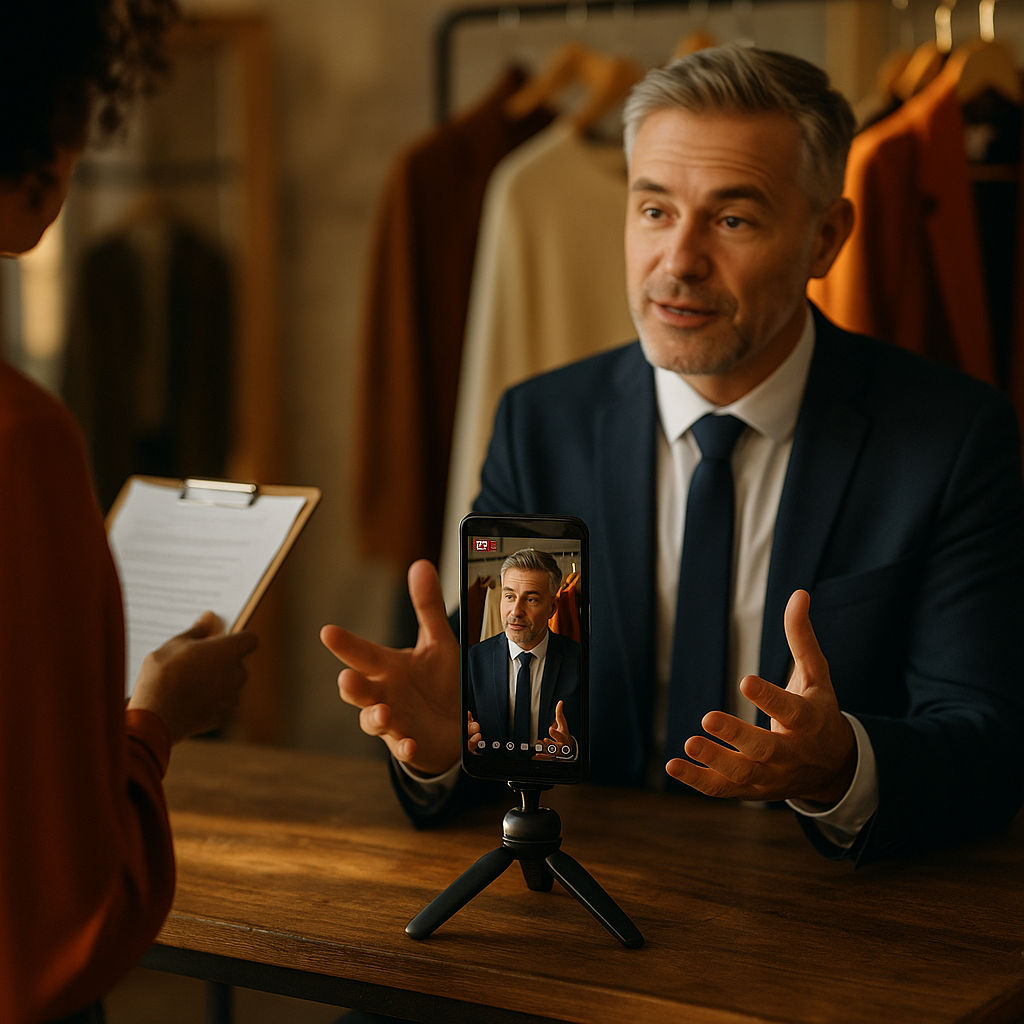
Would you hand your brand’s login credentials to a dermatologist, a CFA, or a licensed sommelier for 24 hours? A growing number of marketing teams are answering yes. The expert takeover format, where a credentialed creator runs a brand’s social account for a single day, is quietly becoming one of the highest-trust plays in the influencer playbook. It’s not new as a concept. Media brands have done “guest editor” stunts for years. What’s changed is the operational rigor brands now bring to it.
Done well, an expert takeover gives audiences something algorithms and ad copy can’t fake: a real credential, answering real questions, in real time. Done poorly, it’s a compliance headache and a one-day dip in engagement that nobody can explain to the CMO.
Why This Format Is Having a Moment
Trust in branded content keeps sliding. Edelman’s Trust Barometer research has repeatedly shown that people trust “a person like me” or a subject-matter expert far more than a brand spokesperson. Meanwhile, eMarketer has tracked steady growth in influencer marketing spend even as brands grow warier of one-off sponsored posts that feel transactional.
The expert takeover threads that needle. It’s not an ad. It’s a licensed dietitian answering DMs about GLP-1 drug interactions on a supplement brand’s Instagram. It’s a certified financial planner doing a Q&A on a fintech app’s TikTok about tax-loss harvesting. The brand account becomes a temporary stage for someone whose authority doesn’t depend on the brand at all.
The core value of an expert takeover isn’t reach. It’s borrowed credibility that the brand cannot manufacture on its own, no matter how good the copywriting is.
That distinction matters for budget conversations. If you’re pitching this internally, don’t frame it as a content format. Frame it as a trust acquisition strategy with a hard stop date.
What Makes a Creator “Credentialed” Enough?
Credentialed doesn’t mean famous. It means verifiable. A takeover host should have something a compliance team can point to: a license number, a board certification, a published research history, a professional membership in good standing. Follower count is a distant second consideration.
Here’s where a lot of brands stumble. They chase the creator with the biggest audience in a given niche, discover mid-campaign that the person’s “certification” is a $99 online course, and now they’re explaining to legal why a brand account made implied medical claims through an uncredentialed voice.
Before you sign anyone, verify:
- The license or certification is active and issued by a recognized body (state board, national association, accredited institution)
- The creator’s public content history doesn’t contradict the credential (a “financial expert” who’s pushed crypto pump schemes is a red flag)
- There’s no undisclosed material connection to a competitor that would violate FTC endorsement guidelines
- The creator has done live or semi-live content before. A takeover is not the place to discover someone freezes on camera
Some brands now run this vetting through a formal expert-relations process, similar to how PR teams vet spokespeople for earned media. That’s the right instinct. Treat the credential check with the same seriousness as an influencer contract’s FTC disclosure clause, because regulators increasingly do.
The Operational Playbook: Access Without Chaos
Handing over account access for a day sounds simple until you actually plan it. The brands doing this well treat it like a mini product launch, not a casual guest post.
Start with platform-level controls. Most social platforms and social media management tools (Sprout Social, Hootsuite, Khoros) support role-based access, so the creator can post and reply without ever seeing DMs unrelated to the takeover, ad account settings, or historical analytics. Never hand over the actual master password. If your current tech stack can’t do granular permissions, that’s a signal to fix your stack before you fix your influencer strategy.
Second, build a real-time escalation path. Who approves a reply if a follower asks something legally sensitive? Who’s watching for off-brand tone? Most takeovers run a “chaperone” model: a brand social manager sits in a shared Slack or Teams channel with the creator, pre-approving anything that touches claims, pricing, or health/financial advice specifically.
Third, decide the boundaries before day one, not during it:
- Which formats are in play (Stories, Lives, feed posts, Reels, comment replies)?
- What topics are explicitly off-limits?
- What’s the disclosure language, and where does it appear on every single post?
- What’s the kill switch if something goes sideways?
This is where a solid creative brief earns its keep. The discipline required is similar to what we’ve covered in launch sequence briefs, where every beat is mapped in advance because there’s no room to improvise once the clock starts.
Disclosure Isn’t Optional, and It’s Not Simple
This is the section brand and legal teams should read twice. An expert takeover almost always counts as a material connection under FTC rules, even if the creator isn’t being paid in the traditional sense. Free access, a flat fee, or even reputational benefit (“exposure to a new audience”) can trigger disclosure requirements.
The complication is platform-native. A creator hosting a Live on a brand’s own account is a different disclosure scenario than a creator posting from their personal account about the brand. Confirm with legal whether “#ad” or “#sponsored” needs to appear in the creator’s own bio for that day, in each post caption, and verbally during any Live segment. The FTC’s endorsement guidance doesn’t have a specific carve-out for takeovers, so brands are applying general principles here, and getting it wrong is a real enforcement risk, not a theoretical one.
If you operate in the UK or EU, loop in guidance from the ICO as well, particularly around any data collected during Q&A segments or Lives where followers submit personal information.
A single ambiguous disclosure line has undone entire takeover campaigns after the fact. Get legal sign-off on exact wording before the creator ever logs in.
Format Choices: Live Q&A vs. Scheduled Drops vs. Full Feed Handover
Not every takeover needs to be a chaotic live-fire event. There are three common structures, and each carries different risk and resource profiles.
Live Q&A takeover. The creator does a scheduled Live session, answering pre-submitted and real-time questions. Highest engagement potential, highest risk, because there’s no edit buffer. Best suited for creators with genuine live-hosting experience.
Scheduled content drop. The creator’s content is pre-recorded and pre-approved, then published in a sequence across the day under their voice and framing. Lower risk, more predictable, but loses some of the “anything could happen” energy that makes takeovers feel authentic. This model borrows heavily from the structured pacing used in serialized content formats, where anticipation is built into the release schedule rather than left to chance.
Hybrid handover. Pre-recorded core content (a demo, a myth-busting segment) paired with live comment replies throughout the day. This is increasingly the default for brands that want authenticity without total unpredictability. If your team has run myth-busting formats before, the muscle memory transfers directly here: expert credibility plus direct audience engagement is the same engine, just running on the brand’s own channel instead of the creator’s.
Measuring Something Other Than Vanity Metrics
Engagement rate will spike. That’s almost guaranteed when you introduce a novel voice to a familiar feed. The real measurement question is whether that spike converts into something durable.
Track these specifically:
- Follower growth net of unfollows in the 72 hours after the takeover (not just during it)
- Saves and shares on the expert’s specific posts versus the account’s baseline
- Comment sentiment, not just comment volume, ideally with a manual spot-check, not just a sentiment API score
- DM or link-click conversion if the takeover included any CTA
- Post-campaign surveys or brand lift studies if budget allows, since HubSpot and similar platforms can help track downstream funnel movement
One honest caveat: attribution here is messy. A single day of borrowed credibility rarely shows up cleanly in last-click conversion data. Treat it as a trust and awareness play, and measure it against brand lift and audience quality, not just immediate sales.
Where This Fits in a Broader Content Calendar
Expert takeovers work best as a punctuation mark, not a routine. Running them monthly dilutes the “special occasion” feeling that makes them work. Most brands doing this successfully run two to four a year, tied to relevant moments: tax season for a fintech brand, allergy season for a wellness brand, back-to-school for an ed-tech brand.
Pair the takeover announcement with a countdown sequence so the audience knows it’s coming and shows up. The mechanics are nearly identical to what we’ve outlined in drop-style launch briefs: build anticipation, confirm the exact time, and give people a reason to set a reminder.
The format also pairs well with a testimonial-style close. Once the takeover wraps, a short recap post confirming what the expert covered, and where to get more, tends to outperform letting the content simply age out of the feed. That’s a similar principle to what works in testimonial-driven briefs: credibility content needs a clear next step, or the trust you built evaporates without converting.
The next expert takeover on your calendar should start with a credential check and a legal sign-off, not a creative brief. Get those two things locked, and the content will take care of itself.
FAQs
What is an expert takeover in influencer marketing?
It’s a format where a brand hands temporary control of its social media account to a credentialed expert, such as a licensed professional or certified specialist, who creates content or interacts with followers as themselves for a defined period, usually one day.
How is an expert takeover different from a regular influencer partnership?
Regular influencer partnerships typically involve creators posting sponsored content on their own channels. An expert takeover happens on the brand’s own account, and the value comes specifically from the creator’s verified professional credential rather than their follower count or content style.
Do expert takeovers require FTC disclosure?
In most cases, yes. If there’s any material connection between the brand and the creator, including payment, free product, or reputational benefit, disclosure is generally required under FTC endorsement guidelines. Brands should confirm exact wording and placement with legal counsel before the takeover begins.
How do brands vet a creator’s credentials before a takeover?
Verification should include confirming the license or certification is active and issued by a recognized body, reviewing the creator’s public content history for consistency with their stated expertise, and checking for any undisclosed conflicts of interest, such as ties to competitors.
What platforms support safe account handover for takeovers?
Social media management tools like Sprout Social, Hootsuite, and Khoros allow role-based access, so a creator can post and reply without full account control. This limits risk while still giving the creator enough access to run the takeover authentically.
How often should a brand run this format?
Most brands see the best results running two to four expert takeovers a year, tied to relevant seasonal or industry moments. Running them too frequently dilutes the novelty that makes the format effective.
FAQs
What is an expert takeover in influencer marketing?
It’s a format where a brand hands temporary control of its social media account to a credentialed expert, such as a licensed professional or certified specialist, who creates content or interacts with followers as themselves for a defined period, usually one day.
How is an expert takeover different from a regular influencer partnership?
Regular influencer partnerships typically involve creators posting sponsored content on their own channels. An expert takeover happens on the brand’s own account, and the value comes specifically from the creator’s verified professional credential rather than their follower count or content style.
Do expert takeovers require FTC disclosure?
In most cases, yes. If there’s any material connection between the brand and the creator, including payment, free product, or reputational benefit, disclosure is generally required under FTC endorsement guidelines. Brands should confirm exact wording and placement with legal counsel before the takeover begins.
How do brands vet a creator’s credentials before a takeover?
Verification should include confirming the license or certification is active and issued by a recognized body, reviewing the creator’s public content history for consistency with their stated expertise, and checking for any undisclosed conflicts of interest, such as ties to competitors.
What platforms support safe account handover for takeovers?
Social media management tools like Sprout Social, Hootsuite, and Khoros allow role-based access, so a creator can post and reply without full account control. This limits risk while still giving the creator enough access to run the takeover authentically.
How often should a brand run this format?
Most brands see the best results running two to four expert takeovers a year, tied to relevant seasonal or industry moments. Running them too frequently dilutes the novelty that makes the format effective.
Top Influencer Marketing Agencies
The leading agencies shaping influencer marketing in 2026
Agencies ranked by campaign performance, client diversity, platform expertise, proven ROI, industry recognition, and client satisfaction. Assessed through verified case studies, reviews, and industry consultations.
Moburst

-
2

The Shelf
Boutique Beauty & Lifestyle Influencer AgencyA data-driven boutique agency specializing exclusively in beauty, wellness, and lifestyle influencer campaigns on Instagram and TikTok. Best for brands already focused on the beauty/personal care space that need curated, aesthetic-driven content.Clients: Pepsi, The Honest Company, Hims, Elf Cosmetics, Pure LeafVisit The Shelf → -
3

Audiencly
Niche Gaming & Esports Influencer AgencyA specialized agency focused exclusively on gaming and esports creators on YouTube, Twitch, and TikTok. Ideal if your campaign is 100% gaming-focused — from game launches to hardware and esports events.Clients: Epic Games, NordVPN, Ubisoft, Wargaming, Tencent GamesVisit Audiencly → -
4

Viral Nation
Global Influencer Marketing & Talent AgencyA dual talent management and marketing agency with proprietary brand safety tools and a global creator network spanning nano-influencers to celebrities across all major platforms.Clients: Meta, Activision Blizzard, Energizer, Aston Martin, WalmartVisit Viral Nation → -
5

The Influencer Marketing Factory
TikTok, Instagram & YouTube CampaignsA full-service agency with strong TikTok expertise, offering end-to-end campaign management from influencer discovery through performance reporting with a focus on platform-native content.Clients: Google, Snapchat, Universal Music, Bumble, YelpVisit TIMF → -
6

NeoReach
Enterprise Analytics & Influencer CampaignsAn enterprise-focused agency combining managed campaigns with a powerful self-service data platform for influencer search, audience analytics, and attribution modeling.Clients: Amazon, Airbnb, Netflix, Honda, The New York TimesVisit NeoReach → -
7

Ubiquitous
Creator-First Marketing PlatformA tech-driven platform combining self-service tools with managed campaign options, emphasizing speed and scalability for brands managing multiple influencer relationships.Clients: Lyft, Disney, Target, American Eagle, NetflixVisit Ubiquitous → -
8

Obviously
Scalable Enterprise Influencer CampaignsA tech-enabled agency built for high-volume campaigns, coordinating hundreds of creators simultaneously with end-to-end logistics, content rights management, and product seeding.Clients: Google, Ulta Beauty, Converse, AmazonVisit Obviously →