


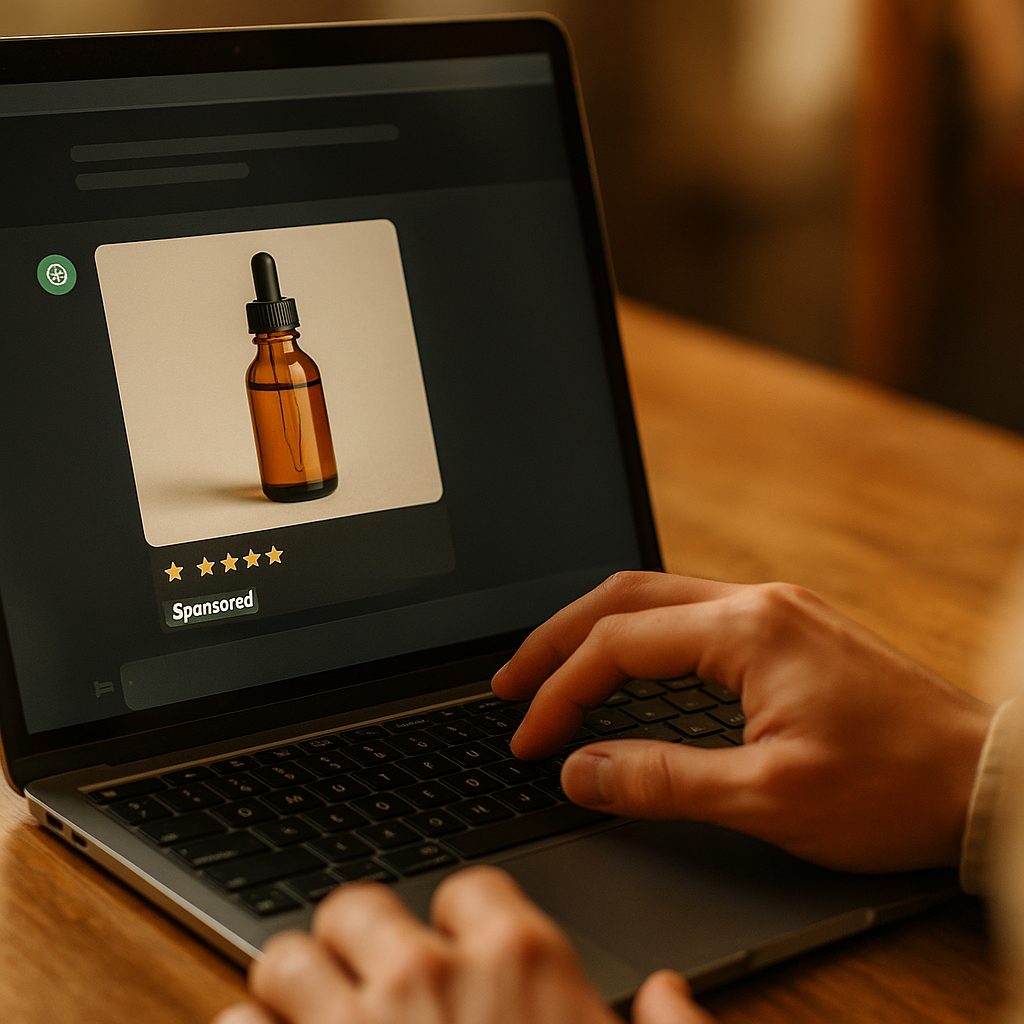
ChatGPT now recommends products to millions of shoppers a week. Some of those recommendations are organic. Some are paid, sponsored, or the result of a data feed a brand paid to prioritize. The FTC’s native advertising guidelines applied to AI chatbot product recommendations were written for banner ads and sponsored articles, not conversational commerce. That gap is exactly where brand risk is piling up right now.
If your team has a product feed, an affiliate deal, or a paid placement arrangement tied to any AI shopping assistant, you need a disclosure framework today. Not after the first FTC inquiry letter arrives.
Why This Isn’t Just “Another Native Ad” Problem
The FTC’s 2015 Native Advertising Guidelines govern how sponsored content must be labeled when it mimics editorial or organic content. The core test has always been simple: would a reasonable consumer understand this is an ad? Sponsored listicles, “recommended products” widgets, in-feed social posts — all of it got measured against that standard.
AI chatbot answers break the model in three ways.
- There’s no visible ad unit. A banner has a border. A ChatGPT answer is just prose, delivered with the same tone whether it’s citing a peer-reviewed study or a brand’s paid data feed.
- The recommendation feels personalized. Native ads on a webpage are static for every visitor. A chatbot answer is generated live, shaped by the user’s exact question, which makes it feel like independent advice rather than marketing.
- Attribution is opaque. When a search engine shows a sponsored result, Google labels it. When ChatGPT, Perplexity, or Gemini surface a product recommendation, the underlying commercial relationship — paid placement, affiliate commission, merchant data partnership — is rarely visible to the end user at all.
The FTC has never said conversational AI is exempt from disclosure law. It just hasn’t caught up to the format yet — and “the regulator hasn’t caught up” is not a defense that holds in an enforcement action.
OpenAI has begun testing shopping features inside ChatGPT, including product carousels and checkout flows built on merchant data feeds. Perplexity has its own shopping assistant. Amazon’s Rufus recommends products directly. Google is folding AI Overviews into shopping queries. Every one of these surfaces sits squarely inside the FTC’s existing “clear and conspicuous” standard — a standard that predates chatbots but was written broadly enough to cover them.
What “Clear and Conspicuous” Even Means in a Chat Window
The FTC’s Endorsement Guides require disclosures to be difficult to miss, in language consumers understand, and presented at the moment the claim is made — not buried in a footer or a separate terms page. Applied to native content, that historically meant labels like “Sponsored,” “Ad,” or “Paid Partnership” placed directly adjacent to the content itself.
Apply that same logic to a chatbot answer and you get an uncomfortable question: does a parenthetical “(sponsored)” after a product name in a wall of AI-generated text actually meet the “clear and conspicuous” bar? Most brand and platform teams haven’t tested this with real users. Almost none have documented it for legal defensibility.
Here’s the practical translation of FTC principles into chatbot-specific requirements:
- Proximity. The disclosure needs to sit next to the specific product mention, not in a disclaimer at the end of the chat session.
- Plain language. “This response includes paid product placements” beats a generic “may contain affiliate links” buried in a settings page.
- Repetition across turns. If the user asks a follow-up question and the chatbot recommends the same sponsored product again, the disclosure needs to persist. A one-time disclosure at the start of a long conversation likely won’t satisfy “clear and conspicuous” if the user has scrolled past it.
- Consistency across surfaces. If the brand pays for placement in ChatGPT shopping answers, Perplexity results, and Google AI Overviews, the disclosure standard should be uniform — not stronger on one platform because that platform enforces it and weaker on another because it doesn’t.
This isn’t theoretical. The FTC has a documented track record of pursuing disclosure cases in formats far more ambiguous than a chat window — subscription dark patterns, influencer posts without hashtags, and native content dressed as journalism. A chatbot recommendation that reads like organic advice but is actually a paid merchant feed result fits the pattern the FTC has pursued before.
Who’s Actually Liable: Brand, Platform, or Both?
This is the question every general counsel is going to ask, and the honest answer is: it depends on the deal structure, but brands rarely get to hide behind the platform.
The FTC has consistently held that advertisers share responsibility for disclosure failures even when a third party (a publisher, an influencer, an ad network) is the one presenting the content to consumers. That precedent almost certainly extends to AI platforms. If your brand pays OpenAI, Perplexity, or a shopping-feed intermediary for preferential placement, and the resulting chatbot answer doesn’t disclose that relationship clearly, your brand is exposed — regardless of what the platform’s terms of service say about who’s responsible for labeling.
This mirrors a pattern Influencers Time has covered extensively in the creator space. The same five-question liability test used to evaluate brand-directed FTC liability in influencer campaigns — who controlled the message, who benefited financially, who had approval rights — applies almost identically to AI shopping placements. Swap “creator” for “chatbot” and the analysis holds.
If your legal team has a five-question test for influencer disclosure liability, run your AI shopping placements through the same test before your next platform renewal.
Platforms will eventually build native disclosure UI — Google did this for search ads over two decades, and Google’s ad policies now set the industry bar for sponsored labeling. But “eventually” isn’t a compliance strategy. Brands that wait for OpenAI or Perplexity to solve this are betting their FTC exposure on someone else’s product roadmap.
Building the Disclosure Framework: Five Components
Here’s what a working framework looks like for brands with paid presence in AI shopping answers.
- Map every AI surface where your products appear. This includes ChatGPT shopping, Perplexity, Google AI Overviews, Amazon Rufus, and any white-label shopping assistant your retail partners run. Most brand marketing teams don’t have a full inventory of this yet. Building one is step zero.
- Classify the commercial relationship for each surface. Paid placement, affiliate commission, data licensing, and “organic” inclusion in a merchant feed all carry different disclosure obligations. Treat them as legally distinct, not interchangeable.
- Negotiate disclosure language into the contract. Don’t assume the platform will label your placement adequately. Specify disclosure wording, placement, and persistence requirements in the vendor agreement itself, the same way brands now negotiate disclosure clauses into influencer contracts.
- Audit the actual user experience, not the spec sheet. Have someone outside the marketing team run real queries and screenshot what a consumer actually sees. Platform documentation about “we always disclose sponsorships” means nothing if the live product doesn’t reliably render the label.
- Build a monitoring cadence. AI platforms update ranking and rendering logic constantly. A disclosure that renders correctly this quarter may silently break after a model update. Quarterly audits, at minimum, are the baseline — monthly if your placement spend is significant.
This is structurally similar to work brands have already had to do around satisfying both ASA and FTC disclosure rules in cross-border influencer campaigns. If your compliance team already built that muscle, extending it to AI shopping surfaces is a matter of scope, not a brand-new discipline.
It’s also worth revisiting how your team escalates disclosure failures internally. The same logic behind NAD-to-FTC escalation triggers for influencer content should apply here: define in advance what disclosure failure severity requires legal review versus a quick platform fix request.
State Law Adds Another Layer
Federal FTC rules aren’t the only exposure. States are moving faster than the FTC on AI-specific disclosure mandates. New Jersey’s AI advertising disclosure bill, for instance, imposes obligations that go beyond current federal guidance and specifically contemplate AI-generated commercial content — worth reviewing in full if you have any New Jersey-directed campaigns, as covered in our breakdown of what brands must do now under that law.
Brands running multi-state or multi-jurisdiction campaigns should treat federal FTC guidance as the floor, not the ceiling. A framework built only to satisfy the FTC’s Endorsement Guides may still leave you exposed under emerging state statutes, several of which explicitly name AI-generated or AI-mediated commercial content as covered activity.
According to eMarketer research on retail media and AI search, a growing share of product discovery is shifting toward conversational and AI-assisted surfaces. That trajectory means the disclosure question isn’t a niche edge case for brands experimenting with AI shopping — it’s becoming core to how product marketing operates. Legal and marketing teams that build the framework now will have a real head start once the FTC issues chatbot-specific guidance, which most compliance attorneys expect within the next enforcement cycle.
What to Do Before Your Next Platform Renewal
Pull your current AI shopping placement contracts. Check whether disclosure language, placement, and persistence are specified anywhere in writing. If they’re not, that’s your first fix — and it’s cheaper to negotiate now than to defend later.
Frequently Asked Questions
Does the FTC’s Endorsement Guides framework legally apply to AI chatbot product recommendations?
The FTC hasn’t issued chatbot-specific rules yet, but its existing Endorsement Guides and native advertising principles are written broadly enough to apply to any format where a paid relationship could mislead a reasonable consumer, including AI-generated shopping answers. Brands should assume coverage rather than wait for explicit guidance.
Who is liable if ChatGPT recommends a sponsored product without disclosing the paid relationship?
Liability can extend to both the platform and the brand, depending on who controlled the placement and who benefited financially. Historically, the FTC has held advertisers responsible even when a third party presented the content, so brands can’t rely solely on the platform to handle disclosure correctly.
What does a compliant disclosure look like inside a chatbot answer?
It needs to be placed directly next to the sponsored product mention, use plain language like “sponsored” or “paid placement,” and persist across follow-up questions in the same conversation rather than appearing only once at the start.
Are affiliate links in AI shopping recommendations treated differently than direct paid placements?
Both create a material commercial relationship the FTC expects disclosed, though the specific wording may differ. Affiliate commissions, data licensing fees, and direct paid placement should all be documented and disclosed, even if the disclosure language varies slightly by relationship type.
Do state AI disclosure laws add requirements beyond the FTC?
Yes. Several states, including New Jersey, have introduced AI-specific advertising disclosure requirements that go beyond current federal guidance. Brands running multi-state campaigns should treat federal rules as a baseline and check state-level requirements separately.
Visible FAQ (JSON-LD below matches exactly)
Top Influencer Marketing Agencies
The leading agencies shaping influencer marketing in 2026
Agencies ranked by campaign performance, client diversity, platform expertise, proven ROI, industry recognition, and client satisfaction. Assessed through verified case studies, reviews, and industry consultations.
Moburst

-
2

The Shelf
Boutique Beauty & Lifestyle Influencer AgencyA data-driven boutique agency specializing exclusively in beauty, wellness, and lifestyle influencer campaigns on Instagram and TikTok. Best for brands already focused on the beauty/personal care space that need curated, aesthetic-driven content.Clients: Pepsi, The Honest Company, Hims, Elf Cosmetics, Pure LeafVisit The Shelf → -
3

Audiencly
Niche Gaming & Esports Influencer AgencyA specialized agency focused exclusively on gaming and esports creators on YouTube, Twitch, and TikTok. Ideal if your campaign is 100% gaming-focused — from game launches to hardware and esports events.Clients: Epic Games, NordVPN, Ubisoft, Wargaming, Tencent GamesVisit Audiencly → -
4

Viral Nation
Global Influencer Marketing & Talent AgencyA dual talent management and marketing agency with proprietary brand safety tools and a global creator network spanning nano-influencers to celebrities across all major platforms.Clients: Meta, Activision Blizzard, Energizer, Aston Martin, WalmartVisit Viral Nation → -
5

The Influencer Marketing Factory
TikTok, Instagram & YouTube CampaignsA full-service agency with strong TikTok expertise, offering end-to-end campaign management from influencer discovery through performance reporting with a focus on platform-native content.Clients: Google, Snapchat, Universal Music, Bumble, YelpVisit TIMF → -
6

NeoReach
Enterprise Analytics & Influencer CampaignsAn enterprise-focused agency combining managed campaigns with a powerful self-service data platform for influencer search, audience analytics, and attribution modeling.Clients: Amazon, Airbnb, Netflix, Honda, The New York TimesVisit NeoReach → -
7

Ubiquitous
Creator-First Marketing PlatformA tech-driven platform combining self-service tools with managed campaign options, emphasizing speed and scalability for brands managing multiple influencer relationships.Clients: Lyft, Disney, Target, American Eagle, NetflixVisit Ubiquitous → -
8

Obviously
Scalable Enterprise Influencer CampaignsA tech-enabled agency built for high-volume campaigns, coordinating hundreds of creators simultaneously with end-to-end logistics, content rights management, and product seeding.Clients: Google, Ulta Beauty, Converse, AmazonVisit Obviously →