


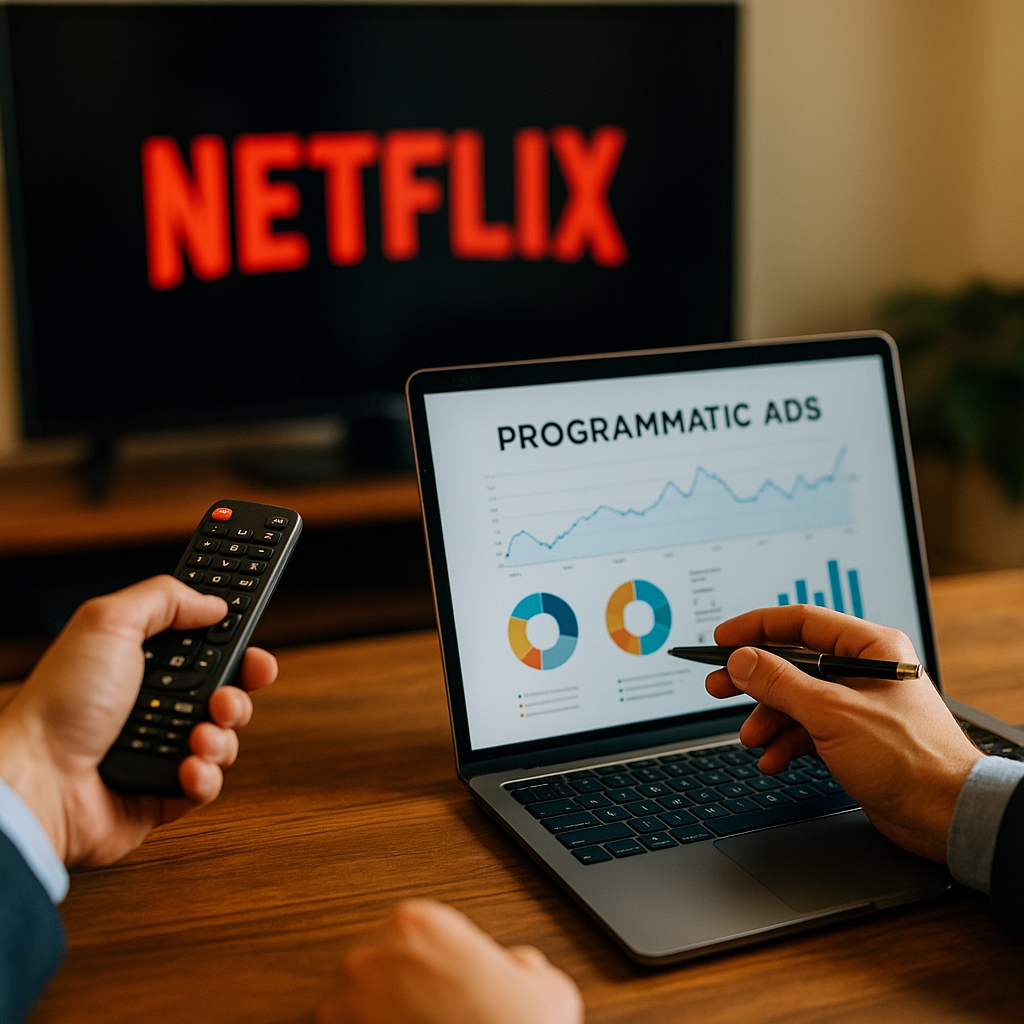
Netflix’s programmatic ad inventory jumped by more than a third heading into Q2, and most brand media buyers still haven’t adjusted their bidding strategy to match. That’s a costly oversight. If your trading desk is still treating Netflix like a direct-buy-only walled garden, you’re overpaying for reach you could get more efficiently through the open exchange.
Netflix quietly became one of the most consequential programmatic sellers in streaming. The revenue mix behind that inventory tells brand buyers exactly where the leverage is, and where it isn’t.
The Inventory Surge, By the Numbers
Netflix’s ad-supported tier has crossed roughly 190 million monthly active users globally, and the platform has been steadily shifting more of that inventory from direct IO deals into programmatic channels. Industry estimates suggest programmatic now accounts for a meaningfully larger share of Netflix’s ad revenue mix than it did a year ago, with The Trade Desk, Google’s Display & Video 360, and Microsoft’s ad platform all serving as active demand-side partners.
Why the shift? Netflix needs to fill inventory at scale, and direct sales teams simply can’t move that volume fast enough. Programmatic solves the fill-rate problem. It also solves a pricing-discovery problem that had made Netflix’s ad business hard for smaller and mid-market brands to access.
Programmatic access doesn’t mean cheap access — Netflix CPMs still command a premium over most CTV inventory, but the auction dynamics now let mid-sized brands compete for placements that used to require seven-figure upfront commitments.
That’s the headline shift. Netflix is no longer a velvet-rope upfront product exclusively for Fortune 500 marketers with dedicated Netflix reps. It’s becoming a biddable market, closer in mechanics (if not in price) to how brands already buy streaming and social inventory elsewhere.
What “Revenue Mix” Actually Means Here
When we talk about Netflix’s revenue mix, we mean the split between three channels: direct upfront sales (negotiated annually, locked pricing), programmatic guaranteed (fixed price, automated delivery), and open programmatic auction (real-time bidding, variable pricing). The surge is concentrated in the third bucket. That’s the part that should reshape your buying strategy immediately, because open auction dynamics reward buyers who understand bid density, dayparting, and audience overlap — not just brand budget size.
For media buyers, this matters because pricing power has shifted. A brand with a smart programmatic desk and clean first-party data can now outcompete a bigger spender running a lazy, broad-targeted campaign. That’s a genuine structural opportunity, not just a talking point from your DSP rep.
Why This Changes Your Q2 Planning
Most media plans built in late Q4 or early Q1 assumed Netflix inventory was scarce and expensive. That assumption is now outdated. Scarcity has eased. Prices, while still premium relative to general CTV, have become more negotiable through auction dynamics and less dependent on relationship-based upfront deals.
Here’s the practical implication: if your Q2 plan allocated a fixed Netflix budget based on last year’s upfront rate card, you’re likely leaving efficiency on the table. Programmatic access means you can test smaller budgets, measure incrementality, and scale what works — the same iterative approach performance marketers already apply to AI-driven video inventory on other platforms.
- Reassess whether your current Netflix allocation is IO-based or programmatic-eligible.
- Ask your DSP partner directly what fill rates and win rates look like on Netflix inventory specifically — not blended CTV averages.
- Run a controlled test: split spend between direct and programmatic Netflix buys and compare CPM-to-completion-rate efficiency.
- Revisit frequency capping. Programmatic access often means multiple buying desks targeting the same audience segments, which can quietly inflate frequency without anyone noticing.
That last point trips up more buyers than you’d expect. When several trading desks bid into the same auction for overlapping audiences, effective frequency can spike well past your planned cap. Nobody budgeted for that. Nobody’s monitoring it either, unless you specifically ask for cross-campaign frequency reporting.
Streaming’s Broader Ad Mix Is Shifting Too
Netflix isn’t operating in isolation. This is part of a wider streaming ad market recalibration that includes Amazon Prime Video, Disney+, and Peacock all expanding programmatic access simultaneously. eMarketer’s connected TV forecasts have consistently shown programmatic CTV spend outpacing direct-sold growth for several consecutive quarters, and Netflix’s move simply confirms it’s following the market rather than resisting it.
We covered this trajectory when Netflix first went public with its ad revenue targets, and the programmatic surge is the mechanism by which that target actually gets hit. You don’t get from ad-tier launch to multibillion-dollar ad revenue without opening the pipes to programmatic demand. Direct sales alone can’t carry that volume.
This also connects to a broader budget conversation happening across the industry. As overall ad spend growth slows, brands are under more pressure to extract efficiency from every channel, streaming included. Netflix’s programmatic expansion is arriving at exactly the moment brands need it to.
Where the Risk Sits: Brand Safety and Contextual Controls
Programmatic access always raises the brand safety question, and Netflix is no exception. The platform has maintained tighter content controls than most open-web programmatic inventory, largely because its content library is curated rather than user-generated. That’s a genuine advantage over, say, programmatic buys on YouTube’s long tail or open-web display networks.
Still, buyers should verify a few specifics before scaling spend:
- Confirm which content categories and maturity ratings your programmatic buys can appear against.
- Check whether your DSP supports Netflix’s specific brand safety segmentation, or whether you’re buying blind into broader packages.
- Ask about verification partnerships — Netflix has worked with third-party measurement vendors, and you should know which ones apply to your specific buy.
None of this is exotic risk. It’s standard programmatic due diligence, the same checklist you’d run for any new inventory source. The mistake is assuming Netflix’s brand reputation means you can skip it.
Measurement Gets Trickier, Not Easier
Here’s the part vendors won’t tell you upfront: programmatic Netflix inventory complicates attribution. Direct IO deals came with cleaner, more predictable reporting because Netflix controlled the full delivery chain. Programmatic buys route through multiple DSPs, each with its own measurement methodology, and reconciling cross-DSP performance against a single Netflix campaign is still clunky.
Brands running multi-platform streaming campaigns need a measurement framework that normalizes data across DSPs rather than trusting each platform’s self-reported numbers at face value. This is the same discipline required across most modern martech stack decisions — the tooling is only as good as the standardization layer behind it.
If your team lacks a unified measurement partner, this is the quarter to fix that. Third-party verification vendors like Statista-tracked measurement providers and independent MMPs can help normalize Netflix programmatic data against your broader CTV mix, but only if you set that up before the campaign launches, not after you’re staring at conflicting reports.
Practical Bidding Strategy for Q2
So what should your desk actually do differently this quarter? A few concrete adjustments:
- Shift budget cadence from annual lock-in to quarterly flexibility. Programmatic access rewards agility. Locking a full year of Netflix spend at Q1 pricing ignores the fact that auction dynamics will shift as more sellers and buyers enter the market.
- Layer first-party data aggressively. The buyers winning the best programmatic Netflix inventory right now are the ones bringing clean, matchable audience data to the auction, not relying on Netflix’s own contextual targeting alone.
- Test smaller, iterate faster. Don’t commit your full streaming budget to Netflix programmatic in one swing. Run a controlled test cell, measure completion rates and incremental reach, then scale.
- Coordinate frequency across your full CTV stack. If you’re also buying Hulu, Peacock, and Amazon programmatically, make sure your frequency management sits above the platform level, not siloed within each DSP.
This isn’t fundamentally different from how sharp buyers approach budget planning under efficiency pressure across any channel. Streaming just happens to be where the inventory dynamics are moving fastest right now.
What This Means for Smaller Brands
There’s a genuine democratization story here worth acknowledging. Programmatic access to Netflix inventory means a regional retailer or a mid-market DTC brand can now get in front of Netflix’s ad-tier audience without negotiating a seven-figure upfront commitment. That wasn’t possible even a few quarters ago.
The catch: competing effectively still requires sophistication. Smaller brands without a dedicated programmatic trading function will struggle to extract the same efficiency that larger, better-resourced desks can. If you don’t have that capability in-house, this is exactly the kind of specialized execution that an AI-native boutique agency is often built to handle faster and cheaper than a traditional holding company trading desk.
For reference on how DSPs structure CTV programmatic access more broadly, TikTok’s ad platform documentation and Google’s Display & Video 360 support resources offer useful comparative context on auction mechanics, even outside the Netflix-specific environment.
The takeaway for Q2: audit your current Netflix buying structure this week, not next quarter. Confirm whether you’re paying upfront rates for inventory now available programmatically, run a small test allocation through your DSP, and build a cross-platform frequency and measurement check before you scale spend further.
FAQs
What is driving Netflix’s programmatic ad inventory surge?
Netflix needs to fill growing ad-tier inventory faster than its direct sales team can sell it, so it has expanded access through DSPs like The Trade Desk and Google’s Display & Video 360. This shift also supports Netflix’s broader ad revenue growth targets.
Does programmatic access make Netflix ad inventory cheaper?
Not necessarily. Netflix CPMs remain premium relative to general CTV inventory, but auction dynamics now allow mid-sized brands to compete for placements that previously required large upfront commitments.
How should media buyers adjust Q2 budgets for Netflix inventory?
Shift from annual fixed allocations to quarterly flexible testing, bring clean first-party data to the auction, and run small controlled test cells before scaling spend across the platform.
What are the biggest risks with programmatic Netflix buys?
Cross-DSP measurement inconsistency and frequency inflation from multiple buyers targeting overlapping audiences are the two most common operational risks brand buyers overlook.
Is Netflix programmatic inventory brand-safe?
Netflix’s curated content library generally offers stronger brand safety controls than open-web programmatic inventory, but buyers should still confirm content category restrictions and verification partnerships before scaling spend.
FAQs
What is driving Netflix’s programmatic ad inventory surge?
Netflix needs to fill growing ad-tier inventory faster than its direct sales team can sell it, so it has expanded access through DSPs like The Trade Desk and Google’s Display & Video 360. This shift also supports Netflix’s broader ad revenue growth targets.
Does programmatic access make Netflix ad inventory cheaper?
Not necessarily. Netflix CPMs remain premium relative to general CTV inventory, but auction dynamics now allow mid-sized brands to compete for placements that previously required large upfront commitments.
How should media buyers adjust Q2 budgets for Netflix inventory?
Shift from annual fixed allocations to quarterly flexible testing, bring clean first-party data to the auction, and run small controlled test cells before scaling spend across the platform.
What are the biggest risks with programmatic Netflix buys?
Cross-DSP measurement inconsistency and frequency inflation from multiple buyers targeting overlapping audiences are the two most common operational risks brand buyers overlook.
Is Netflix programmatic inventory brand-safe?
Netflix’s curated content library generally offers stronger brand safety controls than open-web programmatic inventory, but buyers should still confirm content category restrictions and verification partnerships before scaling spend.
Top Influencer Marketing Agencies
The leading agencies shaping influencer marketing in 2026
Agencies ranked by campaign performance, client diversity, platform expertise, proven ROI, industry recognition, and client satisfaction. Assessed through verified case studies, reviews, and industry consultations.
Moburst

-
2

The Shelf
Boutique Beauty & Lifestyle Influencer AgencyA data-driven boutique agency specializing exclusively in beauty, wellness, and lifestyle influencer campaigns on Instagram and TikTok. Best for brands already focused on the beauty/personal care space that need curated, aesthetic-driven content.Clients: Pepsi, The Honest Company, Hims, Elf Cosmetics, Pure LeafVisit The Shelf → -
3

Audiencly
Niche Gaming & Esports Influencer AgencyA specialized agency focused exclusively on gaming and esports creators on YouTube, Twitch, and TikTok. Ideal if your campaign is 100% gaming-focused — from game launches to hardware and esports events.Clients: Epic Games, NordVPN, Ubisoft, Wargaming, Tencent GamesVisit Audiencly → -
4

Viral Nation
Global Influencer Marketing & Talent AgencyA dual talent management and marketing agency with proprietary brand safety tools and a global creator network spanning nano-influencers to celebrities across all major platforms.Clients: Meta, Activision Blizzard, Energizer, Aston Martin, WalmartVisit Viral Nation → -
5

The Influencer Marketing Factory
TikTok, Instagram & YouTube CampaignsA full-service agency with strong TikTok expertise, offering end-to-end campaign management from influencer discovery through performance reporting with a focus on platform-native content.Clients: Google, Snapchat, Universal Music, Bumble, YelpVisit TIMF → -
6

NeoReach
Enterprise Analytics & Influencer CampaignsAn enterprise-focused agency combining managed campaigns with a powerful self-service data platform for influencer search, audience analytics, and attribution modeling.Clients: Amazon, Airbnb, Netflix, Honda, The New York TimesVisit NeoReach → -
7

Ubiquitous
Creator-First Marketing PlatformA tech-driven platform combining self-service tools with managed campaign options, emphasizing speed and scalability for brands managing multiple influencer relationships.Clients: Lyft, Disney, Target, American Eagle, NetflixVisit Ubiquitous → -
8

Obviously
Scalable Enterprise Influencer CampaignsA tech-enabled agency built for high-volume campaigns, coordinating hundreds of creators simultaneously with end-to-end logistics, content rights management, and product seeding.Clients: Google, Ulta Beauty, Converse, AmazonVisit Obviously →