


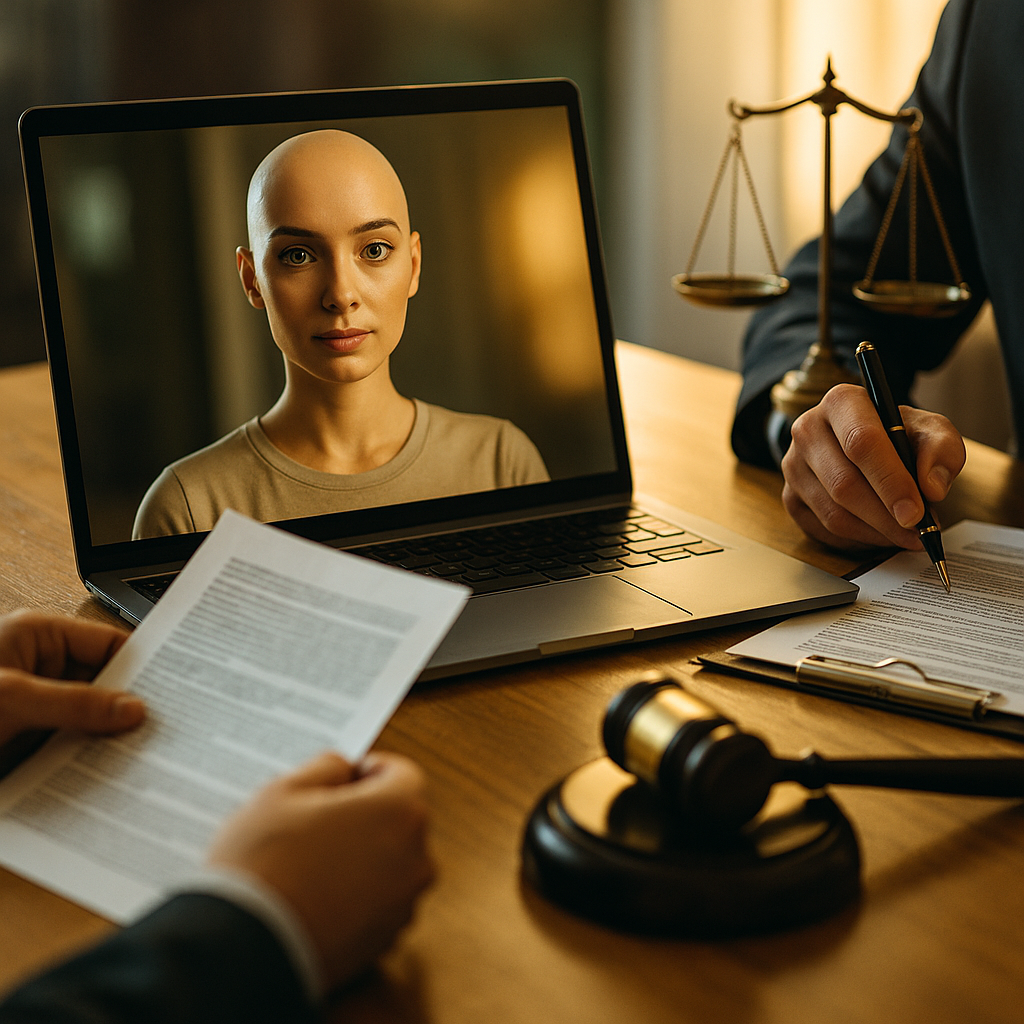
One AI-generated spokesperson. One national campaign. And potentially a dozen conflicting disclosure laws depending on where the viewer happens to be sitting. State synthetic performer disclosure laws are multiplying fast, and they don’t share a single definition of what counts as “synthetic,” “AI-generated,” or “digitally altered.” If your legal team is still treating FTC compliance as the finish line, you’re already behind.
The Patchwork Nobody Budgeted For
Marketing teams spent the last two years building FTC-compliant disclosure workflows: clear and conspicuous labels, upfront placement, no burying “#ad” in a hashtag pile. Reasonable. Manageable. Then states started passing their own synthetic performer and AI-disclosure statutes, layered on top of federal rules rather than replacing them.
California’s AI-generated content disclosure requirements, New York’s proposed synthetic media labeling rules, and a growing list of state-level “digital replica” statutes tied to right-of-publicity law now sit alongside the FTC’s material connection standard. None of them were written with the other in mind. A campaign running in Ohio, Texas, and California simultaneously might need three different disclosure treatments for the same fifteen-second ad.
A single AI-assisted ad running nationally can trigger federal material connection rules and multiple, non-identical state synthetic performer disclosure obligations at the same time, none of which were drafted with the others in mind.
That’s not a hypothetical compliance headache. It’s the operating reality for any brand running programmatic or cross-platform campaigns with an AI-generated or AI-augmented performer in the creative.
What the FTC Actually Requires (A Quick Refresher)
The FTC’s material connection standard hasn’t changed its core logic in years: if there’s a relationship between an endorser and a brand that could affect how a reasonable consumer weighs the endorsement, disclose it clearly and conspicuously. That standard applies whether the “endorser” is a human creator, a virtual influencer, or a fully synthetic AI spokesperson generated for the campaign.
The FTC’s Endorsement Guides don’t specifically legislate AI performers as a separate category. Instead, the agency has signaled through enforcement actions and business guidance that AI-generated endorsers get folded into existing deception and disclosure frameworks. If a synthetic spokesperson implies real human experience with a product it never actually used, that’s a deception problem independent of any disclosure question. Brands running branded chatbots have already run into this exact substantiation gap.
So federal law asks one core question: does the audience understand the relationship and the nature of the endorsement? Simple in theory. Complicated the moment a synthetic performer is involved, because “nature of the endorsement” now includes whether the performer is even real.
Where States Diverge — and Why It Matters
State synthetic performer laws generally fall into three buckets, and the differences are not cosmetic.
- Right-of-publicity extensions: States like California and Tennessee (via the ELVIS Act) have expanded publicity rights to cover AI-generated digital replicas of real people’s voice or likeness, requiring consent and, in some formulations, disclosure when a replica is used commercially.
- Consumer protection disclosure mandates: A newer wave of state bills requires an explicit “AI-generated” or “synthetic performer” label on any commercial content where the performer isn’t a real, identifiable human, independent of whether any real person’s likeness was used at all.
- Election and political-ad carve-outs: Several states passed synthetic media disclosure rules narrowly for political advertising first, then broadened language during subsequent sessions to sweep in commercial advertising too.
The practical problem: these categories don’t map cleanly onto each other, and the trigger language varies. Some statutes trigger on “AI-generated” content broadly. Others trigger only when a real person’s likeness is synthetically recreated. A wholly original AI spokesperson, invented from scratch with no real-world likeness basis, might dodge the right-of-publicity statutes entirely while still tripping a broader AI-disclosure consumer protection law in a different state.
This is structurally similar to the mess brands already navigate with youth-adjacent content across jurisdictions, where UK and Australia rules diverge sharply from US state law despite covering the same creative asset.
The National Ad Problem, Concretely
Say your brand runs a fully AI-generated spokesperson in a paid social and CTV campaign, distributed nationally through a single media buy. You’ve disclosed “This ad features an AI-generated spokesperson” in the video’s opening frame, satisfying a strict reading of the FTC’s clear-and-conspicuous standard.
Is that enough? In California, maybe. In a state requiring a persistent on-screen label rather than a one-time opening disclosure, no. In a state whose statute only applies to synthetic replicas of real, identifiable people, the disclosure requirement might not even apply to your wholly-invented AI performer, meaning you’ve added a label the law didn’t require while possibly missing one it did.
Geotargeting the disclosure treatment by state sounds like the obvious fix. It’s also expensive, operationally fragile, and a nightmare for programmatic buys where geographic serving isn’t always precise down to the state line. Most media buyers don’t have granular state-level creative versioning built into their standard workflow, and building it just for disclosure text is a real cost center most brands haven’t priced in yet.
Reconciling the Two Standards: A Practical Framework
You can’t wait for federal preemption to sort this out. Congress hasn’t moved, and the FTC has been clear it expects brands to comply with applicable state law on top of federal disclosure standards, not instead of it. So the reconciliation work falls on brand and agency compliance teams. Here’s how leading legal and marketing teams are structuring it.
- Adopt the strictest applicable standard as your national default. Instead of geotargeting disclosure language, identify the most restrictive state requirement in your distribution footprint and apply it universally. If one state requires a persistent on-screen “AI-Generated Content” label and the FTC standard would accept an opening disclosure, run the persistent label everywhere. It’s redundant in 40 states but defensible in all 50.
- Separate “synthetic performer” disclosure from “material connection” disclosure. These are answering two different questions — is this performer real, and is this a paid endorsement — and conflating them into one vague disclosure line creates ambiguity regulators can exploit. Use two distinct, clearly worded disclosures if both apply.
- Document your legal basis for each creative asset. Build a compliance matrix mapping each AI-assisted ad to the specific state statutes it may trigger, the disclosure language used, and the rationale. If a state AG or the FTC ever asks, “why did you disclose it this way,” you want a paper trail, not a scramble.
- Loop in media buying and legal before the buy, not after creative is locked. Disclosure format constraints (font size, on-screen duration, placement) affect creative production. Retrofitting compliant disclosure into a finished asset is expensive and often creatively compromising.
This mirrors the operational lesson from cross-platform disclosure matrices built for TikTok, Instagram, YouTube, and LinkedIn: when the rules differ by channel or by jurisdiction, the fix is a documented decision matrix, not case-by-case improvisation.
Indemnification Is Not Optional Anymore
If you’re working with an AI vendor, ad tech platform, or agency generating the synthetic performer, your contract needs explicit language on who owns compliance risk when state and federal disclosure standards conflict. Vague “vendor will comply with applicable law” boilerplate doesn’t cut it when “applicable law” means fifty different things depending on where the ad serves.
The same logic that’s reshaping AI agent media-buying indemnification clauses applies directly here: specify which party bears the cost of a compliance failure, require the vendor to flag jurisdiction-specific disclosure risk before launch, and build in a right to pull or edit creative fast if a new state law lands mid-flight. State legislatures are moving quickly on this topic; a clause written last year may already be outdated.
What This Means for Budget and Timeline
Add two things to your campaign planning that probably weren’t there before: a legal review checkpoint specific to synthetic performer disclosure, and a contingency line item for creative re-versioning if a new state law passes mid-campaign. Neither is glamorous. Both are cheaper than a state AG inquiry or an FTC complaint tied to an ad that already ran nationally.
Brands that treat this as a one-time legal sign-off rather than an ongoing monitoring function will get caught flat when the next state statute lands. Given how fast this legislative area is moving (multiple states introduced synthetic media disclosure bills in the last legislative cycle alone, per tracking from state legislative databases), quarterly compliance reviews aren’t overkill. They’re the minimum.
FAQs
Do FTC material connection rules apply to fully AI-generated spokespeople?
Yes. The FTC’s Endorsement Guides apply to any endorser, human or synthetic, when there’s a connection to the brand that could affect how consumers weigh the claim. A wholly AI-generated spokesperson still requires clear and conspicuous disclosure of the paid relationship.
Can a national ad campaign use one disclosure format for every state?
It can, but only if that format meets the strictest state requirement in the distribution footprint. Many compliance teams adopt the most restrictive applicable standard as a national default rather than geotargeting disclosure language by state.
Is disclosing “AI-generated” the same as disclosing a paid partnership?
No. These address different questions: whether the performer is real, and whether the content is a paid endorsement. Brands should treat synthetic performer disclosure and material connection disclosure as separate statements, not one combined line.
Do state synthetic performer laws only apply to real people’s likenesses?
It depends on the state. Some statutes only trigger when an AI system recreates a real, identifiable person’s voice or image. Others apply more broadly to any AI-generated performer, including entirely invented synthetic spokespeople with no real-world likeness basis.
What happens if a new state disclosure law passes while a campaign is already running?
Brands should have a contingency process to pull, edit, or re-version creative quickly. Vendor and agency contracts should specify who bears the cost of re-versioning triggered by new legislation mid-flight.
Build your compliance matrix before your next AI-assisted creative locks, not after a state AG’s office calls. The brands winning this cycle aren’t the ones with the most polished synthetic performer; they’re the ones who can prove, in writing, exactly why their disclosure choices hold up in every state the ad touches.
Top Influencer Marketing Agencies
The leading agencies shaping influencer marketing in 2026
Agencies ranked by campaign performance, client diversity, platform expertise, proven ROI, industry recognition, and client satisfaction. Assessed through verified case studies, reviews, and industry consultations.
Moburst

-
2

The Shelf
Boutique Beauty & Lifestyle Influencer AgencyA data-driven boutique agency specializing exclusively in beauty, wellness, and lifestyle influencer campaigns on Instagram and TikTok. Best for brands already focused on the beauty/personal care space that need curated, aesthetic-driven content.Clients: Pepsi, The Honest Company, Hims, Elf Cosmetics, Pure LeafVisit The Shelf → -
3

Audiencly
Niche Gaming & Esports Influencer AgencyA specialized agency focused exclusively on gaming and esports creators on YouTube, Twitch, and TikTok. Ideal if your campaign is 100% gaming-focused — from game launches to hardware and esports events.Clients: Epic Games, NordVPN, Ubisoft, Wargaming, Tencent GamesVisit Audiencly → -
4

Viral Nation
Global Influencer Marketing & Talent AgencyA dual talent management and marketing agency with proprietary brand safety tools and a global creator network spanning nano-influencers to celebrities across all major platforms.Clients: Meta, Activision Blizzard, Energizer, Aston Martin, WalmartVisit Viral Nation → -
5

The Influencer Marketing Factory
TikTok, Instagram & YouTube CampaignsA full-service agency with strong TikTok expertise, offering end-to-end campaign management from influencer discovery through performance reporting with a focus on platform-native content.Clients: Google, Snapchat, Universal Music, Bumble, YelpVisit TIMF → -
6

NeoReach
Enterprise Analytics & Influencer CampaignsAn enterprise-focused agency combining managed campaigns with a powerful self-service data platform for influencer search, audience analytics, and attribution modeling.Clients: Amazon, Airbnb, Netflix, Honda, The New York TimesVisit NeoReach → -
7

Ubiquitous
Creator-First Marketing PlatformA tech-driven platform combining self-service tools with managed campaign options, emphasizing speed and scalability for brands managing multiple influencer relationships.Clients: Lyft, Disney, Target, American Eagle, NetflixVisit Ubiquitous → -
8

Obviously
Scalable Enterprise Influencer CampaignsA tech-enabled agency built for high-volume campaigns, coordinating hundreds of creators simultaneously with end-to-end logistics, content rights management, and product seeding.Clients: Google, Ulta Beauty, Converse, AmazonVisit Obviously →