


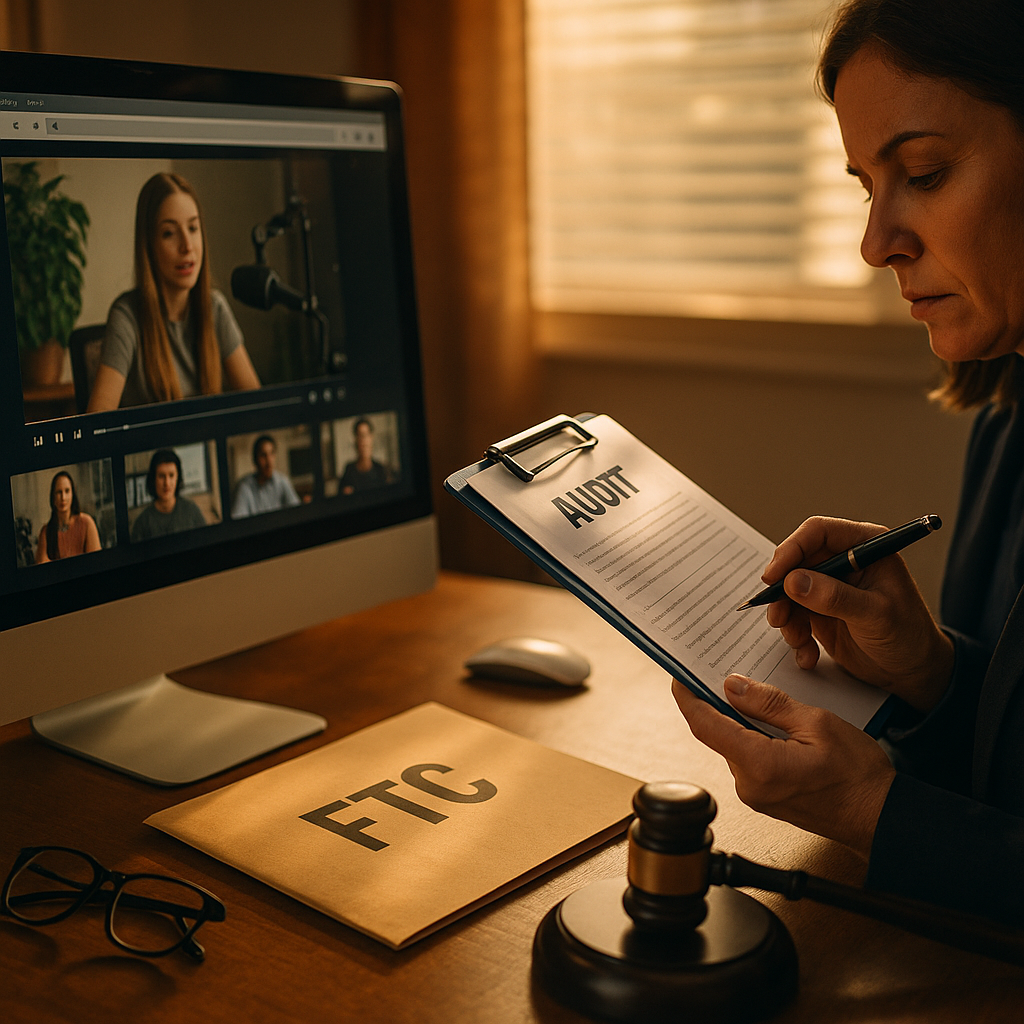
Six clips. Three platforms. Zero disclosures. That’s what one CPG brand found last quarter when a routine spot-check traced a single sponsored video through a clipping network and into 40 re-uploads, only two of which carried any hint of #ad. If your FTC disclosure compliance program only monitors the creators you pay directly, you’re auditing a fraction of your actual exposure.
UGC clipping networks — the loosely organized ecosystems of clippers, meme pages, and repost accounts that slice long-form creator content into short clips for reach and revenue share — have become a distribution layer brands didn’t ask for and mostly don’t monitor. That’s a problem. The FTC doesn’t care who re-uploaded the content. It cares whether the endorsement relationship was disclosed, full stop.
Why Clipping Networks Break the Traditional Compliance Model
Most brand compliance workflows were built around a simple chain: brand briefs creator, creator posts, brand reviews the post. Clean and traceable. Clipping networks blow that model apart.
Here’s the mechanics. A creator posts a sponsored long-form video or livestream. Clippers — sometimes affiliated with the creator, sometimes total strangers running a content farm — cut it into 15-to-60-second segments and repost across TikTok, Instagram Reels, YouTube Shorts, and X. Some clippers are paid a rev-share by the original creator or an agency; others just farm engagement for their own monetization. Either way, the sponsored moment often survives the edit. The disclosure rarely does.
The result: your brand’s paid endorsement is now circulating in dozens of derivative posts, most without any #ad, #sponsored, or paid-partnership tag. If regulators or watchdogs trace it back, “we didn’t post that clip” is not a defense the FTC has ever accepted. The agency has repeatedly held brands and their contracted creators responsible for the disclosures on content stemming from a paid relationship, even when a third party did the actual re-posting.
If your compliance program stops at the original creator’s post, you’re only auditing the visible tip of a distribution iceberg that regulators can still hold you accountable for.
What an Internal Audit Protocol Actually Needs to Cover
An audit protocol for clipping-network exposure isn’t a bolt-on to your existing creator compliance checklist. It needs its own scope, cadence, and escalation path. Here’s what that looks like in practice.
1. Map the distribution graph, not just the primary post
Start by identifying which campaigns are structurally prone to clipping: livestreams, long-form YouTube integrations, Twitch sponsorships, podcast reads. These formats get clipped far more often than a static Instagram carousel. For each of these, build a distribution map: original post, known rev-share clippers, and a sample audit of downstream re-uploads found via reverse video search or platform-native “sounds/remix” tracking.
Tools like TikTok’s Creative Center and YouTube’s content ID system can help surface derivative uploads, but don’t expect full coverage. Budget for manual spot-checks, particularly in the first 72 hours after a sponsored livestream airs, since that’s when clip volume peaks.
2. Contractually require disclosure to travel with the clip
This is the fix most brands skip. Your creator agreement should explicitly state that any authorized derivative content, including clips distributed through third-party networks, must retain or restate the material connection disclosure. If the creator has a formal relationship with a clipping network or agency, that requirement should be flowed down contractually. This is the same logic already applied in right-to-audit clauses for whitelisting deals — you can’t manage what you haven’t reserved the right to inspect.
Where clippers are unaffiliated freelancers with no direct contract to your brand, you obviously can’t bind them. But you can and should require your primary creator to actively request removal or correction when they’re aware of an undisclosed re-upload of their sponsored content. Silence isn’t neutral here; it’s a gap.
3. Set a sampling cadence, not a one-time sweep
Clipping activity isn’t static. A video that generated no clips in week one can suddenly spike after a controversy, a trend tie-in, or an algorithm push months later. Build a recurring sampling cadence: weekly for high-spend influencer livestreams, monthly for evergreen sponsored long-form content, quarterly for the broader roster.
This mirrors the logic behind recurring audit frameworks for other FTC-adjacent risks like scarcity messaging: compliance isn’t a launch-day checkbox, it’s an ongoing monitoring function.
4. Score severity, don’t just log incidents
Not every undisclosed clip carries equal risk. A 200-view repost on a dormant account is a low-priority log entry. A 2-million-view clip trending on a major page, stripped of disclosure and pushing a health or financial claim, is a five-alarm fire. Build a severity matrix based on:
- Reach and engagement of the derivative post
- Presence of a material claim (health, earnings, performance) versus general brand sentiment
- Whether the clipper has a known financial relationship to the creator or agency
- Platform-specific disclosure tools available but unused (paid partnership tag, branded content toggle)
This severity scoring should feed directly into the same kind of tiered response used in an escalation trigger policy for undisclosed sponsorships, so legal and marketing aren’t debating from scratch every time a flag comes in.
Who Owns This Inside the Organization?
Ambiguity kills audit programs faster than any technical gap. Decide upfront: does influencer marketing own clip monitoring, or does it sit with legal/compliance? In practice, the strongest model splits it. Marketing ops runs the detection layer (tools, sampling, vendor coordination), while legal or compliance owns severity scoring and the decision to escalate or issue takedown requests.
Whoever owns it needs a documented protocol, not tribal knowledge held by one campaign manager. That protocol should specify:
- Which platforms are in scope for monitoring (TikTok, Reels, Shorts, X, at minimum)
- What tools or vendors perform the detection (in-house social listening, third-party clip-tracking vendors, or manual review)
- Response SLAs by severity tier (e.g., critical flags require creator outreach within 24 hours)
- Documentation requirements for every audit cycle, since a paper trail is your best defense if regulators come asking
This documentation piece connects directly to the broader push toward building a defensible FTC paper trail. Auditors and regulators aren’t just evaluating whether you caught a problem. They’re evaluating whether you had a system capable of catching it.
What About Whitelisting and Paid Amplification Through Clips?
Here’s a wrinkle that trips up even sophisticated brands: sometimes the “clip” isn’t organic at all. A brand or agency takes a creator’s sponsored moment, cuts it down, and runs it as paid media through the brand’s own ad account or the creator’s whitelisted handle. This isn’t a rogue clipper problem, it’s a paid media compliance problem, and it needs its own disclosure verification step before the ad goes live.
If your team is repurposing creator content into paid social, confirm the original disclosure is either visibly retained in the clip or restated in the ad unit itself. Platforms like Meta and TikTok have branded content tools designed exactly for this (Meta’s branded content policies and TikTok’s ad transparency tools both support disclosure tagging on paid amplification). Skipping the tag because “it’s just a repost” is exactly the kind of shortcut that shows up in FTC enforcement actions.
Building the Audit Checklist: A Practical Template
Strip away the theory and here’s what a working internal audit checklist for clipping-network exposure should include, campaign by campaign:
- Source inventory: List every long-form or livestream sponsored asset produced in the audit period.
- Clip discovery: Run reverse-search or platform-native discovery tools to identify derivative clips, prioritizing content from the first two weeks post-publish.
- Disclosure check: For each derivative clip found, verify presence of a disclosure statement, hashtag, or platform paid-partnership tag.
- Severity scoring: Apply your reach/claim/relationship matrix to flag high-risk instances.
- Creator outreach: For flagged clips tied to a known creator relationship, request the creator contact the clipper or platform for correction/removal.
- Escalation: Route critical-severity flags to legal per your disclosure gap escalation protocol.
- Documentation: Log findings, actions taken, and timestamps in a centralized compliance record.
Run this cycle on a rolling basis, not just once per campaign launch. According to eMarketer’s creator economy research, short-form video consumption continues to outpace long-form growth, which means the clip layer of your distribution isn’t a side channel. It’s becoming the primary way most audiences will ever encounter your sponsored content.
It’s also worth remembering that the FTC’s own guidance on endorsements, updated in its Endorsement Guides, doesn’t distinguish between platforms or content formats. A disclosure obligation attached to a paid relationship doesn’t expire when the content gets re-cut into a nine-second clip.
The Cost of Skipping This
Brands tend to underinvest here because clipping feels like someone else’s problem, an organic phenomenon outside marketing’s control. That framing doesn’t survive contact with an FTC complaint or a journalist’s screenshot thread. The reputational and regulatory exposure is real, and unlike a single influencer post, a viral clip missing disclosure can rack up view counts the original post never touched.
Compare this to how brands have had to adapt around other emerging disclosure gray areas, like AI remix consent clauses or synthetic content rules. The pattern is consistent: new distribution mechanics outpace compliance frameworks, and the brands that get burned are the ones that waited for enforcement action to build a monitoring system instead of building it proactively.
Where This Is Headed
Expect clip-tracking to become a standard line item in influencer platform RFPs within the next year or two. Vendors that can offer automated derivative-content detection tied to disclosure verification will have a real edge, and brands that build this capability in-house now will be ahead of both regulators and competitors.
For now, the protocol doesn’t need to be perfect. It needs to exist, run on a schedule, and produce a paper trail. That’s the bar the FTC actually holds brands to, and it’s a bar most compliance teams haven’t cleared yet.
FAQs
Frequently Asked Questions
What exactly counts as a “UGC clipping network” for compliance purposes?
It’s any ecosystem of accounts or individuals that take existing creator content, particularly long-form video or livestreams, and repost shortened clips across social platforms, often for engagement or rev-share, independent of the brand’s direct creator agreement.
Is a brand actually liable if a random clipper reposts sponsored content without disclosure?
Liability depends on the relationship chain, but the FTC has consistently held brands and their contracted creators responsible for endorsement disclosures tied to a paid relationship, even when a third party performed the actual re-upload. “We didn’t post it” is not a reliable defense.
How often should brands audit for undisclosed clips?
High-spend livestream or long-form sponsorships warrant weekly checks in the first month post-publish, tapering to monthly or quarterly monitoring for the broader roster. Clip volume often spikes unpredictably, so a one-time sweep isn’t sufficient.
Can brands require creators to police clipping networks contractually?
Yes, for creators and any affiliated clippers or agencies under direct contract. Require disclosure to travel with authorized derivative content and require the creator to request corrections for unaffiliated re-uploads they become aware of.
What tools help detect derivative clips?
Platform-native tools like TikTok’s Creative Center, YouTube’s content matching systems, and third-party social listening vendors can surface derivative content, though manual spot-checks remain necessary for full coverage.
Does this apply to paid whitelisting and boosted creator content too?
Yes. If a brand repurposes creator content into paid media, the original disclosure must be visibly retained or restated in the ad unit, using platform-native branded content tools where available.
Top Influencer Marketing Agencies
The leading agencies shaping influencer marketing in 2026
Agencies ranked by campaign performance, client diversity, platform expertise, proven ROI, industry recognition, and client satisfaction. Assessed through verified case studies, reviews, and industry consultations.
Moburst

-
2

The Shelf
Boutique Beauty & Lifestyle Influencer AgencyA data-driven boutique agency specializing exclusively in beauty, wellness, and lifestyle influencer campaigns on Instagram and TikTok. Best for brands already focused on the beauty/personal care space that need curated, aesthetic-driven content.Clients: Pepsi, The Honest Company, Hims, Elf Cosmetics, Pure LeafVisit The Shelf → -
3

Audiencly
Niche Gaming & Esports Influencer AgencyA specialized agency focused exclusively on gaming and esports creators on YouTube, Twitch, and TikTok. Ideal if your campaign is 100% gaming-focused — from game launches to hardware and esports events.Clients: Epic Games, NordVPN, Ubisoft, Wargaming, Tencent GamesVisit Audiencly → -
4

Viral Nation
Global Influencer Marketing & Talent AgencyA dual talent management and marketing agency with proprietary brand safety tools and a global creator network spanning nano-influencers to celebrities across all major platforms.Clients: Meta, Activision Blizzard, Energizer, Aston Martin, WalmartVisit Viral Nation → -
5

The Influencer Marketing Factory
TikTok, Instagram & YouTube CampaignsA full-service agency with strong TikTok expertise, offering end-to-end campaign management from influencer discovery through performance reporting with a focus on platform-native content.Clients: Google, Snapchat, Universal Music, Bumble, YelpVisit TIMF → -
6

NeoReach
Enterprise Analytics & Influencer CampaignsAn enterprise-focused agency combining managed campaigns with a powerful self-service data platform for influencer search, audience analytics, and attribution modeling.Clients: Amazon, Airbnb, Netflix, Honda, The New York TimesVisit NeoReach → -
7

Ubiquitous
Creator-First Marketing PlatformA tech-driven platform combining self-service tools with managed campaign options, emphasizing speed and scalability for brands managing multiple influencer relationships.Clients: Lyft, Disney, Target, American Eagle, NetflixVisit Ubiquitous → -
8

Obviously
Scalable Enterprise Influencer CampaignsA tech-enabled agency built for high-volume campaigns, coordinating hundreds of creators simultaneously with end-to-end logistics, content rights management, and product seeding.Clients: Google, Ulta Beauty, Converse, AmazonVisit Obviously →