


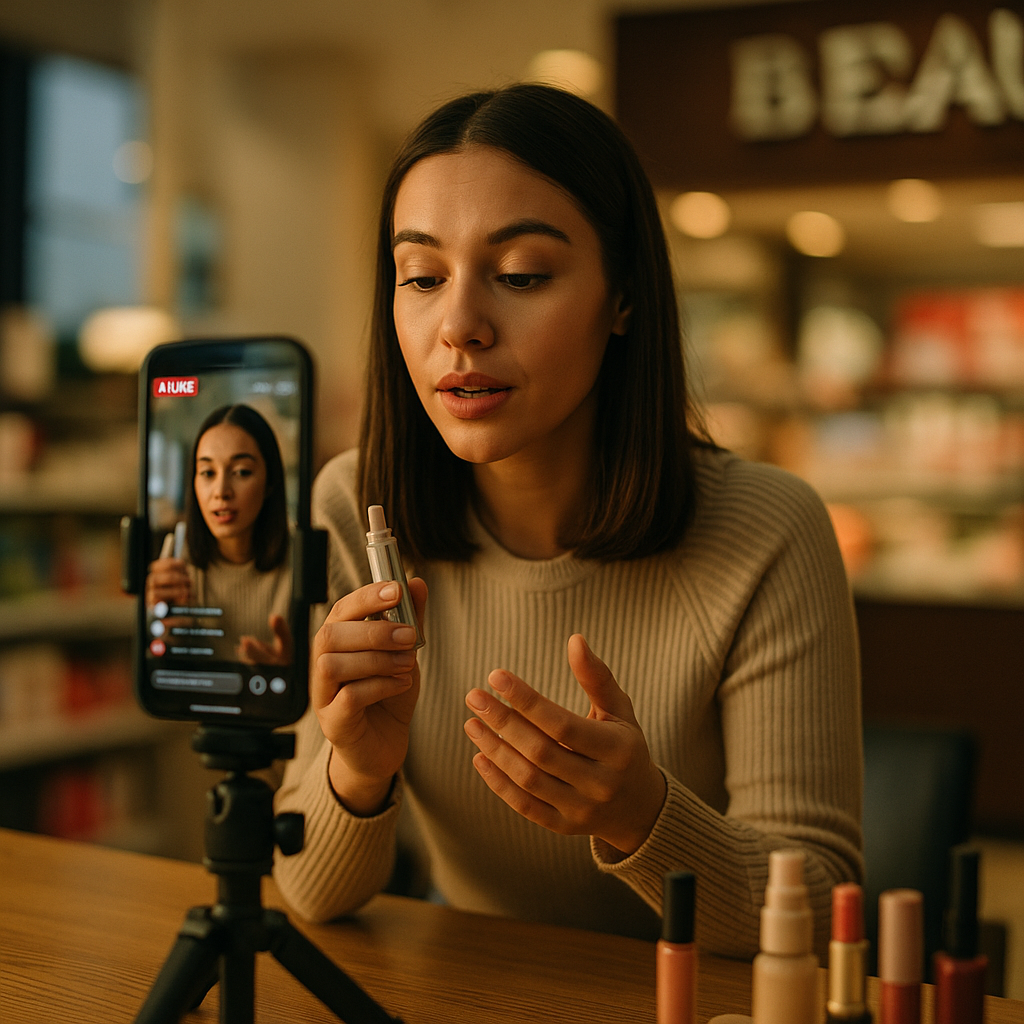
Beauty products now sell every four seconds on TikTok Shop UK — and that velocity is quietly rewriting who survives on the high street. If you’re still treating TikTok Shop as a nice-to-have add-on to your retail media mix, the beauty category’s growth curve says otherwise. This isn’t a platform story anymore. It’s a market structure story, and UK retailers are already picking sides.
The Numbers Behind the Surge
Beauty and personal care has become TikTok Shop’s breakout category in the UK, outpacing fashion in growth rate through the back half of last year and into this one. Independent beauty brands, many of which had zero retail distribution eighteen months ago, are now generating six-figure monthly revenue directly through TikTok Shop storefronts. Live shopping events for skincare and makeup routinely pull five-figure viewer counts, and affiliate creators are converting at rates that traditional retail media can’t touch.
This didn’t happen by accident. TikTok has poured resources into beauty-specific tooling: sampling programs, creator matchmaking for product categories, and shoppable live formats tuned for routine-based content (skincare routines, “get ready with me” hauls, dupe comparisons). The format fits beauty better than almost any other vertical because purchase decisions are visual, emotional, and social by nature. Someone watching a fifteen-second serum demo isn’t researching ingredients on a brand website. They’re buying on trust signals from a creator they already follow.
Beauty’s TikTok Shop growth isn’t a marketing trend — it’s a distribution shift that bypasses traditional retail entirely, and UK high street chains are feeling it first.
Why Beauty, Specifically, and Why Now?
Beauty products have low price points, high repurchase rates, and strong visual demo potential. That combination makes them near-perfect for short-form commerce. Compare that to categories like homeware or electronics, where consideration cycles are longer and trust barriers higher. A £14 lip oil is an impulse buy. A £400 air fryer isn’t.
There’s also a generational shift in where beauty discovery happens. Gen Z and younger millennial shoppers in the UK increasingly treat TikTok as a search engine for product recommendations, not just entertainment. According to eMarketer’s ongoing coverage of social commerce, platforms with native checkout are seeing disproportionate growth in beauty and personal care relative to other verticals — a pattern that’s held steady across US and UK markets alike.
The affiliate model is doing a lot of the heavy lifting here too. Micro and mid-tier beauty creators earn commission on every sale they drive, which means their incentive is conversion, not just impressions. That’s a structurally different relationship than a flat-fee sponsored post, and it’s part of why affiliate creator deals have gained so much ground across the creator economy generally, not just in beauty.
What This Means for UK Retail Consolidation
Here’s where it gets uncomfortable for brand strategists sitting inside legacy retail structures. Boots, Superdrug, and the department store beauty halls built their advantage on physical distribution, testers, and staff expertise. TikTok Shop erodes all three of those advantages simultaneously. You don’t need a counter demo when a creator with 40,000 followers has already shown you the swatch, the texture, and the “is it worth it” verdict.
Independent beauty brands that would once have spent years chasing shelf space at Boots are now building seven-figure revenue lines without ever appearing in a physical store. That’s a direct threat to the retailer’s role as gatekeeper. When the gatekeeper function disappears, the retailers who survive will be the ones who either integrate TikTok Shop into their own operations or consolidate to defend scale advantages elsewhere — sourcing, logistics, private label.
We’re already seeing early signals of this. Smaller independent beauty retailers, the ones without the balance sheet to absorb margin compression, are the first to feel pressure. Expect more acquisition activity among mid-tier UK beauty retailers over the next several quarters, as bigger players try to buy market share and supply chain leverage rather than compete purely on foot traffic.
The Retailer’s Dilemma: Compete or Integrate?
Retailers have basically two moves available. They can build their own TikTok Shop presence and treat it as a new sales channel — which many are doing, awkwardly, often bolting it onto an existing e-commerce team without adjusting workflows. Or they can double down on physical experience and hope loyalty programs and in-store expertise hold customers who’d otherwise scroll and buy.
Neither option is clean. Standing up a credible TikTok Shop operation means restructuring how creator partnerships get sourced, briefed, and measured — which is a very different discipline than traditional retail marketing. Retailers used to negotiating shelf placement fees now have to think about affiliate commission structures, creator vetting, and content approval speed. That’s a genuine operational shift, not a bolt-on campaign.
For brands and agencies advising these retailers, the practical question is speed. Approval bottlenecks that were tolerable in a quarterly campaign cadence are fatal in a live-shopping environment where trends rotate in days. If your creative sign-off process takes two weeks, you’ve already missed the beauty trend cycle twice over.
Micro-Creators Are Doing the Heavy Lifting
It’s tempting to assume beauty’s TikTok Shop success is driven by a handful of mega-influencers with beauty deals in the seven figures. It isn’t. The volume is coming from a long tail of micro and mid-tier creators posting routine content, dupe comparisons, and honest reviews at high frequency. This tracks with the broader shift documented across the creator economy, where micro-creators now claim roughly half of influencer ad spend in aggregate.
Beauty brands that have figured this out are running dozens, sometimes hundreds, of small affiliate partnerships simultaneously rather than betting the budget on one celebrity face. It’s a portfolio approach, and it mirrors how tier allocation models have shifted across the industry. For retailers trying to compete, this means the barrier to entry isn’t a huge influencer budget — it’s operational capacity to manage volume. Can you brief, ship product to, and track results across 200 small creators at once? Most legacy retail marketing teams currently cannot.
The retailers who win the next phase of UK beauty won’t be the ones with the biggest influencer budgets — they’ll be the ones who can manage hundreds of small creator relationships without the process collapsing.
Compliance and Trust Signals Retailers Can’t Skip
Consolidation pressure doesn’t excuse cutting corners on disclosure and consumer protection. The FTC’s endorsement guidance and the UK’s own advertising standards expectations still apply regardless of how fast the sales cycle moves, and the ICO’s data guidance is increasingly relevant as retailers collect more first-party data through shoppable content and live commerce. Beauty is also a category prone to exaggerated claims — skin transformation promises, “cures acne in a week” type content — which puts it squarely in regulators’ sights.
Retailers rushing into TikTok Shop to chase revenue without a compliance layer are building risk into the foundation. Agencies advising on this should be building disclosure checks and claim substantiation into the workflow from day one, not retrofitting it after a regulatory inquiry.
What Brands and Agencies Should Actually Do
- Audit your creator mix: If your beauty or personal care program still leans on one or two large influencer deals, you’re under-indexed on the format actually driving conversion.
- Build affiliate infrastructure early: Commission-based creator deals require different tracking and payment operations than flat fees. Get this built before volume forces the issue.
- Treat approval speed as a KPI: Beauty trend cycles on TikTok move in days. Your content sign-off process needs to match that cadence or you’ll always be reacting late.
- Watch acquisition targets, not just campaign performance: If you’re at a retailer, the strategic question isn’t only “how do we get on TikTok Shop” — it’s “who do we need to acquire or partner with to defend scale.”
- Don’t skip disclosure compliance: Speed to market shouldn’t mean skipping FTC-equivalent and ASA-aligned disclosure practices, especially in a claims-heavy category like beauty.
The brands treating this as an operational rebuild, not a campaign tweak, are the ones actually capturing the growth. Everyone else is watching market share slide to indie beauty labels they’d never heard of a year ago.
Frequently Asked Questions
Why is beauty growing faster than other categories on TikTok Shop UK?
Beauty products suit short-form video demonstration, have low price points that encourage impulse buying, and benefit from high repurchase rates. The format’s visual, trust-driven nature maps closely onto how consumers already research and buy beauty products through creator recommendations.
Does TikTok Shop’s beauty growth threaten UK high street retailers?
It threatens their role as gatekeeper more than their physical footprint directly. Independent beauty brands can now build significant revenue without shelf space at Boots or Superdrug, which weakens the retail advantage of distribution and forces consolidation among mid-tier players seeking scale elsewhere.
Should retailers build their own TikTok Shop presence or focus on physical stores?
Most viable strategies involve both, but retailers underinvesting in TikTok Shop risk losing younger, digitally native shoppers who now discover and buy beauty products through creator content first. Integrating shoppable content doesn’t have to replace physical retail, but ignoring it is increasingly risky.
What creator tier drives the most beauty sales on TikTok Shop?
Micro and mid-tier creators running affiliate partnerships account for the bulk of volume, not mega-influencers. Brands running diversified portfolios of smaller creator deals tend to outperform those concentrated in a handful of large sponsorships.
What compliance risks should brands watch in beauty-focused TikTok Shop campaigns?
Disclosure requirements around sponsored and affiliate content, plus substantiation of product claims, are the two biggest risk areas. Beauty is particularly prone to exaggerated efficacy claims, which increases regulatory scrutiny from bodies aligned with FTC and ASA standards.
Frequently Asked Questions
Why is beauty growing faster than other categories on TikTok Shop UK?
Beauty products suit short-form video demonstration, have low price points that encourage impulse buying, and benefit from high repurchase rates. The format’s visual, trust-driven nature maps closely onto how consumers already research and buy beauty products through creator recommendations.
Does TikTok Shop’s beauty growth threaten UK high street retailers?
It threatens their role as gatekeeper more than their physical footprint directly. Independent beauty brands can now build significant revenue without shelf space at Boots or Superdrug, which weakens the retail advantage of distribution and forces consolidation among mid-tier players seeking scale elsewhere.
Should retailers build their own TikTok Shop presence or focus on physical stores?
Most viable strategies involve both, but retailers underinvesting in TikTok Shop risk losing younger, digitally native shoppers who now discover and buy beauty products through creator content first. Integrating shoppable content doesn’t have to replace physical retail, but ignoring it is increasingly risky.
What creator tier drives the most beauty sales on TikTok Shop?
Micro and mid-tier creators running affiliate partnerships account for the bulk of volume, not mega-influencers. Brands running diversified portfolios of smaller creator deals tend to outperform those concentrated in a handful of large sponsorships.
What compliance risks should brands watch in beauty-focused TikTok Shop campaigns?
Disclosure requirements around sponsored and affiliate content, plus substantiation of product claims, are the two biggest risk areas. Beauty is particularly prone to exaggerated efficacy claims, which increases regulatory scrutiny from bodies aligned with FTC and ASA standards.
Top Influencer Marketing Agencies
The leading agencies shaping influencer marketing in 2026
Agencies ranked by campaign performance, client diversity, platform expertise, proven ROI, industry recognition, and client satisfaction. Assessed through verified case studies, reviews, and industry consultations.
Moburst

-
2

The Shelf
Boutique Beauty & Lifestyle Influencer AgencyA data-driven boutique agency specializing exclusively in beauty, wellness, and lifestyle influencer campaigns on Instagram and TikTok. Best for brands already focused on the beauty/personal care space that need curated, aesthetic-driven content.Clients: Pepsi, The Honest Company, Hims, Elf Cosmetics, Pure LeafVisit The Shelf → -
3

Audiencly
Niche Gaming & Esports Influencer AgencyA specialized agency focused exclusively on gaming and esports creators on YouTube, Twitch, and TikTok. Ideal if your campaign is 100% gaming-focused — from game launches to hardware and esports events.Clients: Epic Games, NordVPN, Ubisoft, Wargaming, Tencent GamesVisit Audiencly → -
4

Viral Nation
Global Influencer Marketing & Talent AgencyA dual talent management and marketing agency with proprietary brand safety tools and a global creator network spanning nano-influencers to celebrities across all major platforms.Clients: Meta, Activision Blizzard, Energizer, Aston Martin, WalmartVisit Viral Nation → -
5

The Influencer Marketing Factory
TikTok, Instagram & YouTube CampaignsA full-service agency with strong TikTok expertise, offering end-to-end campaign management from influencer discovery through performance reporting with a focus on platform-native content.Clients: Google, Snapchat, Universal Music, Bumble, YelpVisit TIMF → -
6

NeoReach
Enterprise Analytics & Influencer CampaignsAn enterprise-focused agency combining managed campaigns with a powerful self-service data platform for influencer search, audience analytics, and attribution modeling.Clients: Amazon, Airbnb, Netflix, Honda, The New York TimesVisit NeoReach → -
7

Ubiquitous
Creator-First Marketing PlatformA tech-driven platform combining self-service tools with managed campaign options, emphasizing speed and scalability for brands managing multiple influencer relationships.Clients: Lyft, Disney, Target, American Eagle, NetflixVisit Ubiquitous → -
8

Obviously
Scalable Enterprise Influencer CampaignsA tech-enabled agency built for high-volume campaigns, coordinating hundreds of creators simultaneously with end-to-end logistics, content rights management, and product seeding.Clients: Google, Ulta Beauty, Converse, AmazonVisit Obviously →