


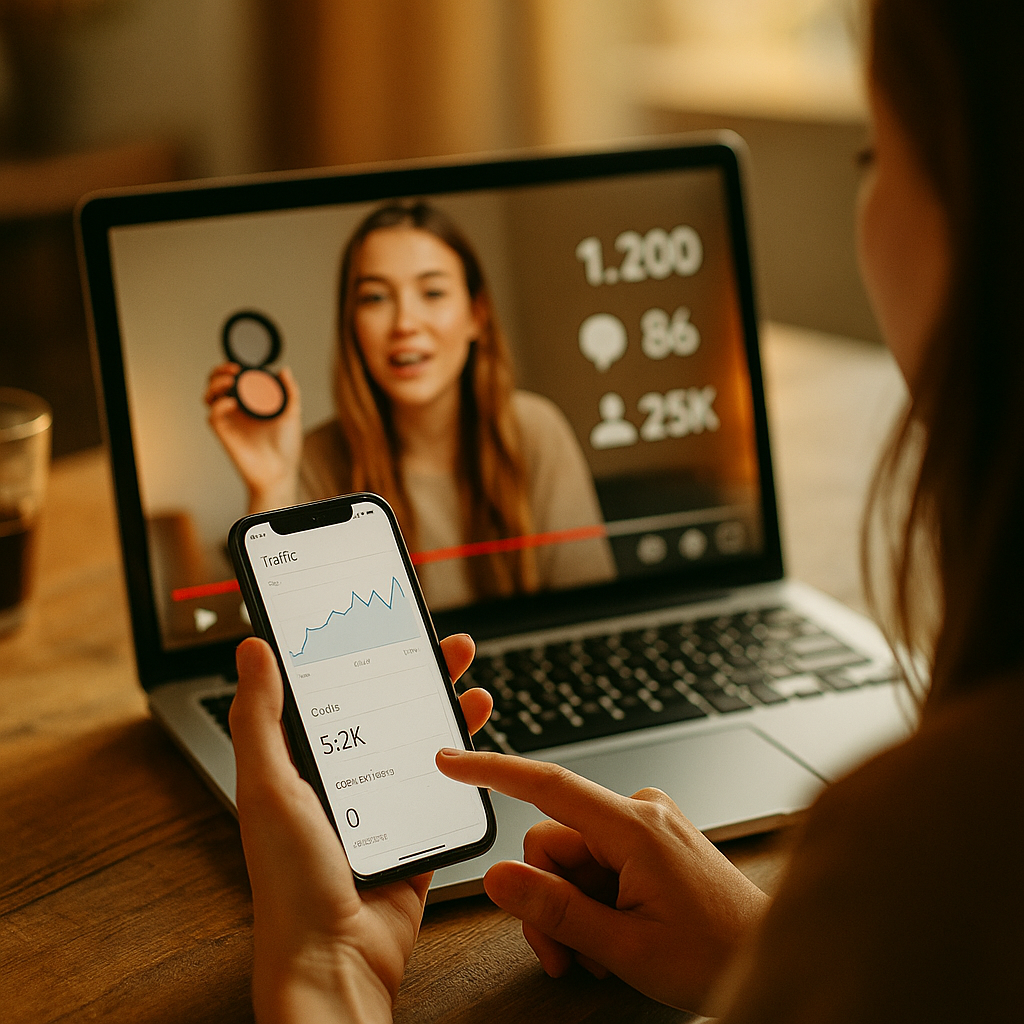
More than 60% of Google searches now end without a click to any website. If your influencer program still reports success in landing page visits and last-click conversions, you’re measuring a funnel that no longer exists. Zero click search has quietly rewritten how discovery, trust, and purchase intent form, and brands clinging to old attribution models are flying blind.
This isn’t a search marketing footnote. It’s a structural shift that touches every dollar a brand spends on creators, because creators are now the content that fills the zero click surfaces, AI Overviews, TikTok search, Instagram’s “see more” panels, and Reddit threads surfaced directly in results.
What Zero Click Search Actually Means for Brands
Zero click search describes any query where the user gets their answer directly on the results page, an AI-generated summary, a featured snippet, a knowledge panel, without ever visiting a publisher or brand site. Google’s AI Overviews now appear on a huge share of informational queries, and platforms like TikTok and Perplexity have built entire experiences around answering questions without a single outbound link.
For influencer marketing specifically, this matters because a huge chunk of creator content already lives inside that zero click ecosystem. A product review video, an unboxing clip, a “does this actually work” TikTok, these get scraped, summarized, and surfaced as answers. The consumer gets the recommendation. The brand gets no click, no session, no attribution ping.
The old funnel assumed a click was the handoff point between discovery and consideration. Zero click search deletes that handoff, which means brands need new signals to prove a creator campaign worked.
The Funnel Didn’t Disappear, It Went Invisible
Marketers love to declare the funnel dead. It’s not dead. It’s just happening somewhere you can’t see it with a UTM parameter. A shopper still moves from awareness to consideration to purchase, but that journey now loops through search summaries, creator comment sections, and group chats before it ever touches a brand-owned property.
This mirrors what we’ve already covered in how search and AI rewire creator strategy: discovery has fragmented across so many surfaces that no single click-based metric can capture it. Add zero click search on top, and even the surfaces you do track are underreporting engagement, because the platform itself is answering the question before the user ever lands anywhere.
Brands running influencer programs on cost-per-click or landing-page-conversion models are essentially measuring the shrinking minority of the journey. Everyone else, the majority in many categories, gets silently excluded from the ROI math.
What to Track Instead
If clicks and sessions are unreliable, what fills the gap? A handful of signals are emerging as the practical replacement stack, and none of them require reinventing your entire measurement approach from scratch.
- Share of voice in AI-generated answers. Tools that monitor how often your brand appears in AI Overviews, Perplexity answers, and chatbot responses for category-relevant queries are becoming table stakes. If a competitor’s creator content is the source material for the AI’s answer and yours isn’t, that’s a visibility gap no click metric would ever surface.
- View-through and watch-time behavior. Instead of asking “did they click,” ask “did they watch, and how much.” This is why view-through rate as a core KPI has gained so much traction, it captures attention that never intended to click in the first place.
- Branded search lift. Track whether a creator campaign increases direct and branded search volume, even if those searches resolve without a click. Rising branded query volume, even into zero click territory, is still a demand signal.
- Sentiment and mention velocity. Social listening and AI brand monitoring tools now track how often and how favorably a brand shows up across comment threads, Reddit, and creator captions, independent of any traffic metric.
- Assisted conversions via multi-touch modeling. Platforms like Meta and TikTok offer view-through and engaged-view attribution windows that at least approximate influence beyond the click. Pair that with a marketing mix model to catch what platform-level attribution misses.
None of these is a perfect replacement for a click. But stacked together, they paint a far more honest picture of what’s actually driving demand.
Why AI Overviews Change the Content Brief, Not Just the Metrics
Here’s the part most brands miss: measurement isn’t the only thing that needs to change. The content itself needs to be built for extraction. AI summarization tools favor content that’s structured, specific, and easy to lift, clear comparisons, direct answers, concrete numbers. A creator’s rambling, vibes-heavy review might perform beautifully on watch time but get ignored entirely by an AI summarizer looking for a crisp verdict.
Smart brands are now briefing creators to include structured claims, “three things I’d tell a friend before buying this,” clear pros and cons, specific use cases, precisely because that format is more likely to get pulled into a zero click answer. It’s a subtle shift from optimizing for engagement alone to optimizing for both engagement and machine readability. That second goal comes with its own operational cost. Compliance and legal teams are already stretched thin reviewing creator content, and layering in machine-readability standards adds another checklist item. That’s part of why machine readability compliance has become a real operational burden inside marketing ops teams, not just a technical nice-to-have.
Attribution Isn’t Dying, It’s Diversifying
It’s tempting to treat zero click search as an attribution apocalypse. It’s really more of an attribution diversification. The brands handling this well aren’t abandoning measurement, they’re building a portfolio of signals instead of betting everything on last-click.
This tracks with a broader trend across the industry: pay structures and performance benchmarks are moving away from single-metric thinking entirely. We’ve seen it in how LTV metrics are replacing reach in pay contracts, and in how nano influencer conversion data is resetting budget benchmarks. Zero click search is just the latest force pushing brands toward multi-signal evaluation instead of a single, tidy number in a dashboard.
If your dashboard only has one column for “success,” zero click search will make that column increasingly meaningless. The fix isn’t a better dashboard, it’s a broader definition of what counts as a result.
The Retail Media Wrinkle
There’s an added complication. Retail media networks, Amazon, Walmart Connect, Target Roundel, are absorbing a growing share of creator budgets precisely because they offer closed-loop, purchase-verified attribution that search and social increasingly can’t. As covered in how retail media networks are absorbing creator budget, brands frustrated by zero click search’s attribution fog are shifting spend toward environments where a “click” still reliably means something. That’s a reasonable hedge, but it shouldn’t be the whole strategy. Retail media captures bottom-funnel intent well. It says almost nothing about the upper-funnel discovery that zero click search is actively reshaping.
Brands need both: retail media for provable purchase attribution, and the broader signal stack above for everything happening earlier in the journey.
Building a Practical Measurement Stack
So what does this actually look like operationally? A few concrete moves:
- Audit which of your target queries already trigger AI Overviews or featured snippets, and check whether creator or brand content is the cited source.
- Add branded search volume and view-through rate to your standard campaign reporting template, not as a footnote, as a headline metric.
- Brief creators for extractable structure: clear verdicts, numbered lists, direct comparisons, in addition to authentic storytelling.
- Run a quarterly marketing mix model to sanity-check platform-reported attribution against actual sales lift.
- Set a standing process for AI brand monitoring, since manual tracking of AI-surfaced mentions is already consuming excessive analyst time, according to recent industry reporting on AI brand monitoring hours spent weekly.
For context on scale: eMarketer and Statista have both tracked declining organic click-through rates on informational queries for several consecutive years, a trend accelerating as generative answers expand across Google, Bing, and conversational AI tools. Meanwhile, platforms like Sprout Social and Meta Business now offer view-through and engagement reporting specifically designed to fill the gap left by declining click volume. The infrastructure to measure this new reality exists. Most brands just haven’t rebuilt their reporting templates to use it.
FAQs
Frequently Asked Questions
What is zero click search and why does it matter for influencer marketing?
Zero click search happens when a user gets their answer directly on a search or platform results page without visiting any website. It matters for influencer marketing because creator content increasingly feeds those AI-generated answers, meaning a campaign can drive massive visibility and zero measurable traffic.
How do brands measure influencer ROI without relying on clicks?
Brands are shifting toward view-through rate, branded search lift, sentiment tracking, share of voice in AI-generated answers, and marketing mix modeling to capture influence that never results in a direct click.
Does zero click search mean influencer marketing is less effective?
No. It means the effectiveness is harder to see with traditional click-based tools. Attention, trust, and purchase intent are still forming, just through channels that don’t leave a clickable trail.
Should brands brief creators differently because of AI Overviews?
Yes. Content that includes clear verdicts, structured comparisons, and specific claims is more likely to get pulled into AI-generated summaries, giving the brand visibility even in a zero click result.
Is retail media a solution to zero click attribution problems?
It helps for bottom-funnel, purchase-verified attribution, but it doesn’t address the upper-funnel discovery that zero click search is reshaping. Brands need both retail media and broader signal tracking.
The brands that win the next phase of influencer marketing won’t be the ones chasing clicks harder. They’ll be the ones who rebuilt their reporting stack around visibility, attention, and search lift, and briefed creators to win inside the zero click answer itself.
Top Influencer Marketing Agencies
The leading agencies shaping influencer marketing in 2026
Agencies ranked by campaign performance, client diversity, platform expertise, proven ROI, industry recognition, and client satisfaction. Assessed through verified case studies, reviews, and industry consultations.
Moburst

-
2

The Shelf
Boutique Beauty & Lifestyle Influencer AgencyA data-driven boutique agency specializing exclusively in beauty, wellness, and lifestyle influencer campaigns on Instagram and TikTok. Best for brands already focused on the beauty/personal care space that need curated, aesthetic-driven content.Clients: Pepsi, The Honest Company, Hims, Elf Cosmetics, Pure LeafVisit The Shelf → -
3

Audiencly
Niche Gaming & Esports Influencer AgencyA specialized agency focused exclusively on gaming and esports creators on YouTube, Twitch, and TikTok. Ideal if your campaign is 100% gaming-focused — from game launches to hardware and esports events.Clients: Epic Games, NordVPN, Ubisoft, Wargaming, Tencent GamesVisit Audiencly → -
4

Viral Nation
Global Influencer Marketing & Talent AgencyA dual talent management and marketing agency with proprietary brand safety tools and a global creator network spanning nano-influencers to celebrities across all major platforms.Clients: Meta, Activision Blizzard, Energizer, Aston Martin, WalmartVisit Viral Nation → -
5

The Influencer Marketing Factory
TikTok, Instagram & YouTube CampaignsA full-service agency with strong TikTok expertise, offering end-to-end campaign management from influencer discovery through performance reporting with a focus on platform-native content.Clients: Google, Snapchat, Universal Music, Bumble, YelpVisit TIMF → -
6

NeoReach
Enterprise Analytics & Influencer CampaignsAn enterprise-focused agency combining managed campaigns with a powerful self-service data platform for influencer search, audience analytics, and attribution modeling.Clients: Amazon, Airbnb, Netflix, Honda, The New York TimesVisit NeoReach → -
7

Ubiquitous
Creator-First Marketing PlatformA tech-driven platform combining self-service tools with managed campaign options, emphasizing speed and scalability for brands managing multiple influencer relationships.Clients: Lyft, Disney, Target, American Eagle, NetflixVisit Ubiquitous → -
8

Obviously
Scalable Enterprise Influencer CampaignsA tech-enabled agency built for high-volume campaigns, coordinating hundreds of creators simultaneously with end-to-end logistics, content rights management, and product seeding.Clients: Google, Ulta Beauty, Converse, AmazonVisit Obviously →