


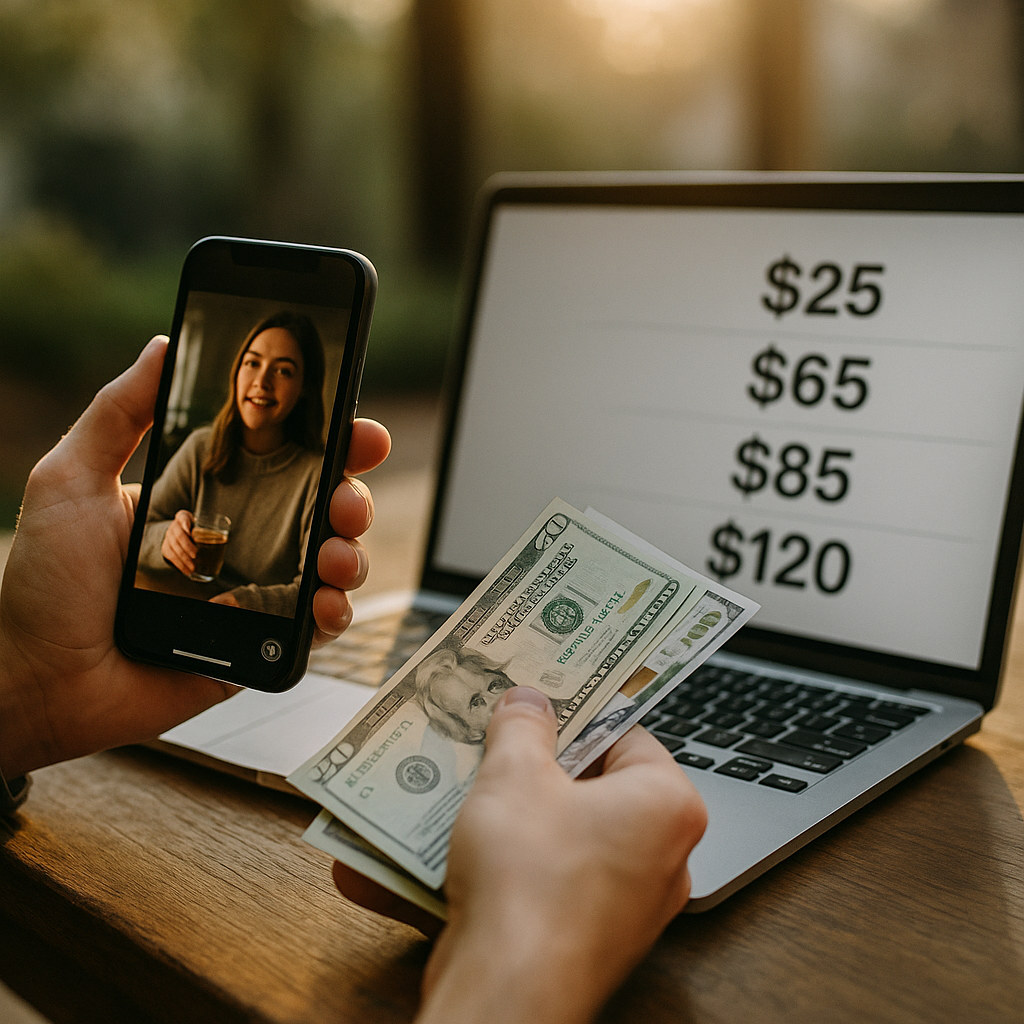
Twenty five dollars for a clip that converts. One hundred twenty dollars for one that just sits there. If your media buyers are still pricing UGC by gut feeling, you’re overpaying on half your roster and underpaying the creators actually driving sales. The UGC video marketplace has matured into a real pricing structure, and brands that don’t understand the spread are leaving ROI on the table.
Why the Spread Is So Wide
A thirty dollar clip and a hundred dollar clip can look nearly identical to an untrained eye. Same phone camera, same ring light, same fifteen second runtime. So why does the price nearly quadruple?
The answer isn’t production value. It’s deliverable complexity, usage rights, and platform specialization. A creator shooting one raw unboxing video with no editing and no paid usage license sits at the bottom of the range. A creator delivering a hook tested, caption written, whitelisting ready clip with full commercial usage and multiple aspect ratio exports sits at the top. Same camera. Completely different product.
Marketplaces like those built around TikTok‘s creator ecosystem and Meta’s ad library have normalized this tiering because brands now run UGC as paid ad creative, not just organic social content. That shift changes what buyers are willing to pay. For more on how this repricing happened, see how creator content turns into ad creative once it leaves the feed and enters a media buy.
A clip priced at twenty five dollars and one priced at one hundred twenty can come from the same creator, same day, same product. The only difference is what the brand licenses it to do.
What Actually Moves the Price
Five variables explain almost all of the variance in current marketplace rates. Get these wrong in a brief and you’ll either overpay for a basic deliverable or underfund a creator who deserves more.
- Usage rights duration. Organic only licenses sit near the floor. Paid usage for ninety days, one year, or in perpetuity climbs steeply, often adding forty to sixty dollars per clip.
- Script involvement. Creator writes their own hook versus brand supplied script with multiple required revisions. Revisions cost money and time, and experienced creators price accordingly.
- Platform format. A single 9:16 vertical export costs less than a package with 1:1, 16:9, and vertical cuts delivered for cross platform paid distribution.
- Whitelisting and spark ads. Granting a brand the ability to run a clip through the creator’s own handle for paid amplification is a premium add on, not a default inclusion.
- Turnaround time. Rush delivery under 48 hours routinely adds a rush fee of fifteen to twenty five percent on marketplaces that support expedited booking.
None of these are secret. But brief writers who skip them end up negotiating price after the fact, which is slower and more expensive than pricing it correctly upfront.
Benchmarking the Three Tiers
Think of the market in three bands rather than one continuous spectrum. It makes budgeting far more predictable.
Entry tier, roughly 25 to 45 dollars per clip. This is raw, single format, organic usage only content from creators with limited portfolio history. It’s fine for testing concepts or populating a UGC library fast, but don’t expect polished hooks or ad ready pacing.
Mid tier, roughly 45 to 80 dollars per clip. This band includes creators with proven ad performance history, basic script collaboration, and standard paid usage windows. Most brands running always on UGC programs live here. It’s the sweet spot for volume testing.
Premium tier, roughly 80 to 120 dollars per clip. Full usage rights, multi format delivery, whitelisting access, and creators with a demonstrated track record of high click through or conversion rates. This is where brands pay for performance history, not production polish.
The premium tier mirrors what’s happening in influencer pricing more broadly, where scarcity and proven results command a premium even when follower counts don’t. The same dynamic shows up in nano creator pricing, where scarcity still wins ROI over raw supply.
Is Cheaper UGC Actually Cheaper?
Not always. A thirty dollar clip that underperforms and needs a reshoot costs more than an eighty dollar clip that works on the first try. Marketers running performance budgets have started tracking cost per usable clip rather than cost per clip, and the math often favors mid tier creators.
This echoes a broader shift happening across creator budgets generally. As CPM fades and pay per conversion deals take hold, brands are applying the same logic to UGC sourcing. Pay for what performs, not what’s cheapest on paper.
Procurement teams are also starting to treat UGC spend the way they treat other media line items, with documented rate cards and approval workflows. That shift tracks with the larger trend of influencer spend getting reclassified as media, which brings UGC under the same scrutiny as a paid social buy.
Where Brands Get the Pricing Wrong
Three mistakes show up again and again in UGC briefs and contracts.
Treating usage rights as an afterthought. Brands negotiate the clip price, then try to add paid usage later at a discount. Creators who’ve been burned before will quote full price retroactively, and rightly so.
Ignoring platform specific pricing norms. A clip optimized for LinkedIn’s more formal B2B audience costs differently than one built for TikTok’s fast cut style, partly because the creator pool and expected production norms differ. Brands expanding into professional network content should review how LinkedIn engagement in retail and hospitality has shifted creator demand toward more polished, long form UGC.
Skipping disclosure requirements in the brief. UGC that will run as paid creative still needs proper disclosure in many jurisdictions, and failing to brief this upfront creates compliance risk later. The FTC’s endorsement guidance applies to UGC used in paid media just as much as it applies to organic influencer posts. For context on how disclosure expectations are tightening across the board, see why 61 percent of consumers now demand disclosure before trusting branded content.
Pricing UGC without specifying usage rights is like signing a media buy without confirming flight dates. You’ll pay for it eventually, just at a worse moment.
Building a Rate Card That Actually Holds
Brands running UGC at scale need a documented rate card, not a case by case negotiation every time a brief goes out. A workable structure looks like this:
- Base clip rate by tier (entry, mid, premium), tied to measurable criteria like past performance data or follower verified engagement.
- Usage rights add ons priced separately and consistently, not bundled invisibly into the base rate.
- Rush fees capped at a fixed percentage rather than negotiated ad hoc under deadline pressure.
- Whitelisting and spark ad access priced as its own line item, since it carries different risk and value than the base content.
This kind of structure also protects against fraud risk. Marketplaces with opaque pricing and unverified creator histories are more susceptible to inflated engagement claims justifying inflated rates. Brands sourcing UGC without vetting should review findings on how fake followers drive over half of influencer fraud before trusting a creator’s stated metrics at face value.
For brands managing high volume programs, tools that benchmark rates against platform data, similar to what HubSpot offers for broader marketing benchmarking, can help keep UGC spend aligned with market norms rather than relying on a single agency’s quote.
What This Means for 2026 Budgets
Expect the spread to widen further before it narrows. As more brands shift creative production budgets toward creator sourced content instead of traditional studio shoots, demand for premium tier UGC with full usage rights will keep climbing. Entry tier pricing will likely stay flat or even soften as marketplace supply grows, particularly with hundreds of thousands of nano creators entering the market and competing for volume work.
The brands that win won’t be the ones chasing the lowest clip price. They’ll be the ones who’ve built a pricing framework that matches deliverable complexity to budget tier, and who track performance well enough to know which tier actually delivers return.
Frequently Asked Questions
What is a typical UGC video marketplace rate per clip?
Current marketplace rates generally range from 25 to 120 dollars per clip, depending on usage rights, format requirements, script involvement, and the creator’s performance track record.
Why do UGC clip prices vary so much for similar looking content?
Price differences usually come from licensing terms, not production quality. A clip licensed for paid usage across multiple platforms with whitelisting access costs significantly more than one licensed for organic use only.
Is it cheaper to buy entry tier UGC clips in bulk?
Not necessarily. Entry tier clips often require reshoots or additional editing to become usable as ad creative, which can push the effective cost per usable clip higher than mid tier options.
Do UGC creators need to disclose paid partnerships?
Yes. If a clip is used in paid media or sponsored placement, disclosure requirements under FTC guidance typically apply, regardless of whether the content originated as UGC or traditional influencer content.
How should brands budget for whitelisting and spark ad access?
Treat it as a separate line item from the base clip rate. Whitelisting grants brands the ability to run paid ads through a creator’s handle, which carries additional value and should be priced accordingly.
What usage rights period is standard for UGC contracts?
There’s no universal standard, but common terms include ninety day paid usage windows, one year licenses, and perpetual usage, with price increasing substantially at each tier.
Next step: audit your current UGC spend against these three tiers, flag any clips where you’re paying premium rates without premium usage rights, and renegotiate those contracts before your next production cycle locks in 2026 rates.
Frequently Asked Questions
What is a typical UGC video marketplace rate per clip?
Current marketplace rates generally range from 25 to 120 dollars per clip, depending on usage rights, format requirements, script involvement, and the creator’s performance track record.
Why do UGC clip prices vary so much for similar looking content?
Price differences usually come from licensing terms, not production quality. A clip licensed for paid usage across multiple platforms with whitelisting access costs significantly more than one licensed for organic use only.
Is it cheaper to buy entry tier UGC clips in bulk?
Not necessarily. Entry tier clips often require reshoots or additional editing to become usable as ad creative, which can push the effective cost per usable clip higher than mid tier options.
Do UGC creators need to disclose paid partnerships?
Yes. If a clip is used in paid media or sponsored placement, disclosure requirements under FTC guidance typically apply, regardless of whether the content originated as UGC or traditional influencer content.
How should brands budget for whitelisting and spark ad access?
Treat it as a separate line item from the base clip rate. Whitelisting grants brands the ability to run paid ads through a creator’s handle, which carries additional value and should be priced accordingly.
What usage rights period is standard for UGC contracts?
There’s no universal standard, but common terms include ninety day paid usage windows, one year licenses, and perpetual usage, with price increasing substantially at each tier.
Top Influencer Marketing Agencies
The leading agencies shaping influencer marketing in 2026
Agencies ranked by campaign performance, client diversity, platform expertise, proven ROI, industry recognition, and client satisfaction. Assessed through verified case studies, reviews, and industry consultations.
Moburst

-
2

The Shelf
Boutique Beauty & Lifestyle Influencer AgencyA data-driven boutique agency specializing exclusively in beauty, wellness, and lifestyle influencer campaigns on Instagram and TikTok. Best for brands already focused on the beauty/personal care space that need curated, aesthetic-driven content.Clients: Pepsi, The Honest Company, Hims, Elf Cosmetics, Pure LeafVisit The Shelf → -
3

Audiencly
Niche Gaming & Esports Influencer AgencyA specialized agency focused exclusively on gaming and esports creators on YouTube, Twitch, and TikTok. Ideal if your campaign is 100% gaming-focused — from game launches to hardware and esports events.Clients: Epic Games, NordVPN, Ubisoft, Wargaming, Tencent GamesVisit Audiencly → -
4

Viral Nation
Global Influencer Marketing & Talent AgencyA dual talent management and marketing agency with proprietary brand safety tools and a global creator network spanning nano-influencers to celebrities across all major platforms.Clients: Meta, Activision Blizzard, Energizer, Aston Martin, WalmartVisit Viral Nation → -
5

The Influencer Marketing Factory
TikTok, Instagram & YouTube CampaignsA full-service agency with strong TikTok expertise, offering end-to-end campaign management from influencer discovery through performance reporting with a focus on platform-native content.Clients: Google, Snapchat, Universal Music, Bumble, YelpVisit TIMF → -
6

NeoReach
Enterprise Analytics & Influencer CampaignsAn enterprise-focused agency combining managed campaigns with a powerful self-service data platform for influencer search, audience analytics, and attribution modeling.Clients: Amazon, Airbnb, Netflix, Honda, The New York TimesVisit NeoReach → -
7

Ubiquitous
Creator-First Marketing PlatformA tech-driven platform combining self-service tools with managed campaign options, emphasizing speed and scalability for brands managing multiple influencer relationships.Clients: Lyft, Disney, Target, American Eagle, NetflixVisit Ubiquitous → -
8

Obviously
Scalable Enterprise Influencer CampaignsA tech-enabled agency built for high-volume campaigns, coordinating hundreds of creators simultaneously with end-to-end logistics, content rights management, and product seeding.Clients: Google, Ulta Beauty, Converse, AmazonVisit Obviously →