


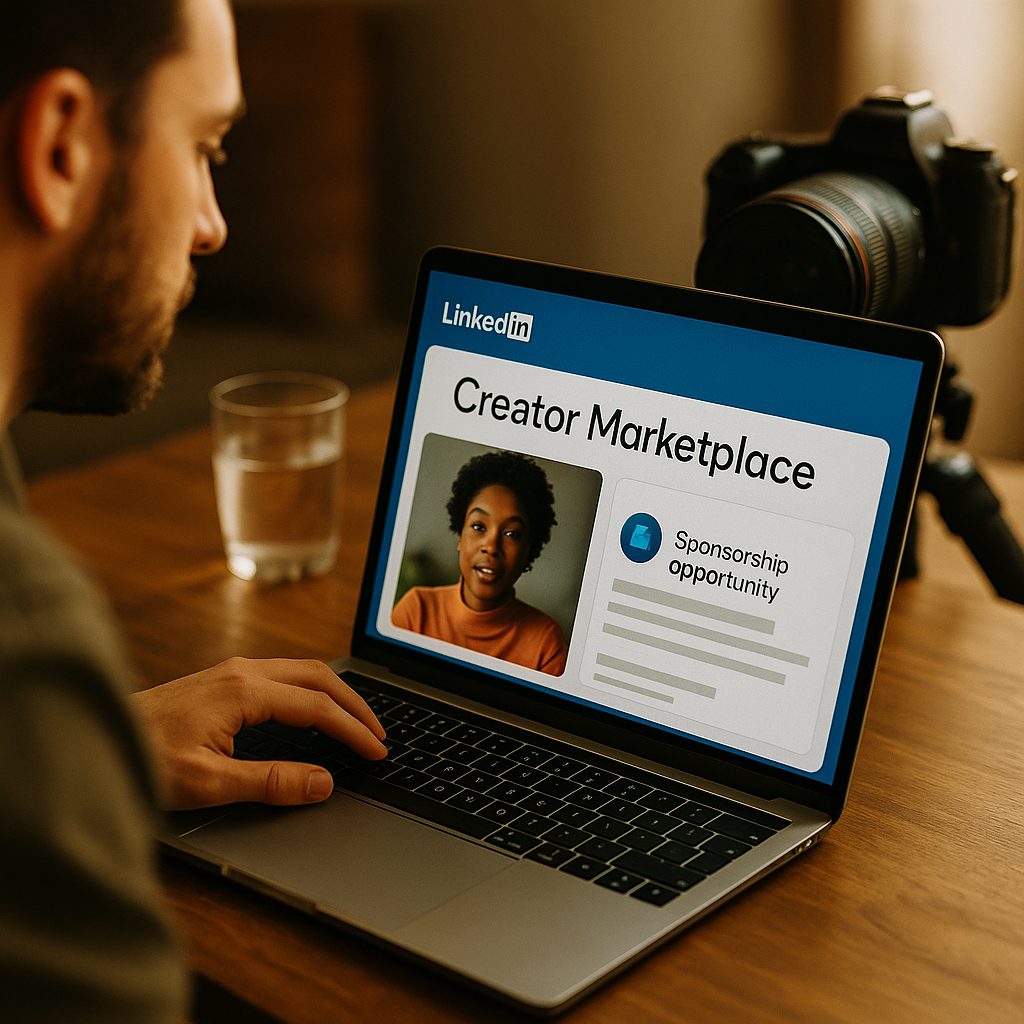
LinkedIn now hosts over 1.2 billion members and, by its own admission, has quietly become one of the fastest-growing spaces for branded content consumption. Yet most B2B marketers still treat the LinkedIn Creator Marketplace like a rumor rather than a channel. That hesitation is costing first-mover advantage. This playbook breaks down how to vet creators properly and structure sponsorships that won’t blow up your compliance review.
Why B2B Brands Are Finally Paying Attention
For years, LinkedIn influencer marketing meant awkward “thought leadership” posts from executives with ghostwriters. That’s changed. The platform’s creator economy push, paired with its expanded video surface, has produced a new class of professional creators: former operators, analysts, and niche experts who’ve built five- and six-figure followings around specific industries — supply chain, fintech compliance, dev tools, HR tech.
These aren’t lifestyle influencers dabbling in business content. They’re practitioners with credibility, which is exactly what B2B buyers say they trust more than brand messaging. HubSpot’s research on buyer behavior has consistently shown that peer recommendations outperform vendor claims, and LinkedIn creators sit squarely in that trust gap.
The Creator Marketplace formalizes what was previously a DM-and-invoice hustle. It gives brands a searchable database of vetted creators, performance benchmarks, and a structured path to partnership — similar in spirit to what TikTok and Instagram built years ago, but tuned for a professional audience.
The B2B buying committee doesn’t scroll TikTok for vendor research. They scroll LinkedIn. That’s the entire argument for building a creator program here before competitors do.
Vetting Creators: What Actually Matters
Follower count is the weakest signal you can use on LinkedIn. A creator with 40,000 followers and a niche in enterprise procurement will outperform a 300,000-follower generalist every time, for B2B goals. Here’s what to actually check.
- Engagement composition, not volume. Look at who’s commenting. Are they job titles that match your ICP (ideal customer profile), or are they other creators farming engagement pods? LinkedIn’s comment sections are notoriously gameable — check for generic “Great insight!” comments from accounts with no profile photo.
- Content consistency over time. Pull their last 90 days of posts. Sudden spikes in posting frequency right before a rate card pitch is a red flag. Consistent, dated expertise is worth more than a recent pivot into “creator” branding.
- Native format fluency. Does this person actually use LinkedIn’s video tools, documents, and polls, or do they just cross-post from X and Instagram? Native content performs dramatically better, per LinkedIn’s own algorithm behavior, which our talking-head video breakdown covers in more depth.
- Prior brand mentions. Search their post history for competitor tags or sponsored disclosures. A creator who’s shilled for five SaaS tools in six months has an audience trained to scroll past sponsored content.
- Audience geography and seniority. LinkedIn’s Creator Marketplace analytics (where available) or a simple manual audit of commenters’ titles tells you whether this creator’s audience is actually decision-makers or mostly students and job-seekers.
Don’t skip the manual audit step just because a creator shows up in the Marketplace’s recommended list. Being listed isn’t the same as being right for your category.
The Credibility Test
Ask yourself one blunt question: would this creator’s audience believe they’d genuinely use your product? A DevOps creator promoting a project management tool they clearly never touched is a worse outcome than no sponsorship at all. B2B audiences are unusually skeptical, and skepticism travels fast in comment sections.
Structuring the First Sponsorship: Start Small, Prove the Model
Your first LinkedIn creator deal should be a pilot, not a campaign. Treat it like a controlled test with clear success metrics, not a six-month retainer signed on vibes.
A sensible starting structure:
- Single-post pilot with defined deliverables. One native video or document carousel, one clear CTA, one tracked link (UTM-tagged, obviously).
- Flat fee, not pure performance. Early-stage creators on LinkedIn rarely have performance data mature enough to price a CPM or affiliate structure confidently. Pay a flat fee scaled to their average post engagement, not follower count.
- 30-day usage rights. Negotiate rights to repost the content on your own channels or run it as a dark post ad. LinkedIn’s Thought Leader Ads format makes this especially valuable — you can boost a creator’s organic post using your ad budget while it still carries their name and face.
- Disclosure language locked in advance. Don’t leave FTC disclosure wording to the creator’s discretion. Provide exact hashtag and disclosure copy in the brief.
Once you’ve run three to five pilots, you’ll have real comparative data: cost per engagement, click-through by creator niche, and — most importantly — the sales team’s read on lead quality. That’s when you start structuring longer retainers or multi-post series.
Run pilots in threes, not ones. A single sponsored post tells you almost nothing statistically significant. Three creators, same brief, same budget tier gives you an actual comparison.
Budgeting and Rate Benchmarks
Rates on LinkedIn remain less standardized than TikTok or Instagram, largely because the Creator Marketplace is younger and the professional-audience premium is still being priced in real time. As a rough industry benchmark for the current market: expect $500–$1,500 per sponsored post for a mid-tier B2B creator (15,000–75,000 followers) with strong engagement, and $2,000–$5,000+ for category-leading voices with proven pipeline influence.
Compare that to influencer rates on other platforms and it looks steep for the follower count. But B2B conversion value changes the math entirely — a single enterprise lead can be worth more than an entire consumer influencer campaign. eMarketer’s B2B spend data consistently shows marketers underestimate content marketing’s compounding pipeline effect versus paid search.
Budget structuring tip: hold back 20% of your pilot budget for amplification. A great organic post deserves paid boost dollars once you’ve confirmed it converts. This mirrors a lesson we’ve seen play out in creator bundle pricing negotiations on YouTube — the initial rate is just the entry fee, not the full spend.
Where the Budget Actually Goes Wrong
Most first-time LinkedIn sponsorship budgets fail for one reason: no line item for iteration. Brands pay for one post, it underperforms, and the program dies before a second attempt. Build in at least two rounds of creative testing per creator relationship before judging the channel a failure.
Compliance and Disclosure: The Part Legal Will Ask About
LinkedIn sponsored content falls under the same FTC endorsement guidelines as every other platform. The professional tone of LinkedIn doesn’t exempt anyone from disclosure requirements, and enforcement risk is arguably higher because B2B audiences include compliance officers who will notice.
Practical rules to bake into every contract:
- Disclosure must appear before the “see more” cutoff, not buried at the bottom of a long post.
- Use unambiguous language: “Sponsored by” or “Paid partnership with,” not vague hashtags like #collab.
- Document the brief and approval trail. If the FTC or a regulator ever asks, you need a paper trail showing the creator was instructed properly.
- For UK or EU audiences, cross-check ICO guidance on advertising transparency alongside FTC rules, since LinkedIn’s B2B audience is often more international than a typical consumer platform play.
This is one area where the compliance-adjacent lessons from other platforms apply directly. Our breakdown of FTC disclosure rules in buy-moment content is written for Instagram but the underlying disclosure logic — visible, unambiguous, timely — transfers cleanly to LinkedIn.
Measuring What Matters (Hint: It’s Not Likes)
Vanity metrics are especially misleading on LinkedIn because the algorithm rewards dwell time and comment depth over raw reach. A post with 2,000 impressions and 40 substantive comments from director-level titles is worth more than one with 50,000 impressions and no engagement from anyone in your target account list.
Track these instead:
- Click-through rate on tracked links, segmented by job title if your CRM allows it
- Comment quality — are prospects asking product questions?
- Profile visits to your company page in the 48 hours following the post
- Downstream pipeline attribution, even if it’s directional rather than exact
LinkedIn’s algorithm has shifted meaningfully toward rewarding genuine community interaction over passive reach, a trend we’ve tracked in detail separately. Understanding how the algorithm weighs community signals should directly inform which creators you prioritize — the ones who spark real discussion, not just reactions.
Structuring measurement this way also protects you internally. When a CFO asks why you’re spending five figures on “some guy who posts about logistics,” pipeline-adjacent data is a far stronger answer than impression counts.
Next Step
Pick three creators in your niche, run identical flat-fee pilots this quarter, and judge the channel on comment quality and pipeline signal, not follower count. That single test will tell you more than any rate card ever could.
FAQs
What is the LinkedIn Creator Marketplace?
It’s LinkedIn’s formal system for connecting brands with vetted creators for sponsored content, including discovery tools, creator analytics, and structured partnership workflows, replacing the informal DM-based outreach brands previously relied on.
How much should a B2B brand budget for a first LinkedIn creator sponsorship?
Expect roughly $500–$1,500 per post for mid-tier niche creators and $2,000–$5,000+ for established category voices, plus a reserve budget for paid amplification of top-performing posts.
What’s the biggest vetting mistake brands make?
Prioritizing follower count over audience composition. A smaller creator with an audience of relevant job titles and genuine engagement will consistently outperform a larger, generalist account for B2B goals.
Do FTC disclosure rules apply to LinkedIn the same way as Instagram or TikTok?
Yes. The FTC’s endorsement guidelines apply platform-agnostically. Disclosures must be clear, unambiguous, and visible before any “see more” content cutoff.
How long should a pilot sponsorship run before judging results?
Run at least three creator pilots with identical briefs before drawing conclusions. A single post rarely provides statistically meaningful comparison data.
Top Influencer Marketing Agencies
The leading agencies shaping influencer marketing in 2026
Agencies ranked by campaign performance, client diversity, platform expertise, proven ROI, industry recognition, and client satisfaction. Assessed through verified case studies, reviews, and industry consultations.
Moburst

-
2

The Shelf
Boutique Beauty & Lifestyle Influencer AgencyA data-driven boutique agency specializing exclusively in beauty, wellness, and lifestyle influencer campaigns on Instagram and TikTok. Best for brands already focused on the beauty/personal care space that need curated, aesthetic-driven content.Clients: Pepsi, The Honest Company, Hims, Elf Cosmetics, Pure LeafVisit The Shelf → -
3

Audiencly
Niche Gaming & Esports Influencer AgencyA specialized agency focused exclusively on gaming and esports creators on YouTube, Twitch, and TikTok. Ideal if your campaign is 100% gaming-focused — from game launches to hardware and esports events.Clients: Epic Games, NordVPN, Ubisoft, Wargaming, Tencent GamesVisit Audiencly → -
4

Viral Nation
Global Influencer Marketing & Talent AgencyA dual talent management and marketing agency with proprietary brand safety tools and a global creator network spanning nano-influencers to celebrities across all major platforms.Clients: Meta, Activision Blizzard, Energizer, Aston Martin, WalmartVisit Viral Nation → -
5

The Influencer Marketing Factory
TikTok, Instagram & YouTube CampaignsA full-service agency with strong TikTok expertise, offering end-to-end campaign management from influencer discovery through performance reporting with a focus on platform-native content.Clients: Google, Snapchat, Universal Music, Bumble, YelpVisit TIMF → -
6

NeoReach
Enterprise Analytics & Influencer CampaignsAn enterprise-focused agency combining managed campaigns with a powerful self-service data platform for influencer search, audience analytics, and attribution modeling.Clients: Amazon, Airbnb, Netflix, Honda, The New York TimesVisit NeoReach → -
7

Ubiquitous
Creator-First Marketing PlatformA tech-driven platform combining self-service tools with managed campaign options, emphasizing speed and scalability for brands managing multiple influencer relationships.Clients: Lyft, Disney, Target, American Eagle, NetflixVisit Ubiquitous → -
8

Obviously
Scalable Enterprise Influencer CampaignsA tech-enabled agency built for high-volume campaigns, coordinating hundreds of creators simultaneously with end-to-end logistics, content rights management, and product seeding.Clients: Google, Ulta Beauty, Converse, AmazonVisit Obviously →