


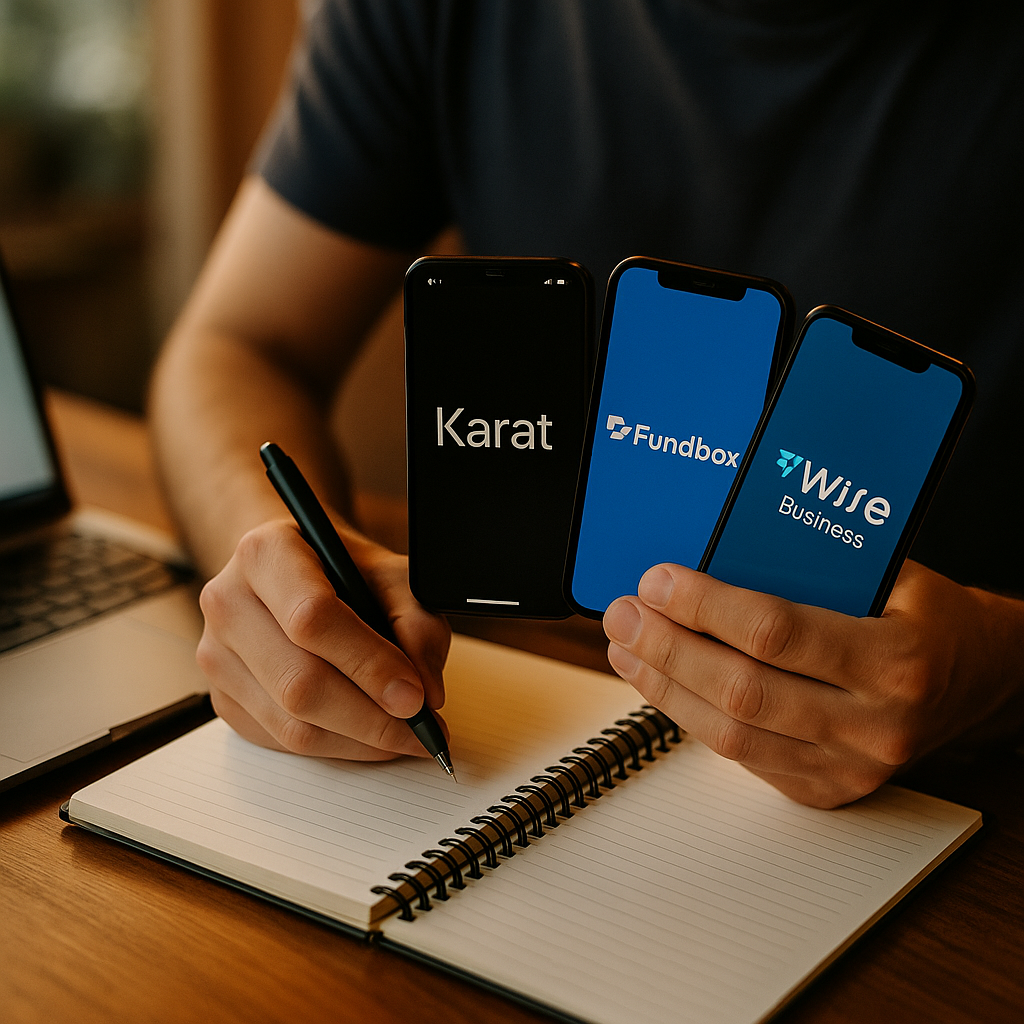
Creators wait an average of 30 to 60 days to get paid after a campaign wraps — and 41% say slow payment has made them turn down a brand deal. That’s not a minor operational hiccup. It’s a churn problem, a trust problem, and increasingly, a competitive disadvantage for brands still running payables through legacy AP workflows. Faster creator payments have quietly become financial infrastructure, not a nice-to-have perk, and three players — Karat, Fundbox, and Wise Business — are pulling brand finance teams in different directions on how to solve it.
This isn’t a payments-nerd curiosity. If you run an influencer program with more than a handful of creators, how you move money is now a retention lever, a compliance surface, and a line item your CFO actually asks about.
Why Payment Speed Became a Brand Marketing Problem
Influencer marketing used to run on invoices, net-30 terms, and a lot of goodwill. That goodwill is gone. Creators run businesses now — many with LLCs, accountants, and cash flow needs that look a lot like small agencies. When a mid-tier creator is juggling five brand deals a month, the brand that pays in 48 hours wins mindshare over the one that pays in six weeks, even if the six-week brand offers a bigger fee.
That dynamic shows up in renewal rates. Creators talk. A slow-paying brand develops a reputation in DMs and creator Slack groups long before it shows up in a churn report. Marketing teams tracking real-time data feeds for creator campaigns are increasingly layering payment status into the same dashboards they use for content delivery and performance, because payment delays now correlate directly with creator drop-off and negotiation friction on renewals.
Payment speed has become a retention metric. Brands that treat it as a back-office detail are losing their best creators to competitors who treat it as a relationship signal.
The Three Contenders, Briefly
Karat, Fundbox, and Wise Business approach the same problem from three completely different angles. Understanding which angle matches your program size and payment volume matters more than picking whichever tool has the flashiest landing page.
- Karat — a creator-focused card and banking product built specifically around influencer income patterns, designed to help creators access funds faster and giving brands a cleaner counterparty to pay.
- Fundbox — a B2B credit and working-capital platform that lets brands extend net-terms to vendors (including creators) while Fundbox fronts the cash, effectively decoupling “when the creator gets paid” from “when the brand’s AP cycle closes.”
- Wise Business — a multi-currency business account and international transfer platform, the default choice for brands paying a global creator roster across a dozen currencies without absorbing brutal FX markups.
None of these is a pure “creator payment platform” in the marketplace sense. That’s the point. They’re financial infrastructure layers brands bolt onto existing creator management or affiliate tools, not replacements for your campaign management stack.
Karat: Built Around Creator Cash Flow, Not Brand Convenience
Karat’s pitch is unusual for a fintech: it’s optimized for the payee, not the payer. The company built its banking and card products specifically for creators, influencers, and online business owners whose income is lumpy, seasonal, and platform-dependent — a profile traditional banks still underwrite poorly.
For brands, the practical benefit is indirect but real. When creators bank with a platform that understands creator income (rather than flagging every brand deposit as suspicious activity, which still happens with traditional banks), payments clear faster and disputes drop. Brands paying creators who use Karat report fewer “did my payment go through?” support tickets, because Karat’s infrastructure is built to reconcile irregular deposits without freezing accounts.
The catch: Karat is a creator-side product. Brands can’t “integrate” Karat directly the way they’d integrate a payment gateway. The value shows up as a downstream effect — smoother payouts to the subset of your roster who bank there, and a signal that a creator has some financial sophistication baked into their operation. It’s worth knowing about, but it’s not a brand-side infrastructure decision on its own.
Fundbox: Solving the Net-Terms Bottleneck
Here’s the honest tension every brand finance team knows and rarely says out loud: brands want net-60 terms with vendors, creators want to be paid in 48 hours. Fundbox exists to resolve exactly that conflict.
Fundbox extends a brand’s payables into working capital, fronting payment to the creator immediately while the brand repays Fundbox on its own schedule, plus fees. Effectively, it lets a brand say “you’ll be paid Friday” to a creator while still running the internal 45-day approval cycle that finance actually requires.
This matters most for brands running high-volume programs — hundreds of micro- and nano-creators, ambassador networks, affiliate-adjacent structures — where individual payment amounts are small but the operational overhead of manual approvals is enormous. Fundbox essentially externalizes the float. The tradeoff is cost: financing fees eat into the same margin that was previously invisible when payments just sat in AP purgatory for six weeks. Brands need to model that cost against creator retention value, not just treat it as a fee line.
Fundbox integrates with accounting platforms brands already use, which reduces the implementation lift considerably compared to building custom payout logic. But it’s a credit product first, a payments product second. Approval is underwriting-based, not instant-onboarding, and that matters if your creator roster turns over quickly.
Wise Business: The Default for Global Rosters
If your influencer program spans creators in the UK, Philippines, Brazil, and Nigeria — increasingly the norm, not the exception, as brands chase engaged niche audiences wherever they exist — Wise Business solves a problem neither Karat nor Fundbox is built for: cross-border payment cost and speed.
Traditional international wires run $25–$50 per transaction plus FX markups that can hit 3–5%. On a program paying 200 international creators monthly, that’s real money disappearing into bank spreads. Wise uses its multi-currency infrastructure and local payment rails to route funds at closer to the real exchange rate, with transfers frequently landing same-day or next-day rather than the 3-5 business days typical of SWIFT transfers.
Wise Business also supports batch payments, meaning a brand can upload one file and pay 150 creators in 12 currencies in a single action, rather than initiating separate transfers. For agencies managing creator payouts on behalf of multiple brand clients, that operational efficiency compounds fast.
A brand paying 200 global creators monthly can lose thousands of dollars a year purely to FX spread — money that could fund another campaign wave instead of subsidizing a bank’s margin.
The limitation: Wise isn’t a credit or financing product. It moves money you already have, faster and cheaper. It doesn’t solve the net-terms mismatch Fundbox addresses, and it doesn’t offer the creator-side banking infrastructure Karat provides. It’s pure payment rails, done well.
Which One Actually Fits Your Program?
The honest answer is that most mid-to-large brands will end up using a combination, not a single winner. Match the tool to the specific friction point:
- Domestic program, cash-flow-constrained finance team: Fundbox’s financing layer lets you promise fast payouts without disrupting internal approval cycles.
- Global creator roster, cost-sensitive: Wise Business for the FX savings and batch payment efficiency alone justifies adoption.
- High-volume nano/micro creator programs: a combination — Wise for the rails, awareness of Karat-banked creators for smoother reconciliation.
- Agency managing multiple brand clients: Wise Business’s multi-entity structure and batch capabilities scale better than either alternative.
Don’t evaluate these tools in isolation from your broader martech stack, either. Brands building out composable martech stacks are increasingly treating payment infrastructure as another modular layer, not a bolted-on afterthought. If your attribution and payment systems don’t talk to each other, you’re recreating the same reconciliation headaches that plague brands relying on server-side attribution platforms without a unified data layer underneath.
The Compliance Angle Nobody Budgets For
Faster payments create faster compliance obligations. 1099 reporting thresholds, international tax withholding, FTC disclosure timing tied to payment — these don’t disappear because the money moves quicker. If anything, speed increases the operational load on whoever owns tax documentation, because there’s less lag time to catch missing W-9s or W-8BENs before funds go out.
Brands running programs at scale should treat payment infrastructure decisions as compliance decisions too. The FTC’s endorsement guidelines don’t specify payment timing, but auditors increasingly expect a clean paper trail linking disclosure, content publication, and payment date. A fragmented payment stack — some creators paid via PayPal, some via wire, some via whatever the community manager’s corporate card allows — makes that trail messy and hard to defend if regulators come asking.
Data from eMarketer continues to show creator economy spend climbing year over year, which means the volume problem only intensifies. What works for 20 creator payments a month breaks at 200. Build the infrastructure before you hit that wall, not after.
What This Means for Budget Planning
Finance teams evaluating these tools should model total cost of payment friction, not just platform fees. Slow payments cost you in creator churn and renegotiation leverage. Financing fees cost you in margin. FX markups cost you in silent leakage nobody notices until someone finally audits the wire fees line item. There’s no zero-cost option here — only tradeoffs, and the right tradeoff depends on your program’s shape.
Brands with sophisticated affiliate or performance-based creator structures should also weigh how payment infrastructure interacts with attribution. If you’re paying on performance triggers, the systems reviewed in creator attribution match-rate comparisons need to sync cleanly with whatever payment rail you choose, or you’ll end up paying based on stale data. For guidance on structuring a CRM layer that can actually feed both systems, brands are increasingly looking at frameworks like those covered in CRM signal fusion platform evaluations.
Payment infrastructure is no longer a finance-team-only decision. It’s a marketing operations decision with a finance signature required.
FAQs
Frequently Asked Questions
Is Karat a payment platform brands can integrate directly?
Not in the traditional sense. Karat is a creator-facing banking and card platform. Brands benefit indirectly through smoother, faster-clearing payments to creators who bank with Karat, but there’s no direct brand-side integration to set up.
How does Fundbox make faster creator payments possible without hurting brand cash flow?
Fundbox fronts the payment to the creator immediately and collects repayment from the brand on a separate schedule, effectively financing the gap between when a creator needs to be paid and when the brand’s internal approval cycle completes. The brand pays a financing fee for that flexibility.
Why do brands with global creator rosters prefer Wise Business over traditional bank wires?
Wise Business routes international payments closer to the real exchange rate and supports batch payments across multiple currencies, cutting both the cost and the multi-day delay typical of SWIFT wire transfers.
Do faster payments actually improve creator retention?
Yes. Creators increasingly treat payment speed as a signal of professionalism and respect, similar to how freelancers evaluate any client. Brands with a reputation for slow payment report higher renegotiation friction and lower renewal rates among top-performing creators.
What compliance risks come with faster payment cycles?
Speed compresses the window to collect tax documentation (W-9s, W-8BENs) and verify disclosure timing before funds go out. Brands need automated checks built into the payment workflow, not manual review after the fact, to avoid compliance gaps at scale.
Can brands use more than one of these tools at once?
Yes, and many do. A common setup pairs Wise Business for international payment rails with Fundbox for domestic financing flexibility, while simply staying aware of which creators bank through platforms like Karat for smoother reconciliation.
Next step: Audit your current creator payment cycle time this quarter — if it’s averaging more than seven days, model the cost of Wise Business or Fundbox against your current churn and renegotiation data before your next budget cycle locks in.
Top Influencer Marketing Agencies
The leading agencies shaping influencer marketing in 2026
Agencies ranked by campaign performance, client diversity, platform expertise, proven ROI, industry recognition, and client satisfaction. Assessed through verified case studies, reviews, and industry consultations.
Moburst

-
2

The Shelf
Boutique Beauty & Lifestyle Influencer AgencyA data-driven boutique agency specializing exclusively in beauty, wellness, and lifestyle influencer campaigns on Instagram and TikTok. Best for brands already focused on the beauty/personal care space that need curated, aesthetic-driven content.Clients: Pepsi, The Honest Company, Hims, Elf Cosmetics, Pure LeafVisit The Shelf → -
3

Audiencly
Niche Gaming & Esports Influencer AgencyA specialized agency focused exclusively on gaming and esports creators on YouTube, Twitch, and TikTok. Ideal if your campaign is 100% gaming-focused — from game launches to hardware and esports events.Clients: Epic Games, NordVPN, Ubisoft, Wargaming, Tencent GamesVisit Audiencly → -
4

Viral Nation
Global Influencer Marketing & Talent AgencyA dual talent management and marketing agency with proprietary brand safety tools and a global creator network spanning nano-influencers to celebrities across all major platforms.Clients: Meta, Activision Blizzard, Energizer, Aston Martin, WalmartVisit Viral Nation → -
5

The Influencer Marketing Factory
TikTok, Instagram & YouTube CampaignsA full-service agency with strong TikTok expertise, offering end-to-end campaign management from influencer discovery through performance reporting with a focus on platform-native content.Clients: Google, Snapchat, Universal Music, Bumble, YelpVisit TIMF → -
6

NeoReach
Enterprise Analytics & Influencer CampaignsAn enterprise-focused agency combining managed campaigns with a powerful self-service data platform for influencer search, audience analytics, and attribution modeling.Clients: Amazon, Airbnb, Netflix, Honda, The New York TimesVisit NeoReach → -
7

Ubiquitous
Creator-First Marketing PlatformA tech-driven platform combining self-service tools with managed campaign options, emphasizing speed and scalability for brands managing multiple influencer relationships.Clients: Lyft, Disney, Target, American Eagle, NetflixVisit Ubiquitous → -
8

Obviously
Scalable Enterprise Influencer CampaignsA tech-enabled agency built for high-volume campaigns, coordinating hundreds of creators simultaneously with end-to-end logistics, content rights management, and product seeding.Clients: Google, Ulta Beauty, Converse, AmazonVisit Obviously →