


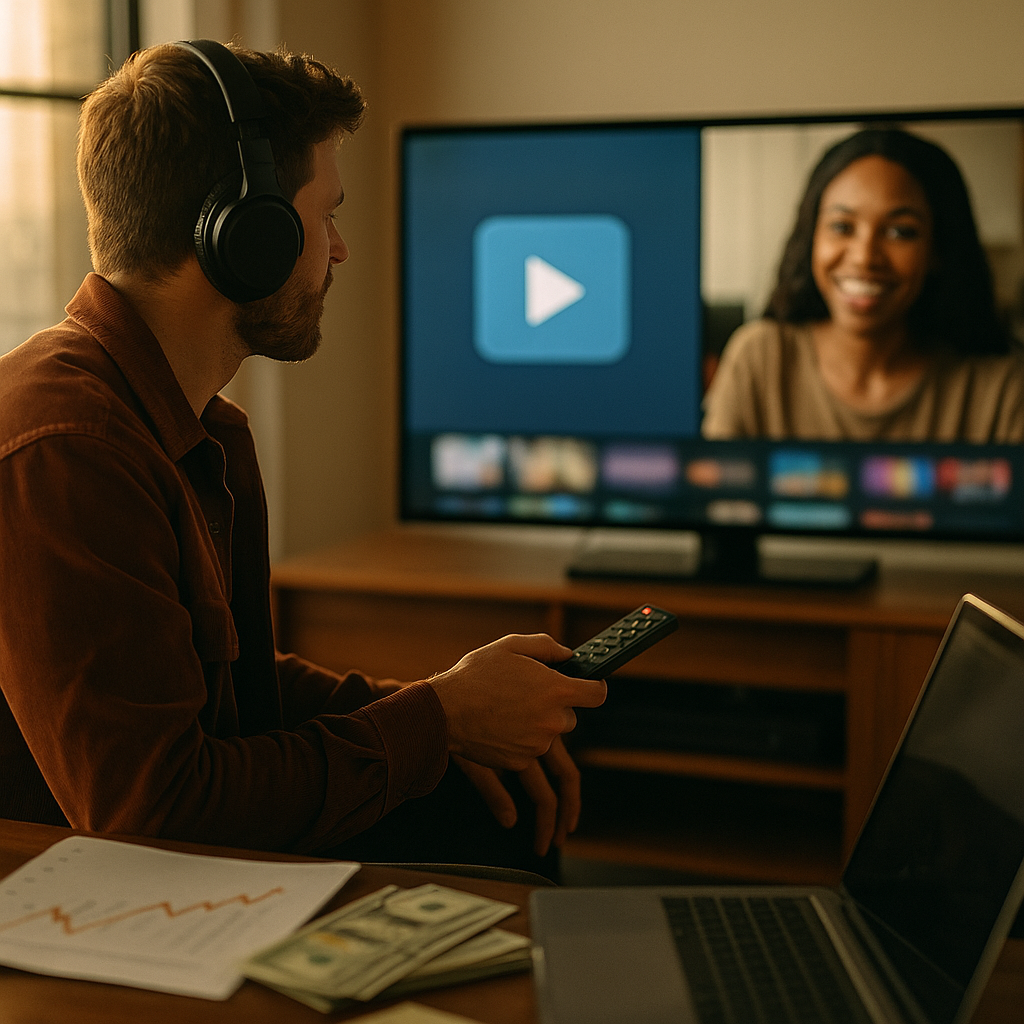
Netflix now sells creator-fronted ad packages. Amazon Prime Video is signing YouTubers to exclusive originals. Roku just opened a self-serve marketplace pairing streaming inventory with influencer content. If you still think of CTV as “TV but on an app,” you’re already behind. The streaming platform creator deal race has started, and the budget lines being drawn now will define influencer marketing contracts through 2027.
This isn’t a side story. It’s a structural shift in where creator dollars flow and who controls the distribution layer.
Why Streaming Platforms Suddenly Want Creators
Linear TV ad revenue keeps sliding. eMarketer has tracked this decline for years, and streaming services know exactly what’s replacing it: connected TV inventory sold against younger, harder-to-reach audiences. The problem is that streamers don’t have the audience relationships creators do. So they’re buying access instead of building it.
Netflix’s ad tier passed meaningful scale faster than most analysts predicted, and the platform has been public about wanting creator-produced content to fill inventory gaps cheaply. Amazon has the advantage of owning Twitch, so its creator pipeline is already warm. Disney+ is testing bundled deals that pair streaming placements with linked social content, an approach that mirrors the creator licensing model already reshaping paid media budgets elsewhere.
What’s driving urgency? Attention. Nielsen’s Gauge report has repeatedly shown streaming capturing the largest share of total TV viewing time in the U.S., and a growing chunk of that streaming time includes creator-made or creator-adjacent content on platforms like YouTube, which itself now counts as CTV viewing in most measurement frameworks. The lines between “creator content” and “TV content” are gone. Only the budget categories haven’t caught up yet.
CTV ad spend is projected to keep climbing through 2027, and a meaningful share of that growth is earmarked for creator-produced or creator-hosted inventory, not traditional broadcast-style ads.
What “CTV Budget” Actually Means for Influencer Programs
Here’s where brand teams need to pay attention. CTV budgets have historically lived in a separate silo from influencer or social budgets, managed by different teams, measured with different KPIs, and often booked through entirely different agencies. That wall is coming down.
When Netflix sells a creator-fronted ad slot, is that a media buy or an influencer partnership? The honest answer: both, and neither cleanly. This ambiguity is forcing brands to rethink org structure. Marketers who kept influencer and CTV budgets separate are now finding those budgets need joint governance, shared measurement, and unified creator contracts.
- Procurement complexity increases. Streaming platform creator deals often require multi-party contracts (platform, creator, brand, sometimes an MCN) with different usage rights than a standard sponsored post.
- Measurement gets murkier. CTV attribution already struggles with the kind of granular tracking social platforms provide. Layer in creator content and you need frameworks that bridge both, similar to what the IAB brand lift framework is attempting for cross-channel scoring.
- Contract terms shift. Expect more revenue share and performance-linked structures, echoing the move toward revenue share creator contracts already common in social commerce deals.
For agencies, this means budget conversations with clients now need a CTV line item baked into influencer program proposals, not bolted on afterward.
The Platforms Making the Biggest Moves
A quick scan of who’s doing what helps clarify where brand dollars should go first.
Amazon Prime Video has the cleanest advantage: Twitch creators, Amazon Live sellers, and a retail data layer that ties viewership to purchase behavior. Brands running commerce-driven influencer programs should watch this closely, especially given how native checkout integrations are already quadrupling impulse sales in social feeds. Amazon is positioned to bring that same mechanic to the living room screen.
Netflix is playing a volume game. Its ad tier needs inventory, and creator content is cheaper to produce than scripted originals. Expect more short-form, creator-hosted segments slotted between shows, similar to the vertical formats gaining traction in micro drama app spend.
YouTube, technically already a CTV powerhouse, continues to blur every line. Google’s own reporting has shown YouTube leading U.S. streaming watch time on television screens for extended stretches. Any brand not treating YouTube as both a social platform and a CTV buy is leaving reach on the table.
Roku and Disney+ are the wildcards. Roku’s ad marketplace changes are aimed squarely at making CTV as self-serve and data-rich as programmatic social buying. Disney+ is testing creator tie-ins around its sports and entertainment verticals, likely to expand once ad tier subscriber counts justify it.
Why Brands Should Care Before 2027, Not After
It’s tempting to wait and see how this shakes out. That’s a mistake for a few reasons.
First, early movers get better rates. Streaming platforms are still figuring out creator deal pricing, which means brands negotiating now can lock in terms before demand pushes costs up. Second, measurement standards are still forming. Brands involved in early pilots get a seat at the table when platforms decide what “success” looks like, rather than inheriting metrics designed without their input.
Third, and most important: audience behavior is already there. Gen Z and younger millennials increasingly treat CTV and social as one continuous viewing experience. This tracks with what’s been reported around Gen Z purchase behavior, where intent signals matter more than reach. A creator who sells product on a livestream and appears in a CTV ad slot the same week is reinforcing the same purchase pathway, not running two separate campaigns.
Brands still budgeting influencer and CTV as unrelated line items are optimizing for a media landscape that no longer exists.
What This Means for Creator Contracts and Rights
Streaming deals introduce rights and usage questions that most influencer contracts weren’t written to handle. A sponsored Instagram post has a defined lifespan and platform. A Netflix ad placement might run for months across multiple markets, with different residual or renewal terms than a creator’s typical brand deal.
Agencies negotiating these contracts need to address:
- Usage duration and geographic scope (streaming platforms operate globally, social deals often don’t)
- Whether creator likeness in a streaming spot can be repurposed across the brand’s own social channels
- Disclosure requirements, since FTC guidance on endorsements applies regardless of where content airs
- Exclusivity clauses that might conflict with a creator’s existing brand partnerships
This is legal territory most influencer marketing teams haven’t had to navigate before. Expect more agencies to bring in dedicated contract specialists for streaming deals over the next few budget cycles, mirroring the oversight buildout already happening around AI-driven content review.
How to Prepare Your 2027 Budget Now
Practical steps for brand and agency teams planning ahead:
- Merge your measurement dashboards. If CTV and social performance live in separate reports, you can’t evaluate a creator’s total reach accurately. Tools that unify brand lift and sales data, like the frameworks discussed in cross-channel scorecards, are worth piloting now.
- Audit creator contracts for streaming clauses. Don’t wait until a platform approaches your creator roster with a deal your existing agreements didn’t anticipate.
- Test small before committing big. Run a limited pilot with one platform’s creator marketplace before shifting significant budget. Amazon and Roku both offer smaller entry points than Netflix’s premium placements currently do.
- Track revenue per creator, not just reach. This matters even more in CTV, where impressions are expensive and vanity metrics won’t survive budget scrutiny, a trend already documented in revenue per follower reporting.
- Loop in legal and compliance early. Streaming contracts move faster than most procurement cycles expect.
For more on how measurement standards are consolidating across channels, eMarketer’s CTV research and Statista’s streaming ad data are useful benchmarks to track quarter over quarter.
FAQs
Frequently Asked Questions
What is a streaming platform creator deal?
It’s a partnership where a CTV platform like Netflix, Prime Video, or Disney+ pays creators directly for ad placements, hosted segments, or exclusive content, blending traditional media buying with influencer marketing practices.
How is CTV different from regular influencer marketing budgets?
CTV budgets have traditionally been managed separately from social or influencer budgets, with different measurement tools and agency teams. Streaming platform creator deals are forcing brands to merge these budget lines and reporting structures.
Which streaming platforms are leading creator partnerships right now?
Amazon Prime Video, Netflix, YouTube, Roku, and Disney+ have all made visible moves toward creator-focused ad inventory or exclusive creator content deals.
Should smaller brands wait before entering CTV creator deals?
Waiting risks higher costs and less influence over measurement standards later. Smaller brands can start with lower-cost entry points on platforms like Roku or Amazon before committing to premium placements.
What contract issues should brands watch for in streaming creator deals?
Usage duration, geographic rights, cross-platform repurposing permissions, exclusivity clauses, and FTC-compliant disclosure requirements all need explicit attention since standard influencer contracts often don’t cover streaming-specific terms.
The brands that treat CTV and influencer budgets as one connected system, not two competing line items, will negotiate better rates and cleaner measurement before the rest of the market catches up. Start the pilot now, audit your creator contracts this quarter, and don’t let procurement structure lag behind where the audience already lives.
Top Influencer Marketing Agencies
The leading agencies shaping influencer marketing in 2026
Agencies ranked by campaign performance, client diversity, platform expertise, proven ROI, industry recognition, and client satisfaction. Assessed through verified case studies, reviews, and industry consultations.
Moburst

-
2

The Shelf
Boutique Beauty & Lifestyle Influencer AgencyA data-driven boutique agency specializing exclusively in beauty, wellness, and lifestyle influencer campaigns on Instagram and TikTok. Best for brands already focused on the beauty/personal care space that need curated, aesthetic-driven content.Clients: Pepsi, The Honest Company, Hims, Elf Cosmetics, Pure LeafVisit The Shelf → -
3

Audiencly
Niche Gaming & Esports Influencer AgencyA specialized agency focused exclusively on gaming and esports creators on YouTube, Twitch, and TikTok. Ideal if your campaign is 100% gaming-focused — from game launches to hardware and esports events.Clients: Epic Games, NordVPN, Ubisoft, Wargaming, Tencent GamesVisit Audiencly → -
4

Viral Nation
Global Influencer Marketing & Talent AgencyA dual talent management and marketing agency with proprietary brand safety tools and a global creator network spanning nano-influencers to celebrities across all major platforms.Clients: Meta, Activision Blizzard, Energizer, Aston Martin, WalmartVisit Viral Nation → -
5

The Influencer Marketing Factory
TikTok, Instagram & YouTube CampaignsA full-service agency with strong TikTok expertise, offering end-to-end campaign management from influencer discovery through performance reporting with a focus on platform-native content.Clients: Google, Snapchat, Universal Music, Bumble, YelpVisit TIMF → -
6

NeoReach
Enterprise Analytics & Influencer CampaignsAn enterprise-focused agency combining managed campaigns with a powerful self-service data platform for influencer search, audience analytics, and attribution modeling.Clients: Amazon, Airbnb, Netflix, Honda, The New York TimesVisit NeoReach → -
7

Ubiquitous
Creator-First Marketing PlatformA tech-driven platform combining self-service tools with managed campaign options, emphasizing speed and scalability for brands managing multiple influencer relationships.Clients: Lyft, Disney, Target, American Eagle, NetflixVisit Ubiquitous → -
8

Obviously
Scalable Enterprise Influencer CampaignsA tech-enabled agency built for high-volume campaigns, coordinating hundreds of creators simultaneously with end-to-end logistics, content rights management, and product seeding.Clients: Google, Ulta Beauty, Converse, AmazonVisit Obviously →