


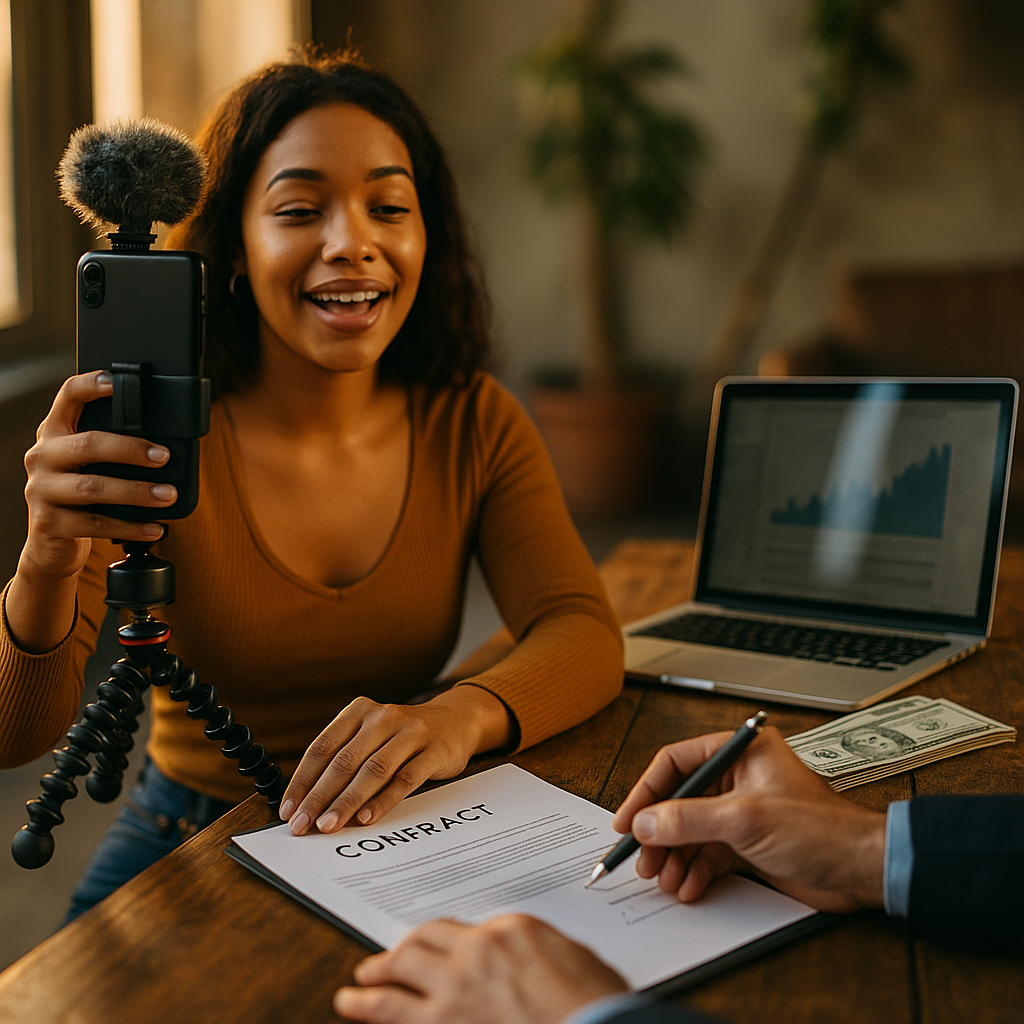
Here’s a number that should reframe how you think about your next content budget: brands running licensed creator content as paid social ads see engagement rates climb 2 to 3 times higher than standard brand-produced ads, according to platform data shared by Meta and TikTok partners. Creator licensing deals, paying creators for the rights to reuse and repurpose their content across paid channels, have quietly become a media buying line item in their own right. Not a sponsorship add-on. Not a nice-to-have usage clause buried in a contract. A channel.
What Creator Licensing Actually Means in Practice
Let’s clear up the confusion first, because “licensing” gets used loosely in this industry. A traditional influencer sponsorship pays for a post: the creator makes content, it runs on their channel, maybe you get a 30-day usage window if you negotiated well. A licensing deal is different. You’re buying the rights to the content itself, often for extended terms (six months, a year, sometimes perpetual), across specified channels: paid social, retail media networks, connected TV, even out-of-home in some cases.
The shift matters because it changes the economics entirely. Instead of paying for reach on someone’s channel, you’re paying for an asset you can deploy anywhere your media budget allows. That asset can outperform agency-produced creative in paid placements because it looks native. It doesn’t scream “ad.” Audiences have gotten very good at filtering that out, and eMarketer’s ongoing ad fatigue research backs this up repeatedly.
Licensing deals let brands treat creator content the way they’d treat any other media asset: something to be tested, scaled, retired, and replaced based on performance data, not on the creator’s follower count.
Why This Is Happening Now, Not Two Years Ago
Three forces converged. First, paid social costs kept climbing while performance on generic branded creative kept sliding. Second, platforms built the infrastructure to make licensing scalable, think TikTok’s Spark Ads and Meta’s Partnership Ads, which let brands boost creator posts directly from the creator’s handle without needing separate licensed files. Third, and this is the one procurement teams care about most, legal and finance functions finally got comfortable treating creator content as a licensable media asset with defined usage terms, rather than a one-off favor negotiated over DM.
Our earlier coverage of how ad budgets shift from media buys to creator distribution flagged this trend before it had a name. What’s changed since then is the formalization. Brands aren’t experimenting anymore. They’re building standing licensing programs with rate cards, usage tiers, and renewal clauses that look a lot like traditional media buying contracts.
There’s also a quieter driver: measurement pressure. Marketing leaders are under scrutiny to justify every dollar, and marketing mix modeling has made it harder to hide soft, unattributed influencer spend inside a broader “brand awareness” bucket. Licensed content, run through paid channels with trackable IDs, produces clean attribution data that MMM models and platform dashboards can actually digest.
The ROI Case Brands Are Making Internally
Ask a media buyer why they’re reallocating budget toward licensed creator content, and you’ll hear some version of the same math. Production costs for a single piece of creator content typically run a fraction of a comparable studio shoot, especially once you factor in talent, location, and post-production overhead. License that content for use across three or four paid channels, and the cost-per-impression math starts looking better than almost anything else in the media plan.
There’s a risk mitigation angle too, one that doesn’t get discussed enough. Brands that license content from a roster of vetted creators reduce their exposure to the kind of single-influencer dependency that’s burned marketers before (remember when one creator’s off-platform controversy tanked a campaign’s entire media plan?). Diversifying the content supply chain across licensed creator assets spreads that risk the same way a media buyer would diversify across ad formats.
This connects directly to the broader move toward margin based creator KPIs. When you’re licensing content as a media asset, you evaluate it the way you’d evaluate any paid placement: cost per acquisition, return on ad spend, incremental lift. Not likes. Not follower growth. That’s a fundamentally different conversation with your CFO, and it’s one that’s easier to win.
How Licensing Deals Get Structured
No single template dominates yet, but a few common structures have emerged across the brands and agencies we track.
- Flat-fee usage rights: A set payment for defined usage duration and channels, often 3, 6, or 12 months. Simple, predictable, easy for procurement to model.
- Tiered licensing: Pricing scales based on spend behind the content. Whitelisting a post for $5,000 in paid media costs less to license than whitelisting it for $50,000.
- Performance-linked licensing: Base fee plus a bonus or revenue share if the content hits certain benchmarks once in paid rotation. This overlaps with the trend we covered in revenue share contracts replacing flat fee sponsorships.
- Content libraries: Brands negotiate bulk licensing across a creator’s back catalog, useful for evergreen categories like beauty, home goods, or personal finance where content doesn’t age out quickly.
Whichever structure a brand chooses, the contract language has gotten dramatically more specific. Usage territory, platform exclusivity, whether the content can be edited or must run as-is, whether AI tools can repurpose the footage into new formats: all of it needs to be spelled out now in ways that would have seemed excessive three years ago.
The Compliance Layer Nobody Can Skip
Here’s where things get less fun and more necessary. When you license content for paid distribution, disclosure obligations don’t disappear, they intensify. The FTC’s endorsement guidance applies whether the content is running organically on a creator’s page or as a paid ad you licensed and boosted. Brands that treat licensed content as exempt from disclosure rules because “we bought it, it’s ours now” are setting themselves up for regulatory exposure.
This is precisely the gap our IBC Summit compliance coverage flagged as a recurring blind spot. Licensing programs need the same vetting rigor as any other creator partnership: background checks on the creator’s history, clear contractual disclosure language, and internal review before content goes into paid rotation. The formal vetting pipelines described in our piece on brand safety fallout forcing vetting pipelines apply directly here, arguably even more so, since licensed content often runs at greater scale and for longer periods than a standard sponsored post.
Data privacy adds another wrinkle. If licensed content includes user-generated elements, testimonials, or third-party likenesses, brands operating across EU or UK markets should review obligations with resources like the ICO’s guidance before scaling usage internationally.
Platform Infrastructure Is Catching Up
TikTok’s Spark Ads and Meta’s Partnership Ads get most of the attention, but the infrastructure war is broader than two platforms. Amazon has built creator-brand connection tools into its ecosystem, visible in programs like the one covered in Amazon India’s Creator Connections, which links creators directly to brand licensing opportunities at scale. YouTube’s payout structures, detailed in our analysis of payout rates across platforms, are also shaping which creators are financially incentivized to opt into licensing arrangements versus keeping content exclusive to their own channel.
The practical upshot for media buyers: platform choice now affects licensing feasibility, not just organic reach potential. A creator deeply embedded in TikTok’s Creator Marketplace is going to have cleaner, faster licensing workflows than one you’re negotiating with cold over email. Factor that into your vendor selection the same way you’d factor in a media partner’s ad tech maturity.
What This Means for Agency and Brand Teams Building Programs Now
If you’re building or scaling a creator licensing program, a few operational lessons from early adopters are worth internalizing.
- Treat licensing budgets separately from sponsorship budgets in your media plan. They serve different functions and should be measured against different benchmarks.
- Build usage rights language into every creator contract from day one, even ones you don’t currently plan to license, so you’re not renegotiating later when a piece of content performs well organically and you want to scale it.
- Centralize your licensed asset library the way you’d manage any DAM (digital asset management) system. Track expiration dates. Nothing kills a program’s credibility faster than an FTC complaint over content running past its licensed window.
- Loop legal and compliance into the process early, not as a final sign-off. The shift toward accountability-focused agency leadership reflects how seriously this is being taken at the executive level now.
Agencies are adapting their retainer structures accordingly too. The move toward standing relationships described in retainer deals for the creator middle class dovetails naturally with licensing: a creator on retainer produces a steady content pipeline that’s pre-cleared for licensing use, which removes the negotiation friction that slows down a lot of one-off deals.
Where the Friction Still Lives
None of this is frictionless yet. Rate standardization is still a mess. Two creators with comparable audiences and engagement can quote wildly different licensing fees, because there’s no universal benchmark the way there is for, say, CPM on a display ad. Agencies like Sprout Social and platforms tracking creator rate data are helping close that gap, but it’s slow going.
Attribution remains imperfect too. Licensed content run as paid social gets decent platform-level attribution, but tying it back to actual revenue lift, especially across a multi-touch customer journey, still requires the kind of measurement discipline covered in our piece on commerce media attribution pulling budget from walled gardens. Brands that skip this step end up licensing content based on gut feel rather than data, which defeats half the point of treating it as a media channel in the first place.
FAQs
Frequently Asked Questions
What is a creator licensing deal?
A creator licensing deal is an agreement where a brand pays a creator for the rights to use their content across paid media channels, such as paid social ads, retail media, or connected TV, typically for a defined time period rather than a single organic post.
How is licensing different from a standard influencer sponsorship?
A sponsorship pays primarily for content creation and organic distribution on the creator’s own channel. A licensing deal pays for the rights to redistribute that content through the brand’s own paid media channels, often at greater scale and for a longer duration.
Do FTC disclosure rules apply to licensed creator content?
Yes. Disclosure obligations under FTC endorsement guidance apply regardless of whether content runs organically or as paid, licensed media. Brands remain responsible for ensuring proper disclosure language is included when licensed content runs as an ad.
How much does creator content licensing typically cost?
Pricing varies widely based on usage duration, channel scope, and the ad spend behind the content, but many deals use tiered pricing tied to how much paid media budget will run behind the licensed asset.
Which platforms make creator licensing easiest to execute?
TikTok’s Spark Ads and Meta’s Partnership Ads are currently the most mature tools for licensing creator content directly into paid campaigns, since they let brands boost content from a creator’s handle without separate file transfers.
Can brands edit licensed creator content?
Only if the contract explicitly grants editing rights. Many licensing agreements require content to run as-is, so brands should negotiate editing and repurposing rights upfront if they anticipate needing to adapt the content for different formats.
The takeaway for anyone managing a media budget right now: audit your existing creator contracts for usage rights language before you sign another deal without it, and start testing licensed content as a formal line item against your paid social benchmarks this quarter, not next year.
Top Influencer Marketing Agencies
The leading agencies shaping influencer marketing in 2026
Agencies ranked by campaign performance, client diversity, platform expertise, proven ROI, industry recognition, and client satisfaction. Assessed through verified case studies, reviews, and industry consultations.
Moburst

-
2

The Shelf
Boutique Beauty & Lifestyle Influencer AgencyA data-driven boutique agency specializing exclusively in beauty, wellness, and lifestyle influencer campaigns on Instagram and TikTok. Best for brands already focused on the beauty/personal care space that need curated, aesthetic-driven content.Clients: Pepsi, The Honest Company, Hims, Elf Cosmetics, Pure LeafVisit The Shelf → -
3

Audiencly
Niche Gaming & Esports Influencer AgencyA specialized agency focused exclusively on gaming and esports creators on YouTube, Twitch, and TikTok. Ideal if your campaign is 100% gaming-focused — from game launches to hardware and esports events.Clients: Epic Games, NordVPN, Ubisoft, Wargaming, Tencent GamesVisit Audiencly → -
4

Viral Nation
Global Influencer Marketing & Talent AgencyA dual talent management and marketing agency with proprietary brand safety tools and a global creator network spanning nano-influencers to celebrities across all major platforms.Clients: Meta, Activision Blizzard, Energizer, Aston Martin, WalmartVisit Viral Nation → -
5

The Influencer Marketing Factory
TikTok, Instagram & YouTube CampaignsA full-service agency with strong TikTok expertise, offering end-to-end campaign management from influencer discovery through performance reporting with a focus on platform-native content.Clients: Google, Snapchat, Universal Music, Bumble, YelpVisit TIMF → -
6

NeoReach
Enterprise Analytics & Influencer CampaignsAn enterprise-focused agency combining managed campaigns with a powerful self-service data platform for influencer search, audience analytics, and attribution modeling.Clients: Amazon, Airbnb, Netflix, Honda, The New York TimesVisit NeoReach → -
7

Ubiquitous
Creator-First Marketing PlatformA tech-driven platform combining self-service tools with managed campaign options, emphasizing speed and scalability for brands managing multiple influencer relationships.Clients: Lyft, Disney, Target, American Eagle, NetflixVisit Ubiquitous → -
8

Obviously
Scalable Enterprise Influencer CampaignsA tech-enabled agency built for high-volume campaigns, coordinating hundreds of creators simultaneously with end-to-end logistics, content rights management, and product seeding.Clients: Google, Ulta Beauty, Converse, AmazonVisit Obviously →