


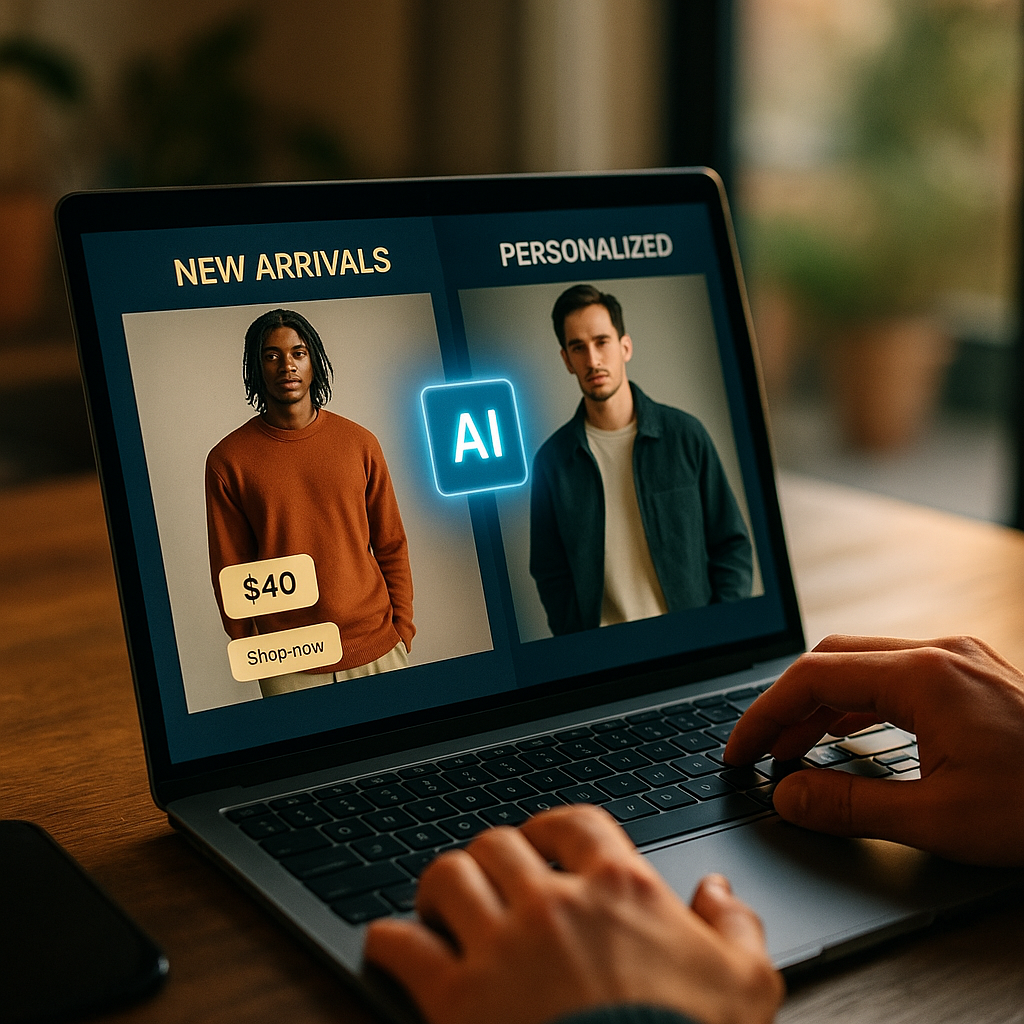
Seventy-one percent of consumers expect personalized interactions, and 76% get frustrated when they don’t get them, according to McKinsey research that vendors love to quote in sales decks. AI-driven personalization at scale is now the pitch behind a dozen platforms promising to swap creative in real time based on weather, inventory, browsing behavior, even scroll speed. But how many of these tools actually deliver on live signals versus just reshuffling pre-approved assets? Let’s separate the real infrastructure from the demo-day magic.
What “Real-Time” Actually Means Here
Every vendor uses the phrase “real-time,” and almost none of them mean the same thing by it. Some platforms swap creative within milliseconds of an ad request, pulling from a live signal feed. Others batch-update every few hours and call it real-time because it’s faster than a quarterly refresh. That gap matters enormously when you’re budgeting for infrastructure and setting expectations with clients or leadership.
True real-time personalization requires three things working together: a live signal pipeline, a decisioning layer that can act on signals in under 200 milliseconds, and a creative asset library structured for dynamic assembly rather than static swaps. Miss any one of those and you get “near-time” personalization dressed up in real-time marketing copy.
If your vendor can’t tell you their median signal-to-render latency in milliseconds, you’re not buying real-time personalization. You’re buying a faster A/B test.
This distinction isn’t academic. A creative swap triggered by yesterday’s weather data isn’t responsive, it’s stale. And in categories like retail media or QSR, stale personalization can actively hurt conversion by showing a rain-themed ad on a sunny afternoon.
The Platform Landscape: Three Categories, Not One
Most comparisons lump every “AI personalization” vendor into a single bucket. That’s a mistake. In practice, the market splits into three distinct architectures, each with different cost structures and risk profiles.
- DCO-native platforms (dynamic creative optimization descendants): These evolved from programmatic ad tech and are strongest at feed-based swaps — product, price, inventory. Think Google’s DCO tooling inside Google Ads infrastructure or dedicated DSP-side tools. They’re mature, well-documented, but often weak on creator or influencer-adjacent content.
- Creator-content orchestration tools: Newer entrants built specifically for influencer and UGC-heavy campaigns, swapping which creator clip, caption, or hook appears based on audience segment or engagement signal. This is where the creator economy angle gets interesting, and where platforms like those compared in our creator-matching tools comparison tend to live.
- Full-stack agentic platforms: The most ambitious tier. These claim end-to-end signal ingestion, decisioning, and creative generation in one system, often layering in generative AI for on-the-fly asset creation rather than just selecting from a pre-built library.
Knowing which category a vendor sits in tells you a lot before you even ask for a demo. A DCO-native tool won’t magically handle creator content well, and a creator-orchestration tool probably wasn’t built to manage a 40,000-SKU retail catalog.
Live Signals: What’s Actually Feeding the Swap?
Ask any vendor “what signals trigger a swap?” and you’ll get a laundry list: weather, location, device, time of day, purchase history, browsing behavior, social sentiment, even trending audio. Ask a follow-up: how fresh is each signal when it reaches the decisioning engine? That’s where things get uncomfortable for a lot of platforms.
Weather APIs typically refresh every 10-15 minutes, not instantly. Inventory feeds from retail systems often update on 30-minute or hourly cycles unless a brand has invested in a proper real-time data layer. Social sentiment signals can lag by hours depending on the listening tool. This is why our earlier buyers guide to real-time data feeds is required reading before you sign anything — the personalization platform is only as fast as its slowest input.
The practical takeaway: audit signal latency for every input you care about before buying the story of “real-time.” A platform might genuinely render creative in 150ms, but if it’s acting on hourly-stale inventory data, you’re not personalizing in real time. You’re personalizing on a delay and calling it live.
Identity Is the Silent Bottleneck
Nobody talks enough about this, but personalization at scale lives or dies on identity resolution. If your platform can’t confidently match a live signal to a known audience segment or individual profile, the “personalization” defaults to generic contextual targeting — which is fine, but it’s not what you’re paying a premium for.
This is where match rate quality becomes a hard financial question, not a technical footnote. Our analysis on identity resolution match rates found meaningful gaps between end-to-end vendor stacks and stitched-together DIY approaches, and personalization platforms inherit whatever identity layer sits underneath them. A creative-swap engine bolted onto a weak identity graph will misfire constantly — showing the wrong offer to the wrong segment with total confidence.
Before evaluating any real-time creative platform, ask what identity provider or resolution method feeds it. If the answer is vague, budget extra time for validation testing before launch.
Comparing the Big Claims Against Reality
Vendor decks love round numbers: “40% lift in engagement,” “3x conversion,” “90% attribution accuracy.” Treat every one of these as a starting hypothesis, not a guarantee. We’ve seen this pattern before — our review of LayerFive’s 90% attribution claims found the number held up only under specific data-clean-room conditions most brands don’t actually have in place.
The same skepticism applies to real-time creative swap claims. Ask vendors for:
- A breakdown of lift by signal type, not a blended average across the whole campaign.
- Sample sizes and test duration for any published case study.
- Whether results were measured against a static-creative control group or a lower baseline of “no personalization at all.”
- Independent verification, not just internal reporting.
According to eMarketer estimates, spend on AI-driven creative personalization tools is climbing sharply as brands chase efficiency gains, but adoption is outpacing measurement maturity. Plenty of teams are buying the tool before they’ve defined how they’ll prove it worked.
Where the ROI Actually Shows Up (and Where It Doesn’t)
Real-time creative personalization tends to pay off fastest in high-frequency, high-SKU categories: retail, travel, food delivery, financial services with variable rate offers. The math is simple — more variants, more opportunities for a mismatched static ad to underperform, more upside from getting it right.
It pays off more slowly, or not at all, in categories with long consideration cycles or heavily regulated messaging. B2B SaaS, pharma, insurance — these industries have compliance review cycles that don’t mesh well with creative swapping every few minutes. If legal has to approve every variant, “real-time” personalization becomes a scheduling nightmare rather than an efficiency win.
There’s also a hidden cost most buyers underweight: creative production volume. A platform that swaps intelligently between three assets isn’t doing much. You need genuine creative diversity — dozens of hooks, visuals, and CTAs — for the AI to have meaningful options. That means either a much bigger production budget or a generative AI layer capable of producing compliant variants on demand, which introduces its own disclosure and brand-safety questions worth reviewing against platform AI-disclosure requirements.
Personalization platforms don’t create good creative. They redistribute whatever creative you feed them, faster. Garbage in, personalized garbage out.
Compliance and Brand Safety Don’t Pause for Speed
Fast creative swaps introduce fast compliance risk. If a platform can substitute messaging in under a second based on a live signal, your review process needs to happen before deployment, not after. That means pre-approving creative logic trees and guardrails, not individual executions.
Regulators are paying attention too. The FTC’s guidance on endorsements and advertising still applies regardless of how automated the creative selection process is — a mis-triggered swap that overstates a product claim or omits required disclosure is still your brand’s liability, not the vendor’s. Build in automated compliance checks as part of the decisioning layer itself, not as a downstream audit.
Data privacy compliance matters just as much. Live signals often mean personal data, and personal data means jurisdiction-specific rules. Check vendor claims against guidance from bodies like the ICO if you operate in UK or EU markets, particularly around consent for behavioral signal collection.
A Practical Evaluation Framework
Skip the demo theater. Here’s what to actually test before signing a contract:
- Latency audit: Request documented signal-to-render times for each input type you’ll use.
- Identity dependency check: Understand what identity resolution powers the targeting layer underneath the creative engine.
- Fallback logic: What happens when a live signal fails or times out? Good platforms degrade gracefully to a default creative, not a blank unit.
- Sandbox testing: Run a 2-4 week pilot with real budget before committing to an enterprise contract.
- Total cost of ownership: Factor in creative production costs, not just platform licensing — this is where many buyers get blindsided, a pattern we’ve flagged before in martech vendor consolidation reviews.
Also worth checking: does the platform play nicely with your existing composable stack, or does it demand a rip-and-replace approach? Our composable stack versus all-in-one guide covers the tradeoffs in more depth, but the short version is that lock-in risk is real and often underpriced in year-one contracts.
Next step: before your next vendor call, ask for documented median latency numbers and a fallback-logic diagram. If they can’t produce either on the spot, you’re not evaluating a real-time personalization platform — you’re evaluating a pitch deck.
Frequently Asked Questions
What counts as a “live signal” in AI-driven creative personalization?
A live signal is any data input that updates in near real time and can trigger a creative change — weather, location, inventory levels, browsing behavior, or engagement patterns. The key qualifier is freshness: a signal that updates hourly isn’t functionally “live” for split-second decisioning use cases.
How fast does creative personalization need to be to count as real-time?
Most practitioners consider sub-200-millisecond signal-to-render latency the threshold for true real-time personalization. Anything slower is better described as near-time or dynamic personalization, which can still be valuable but shouldn’t be priced or marketed the same way.
Does real-time personalization work for influencer and creator campaigns?
Yes, but the tooling differs from traditional programmatic DCO. Creator-content orchestration platforms swap clips, hooks, or captions based on audience segment rather than swapping product images or prices, and they typically require different identity and content infrastructure than retail-focused DCO tools.
What’s the biggest risk with real-time creative swap platforms?
Compliance and brand safety. Because swaps happen automatically and instantly, a misconfigured trigger can push non-compliant or off-brand messaging live before a human ever reviews it. Guardrails need to be built into the decisioning logic itself, not applied after the fact.
Is AI-driven personalization at scale worth it for smaller brands?
It depends on SKU count, campaign frequency, and available creative volume. High-frequency, high-variant categories like retail or travel see faster ROI. Smaller brands with limited creative assets or long sales cycles often get more value from simpler segmentation than a full real-time engine.
Top Influencer Marketing Agencies
The leading agencies shaping influencer marketing in 2026
Agencies ranked by campaign performance, client diversity, platform expertise, proven ROI, industry recognition, and client satisfaction. Assessed through verified case studies, reviews, and industry consultations.
Moburst

-
2

The Shelf
Boutique Beauty & Lifestyle Influencer AgencyA data-driven boutique agency specializing exclusively in beauty, wellness, and lifestyle influencer campaigns on Instagram and TikTok. Best for brands already focused on the beauty/personal care space that need curated, aesthetic-driven content.Clients: Pepsi, The Honest Company, Hims, Elf Cosmetics, Pure LeafVisit The Shelf → -
3

Audiencly
Niche Gaming & Esports Influencer AgencyA specialized agency focused exclusively on gaming and esports creators on YouTube, Twitch, and TikTok. Ideal if your campaign is 100% gaming-focused — from game launches to hardware and esports events.Clients: Epic Games, NordVPN, Ubisoft, Wargaming, Tencent GamesVisit Audiencly → -
4

Viral Nation
Global Influencer Marketing & Talent AgencyA dual talent management and marketing agency with proprietary brand safety tools and a global creator network spanning nano-influencers to celebrities across all major platforms.Clients: Meta, Activision Blizzard, Energizer, Aston Martin, WalmartVisit Viral Nation → -
5

The Influencer Marketing Factory
TikTok, Instagram & YouTube CampaignsA full-service agency with strong TikTok expertise, offering end-to-end campaign management from influencer discovery through performance reporting with a focus on platform-native content.Clients: Google, Snapchat, Universal Music, Bumble, YelpVisit TIMF → -
6

NeoReach
Enterprise Analytics & Influencer CampaignsAn enterprise-focused agency combining managed campaigns with a powerful self-service data platform for influencer search, audience analytics, and attribution modeling.Clients: Amazon, Airbnb, Netflix, Honda, The New York TimesVisit NeoReach → -
7

Ubiquitous
Creator-First Marketing PlatformA tech-driven platform combining self-service tools with managed campaign options, emphasizing speed and scalability for brands managing multiple influencer relationships.Clients: Lyft, Disney, Target, American Eagle, NetflixVisit Ubiquitous → -
8

Obviously
Scalable Enterprise Influencer CampaignsA tech-enabled agency built for high-volume campaigns, coordinating hundreds of creators simultaneously with end-to-end logistics, content rights management, and product seeding.Clients: Google, Ulta Beauty, Converse, AmazonVisit Obviously →