


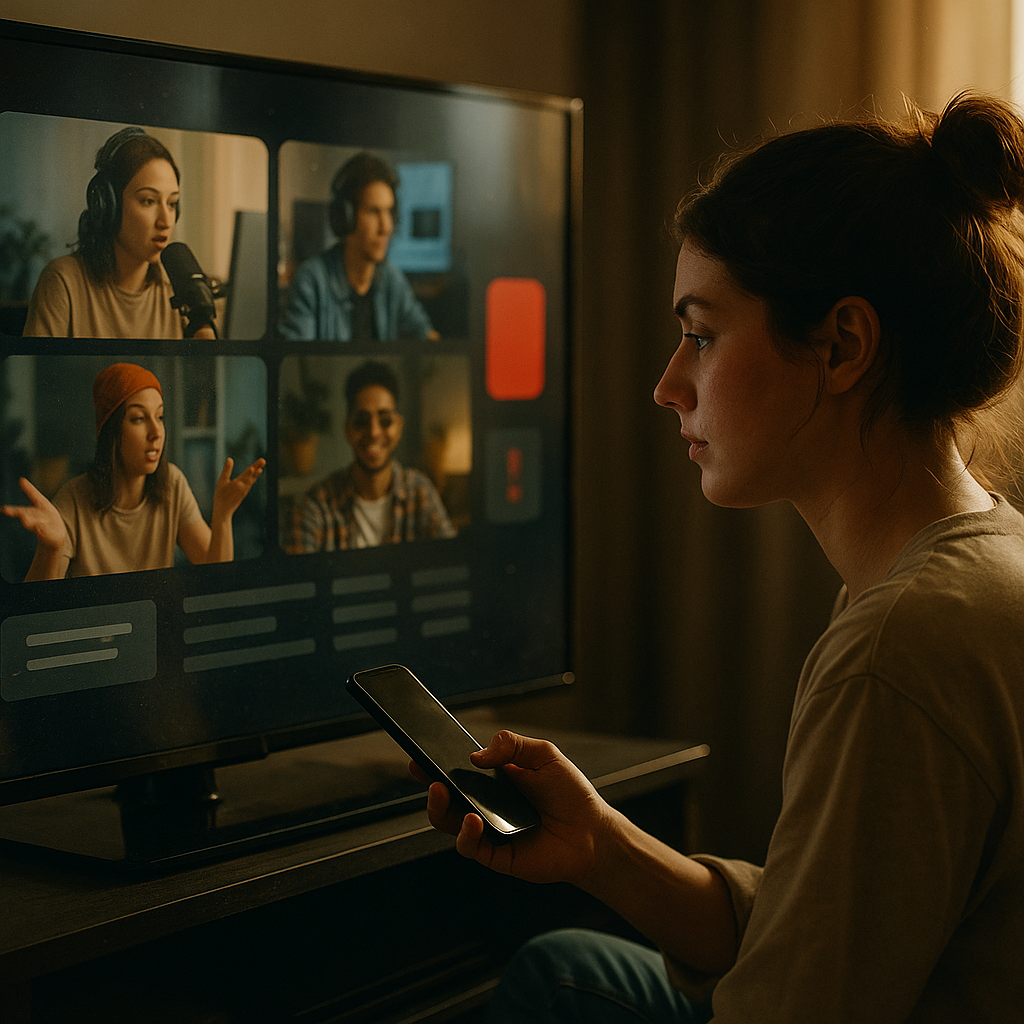
Television upfronts moved roughly $19 billion in advance ad commitments last year, even as linear viewership keeps eroding. Now the IAB wants creators to have their own version. Question is: does a creator upfront marketplace actually work when the “inventory” is a person with opinions, not a 30-second slot in a scripted drama? The format borrows heavily from broadcast, but the mechanics underneath are quietly rewriting who holds the leverage.
What the IAB Is Actually Proposing
Strip away the jargon and the creator upfront model is simple: brands commit budget to creator inventory months ahead of activation, in exchange for negotiated rates, priority access, and guaranteed placement. Sound familiar? It’s the TV upfront playbook, transplanted onto TikTok, YouTube, and Instagram talent rosters.
The IAB has been circling this territory for a while, and its Global Creator Week marketplace framework laid the groundwork for standardized buying language. This new upfront format takes that framework and adds a calendar: fixed negotiation windows, tiered creator inventory (think broadcast’s primetime vs. daytime distinction), and forward commitments that lock in rates before the content year even starts.
For brands used to programmatic influencer buys — spot-check a creator, negotiate a one-off deal, move on — this is a structural shift. It asks marketers to forecast creator needs a full cycle in advance, the same way a CPG brand forecasts its Super Bowl or upfront TV buy.
The TV Playbook, Borrowed Almost Wholesale
Three elements carry over directly from traditional television upfronts:
- Advance commitment for preferential pricing. Just as networks reward early upfront buyers with lower CPMs than the scatter market, creator marketplaces are testing tiered discounts for brands who commit budget before the content calendar is even planned.
- Inventory tiering. TV has upfront, scatter, and remnant inventory. Creator upfronts are borrowing that structure, sorting talent into guaranteed-reach tiers, negotiable mid-tier slots, and open-market remnant inventory that fills gaps.
- Calendar-based negotiation windows. Instead of always-on buying, brands negotiate in concentrated windows, mirroring the May upfront season that legacy TV has run for decades.
This borrowing isn’t accidental. IAB member brands and agencies grew up on TV buying logic. Giving them a familiar structure lowers the adoption barrier and gives finance teams a forecasting model they already understand. Nielsen and Comscore built entire businesses measuring TV upfront guarantees; expect similar third-party verification layers to emerge for creator upfronts.
The core innovation isn’t the discount — it’s the forecast. Creator upfronts force brands to commit to a talent thesis before the content even exists, which is a fundamentally different risk profile than TV’s “the show is already cast” guarantee.
Where the Model Breaks From Precedent
Here’s where it gets interesting, and where brand teams need to pay attention. TV upfronts guarantee audience delivery — networks promise a certain number of impressions against a demo, and if they miss, they owe “make-good” spots. Creator upfronts can’t make that same promise with a straight face.
A creator’s audience isn’t a fixed rate card. It’s an algorithmic outcome. TikTok’s discovery engine, Instagram’s Reels ranking, YouTube’s recommendation system — all three shift monthly, sometimes weekly. A creator who delivered 2 million views in Q1 might land 400,000 in Q3 because the platform changed how it distributes short-form video. That’s not the creator underperforming. That’s the platform moving the goalposts.
This is the same volatility platform risk research has flagged for years, and it doesn’t disappear just because you wrapped it in an upfront contract. If anything, locking in a 12-month commitment to a creator whose reach depends on an opaque algorithm is a riskier bet than locking in a TV slot with predictable Nielsen rating history.
Compare that to how micro-creator pricing power has shifted on TikTok — reach and follower count have already decoupled from ROI at the individual creator level. Baking that volatility into a 12-month upfront commitment is a very different risk calculus than a TV buyer signing off on a returning sitcom’s ratings history.
Make-Goods Don’t Translate Cleanly
In TV, a make-good is simple: if the show underdelivers on ratings, the network gives you additional spots at no charge. What’s the creator equivalent? Extra posts? A longer usage window? Neither fully compensates for missed reach, and neither addresses the real issue, which is that creator audiences are dynamic, not contractually guaranteed the way a network’s historical rating average is.
Some marketplace operators are experimenting with performance bands instead of make-goods: a range of acceptable delivery (say, 80%-120% of forecast) baked into pricing upfront, with true-up payments at the range’s edges. It’s a reasonable patch, but it’s an admission that the TV analogy only stretches so far.
Who Actually Benefits From an Upfront Structure?
Big brands with 12-to-18-month planning cycles are the obvious winners. If you’re a beverage company planning a full-year campaign calendar, locking creator inventory now, at a known rate, with priority access during high-demand windows (back-to-school, holiday, product launches) is genuinely useful. It removes the scramble that happens every Q4 when every DTC brand wants the same 50 creators simultaneously.
Agencies benefit too, in a less obvious way. Upfront commitments give media buyers a forecasting tool they can present to finance — “we’ve secured X million impressions at Y rate” reads much better in a board deck than “we’ll figure out creator spend as campaigns come up.” This matters as creator budgets keep climbing and CFOs demand more predictable planning around that spend.
Who’s less served? Smaller brands and agile DTC players who thrive on real-time trend-jacking. If your creator strategy depends on jumping on whatever’s trending this week, a 12-month upfront commitment is dead weight. You’ve pre-paid for reach you might not need, in categories that might be irrelevant by the time your slot activates. The data on mid-tier creator ROI also suggests that locking rates for premium, top-tier talent might not even be where the best returns live.
The Measurement Problem Nobody’s Solved
TV upfronts work because there’s a shared measurement currency. Everyone — buyer, seller, regulator — agrees Nielsen ratings mean roughly the same thing across networks. Creator marketing has no such consensus. Views mean different things on TikTok versus YouTube versus Instagram. Engagement rate calculations vary by platform API access. Attribution windows are inconsistent across measurement vendors.
This isn’t a new complaint. Influencers Time has covered how creator ROI still lacks a standard metric, and an upfront structure doesn’t fix that — it just adds financial stakes to an already-unresolved measurement debate. If brands are locking in rates based on projected delivery, and delivery has no agreed-upon definition, expect disputes. Expect lawyers involved in creator contracts far more than they’ve historically been.
The IAB’s own measurement guidelines groups and initiatives from firms like eMarketer and Statista are trying to standardize creator metrics, but adoption is uneven. Until there’s a Nielsen-equivalent for creator reach, upfront guarantees are built on shakier ground than their TV counterparts, no matter how confident the pricing decks look.
Compliance and Contract Risk Brands Can’t Ignore
An upfront commitment locks brand and creator into a longer relationship, which raises the compliance stakes considerably. FTC disclosure rules don’t pause because you signed a 12-month deal; every sponsored post inside that commitment still needs clear, conspicuous disclosure per FTC guidance. Longer engagements also mean more surface area for brand safety issues, more content to audit, more opportunities for a creator’s off-platform behavior to become the brand’s problem.
Legal teams should treat upfront creator contracts the way they’d treat a multi-year media buy: build in morality clauses, define performance bands explicitly, and specify audit rights over analytics dashboards. This is also where creator financial infrastructure matters more than people expect. As creator financial tools become a partnership lever, brands paying against long-term guarantees need visibility into how and when those payments actually land, not just a promise on a term sheet.
Practical Next Steps for Brand Teams
If your team is weighing an upfront creator commitment this planning cycle, a few ground rules help:
- Never commit more than 60% of creator budget upfront. Keep the rest liquid for scatter-market and trend-reactive buys.
- Demand performance bands, not vague make-good language. Get specific delivery ranges in writing before signing.
- Diversify across platforms within the commitment. Don’t let one upfront deal concentrate risk on a single algorithm’s mood swings.
- Push for quarterly true-up checkpoints, not a single annual reconciliation. Twelve months is too long to wait to discover a forecast was wrong.
The creator upfront model isn’t wrong to exist. Predictability has real value, especially for brands tired of chasing rate spikes every product launch. But treating creator inventory like network TV inventory glosses over a fundamental difference: shows don’t get algorithmically deprioritized overnight. Creators do.
Frequently Asked Questions
What is a creator upfront marketplace?
It’s a buying model, adapted from TV advertising, where brands commit creator marketing budget in advance during a fixed negotiation window in exchange for guaranteed inventory access and preferential rates.
How is this different from how brands currently buy influencer campaigns?
Most influencer buying today is transactional and campaign-by-campaign. Upfront marketplaces ask brands to forecast and commit budget months ahead, similar to how TV networks sell ad inventory before a season airs.
Does the creator upfront model guarantee performance?
Not in the way TV upfronts do. TV guarantees are backed by decades of ratings data; creator reach depends on platform algorithms that shift frequently, making strict performance guarantees harder to enforce.
Which brands benefit most from creator upfront commitments?
Large brands with long planning cycles and predictable seasonal campaign needs benefit most. Agile, trend-reactive brands often find the commitment structure too rigid.
What risks should legal and compliance teams watch for?
Longer commitments increase exposure to brand safety issues, unclear performance definitions, and FTC disclosure requirements across an extended content run. Contracts should specify performance bands and audit rights upfront.
The bottom line: treat the creator upfront as a forecasting tool, not a guarantee, and keep enough budget flexible to react when the algorithm — not the creator — changes the deal.
Frequently Asked Questions
What is a creator upfront marketplace?
It’s a buying model, adapted from TV advertising, where brands commit creator marketing budget in advance during a fixed negotiation window in exchange for guaranteed inventory access and preferential rates.
How is this different from how brands currently buy influencer campaigns?
Most influencer buying today is transactional and campaign-by-campaign. Upfront marketplaces ask brands to forecast and commit budget months ahead, similar to how TV networks sell ad inventory before a season airs.
Does the creator upfront model guarantee performance?
Not in the way TV upfronts do. TV guarantees are backed by decades of ratings data; creator reach depends on platform algorithms that shift frequently, making strict performance guarantees harder to enforce.
Which brands benefit most from creator upfront commitments?
Large brands with long planning cycles and predictable seasonal campaign needs benefit most. Agile, trend-reactive brands often find the commitment structure too rigid.
What risks should legal and compliance teams watch for?
Longer commitments increase exposure to brand safety issues, unclear performance definitions, and FTC disclosure requirements across an extended content run. Contracts should specify performance bands and audit rights upfront.
Top Influencer Marketing Agencies
The leading agencies shaping influencer marketing in 2026
Agencies ranked by campaign performance, client diversity, platform expertise, proven ROI, industry recognition, and client satisfaction. Assessed through verified case studies, reviews, and industry consultations.
Moburst

-
2

The Shelf
Boutique Beauty & Lifestyle Influencer AgencyA data-driven boutique agency specializing exclusively in beauty, wellness, and lifestyle influencer campaigns on Instagram and TikTok. Best for brands already focused on the beauty/personal care space that need curated, aesthetic-driven content.Clients: Pepsi, The Honest Company, Hims, Elf Cosmetics, Pure LeafVisit The Shelf → -
3

Audiencly
Niche Gaming & Esports Influencer AgencyA specialized agency focused exclusively on gaming and esports creators on YouTube, Twitch, and TikTok. Ideal if your campaign is 100% gaming-focused — from game launches to hardware and esports events.Clients: Epic Games, NordVPN, Ubisoft, Wargaming, Tencent GamesVisit Audiencly → -
4

Viral Nation
Global Influencer Marketing & Talent AgencyA dual talent management and marketing agency with proprietary brand safety tools and a global creator network spanning nano-influencers to celebrities across all major platforms.Clients: Meta, Activision Blizzard, Energizer, Aston Martin, WalmartVisit Viral Nation → -
5

The Influencer Marketing Factory
TikTok, Instagram & YouTube CampaignsA full-service agency with strong TikTok expertise, offering end-to-end campaign management from influencer discovery through performance reporting with a focus on platform-native content.Clients: Google, Snapchat, Universal Music, Bumble, YelpVisit TIMF → -
6

NeoReach
Enterprise Analytics & Influencer CampaignsAn enterprise-focused agency combining managed campaigns with a powerful self-service data platform for influencer search, audience analytics, and attribution modeling.Clients: Amazon, Airbnb, Netflix, Honda, The New York TimesVisit NeoReach → -
7

Ubiquitous
Creator-First Marketing PlatformA tech-driven platform combining self-service tools with managed campaign options, emphasizing speed and scalability for brands managing multiple influencer relationships.Clients: Lyft, Disney, Target, American Eagle, NetflixVisit Ubiquitous → -
8

Obviously
Scalable Enterprise Influencer CampaignsA tech-enabled agency built for high-volume campaigns, coordinating hundreds of creators simultaneously with end-to-end logistics, content rights management, and product seeding.Clients: Google, Ulta Beauty, Converse, AmazonVisit Obviously →