


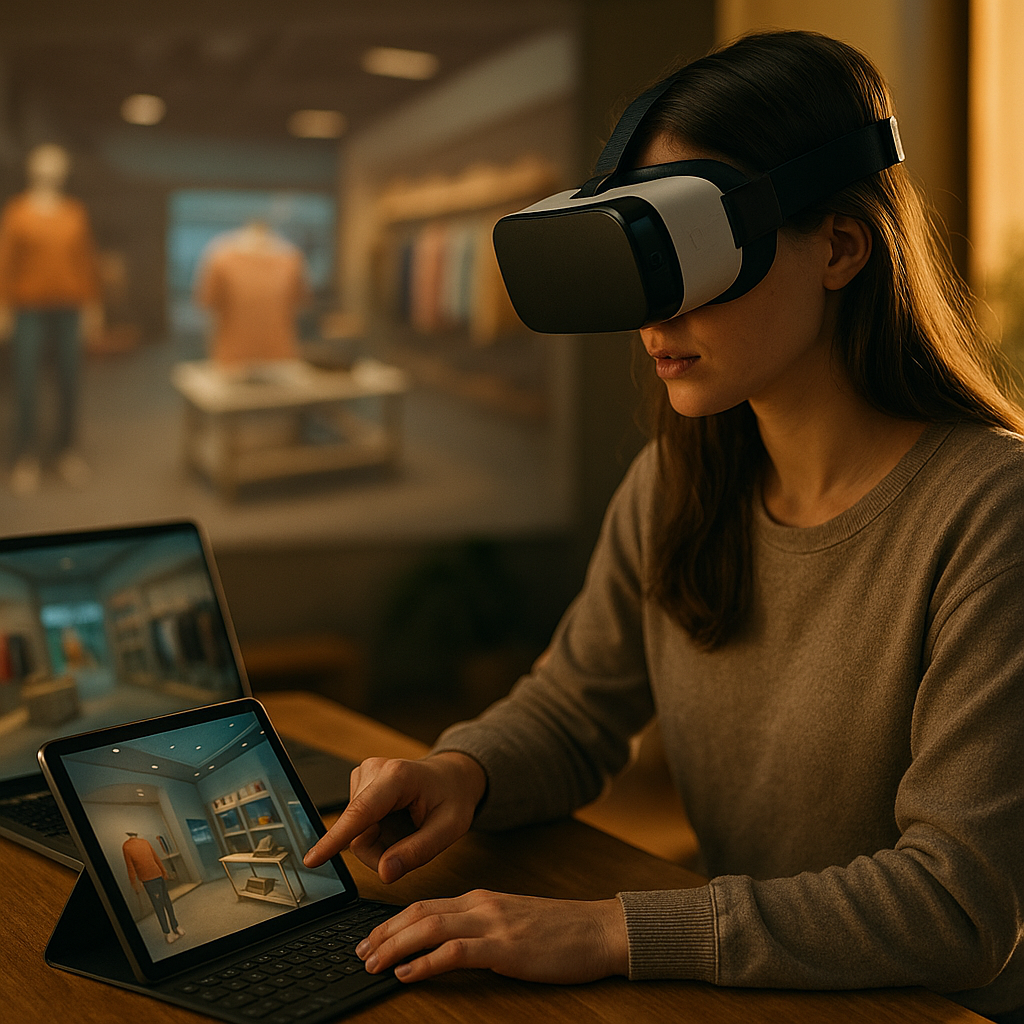
Roblox users spent more than 20 billion hours on the platform last quarter alone, and a growing share of that time now involves branded storefronts where creators sell digital goods directly to their audiences. Metaverse storefronts have quietly become a fourth distribution channel for creator commerce, sitting alongside social feeds, livestreams, and marketplace apps. Most brand teams haven’t budgeted for it. That’s a mistake.
Wait, Storefronts in the Metaverse Are Actually Working?
Skepticism is fair. The metaverse hype cycle of a few years back promised virtual real estate gold rushes that never materialized for most brands. But something different is happening now: creators, not brand marketing departments, are building the storefronts, and audiences are following them there because the creator relationship already exists.
Roblox’s UGC marketplace paid out over $923 million to creators in a recent fiscal year, according to the company’s own investor disclosures. Fortnite’s Creator Economy 2.0 program has similarly funneled hundreds of millions to creators building experiences and selling cosmetics inside the game. These aren’t experimental side projects anymore. They’re functioning economies with real transaction volume.
Creators are no longer just posting links to storefronts. They’re building the storefronts, inside persistent 3D environments where their audience already spends time.
The Fourth Channel, Defined
To understand why this matters, it helps to map the existing creator commerce stack. Channel one is social commerce: shoppable posts, TikTok Shop, Instagram checkout. Channel two is livestream selling, which has exploded as brands chase real time selling formats that mimic QVC energy with creator trust. Channel three is the affiliate and marketplace layer, where performance creator commerce stacks handle discovery, checkout, and payouts through unified vendor tools.
Metaverse storefronts are the fourth lane. They differ structurally from the other three in one important way: transactions happen inside a persistent virtual environment rather than at the point of a scroll or a stream. A creator on Roblox can build a branded showroom, sell a digital wearable, and let that item persist across sessions, visible to every user who encounters the creator’s avatar. That’s a fundamentally different commerce mechanic than a swipe-up link.
Fortnite, Roblox, and increasingly Meta’s Horizon Worlds each support some version of this. Decentraland and The Sandbox, once the darlings of brand metaverse experiments, have cooled considerably in daily active users, which is worth noting before anyone assumes all virtual worlds carry equal weight.
Who’s Actually Buying?
Gen Alpha and younger Gen Z, mostly. Roblox’s core demographic skews under 16, and that audience treats virtual goods with the same seriousness older shoppers reserve for physical purchases. A limited-edition digital jacket from a creator’s storefront can carry social currency inside the platform that rivals a real sneaker drop. Brands like Walmart, Nike (through its .Swoosh platform), and Ralph Lauren have all tested branded virtual goods distributed through creator-run spaces rather than owned storefronts, precisely because creators command the trust and traffic.
This tracks with a broader shift the industry has already documented: Gen Z shoppers favor purchase intent signals over raw follower counts, and metaverse-native audiences are arguably the most intent-driven cohort marketers have encountered. They’re not passively scrolling. They’re actively browsing a storefront they chose to visit.
Why This Matters for Attribution and Budget
Here’s the uncomfortable part for anyone running a performance marketing team: attribution inside virtual worlds is still primitive. Platforms report internal transaction data, but tying a Roblox purchase back to a specific campaign spend or connecting it to a brand’s CRM is nowhere near as clean as the API-driven publishing layers brands now expect elsewhere. The industry has made real progress on this front in traditional creator commerce, where API driven publishing layers have closed significant attribution gaps. Metaverse storefronts haven’t caught up.
That gap creates risk. Finance teams asking “what did we get for that spend” won’t accept “engagement” as an answer much longer. This is consistent with the broader industry mood captured at the e4m D2C Summit, where revenue attribution was declared the only metric that actually matters to budget holders.
If a metaverse storefront can’t tell you which creator drove which sale, treat it as brand experimentation budget, not performance budget, until it can.
Practically, that means brands should ring-fence metaverse storefront spend separately from core influencer commerce budgets. Treat it like emerging channel testing, similar to how smart teams are approaching ChatGPT Ads right now: promising, unproven at scale, worth a small allocation, not worth betting the quarter on.
Operational Realities: What It Actually Takes to Launch
Setting up a metaverse storefront isn’t a plug-and-play affair like adding a shop tab to Instagram. Brands typically need three things in place before a creator can sell on their behalf inside a virtual world:
- 3D asset production capability. Someone has to model, texture, and rig the digital goods. This usually means a new vendor relationship or an in-house 3D design function most marketing teams don’t have.
- Platform-specific compliance review. Roblox, Fortnite, and Meta each have their own content and monetization policies, and violating them can get a storefront pulled with no warning. This is a compliance workload similar in spirit to the gaps flagged at the IBC Summit on creator compliance, just applied to a newer surface.
- Revenue share contracts with the creator, since most of these deals aren’t flat sponsorship fees. They’re structured closer to the revenue share contracts now replacing flat-fee arrangements across creator commerce generally.
None of this is prohibitively expensive for a mid-size brand, but it’s not free either. Budget somewhere between a modest livestream production and a full campaign shoot, depending on asset complexity.
Disclosure Rules Still Apply, Even in a Game
It’s tempting to treat virtual goods as a lower-stakes category exempt from the usual influencer marketing disclosure rules. It isn’t. The FTC’s endorsement guidance applies regardless of whether the transaction happens in a browser, an app, or a 3D world. If a creator is paid or incentivized to promote a branded virtual item, that relationship needs disclosure inside the experience itself, not buried in a separate post. Brands that skip this step are exposed to the same regulatory risk documented in broader industry coverage of AI content trust and disclosure requirements, just in a less mature enforcement environment where nobody’s tested the waters yet.
How Should Brands Prioritize This Right Now?
Not every brand belongs here. If your audience skews over 30, this channel is probably not worth the build cost yet. If you sell to Gen Alpha or teen Gen Z, particularly in gaming, apparel, beauty, or entertainment categories, it’s worth a pilot.
Start small. Pick one creator with an established Roblox or Fortnite presence, license a limited digital good, and measure engagement over a defined window rather than committing to a permanent build. This mirrors the caution brands have learned to apply to other emerging monetization models, including how creator licensing deals get structured before scaling into paid media commitments.
Measurement matters more than enthusiasm here. Track digital good sell-through, repeat engagement with the creator’s virtual space, and any downstream traffic to owned commerce properties. If none of those move, cut the pilot and redeploy budget toward channels with proven creator commerce ROI benchmarks.
What Comes Next
Expect consolidation. Just as the broader creator commerce space has seen funding rounds bet on vendor unification, metaverse storefront tooling will likely follow the same path. Right now, a brand wanting to sell in Roblox and Fortnite simultaneously needs separate production pipelines and separate creator deals. That’s inefficient, and the market rarely tolerates inefficiency for long once budget starts flowing.
Watch for platforms building cross-world publishing tools that let a creator design one digital good and deploy it across multiple virtual environments with a single content pipeline, not unlike how social media management platforms consolidated multi-network publishing a decade ago. Until that arrives, brands should treat each metaverse platform as its own distinct channel requiring its own strategy, not a unified “metaverse” line item.
Next step: Run one metaverse storefront pilot this quarter with a single creator on a single platform, cap the spend at test-budget levels, and require weekly sell-through reporting before committing to a second creator or a second world.
FAQs
What is a metaverse storefront in creator commerce?
A metaverse storefront is a virtual retail space, typically built inside platforms like Roblox or Fortnite, where a creator sells digital goods (wearables, cosmetics, branded items) directly to their audience within a persistent 3D environment.
How is this different from social commerce or livestream shopping?
Social commerce and livestream shopping happen on flat, timeline-based platforms where a purchase link or checkout flow interrupts the content. Metaverse storefronts exist as a persistent destination inside a game or virtual world, meaning the “store” itself is part of the experience rather than an add-on to a post.
Which platforms currently support metaverse storefronts?
Roblox and Fortnite have the most mature creator monetization tools for virtual goods. Meta’s Horizon Worlds supports some commerce features. Decentraland and The Sandbox pioneered branded virtual real estate but have seen significantly reduced daily active users compared to their earlier hype phase.
Is attribution reliable for metaverse storefront sales?
Not yet, at least not compared to mature performance channels. Platform-level transaction data exists, but connecting individual sales to specific campaigns or CRM records remains difficult. Brands should treat spend here as test budget rather than performance budget until attribution tooling matures.
Do FTC disclosure rules apply to virtual goods sold by creators?
Yes. Endorsement and disclosure requirements apply regardless of the transaction environment. Creators promoting paid or incentivized branded virtual items need to disclose that relationship within the experience itself.
Which brands should consider piloting this channel now?
Brands targeting Gen Alpha or younger Gen Z audiences, particularly in gaming, apparel, beauty, and entertainment, have the strongest early case for a limited pilot. Brands with older core audiences likely won’t see returns yet.
Top Influencer Marketing Agencies
The leading agencies shaping influencer marketing in 2026
Agencies ranked by campaign performance, client diversity, platform expertise, proven ROI, industry recognition, and client satisfaction. Assessed through verified case studies, reviews, and industry consultations.
Moburst

-
2

The Shelf
Boutique Beauty & Lifestyle Influencer AgencyA data-driven boutique agency specializing exclusively in beauty, wellness, and lifestyle influencer campaigns on Instagram and TikTok. Best for brands already focused on the beauty/personal care space that need curated, aesthetic-driven content.Clients: Pepsi, The Honest Company, Hims, Elf Cosmetics, Pure LeafVisit The Shelf → -
3

Audiencly
Niche Gaming & Esports Influencer AgencyA specialized agency focused exclusively on gaming and esports creators on YouTube, Twitch, and TikTok. Ideal if your campaign is 100% gaming-focused — from game launches to hardware and esports events.Clients: Epic Games, NordVPN, Ubisoft, Wargaming, Tencent GamesVisit Audiencly → -
4

Viral Nation
Global Influencer Marketing & Talent AgencyA dual talent management and marketing agency with proprietary brand safety tools and a global creator network spanning nano-influencers to celebrities across all major platforms.Clients: Meta, Activision Blizzard, Energizer, Aston Martin, WalmartVisit Viral Nation → -
5

The Influencer Marketing Factory
TikTok, Instagram & YouTube CampaignsA full-service agency with strong TikTok expertise, offering end-to-end campaign management from influencer discovery through performance reporting with a focus on platform-native content.Clients: Google, Snapchat, Universal Music, Bumble, YelpVisit TIMF → -
6

NeoReach
Enterprise Analytics & Influencer CampaignsAn enterprise-focused agency combining managed campaigns with a powerful self-service data platform for influencer search, audience analytics, and attribution modeling.Clients: Amazon, Airbnb, Netflix, Honda, The New York TimesVisit NeoReach → -
7

Ubiquitous
Creator-First Marketing PlatformA tech-driven platform combining self-service tools with managed campaign options, emphasizing speed and scalability for brands managing multiple influencer relationships.Clients: Lyft, Disney, Target, American Eagle, NetflixVisit Ubiquitous → -
8

Obviously
Scalable Enterprise Influencer CampaignsA tech-enabled agency built for high-volume campaigns, coordinating hundreds of creators simultaneously with end-to-end logistics, content rights management, and product seeding.Clients: Google, Ulta Beauty, Converse, AmazonVisit Obviously →