


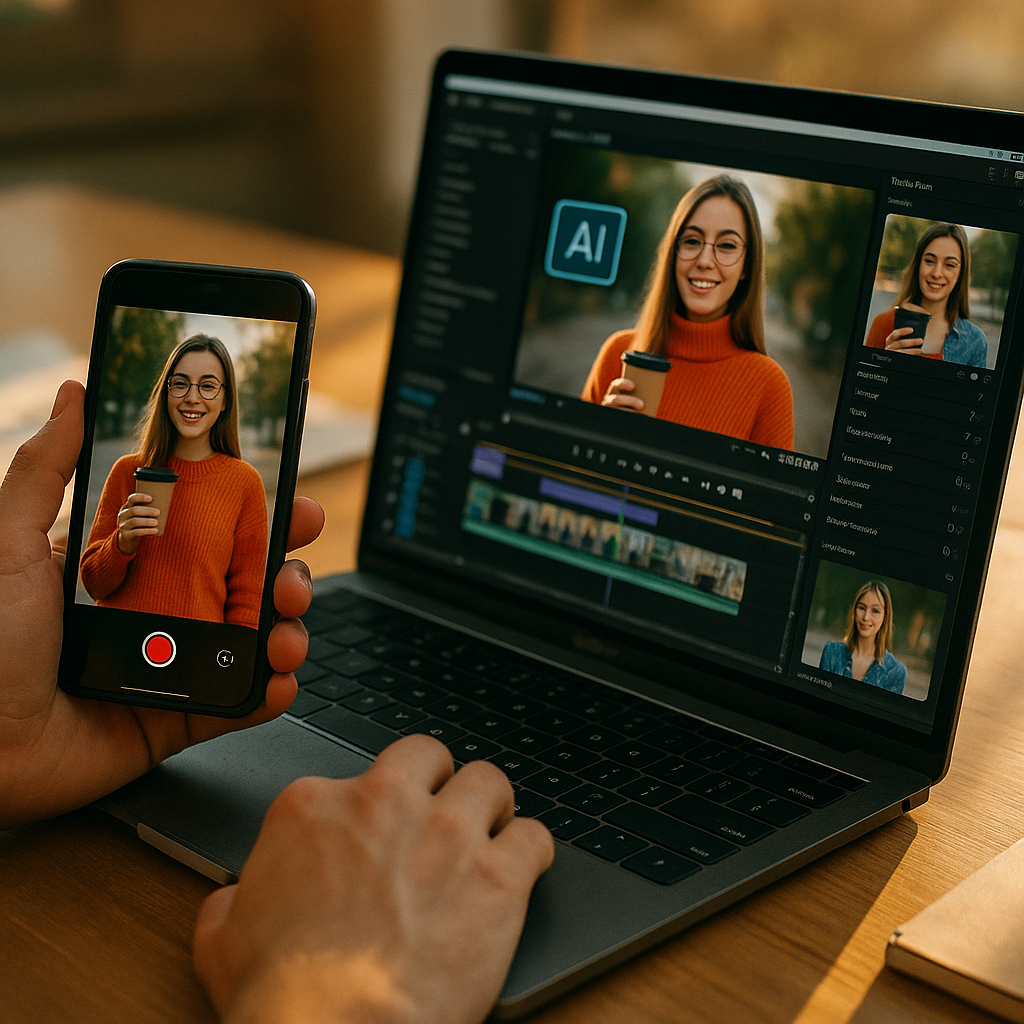
Brands now collect more raw UGC in a single campaign than most editing teams could process in a quarter two years ago. So why does footage still sit in a shared drive for days before anyone touches it? A new wave of AI video editors for real time UGC harvesting claims to close that gap, clipping, captioning, and routing creator content the moment it lands. The pitch is fast. The reality, as usual, is messier.
The UGC Deluge Broke the Old Editing Workflow
Ten years ago, “editing” meant a freelancer in Premiere Pro turning around a hero video in a week. That model never scaled to influencer programs running fifty, a hundred, or five hundred creators at once. Each creator now produces multiple raw clips per week across TikTok, Instagram Reels, and YouTube Shorts, and brands are expected to repurpose that content into ads, landing pages, and paid social almost instantly.
According to eMarketer’s creator economy research, short form video now accounts for the majority of social content consumption time, which means the cost of a slow editing queue isn’t just operational, it’s a missed distribution window. A clip that would have crushed it on Tuesday is dead weight by Friday.
The real bottleneck was never filming. It was the forty-eight hours between “creator uploaded raw footage” and “brand has an approved, on-brand clip ready to run as a paid ad.”
That gap is exactly what this new category of tools is built to eliminate, and it’s why procurement conversations have shifted from “which editor is best” to “which editor plugs into our existing creator stack without adding another manual handoff.”
Who’s Actually Building for Real Time Harvesting?
The category splits into three rough tiers, and knowing which tier you’re evaluating saves a lot of demo fatigue.
- Auto-clipping engines like Opus Clip and Munch scan long form or raw UGC and surface the highest-potential moments automatically, scoring clips for hook strength and predicted watch time.
- Caption-and-brand-kit tools such as Captions and Descript layer on auto subtitles, brand fonts, and voice cleanup, which matters more than it sounds like once you’re running content across a dozen creator accounts with wildly different audio quality.
- Generative repurposing tools like Runway and Pika Labs go further, letting teams extend a clip, swap a background, or generate B-roll to patch gaps in creator footage rather than sending it back for a reshoot.
Some of these overlap with the AI creative platforms brands are already piloting for other production work, which is worth checking before you sign a separate contract. Our GenStudio ROI review found that early adopters got more value stacking generative tools with existing DAM systems than buying single-purpose apps, and the same logic applies here. If your team already has a in house AI creative studio in place, a standalone clipping tool might just be redundant spend.
Speed Is Not the Same as ROI
Here’s the uncomfortable part: fast clipping doesn’t automatically mean better performance. A tool that turns raw footage into a polished clip in ninety seconds is impressive in a demo. It’s less impressive when the clip it prioritized was the wrong one, because the scoring model was trained on generic engagement patterns instead of your actual audience.
Brands running high creator volume should be tracking three numbers before they commit budget to any of these platforms:
- Time from raw upload to publish-ready asset (the metric vendors love to quote)
- Cost per usable clip once you factor in the human review pass almost every legal or brand team still requires
- Downstream performance lift versus manually edited clips over a comparable sample size
That third number is the one vendors rarely volunteer, and it’s the one that actually justifies the subscription. Sprout Social’s benchmarking data consistently shows that hook quality in the first three seconds drives most of the variance in short-form performance, and auto-clipping tools are only as good as the training data behind that hook scoring. Ask vendors directly what their models were trained on. If they can’t answer, treat the “AI-powered” label as marketing copy, not a differentiator.
Worth comparing against your discovery layer too. If you’re already using discovery tools like Favikon or CreatorIQ to identify high-performing creators, the smartest workflow feeds that performance data into the clipping tool’s prioritization logic instead of treating editing as a separate, disconnected step.
The Compliance Blind Spot Nobody Demos
Real time harvesting sounds efficient until legal asks where the usage rights live. Auto-pulling a creator’s raw footage into an editing pipeline and pushing it straight to paid media is a fast way to end up outside the terms of your influencer agreement, especially if the original contract only covered organic posting.
The FTC’s endorsement guidance hasn’t gotten more lenient, and automated editing pipelines make it easier to accidentally strip or bury a required disclosure when a caption gets auto-regenerated. Speed without a compliance checkpoint is just risk moving faster.
An editing tool that shaves two days off your turnaround is worthless if it also strips the sponsorship disclosure your legal team requires on every paid placement.
This is exactly the gap covered in our piece on content governance, and it applies directly here: any AI video editor touching creator content at scale needs a rights and disclosure layer built into the workflow, not bolted on after the fact. If a vendor can’t show you where usage rights are checked before a clip gets published, that’s a red flag worth escalating past the marketing team demo.
Attribution: The Part Everyone Skips
Once a clip gets pulled, edited, and repurposed across five channels, tracking which version drove which conversion gets genuinely hard. Most of these AI editors weren’t built with attribution in mind, they were built to produce content fast. That’s a gap brand teams need to plug themselves, usually by tagging assets at the point of export rather than trying to reverse-engineer performance later.
This mirrors a problem we’ve flagged before in attribution chaos across creator programs more broadly. Adding an auto-clipping layer without a tagging convention just multiplies the number of untracked assets floating around your paid media accounts. According to HubSpot’s marketing benchmarks, teams that tag content at creation consistently report cleaner attribution data than those trying to backfill it post-launch, which should tell you where this belongs in your rollout plan: step one, not step five.
Statista’s video marketing data also points to a widening gap between brands that treat repurposing as a strategic pipeline versus those treating it as a cost-cutting hack. The former group tends to build tagging and rights checks into the tool from day one. The latter group finds out the hard way, usually during a legal review six months in.
None of this means skip the category. It means buy the workflow, not the demo. Pilot one auto-clipping tool against a fixed creator segment for thirty days, measure cost per usable clip against your current manual process, and only scale spend once the compliance and attribution layers are actually built into the pipeline rather than promised on the roadmap.
Frequently Asked Questions
What is real time UGC harvesting?
Real time UGC harvesting refers to software that automatically detects, clips, and prepares creator-generated video for publishing as it’s uploaded, rather than waiting for a manual editing pass. AI video editors handle the detection and formatting, cutting turnaround from days to hours.
Do AI video editors replace human editors entirely?
No. Most enterprise workflows still require a human review pass for brand safety, legal compliance, and quality control before content goes to paid media. The tools reduce the editing workload, not the oversight requirement.
How do these tools handle usage rights and disclosures?
Coverage varies significantly by vendor. Some platforms include rights-checking and disclosure verification as part of the pipeline, while others focus purely on clipping and leave compliance entirely to the brand team. This should be a top question in any vendor evaluation.
What’s a realistic ROI timeline for adopting one of these tools?
Most brands see turnaround time improvements within the first pilot cycle, but performance lift versus manually edited content usually needs a thirty to sixty day sample to measure reliably, since it depends heavily on creator volume and content variety.
Can small teams benefit, or is this only for high-volume creator programs?
Smaller teams can benefit, but the cost-per-clip math tends to favor programs running high creator volume, where the time saved on manual editing scales against a larger content pipeline.
Top Influencer Marketing Agencies
The leading agencies shaping influencer marketing in 2026
Agencies ranked by campaign performance, client diversity, platform expertise, proven ROI, industry recognition, and client satisfaction. Assessed through verified case studies, reviews, and industry consultations.
Moburst

-
2

The Shelf
Boutique Beauty & Lifestyle Influencer AgencyA data-driven boutique agency specializing exclusively in beauty, wellness, and lifestyle influencer campaigns on Instagram and TikTok. Best for brands already focused on the beauty/personal care space that need curated, aesthetic-driven content.Clients: Pepsi, The Honest Company, Hims, Elf Cosmetics, Pure LeafVisit The Shelf → -
3

Audiencly
Niche Gaming & Esports Influencer AgencyA specialized agency focused exclusively on gaming and esports creators on YouTube, Twitch, and TikTok. Ideal if your campaign is 100% gaming-focused — from game launches to hardware and esports events.Clients: Epic Games, NordVPN, Ubisoft, Wargaming, Tencent GamesVisit Audiencly → -
4

Viral Nation
Global Influencer Marketing & Talent AgencyA dual talent management and marketing agency with proprietary brand safety tools and a global creator network spanning nano-influencers to celebrities across all major platforms.Clients: Meta, Activision Blizzard, Energizer, Aston Martin, WalmartVisit Viral Nation → -
5

The Influencer Marketing Factory
TikTok, Instagram & YouTube CampaignsA full-service agency with strong TikTok expertise, offering end-to-end campaign management from influencer discovery through performance reporting with a focus on platform-native content.Clients: Google, Snapchat, Universal Music, Bumble, YelpVisit TIMF → -
6

NeoReach
Enterprise Analytics & Influencer CampaignsAn enterprise-focused agency combining managed campaigns with a powerful self-service data platform for influencer search, audience analytics, and attribution modeling.Clients: Amazon, Airbnb, Netflix, Honda, The New York TimesVisit NeoReach → -
7

Ubiquitous
Creator-First Marketing PlatformA tech-driven platform combining self-service tools with managed campaign options, emphasizing speed and scalability for brands managing multiple influencer relationships.Clients: Lyft, Disney, Target, American Eagle, NetflixVisit Ubiquitous → -
8

Obviously
Scalable Enterprise Influencer CampaignsA tech-enabled agency built for high-volume campaigns, coordinating hundreds of creators simultaneously with end-to-end logistics, content rights management, and product seeding.Clients: Google, Ulta Beauty, Converse, AmazonVisit Obviously →