


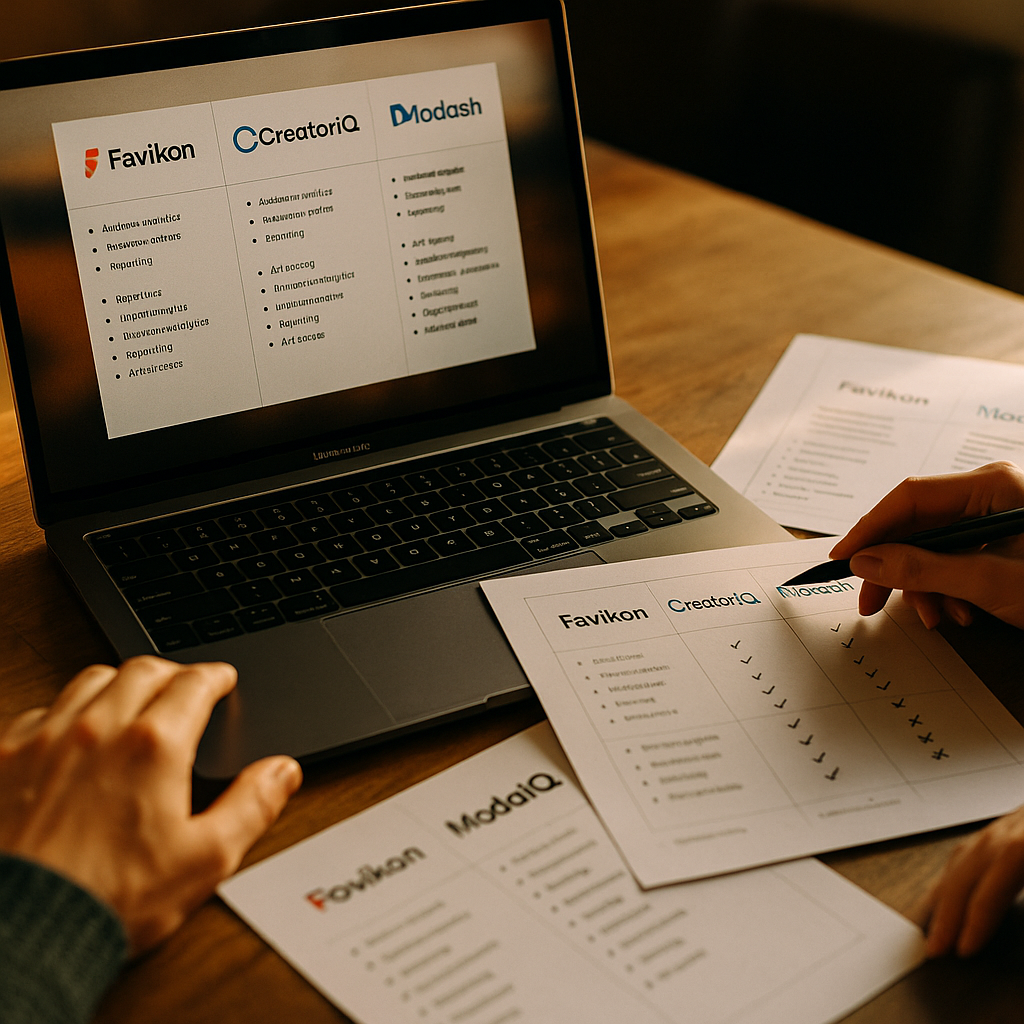
Here’s an uncomfortable stat for anyone building a creator program right now: brands using a single platform discovery tool miss an average of 40% of relevant creators active on adjacent platforms, according to eMarketer research on cross-platform influencer behavior. If your team is still evaluating a multi platform creator discovery tool the way you’d shop for a single-network search engine, you’re already leaving reach on the table. Favikon, CreatorIQ, and Modash all promise cross-platform visibility. They don’t deliver it the same way, and picking wrong costs months.
Why Multi Platform Discovery Broke the Old Playbook
Five years ago, “influencer discovery” meant an Instagram hashtag search and a spreadsheet. Creators now build audiences across TikTok, YouTube Shorts, LinkedIn, Twitch, and podcast feeds simultaneously, often with wildly different engagement patterns on each. A creator with modest Instagram reach might dominate YouTube search intent. A LinkedIn thought leader might have a TikTok side account that outperforms their main channel three to one.
That fragmentation is exactly why discovery tools built for one platform, or bolted-on multi-platform support, fall short. Brand teams need unified audience overlap data, consistent engagement benchmarks across networks, and vetting that catches fraud regardless of where it originates. This is the actual job to be done, and it’s the lens through which Favikon, CreatorIQ, and Modash need to be judged.
Favikon: Built for Speed and Social Listening
Favikon made its name as a rankings and discovery engine that leans heavily on real-time social listening. It’s fast. Search a niche, say “sustainable fashion micro-creators in the UK,” and you get ranked results within seconds, complete with engagement trend lines and audience quality scores.
The strength here is breadth at low cost. Favikon indexes creators across Instagram, TikTok, YouTube, LinkedIn, Twitter/X, and Twitch, and its scoring methodology weights consistency over vanity metrics. For lean marketing teams or agencies running high-volume prospecting, that speed matters more than granular workflow tooling.
Where it thins out is post-discovery. Favikon isn’t built to manage contracts, track deliverables, or reconcile payouts. Teams that pick it expecting an end-to-end platform usually end up stitching in a separate campaign management tool anyway, which is worth budgeting for upfront.
The real cost of a discovery tool isn’t the subscription fee. It’s the operational gap between “found the creator” and “paid the creator correctly,” and that gap is where most brand teams underestimate their true tooling spend.
CreatorIQ: The Enterprise Workflow Machine
CreatorIQ plays a different game entirely. It’s less a discovery tool and more a full creator relationship management system, with discovery as one module among many. Enterprise brands running programs with hundreds of active creators, multi-market compliance requirements, and finance teams demanding audit trails tend to gravitate here.
The discovery layer inside CreatorIQ is genuinely strong for cross-platform audience overlap analysis, particularly useful when you’re deciding whether to consolidate spend with a creator who’s active on three networks or diversify across three separate creators. Its fraud detection, benchmarked against its own proprietary database of past campaigns, is a meaningful differentiator for brands that got burned by inflated follower counts before.
The tradeoff is cost and complexity. CreatorIQ implementations typically run months, not weeks, and pricing sits well above what mid-market teams want to commit before proving program ROI. If your organization is already thinking about vendor evaluation frameworks for unified marketing stacks, CreatorIQ fits that enterprise conversation more naturally than a standalone discovery decision.
Modash: The API First Data Layer
Modash occupies the middle ground, and it does so on purpose. Its pitch is simple: give developers and marketing teams raw, clean creator data via API, then let them build whatever workflow sits on top. Modash covers Instagram, TikTok, and YouTube deeply, with audience demographic breakdowns (age, location, gender, language) that are consistently cited as best-in-class for accuracy.
This matters more than it sounds. Audience overlap and authenticity data is only as good as the underlying methodology, and Modash’s fraud detection flags things like sudden follower spikes, comment pod patterns, and bot ratios with granular scoring rather than a blunt pass/fail.
The catch: Modash’s LinkedIn, Twitch, and podcast coverage lags behind Favikon and CreatorIQ. If your program leans heavily on B2B creators or streaming talent, Modash alone won’t cut it. It’s also less useful if you don’t have engineering resources to build against the API, since the raw data experience is less polished for non-technical marketers than Favikon’s dashboard.
Where Each Tool Actually Falls Short
No platform here is a universal answer, and vendors rarely lead with their gaps in a sales call. Here’s the honest breakdown:
- Favikon lacks deep campaign management and payment workflows, meaning you’ll need a second tool for execution.
- CreatorIQ is priced and structured for enterprise budgets, making it overkill for teams running fewer than 50 active creator relationships.
- Modash has thinner coverage on LinkedIn, Twitch, and emerging platforms, and demands technical resources to extract full value from its API.
This is why “which tool is best” is the wrong question. The right question is which gap your team can tolerate, and which gap actually threatens your program’s compliance or ROI story. Brands scaling affiliate-style creator payouts, for instance, should read how agency workflow costs hide in discovery-to-payment handoffs before assuming any single tool solves the whole chain.
Matching the Tool to Your Actual Team
Think about this in terms of team maturity rather than feature checklists.
Lean teams (one to three people managing creator relationships) get the fastest time-to-value from Favikon. The dashboard requires no onboarding curve, and the pricing tier lets you prove concept before committing to heavier infrastructure. Pair it with a lightweight payment and content approval workflow, and you have a functional program within weeks.
Mid-market teams running structured campaigns across three or more platforms, with a dedicated creator marketing manager and quarterly budget reviews, tend to land on Modash if engineering support exists, or a hybrid of Favikon plus a separate CRM if it doesn’t. The audience data precision Modash offers becomes worth the integration effort once you’re spending real budget and need to defend audience quality to finance.
Enterprise programs with compliance teams, multi-brand portfolios, and finance stakeholders demanding attribution reporting should default to CreatorIQ, accepting the cost and implementation timeline as the price of operational control. For these teams, discovery is rarely the bottleneck. Governance is. Programs at that scale should also review how compliance requirements are shifting for AI-assisted creator tooling more broadly.
The Fraud Detection Question Nobody Skips Anymore
Every conversation with a serious buyer eventually turns to fake followers and engagement pods. All three tools claim fraud detection, but the methodologies differ enough to matter. FTC guidance on endorsement disclosures has also tightened enforcement expectations, meaning brands can’t treat authenticity vetting as optional due diligence anymore, it’s a legal exposure issue too.
Modash’s granular scoring gives compliance teams a paper trail. CreatorIQ’s benchmark against historical campaign data adds context Favikon can’t match at its price point. Favikon’s real-time listening catches sudden anomalies fast but offers less historical depth for audit purposes. If your legal team is asking for documentation, factor that into the decision now rather than after an FTC inquiry. Brands vetting broader creator infrastructure decisions might also find it useful to review how performance-based discovery sorting approaches the same authenticity problem from a different angle, and how infrastructure ROI vetting should happen before any platform migration.
What This Actually Costs Over a Year
Pricing transparency is inconsistent across all three vendors, which is its own red flag worth noting. Favikon publishes tiered plans starting in the low hundreds monthly. Modash’s pricing scales with API call volume and creator database access, meaning a growing program can see costs climb quietly if usage isn’t monitored. CreatorIQ requires a sales conversation, and enterprise contracts commonly run into six figures annually once implementation and support are included.
Budget for the tool, then budget again for the team hours needed to operationalize it. A Sprout Social analysis of marketing tool adoption found that underestimating onboarding time is the single most common reason platform switches fail to show ROI within the first two quarters. Don’t be a statistic in next year’s version of that report.
Next Step
Run a two-week trial with your top three target creator niches across all shortlisted tools before signing anything. Compare the actual overlap data each returns against creators you already know are strong performers, not hypothetical searches, and let that real-world accuracy test decide the contract, not the sales deck.
FAQs
Is Favikon good enough for a small brand’s first influencer program?
Yes, for teams starting out or testing a program before committing budget. Favikon’s speed and low entry cost make it a reasonable first tool, though you’ll likely need to add campaign management or payment tooling as the program grows.
Does CreatorIQ replace the need for a separate discovery tool?
Largely, yes. CreatorIQ bundles discovery into its broader relationship management platform, which is why it suits enterprise teams that want one system of record rather than stitching multiple vendors together.
Why does Modash require engineering resources when the others don’t?
Modash is built API-first, meaning its core value comes from raw data access rather than a polished front-end dashboard. Teams without developer support often get less value from it than from Favikon or CreatorIQ’s ready-made interfaces.
Can these tools detect fake followers reliably?
All three offer fraud detection, but with different depth. Modash’s granular scoring and CreatorIQ’s historical benchmarking generally provide stronger audit trails than Favikon’s real-time anomaly flags, which are faster but shallower.
How long does it typically take to see ROI from a new discovery tool?
Most teams should expect two full quarters before ROI is clearly measurable, factoring in onboarding, creator vetting cycles, and campaign turnaround time. Rushing this timeline is a common reason platform switches get judged prematurely.
Top Influencer Marketing Agencies
The leading agencies shaping influencer marketing in 2026
Agencies ranked by campaign performance, client diversity, platform expertise, proven ROI, industry recognition, and client satisfaction. Assessed through verified case studies, reviews, and industry consultations.
Moburst

-
2

The Shelf
Boutique Beauty & Lifestyle Influencer AgencyA data-driven boutique agency specializing exclusively in beauty, wellness, and lifestyle influencer campaigns on Instagram and TikTok. Best for brands already focused on the beauty/personal care space that need curated, aesthetic-driven content.Clients: Pepsi, The Honest Company, Hims, Elf Cosmetics, Pure LeafVisit The Shelf → -
3

Audiencly
Niche Gaming & Esports Influencer AgencyA specialized agency focused exclusively on gaming and esports creators on YouTube, Twitch, and TikTok. Ideal if your campaign is 100% gaming-focused — from game launches to hardware and esports events.Clients: Epic Games, NordVPN, Ubisoft, Wargaming, Tencent GamesVisit Audiencly → -
4

Viral Nation
Global Influencer Marketing & Talent AgencyA dual talent management and marketing agency with proprietary brand safety tools and a global creator network spanning nano-influencers to celebrities across all major platforms.Clients: Meta, Activision Blizzard, Energizer, Aston Martin, WalmartVisit Viral Nation → -
5

The Influencer Marketing Factory
TikTok, Instagram & YouTube CampaignsA full-service agency with strong TikTok expertise, offering end-to-end campaign management from influencer discovery through performance reporting with a focus on platform-native content.Clients: Google, Snapchat, Universal Music, Bumble, YelpVisit TIMF → -
6

NeoReach
Enterprise Analytics & Influencer CampaignsAn enterprise-focused agency combining managed campaigns with a powerful self-service data platform for influencer search, audience analytics, and attribution modeling.Clients: Amazon, Airbnb, Netflix, Honda, The New York TimesVisit NeoReach → -
7

Ubiquitous
Creator-First Marketing PlatformA tech-driven platform combining self-service tools with managed campaign options, emphasizing speed and scalability for brands managing multiple influencer relationships.Clients: Lyft, Disney, Target, American Eagle, NetflixVisit Ubiquitous → -
8

Obviously
Scalable Enterprise Influencer CampaignsA tech-enabled agency built for high-volume campaigns, coordinating hundreds of creators simultaneously with end-to-end logistics, content rights management, and product seeding.Clients: Google, Ulta Beauty, Converse, AmazonVisit Obviously →