


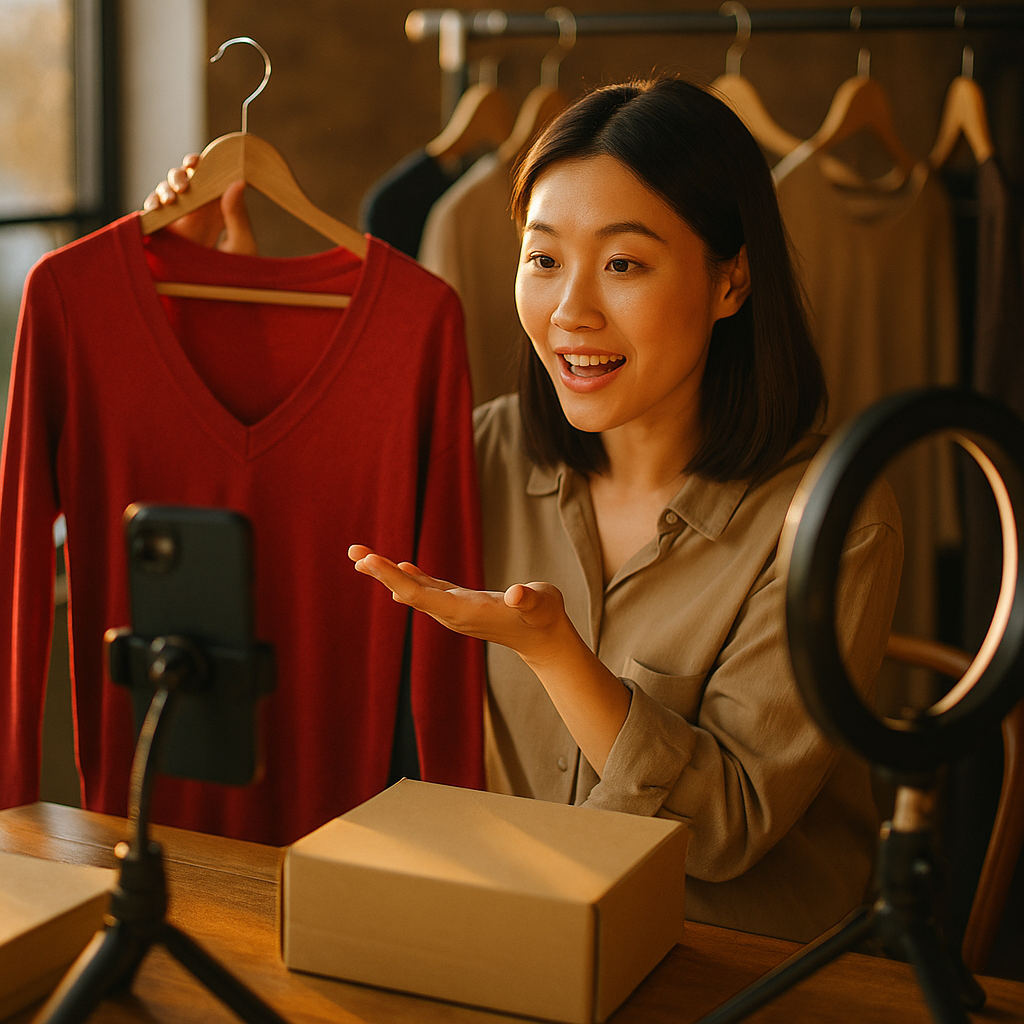
Live stream hours climbed 60% year over year, and the brands still treating live commerce as a novelty are already behind. That’s not a projection. It’s what platform reporting and agency spend trackers are showing right now, across categories that had barely touched live formats eighteen months ago. If your influencer program doesn’t have a live commerce line item yet, this is the data that should change that.
Why Live Stream Hours Are Spiking Now
Three forces converged. First, platforms rebuilt their algorithms to reward watch time over static engagement, so live content simply gets more distribution than a feed post did a year ago. Second, checkout friction dropped: native in-stream purchasing is now standard on TikTok Shop, Instagram Live, and YouTube Shopping, which means a viewer can buy without leaving the stream. Third, and this is the part brand teams underestimate, creators themselves have shifted their output mix. Live formats are cheaper to produce than polished video, and they generate more monetizable minutes per creator per week.
That last point matters for budget planning. A single two-hour live session can outproduce a week of scheduled posts in terms of total engaged time, and platforms are compensating creators accordingly. Combine that with the algorithmic tailwind, and you get the volume surge we’re seeing across nearly every major creator vertical, from beauty to consumer electronics to home goods.
Live stream hours grew 60% in the past year, but conversion rate per viewer grew even faster in categories with native checkout, meaning the surge isn’t just noise. It’s compounding.
What the Numbers Actually Show
Break down the 60% figure and it’s not evenly distributed. Beauty and fashion accounts for the largest share of hours, but electronics and home goods are growing faster off a smaller base. Live sessions during major shopping moments (think end of quarter sales pushes) now regularly outpace scripted campaign content on cost per acquisition, according to data referenced by eMarketer. Sprout Social’s own creator benchmarking has flagged similar momentum, noting that live formats are the fastest growing content type tracked across major platforms this cycle, per Sprout Social’s platform data.
Here’s the part that should get a brand strategist’s attention: watch time isn’t just going up, it’s converting differently. Viewers who stay through a live session for more than ten minutes are showing purchase intent signals well above what a fifteen second clip generates. That’s consistent with what we covered when purchase intent overtook follower counts as the metric brands actually care about. Live isn’t reach theater anymore. It’s a funnel.
The Attribution Problem Nobody’s Solved Yet
Live commerce has a dirty secret: attribution is messier than static content. A viewer might watch a 45 minute stream, get distracted, come back the next day, and buy through a completely different link. Multi-touch attribution models built for static posts don’t map cleanly onto that behavior. This is the same tension we flagged when revenue attribution was declared the only metric that matters at the e4m D2C summit. Live just makes the attribution gap wider, because the “moment of decision” is harder to pin to a single click.
Brands running live commerce at scale are solving this with platform-native checkout links tied to unique creator codes, but even then, cross-device behavior muddies the picture. If your analytics stack still treats live sessions like a standard video post, you’re underreporting performance. Full stop.
Should Every Brand Chase This Trend?
No. And this is where a lot of marketing teams are going to overcorrect. Live commerce works best for categories with visual demonstration value: makeup application, unboxing, fit and sizing, cooking demos, tech setup. If your product doesn’t benefit from real-time demonstration, pouring budget into live hours is chasing a format, not a customer.
Ask three questions before allocating spend:
- Does the product need to be seen in motion or in use to drive a purchase decision?
- Do you have a creator roster with actual live hosting experience, not just polished feed content?
- Can your ops team handle real-time customer questions, inventory checks, and fulfillment promises made on air?
If the answer to any of those is no, you’re not ready. Building live capability without operational readiness is how brands end up with a viral stream and a stockout crisis by dinner.
The Creator Side of the Equation
Creators are recalibrating too. Live hosting is a different skill than scripted video, and not every creator on your roster can hold a room for 90 minutes and keep converting. Agencies are starting to build separate creator tiers specifically for live commerce hosting, distinct from their content creation roster. This tracks with the shift we saw in creators being reclassified as brand builders rather than just content producers. Live hosts are closer to QVC talent than influencer talent, and brands should be casting and compensating them that way.
Pay structures are shifting to match. Flat fees make less sense for a format where a single strong session can drive outsized revenue, which is part of why revenue share contracts are replacing flat fee sponsorships across performance-driven creator work. If you’re still negotiating live commerce deals on flat rate alone, you’re either overpaying for a dud session or underpaying for a breakout one.
Platform Differences Matter More Than You Think
TikTok Shop’s live checkout flow, Instagram’s live shopping tags, and YouTube’s live shopping integration all behave differently on the backend, and treating them as interchangeable is a mistake. TikTok’s algorithm still favors high-frequency, shorter live sessions with rapid product cycling. YouTube rewards longer-form, more editorial live commerce, closer to a shopping show than a flash sale. Instagram sits in between, leaning on existing follower relationships more than algorithmic discovery.
This platform fragmentation is part of a broader pattern we’ve tracked with quarterly algorithm resets forcing publishing calendar audits. Live commerce strategy can’t be platform agnostic. A session format that crushes it on TikTok Shop might flop on YouTube because the audience expectation is completely different. Check TikTok Ads and Meta Business documentation before assuming a one size fits all live playbook will work across your channel mix.
The brands winning at live commerce aren’t the ones streaming the most hours, they’re the ones matching format and cadence to each platform’s specific audience behavior.
What This Means for Budget Allocation
If live stream hours are up 60% and conversion behavior is shifting with it, budget models built around static content and one-off influencer posts are already stale. This is consistent with the broader reallocation happening across the industry, where ad budgets are shifting from media buys to creator distribution more broadly. Live commerce is simply the most aggressive expression of that shift.
Practical next step for planning: earmark a test budget, not your full quarter spend, and run it against one platform and one creator tier for a full sales cycle before scaling. Track cost per acquisition against your existing static content benchmarks using the same attribution window. If live outperforms even with messier attribution, that’s your signal to reallocate further. According to HubSpot’s marketing benchmarking resources, testing budget in controlled increments before full reallocation remains the safest way to validate a new channel without disrupting existing performance baselines.
Frequently Asked Questions
FAQs
Why did live stream hours increase so sharply?
Algorithm changes on major platforms now reward watch time more heavily than static engagement, native checkout removed purchase friction from live sessions, and creators shifted production toward cheaper, higher-volume live formats. Together these factors pushed live stream hours up 60% year over year.
Is live commerce right for every brand category?
No. Live commerce performs best for products that benefit from real-time demonstration, such as beauty, fashion fit, cooking, and tech setup. Categories without a visual demonstration advantage typically see weaker returns relative to the operational cost of running live programs.
How should brands measure live commerce ROI differently from static content?
Live commerce attribution is messier because purchase decisions often happen after the session ends, sometimes on a different device. Brands should use platform-native checkout links with unique creator codes and extend attribution windows rather than relying on last-click models built for static posts.
Do creators need different skills for live hosting versus regular content?
Yes. Live hosting requires real-time audience management, product knowledge, and the ability to sustain engagement over long sessions, which differs significantly from producing polished, scripted content. Many agencies now maintain separate creator tiers specifically for live commerce hosting.
What’s the safest way to test live commerce before scaling budget?
Run a limited test on a single platform with a defined creator tier across one full sales cycle, then compare cost per acquisition against existing static content benchmarks using the same attribution window before committing larger budget.
Live commerce isn’t a passing format spike, it’s a structural shift in how attention converts to revenue. Start with a bounded pilot, fix your attribution model before you scale spend, and match your creator casting to the platform, not the other way around.
Top Influencer Marketing Agencies
The leading agencies shaping influencer marketing in 2026
Agencies ranked by campaign performance, client diversity, platform expertise, proven ROI, industry recognition, and client satisfaction. Assessed through verified case studies, reviews, and industry consultations.
Moburst

-
2

The Shelf
Boutique Beauty & Lifestyle Influencer AgencyA data-driven boutique agency specializing exclusively in beauty, wellness, and lifestyle influencer campaigns on Instagram and TikTok. Best for brands already focused on the beauty/personal care space that need curated, aesthetic-driven content.Clients: Pepsi, The Honest Company, Hims, Elf Cosmetics, Pure LeafVisit The Shelf → -
3

Audiencly
Niche Gaming & Esports Influencer AgencyA specialized agency focused exclusively on gaming and esports creators on YouTube, Twitch, and TikTok. Ideal if your campaign is 100% gaming-focused — from game launches to hardware and esports events.Clients: Epic Games, NordVPN, Ubisoft, Wargaming, Tencent GamesVisit Audiencly → -
4

Viral Nation
Global Influencer Marketing & Talent AgencyA dual talent management and marketing agency with proprietary brand safety tools and a global creator network spanning nano-influencers to celebrities across all major platforms.Clients: Meta, Activision Blizzard, Energizer, Aston Martin, WalmartVisit Viral Nation → -
5

The Influencer Marketing Factory
TikTok, Instagram & YouTube CampaignsA full-service agency with strong TikTok expertise, offering end-to-end campaign management from influencer discovery through performance reporting with a focus on platform-native content.Clients: Google, Snapchat, Universal Music, Bumble, YelpVisit TIMF → -
6

NeoReach
Enterprise Analytics & Influencer CampaignsAn enterprise-focused agency combining managed campaigns with a powerful self-service data platform for influencer search, audience analytics, and attribution modeling.Clients: Amazon, Airbnb, Netflix, Honda, The New York TimesVisit NeoReach → -
7

Ubiquitous
Creator-First Marketing PlatformA tech-driven platform combining self-service tools with managed campaign options, emphasizing speed and scalability for brands managing multiple influencer relationships.Clients: Lyft, Disney, Target, American Eagle, NetflixVisit Ubiquitous → -
8

Obviously
Scalable Enterprise Influencer CampaignsA tech-enabled agency built for high-volume campaigns, coordinating hundreds of creators simultaneously with end-to-end logistics, content rights management, and product seeding.Clients: Google, Ulta Beauty, Converse, AmazonVisit Obviously →