


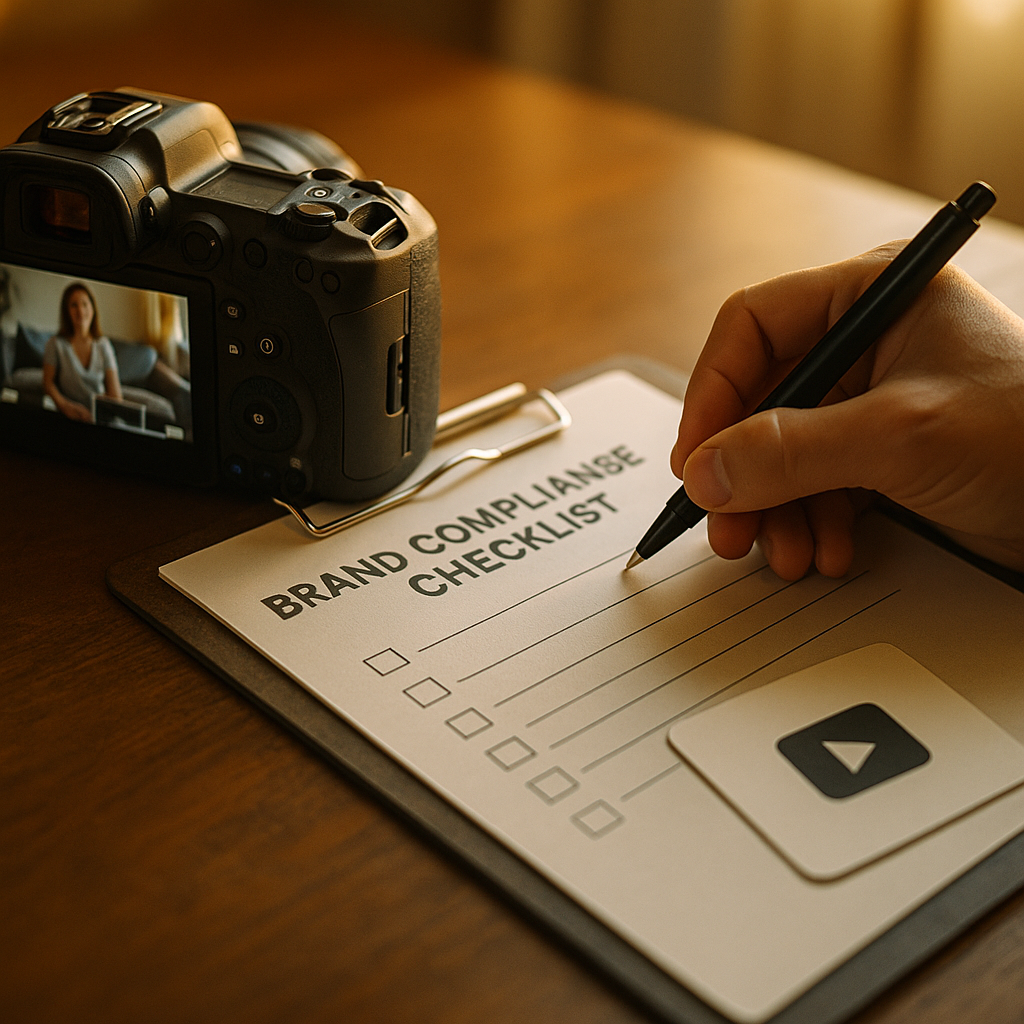
Three seconds. That’s roughly how long a TikTok viewer decides whether to keep watching or swipe away — and now it’s also the window the FTC’s video disclosure standard gives brands to make sponsorship obvious. Miss it, and you’re not just losing engagement. You’re building a case file.
The Federal Trade Commission has spent years signaling that vague, buried, or hashtag-only disclosures don’t meet the “clear and conspicuous” bar. Now that standard has teeth specific to short-form and livestream video: disclosure must appear, visually and audibly where relevant, within the first three seconds of runtime. For brands running influencer programs at scale, this isn’t a tweak to creator guidelines. It’s a structural compliance requirement that touches briefs, contracts, editing workflows, and platform selection all at once.
Why the FTC Moved to a Timed Standard
Regulators got tired of arguing about what “clear and conspicuous” means on a case-by-case basis. Previous FTC guidance said disclosures had to be “hard to miss” and placed where consumers would actually see them before making a purchasing decision. But enforcement actions kept hitting the same wall: creators dropped #ad in a caption nobody read, or flashed a disclosure for half a second buried mid-video after the hook already did its job.
The shift to a first-three-seconds rule closes that loophole. It aligns disclosure timing with attention economics — the FTC is essentially acknowledging that if a disclosure appears after the persuasive moment, it’s functionally invisible. That’s consistent with the agency’s long-standing position, outlined in its endorsement guides, that disclosures must be seen or heard by consumers before the material connection influences their reaction to the content.
If your disclosure lands after the viewer has already formed an impression of the product, the FTC considers it functionally absent — regardless of whether it technically appears somewhere in the video.
What Counts as “Clear and Conspicuous” Now
The updated standard isn’t just about timing. It’s about legibility and audibility under real viewing conditions — most video is watched muted, on small screens, at 1.5x speed. The FTC’s framework for the new rule includes:
- Timing: Disclosure text or verbal statement must appear within the first three seconds of the video, not the caption, not the description box.
- Visual proximity: On-screen text must be large enough to read on a mobile device without zooming, and positioned where platform UI (like TikTok’s username overlay) won’t obscure it.
- Duration: A flash-frame disclosure that appears and disappears in under a second doesn’t satisfy “conspicuous.” The FTC expects it to remain visible long enough for an average viewer to register it.
- Audio parity: If the video has spoken content in the first three seconds, a verbal disclosure (“this video is sponsored by…”) is expected alongside, or instead of, text-only treatment.
- Platform-agnostic application: The standard applies whether the video lives on TikTok, Instagram Reels, YouTube Shorts, or a livestream — there’s no carve-out for ephemeral or live content.
Livestream and TikTok Shop content deserves special attention here, since the sales pressure and countdown mechanics common in live selling create exactly the kind of urgency the FTC worries obscures disclosure. If you’re running live shopping formats, pair this checklist with our breakdown of countdown timer compliance and the broader live-selling script audit framework, since both intersect directly with disclosure timing.
The Brand Compliance Checklist
Here’s the operational version — what your team should actually be checking before content goes live, not after.
1. Pre-Production: Bake Disclosure Into the Brief
- Specify disclosure placement as a non-negotiable brief requirement, not a suggestion left to creator judgment.
- Require creators to script the first three seconds explicitly, including on-screen text overlay instructions.
- For paid partnerships, mandate platform-native disclosure tools (TikTok’s “Paid Partnership” label, Instagram’s “Paid partnership with” tag) as a floor, not a substitute for in-video disclosure.
2. Production: Verify Before Publish
- Confirm disclosure text is legible at actual mobile screen size — test on a phone, not a desktop preview.
- Check that platform UI elements (profile icons, like buttons, captions) don’t cover the disclosure text.
- For spoken-word content, confirm the verbal disclosure occurs within the same three-second window as the visual one.
- Time-stamp review: literally count the seconds. Don’t eyeball it.
3. Post-Production and Distribution
- Audit final cuts against the brief before whitelisting or boosting the content as an ad — edited versions sometimes trim the disclosure to “tighten” the hook. This is the exact failure mode covered in how script edits create FTC liability for brands.
- If the content is repurposed for paid media (whitelisting, spark ads, boosted posts), re-verify disclosure compliance in the ad unit itself. Platform ad specs sometimes crop the top or bottom of a video, which can cut off overlay text.
- Maintain a dated record of the approved cut, the disclosure timestamp, and who signed off. Regulators care about documented process almost as much as the disclosure itself.
4. Contract Language
- Add explicit disclosure-timing clauses to creator agreements, with defined remediation steps (re-cut, re-post, or takedown) if a video ships without compliant disclosure.
- Assign liability clearly: who owns the compliance check, agency or brand marketing team, before content goes live.
- Build audit rights into the contract so your team can request original project files if a dispute arises.
5. Ongoing Monitoring
- Spot-check published content weekly, not just at campaign launch. Creators re-edit, algorithm-driven reposts happen, and duet/stitch formats can strip disclosures entirely.
- Use a compliance dashboard that flags missing or late disclosures automatically rather than relying on manual review at scale. If you’re running dozens of creators simultaneously, manual review doesn’t scale — see our framework for building a creator compliance dashboard that catches these gaps before the FTC does.
Where Brands Actually Get This Wrong
Most compliance failures aren’t malicious. They’re operational. A creator ships the first cut with a compliant disclosure, then trims it for a punchier hook after the brand requests edits — and nobody re-checks the timing. Or the disclosure is compliant on the original platform post but gets cropped when the brand whitelists it as a paid ad on a different aspect ratio.
There’s also a persistent myth that hashtag disclosures (“#ad” in the caption) are sufficient. They aren’t, and haven’t been for years — but the first-three-seconds standard makes this even clearer. A caption isn’t part of the video. It’s a separate text field that many viewers never open, especially on autoplay feeds. If your compliance program still treats caption disclosure as adequate, it’s time to update the playbook.
Whitelisted and dark ad content deserves its own scrutiny, since the disclosure that worked on a creator’s organic post doesn’t automatically survive the transformation into a paid unit. We’ve built out a full whitelisted ads audit framework for exactly this scenario, and it’s worth running every whitelisted asset through it before spend goes live.
What This Means for Program Design
None of this is theoretical enforcement risk. The FTC has shown it will pursue brands, not just creators, when disclosure practices are systematically weak — and marketing teams are increasingly treating disclosure compliance as a budget line item rather than an afterthought. Expect creative review cycles to lengthen slightly as teams add a dedicated compliance checkpoint. Expect brief templates to get longer. Expect legal and marketing to collaborate earlier in the process rather than reviewing content right before it ships.
Platforms are adapting too. Native disclosure tools are getting more prominent, and some are experimenting with automatic timestamp verification for paid partnership labels. But brands shouldn’t wait for platforms to solve this. The FTC holds brands accountable for the substance of disclosure, not just whether a checkbox was ticked in a platform’s ad tool.
If your influencer program spans multiple platforms, each with different UI quirks and disclosure tools, standardize your internal checklist rather than trying to match each platform’s native system exactly. A universal three-second rule, applied consistently, is easier to audit and defend than a patchwork of platform-specific minimums.
FAQs
What exactly does “clear and conspicuous” mean under the new video standard?
It means a disclosure must be visible or audible within the first three seconds of a video, legible on a mobile screen without zooming, not obscured by platform UI elements, and present long enough for an average viewer to register it. Captions and hashtags alone don’t satisfy this standard.
Does this apply to organic creator posts or only paid ads?
It applies to both. If there’s a material connection between the brand and the creator, including free product, payment, or equity, disclosure requirements apply regardless of whether the content is boosted as a paid ad or posted organically.
What happens if a creator’s edit removes the disclosure after brand approval?
The brand can still be held liable, particularly if the brand directed or approved the edit. This is why contract language assigning compliance ownership and requiring re-verification after any edit is essential.
Are livestreams held to the same three-second standard?
Yes. The FTC’s guidance applies across formats, including live selling and TikTok Shop streams. Given the urgency created by countdown timers and live pricing, disclosure needs to appear at the start of the stream and be reinforced periodically throughout.
How should brands document compliance in case of an FTC inquiry?
Maintain timestamped records of approved content cuts, disclosure placement, sign-off logs, and the specific brief language given to creators. A documented, consistent process is one of the strongest defenses if a brand faces regulatory scrutiny.
Visible FAQ (HTML)
FAQs
What exactly does “clear and conspicuous” mean under the new video standard?
It means a disclosure must be visible or audible within the first three seconds of a video, legible on a mobile screen without zooming, not obscured by platform UI elements, and present long enough for an average viewer to register it. Captions and hashtags alone don’t satisfy this standard.
Does this apply to organic creator posts or only paid ads?
It applies to both. If there’s a material connection between the brand and the creator, including free product, payment, or equity, disclosure requirements apply regardless of whether the content is boosted as a paid ad or posted organically.
What happens if a creator’s edit removes the disclosure after brand approval?
The brand can still be held liable, particularly if the brand directed or approved the edit. This is why contract language assigning compliance ownership and requiring re-verification after any edit is essential.
Are livestreams held to the same three-second standard?
Yes. The FTC’s guidance applies across formats, including live selling and TikTok Shop streams. Given the urgency created by countdown timers and live pricing, disclosure needs to appear at the start of the stream and be reinforced periodically throughout.
How should brands document compliance in case of an FTC inquiry?
Maintain timestamped records of approved content cuts, disclosure placement, sign-off logs, and the specific brief language given to creators. A documented, consistent process is one of the strongest defenses if a brand faces regulatory scrutiny.
The three-second rule isn’t going away, and enforcement will only get more automated as regulators and platforms build detection tools. Build your disclosure checklist into the brief, not the review stage, and you’ll spend far less time firefighting takedowns later.
Top Influencer Marketing Agencies
The leading agencies shaping influencer marketing in 2026
Agencies ranked by campaign performance, client diversity, platform expertise, proven ROI, industry recognition, and client satisfaction. Assessed through verified case studies, reviews, and industry consultations.
Moburst

-
2

The Shelf
Boutique Beauty & Lifestyle Influencer AgencyA data-driven boutique agency specializing exclusively in beauty, wellness, and lifestyle influencer campaigns on Instagram and TikTok. Best for brands already focused on the beauty/personal care space that need curated, aesthetic-driven content.Clients: Pepsi, The Honest Company, Hims, Elf Cosmetics, Pure LeafVisit The Shelf → -
3

Audiencly
Niche Gaming & Esports Influencer AgencyA specialized agency focused exclusively on gaming and esports creators on YouTube, Twitch, and TikTok. Ideal if your campaign is 100% gaming-focused — from game launches to hardware and esports events.Clients: Epic Games, NordVPN, Ubisoft, Wargaming, Tencent GamesVisit Audiencly → -
4

Viral Nation
Global Influencer Marketing & Talent AgencyA dual talent management and marketing agency with proprietary brand safety tools and a global creator network spanning nano-influencers to celebrities across all major platforms.Clients: Meta, Activision Blizzard, Energizer, Aston Martin, WalmartVisit Viral Nation → -
5

The Influencer Marketing Factory
TikTok, Instagram & YouTube CampaignsA full-service agency with strong TikTok expertise, offering end-to-end campaign management from influencer discovery through performance reporting with a focus on platform-native content.Clients: Google, Snapchat, Universal Music, Bumble, YelpVisit TIMF → -
6

NeoReach
Enterprise Analytics & Influencer CampaignsAn enterprise-focused agency combining managed campaigns with a powerful self-service data platform for influencer search, audience analytics, and attribution modeling.Clients: Amazon, Airbnb, Netflix, Honda, The New York TimesVisit NeoReach → -
7

Ubiquitous
Creator-First Marketing PlatformA tech-driven platform combining self-service tools with managed campaign options, emphasizing speed and scalability for brands managing multiple influencer relationships.Clients: Lyft, Disney, Target, American Eagle, NetflixVisit Ubiquitous → -
8

Obviously
Scalable Enterprise Influencer CampaignsA tech-enabled agency built for high-volume campaigns, coordinating hundreds of creators simultaneously with end-to-end logistics, content rights management, and product seeding.Clients: Google, Ulta Beauty, Converse, AmazonVisit Obviously →