


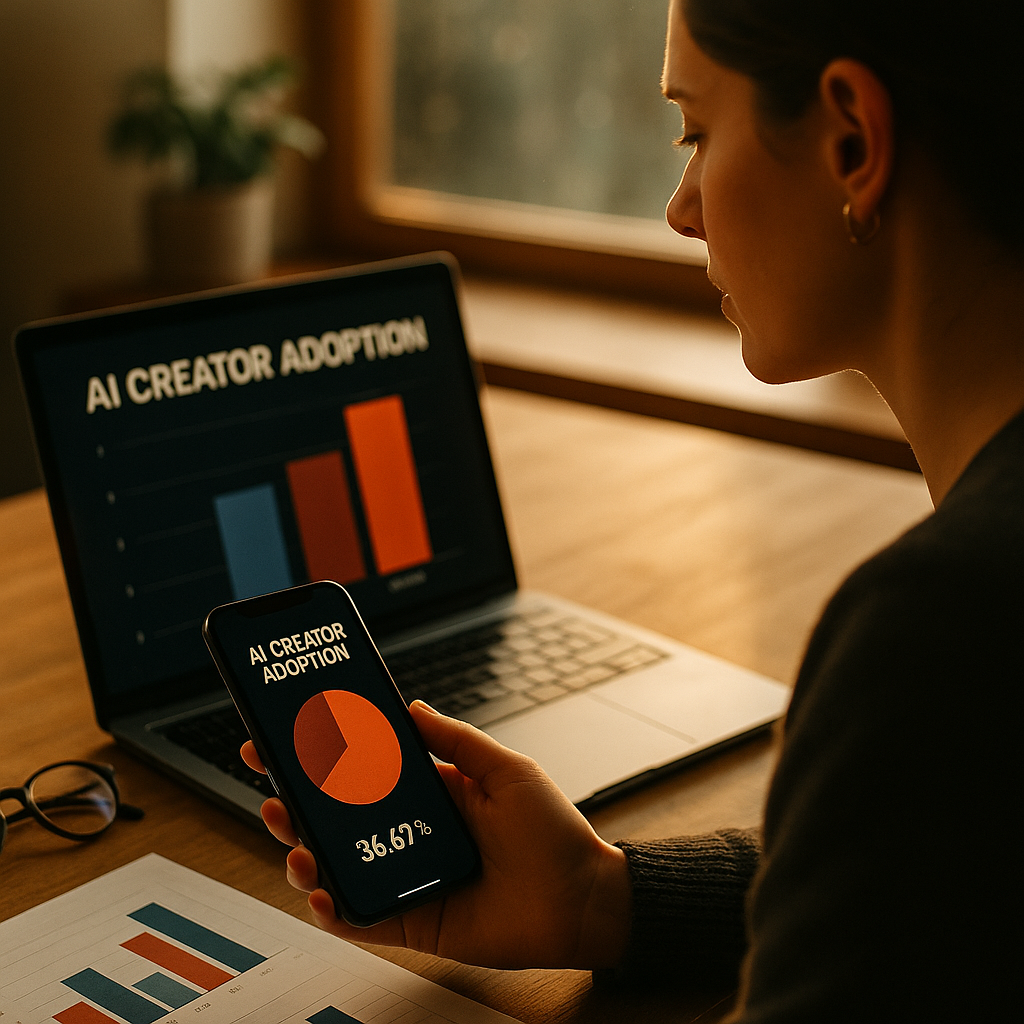
One in three brands now uses AI to find creators before a human ever opens a spreadsheet. AI creator discovery adoption just crossed 36.67%, according to recent industry surveys, and that number is climbing fast enough to make manual vetting look like a relic. So what’s actually happening inside these tools, and should your team be one of the holdouts?
The Number Behind the Headline
36.67% isn’t a rounding error. It represents a tipping point where automated discovery stops being an early-adopter experiment and starts becoming a category norm. Brands that spent years building manual sourcing workflows — spreadsheets, hashtag searches, agency Rolodexes — are now watching a third of their competitors run discovery through machine learning models that score creators on audience quality, brand safety, and predicted performance before a marketer ever sees a name.
This shift didn’t happen overnight. It tracks closely with broader martech consolidation trends, where AI-driven martech investment has reshaped how brands allocate budget across the entire marketing stack. Creator discovery is simply the latest function to get automated.
When more than a third of the market adopts a technology category, the conversation shifts from “should we try this” to “why haven’t we standardized on this yet.”
Why Manual Vetting Is Losing the Argument
Let’s be honest about what manual creator vetting actually looks like at most agencies and brands. Someone on the team scrolls through profiles, eyeballs engagement rates, checks for obvious red flags like bot followers, and makes a judgment call. It’s slow. It’s inconsistent. And it doesn’t scale past a handful of campaigns a quarter.
Automated vetting tools solve the scale problem first. Platforms built for AI-powered discovery can process thousands of creator profiles in the time it takes a human to review twenty. But scale isn’t the only draw — it’s the risk mitigation that’s pulling brand safety and legal teams into the conversation.
- Fraud detection: AI models flag suspicious follower growth patterns and engagement pods that human reviewers routinely miss.
- Brand safety scoring: automated tools scan historical content for controversial statements, competitor endorsements, or off-brand behavior.
- Audience authenticity checks: real-time analysis of follower demographics versus advertised audience claims.
- Predictive performance modeling: forecasting likely conversion or engagement based on historical campaign data.
That last point matters more than most brands realize. Discovery tools aren’t just finding creators anymore — they’re increasingly integrated with attribution systems that predict downstream performance, which connects directly to the trend covered in attribution infrastructure driving martech spend. If a discovery platform can tell you a creator’s audience converts 15% better than average before you sign a contract, that’s not a nice-to-have. That’s budget protection.
What’s Driving the 36.67% Figure
A few forces are pushing adoption past the early-majority line. First, budget pressure. Marketing leaders are being asked to prove ROI on every dollar, and micro-creator pricing power has made the creator pool larger and more fragmented than ever. Finding the right micro or nano creator among millions of accounts isn’t realistic without automated filtering.
Second, the shift toward performance-based creator strategy. As reach-based metrics fall out of favor — a trend documented in conversion velocity replacing reach as the top creator marketing metric — brands need discovery tools that can predict conversion potential, not just audience size. Manual vetting simply can’t compute that at scale.
Third, platform-level trust signals are getting harder to evaluate by eye. Algorithm changes on major platforms have made engagement numbers less reliable as a standalone signal, which is part of why trust-based algorithm ranking is forcing brands to rethink how they evaluate reach altogether. AI discovery tools that incorporate trust and authenticity scoring are filling a gap that manual review can’t close.
The Vendor Landscape Is Getting Crowded
Here’s where it gets tricky for buyers. As adoption climbs past a third of the market, vendors are rushing in, and not all of them are built on defensible data models. Some “AI discovery” tools are little more than keyword search with a chatbot wrapper. Others genuinely run machine learning models trained on historical campaign data across thousands of brand relationships.
This is the same consolidation risk playing out across the broader creator platform category. Recent moves like the GRIN consolidation show how quickly vendor landscapes shift, and brands that lock into a single discovery tool without evaluating data portability and contract terms could find themselves stuck when a platform gets acquired or bundled into a larger suite. The pattern echoes concerns raised around AI martech bundling putting point-solution renewals at risk.
Before signing anything, ask vendors direct questions: Where does the training data come from? How often is the fraud-detection model retrained? Can you export creator vetting history if you switch platforms? These aren’t gotcha questions — they’re basic due diligence for any tool that’s about to influence six or seven figures in creator spend.
What Good Automated Vetting Actually Checks
Not every discovery tool measures the same things, and that inconsistency is exactly why brands need a checklist rather than trusting a vendor’s marketing deck. A credible AI vetting workflow should evaluate:
- Follower authenticity and bot-account percentage
- Historical brand safety incidents across platforms
- Audience overlap with your actual target demographic
- Content compliance history (disclosure practices, platform policy violations)
- Engagement quality, not just volume — comment sentiment, share-to-like ratios
- Cross-platform consistency (does the creator’s TikTok audience match their Instagram claims?)
Compliance is quietly becoming the biggest driver here. With regulators paying closer attention to disclosure practices, per FTC guidance on endorsements, brands can’t afford creator partnerships that skip disclosure norms. Automated tools that flag a creator’s disclosure history before contract signing are functioning as much as legal risk tools as marketing ones. That overlap connects directly to the compliance concerns raised in data-privacy-first creator platforms becoming a compliance requirement rather than a nice-to-have feature.
Does Automation Actually Improve Campaign Outcomes?
This is the question every CFO eventually asks, and the honest answer is: it depends on implementation. Automated discovery reduces time-to-shortlist dramatically — some platforms claim reductions from weeks to hours. But speed alone doesn’t guarantee better creator-brand fit.
The brands seeing real ROI gains are the ones pairing AI discovery with human judgment on the final decision. Think of it as a funnel: AI narrows ten thousand potential creators down to fifty qualified candidates based on data signals, and a human strategist makes the final call based on brand voice fit, creative chemistry, and relationship history. Full automation without human review tends to produce technically qualified but creatively flat partnerships.
Data from eMarketer’s creator economy research has consistently shown that performance gains from influencer campaigns correlate more strongly with authentic audience fit than with reach or follower count, which reinforces why micro and nano creators beating megainfluencers on ROI keeps showing up in industry benchmarks. AI discovery tools are simply better equipped to surface those smaller, high-fit accounts than a human scrolling through follower counts ever could be.
Automation should compress the search, not replace the judgment call. Brands that treat AI discovery as a full replacement for strategist review tend to see faster shortlists and flatter creative results.
What This Means for Budget Planning
If your team hasn’t budgeted for a discovery platform yet, the 36.67% figure should prompt a real conversation, not a knee-jerk purchase. Start by auditing how much time your team currently spends on manual sourcing and vetting. If it’s more than a few hours per campaign, the math on a discovery tool subscription probably pencils out fast, especially once you factor in the risk-reduction value of catching a fraudulent creator before a contract is signed.
Also worth watching: how discovery tools are bundling with broader campaign management suites. The pattern seen in all-in-one AI marketing platforms suggests the standalone discovery tool category may consolidate into broader suites within a few product cycles. Brands negotiating contracts now should push for month-to-month or annual terms rather than multi-year lock-ins, given how fast this vendor landscape is shifting.
For teams building out a formal RFP process, benchmarking data from HubSpot’s marketing technology research and Sprout Social’s platform insights can help establish realistic expectations for what “good” automated vetting looks like versus vendor hype.
The takeaway is simple: 36.67% adoption means AI creator discovery is no longer optional homework, it’s competitive infrastructure. Run a two-week pilot against your current manual process, measure time saved and fraud caught, and let the data — not the hype — decide your next contract.
Frequently Asked Questions
What is AI creator discovery adoption and why does the 36.67% figure matter?
AI creator discovery adoption refers to the percentage of brands using machine learning tools to find, score, and vet influencers instead of relying on manual research. The 36.67% figure matters because it marks a shift from early-adopter experimentation to mainstream category adoption, meaning competitors are increasingly gaining speed and risk-mitigation advantages that manual processes can’t match.
How does automated vetting reduce influencer marketing risk?
Automated vetting tools flag fraudulent follower growth, inconsistent engagement patterns, brand safety incidents, and disclosure compliance history before a contract is signed. This reduces the risk of partnering with creators who could expose a brand to reputational damage or regulatory scrutiny.
Can AI discovery tools fully replace human judgment in creator selection?
Not effectively. The strongest results come from using AI to narrow a large creator pool down to qualified candidates, then applying human judgment for brand voice fit and creative chemistry. Full automation without human review tends to produce technically safe but creatively generic partnerships.
What should brands ask vendors before buying an AI discovery platform?
Ask where training data originates, how often fraud-detection models are retrained, whether creator vetting history is portable if you switch platforms, and how the tool handles disclosure compliance tracking. These questions protect against vendor lock-in and vet the platform’s actual data rigor.
Is AI creator discovery only useful for large brands with big budgets?
No. Smaller brands often benefit more, since automated discovery reduces the time and headcount needed for manual vetting, making sophisticated creator research accessible without a large in-house team.
Top Influencer Marketing Agencies
The leading agencies shaping influencer marketing in 2026
Agencies ranked by campaign performance, client diversity, platform expertise, proven ROI, industry recognition, and client satisfaction. Assessed through verified case studies, reviews, and industry consultations.
Moburst

-
2

The Shelf
Boutique Beauty & Lifestyle Influencer AgencyA data-driven boutique agency specializing exclusively in beauty, wellness, and lifestyle influencer campaigns on Instagram and TikTok. Best for brands already focused on the beauty/personal care space that need curated, aesthetic-driven content.Clients: Pepsi, The Honest Company, Hims, Elf Cosmetics, Pure LeafVisit The Shelf → -
3

Audiencly
Niche Gaming & Esports Influencer AgencyA specialized agency focused exclusively on gaming and esports creators on YouTube, Twitch, and TikTok. Ideal if your campaign is 100% gaming-focused — from game launches to hardware and esports events.Clients: Epic Games, NordVPN, Ubisoft, Wargaming, Tencent GamesVisit Audiencly → -
4

Viral Nation
Global Influencer Marketing & Talent AgencyA dual talent management and marketing agency with proprietary brand safety tools and a global creator network spanning nano-influencers to celebrities across all major platforms.Clients: Meta, Activision Blizzard, Energizer, Aston Martin, WalmartVisit Viral Nation → -
5

The Influencer Marketing Factory
TikTok, Instagram & YouTube CampaignsA full-service agency with strong TikTok expertise, offering end-to-end campaign management from influencer discovery through performance reporting with a focus on platform-native content.Clients: Google, Snapchat, Universal Music, Bumble, YelpVisit TIMF → -
6

NeoReach
Enterprise Analytics & Influencer CampaignsAn enterprise-focused agency combining managed campaigns with a powerful self-service data platform for influencer search, audience analytics, and attribution modeling.Clients: Amazon, Airbnb, Netflix, Honda, The New York TimesVisit NeoReach → -
7

Ubiquitous
Creator-First Marketing PlatformA tech-driven platform combining self-service tools with managed campaign options, emphasizing speed and scalability for brands managing multiple influencer relationships.Clients: Lyft, Disney, Target, American Eagle, NetflixVisit Ubiquitous → -
8

Obviously
Scalable Enterprise Influencer CampaignsA tech-enabled agency built for high-volume campaigns, coordinating hundreds of creators simultaneously with end-to-end logistics, content rights management, and product seeding.Clients: Google, Ulta Beauty, Converse, AmazonVisit Obviously →