


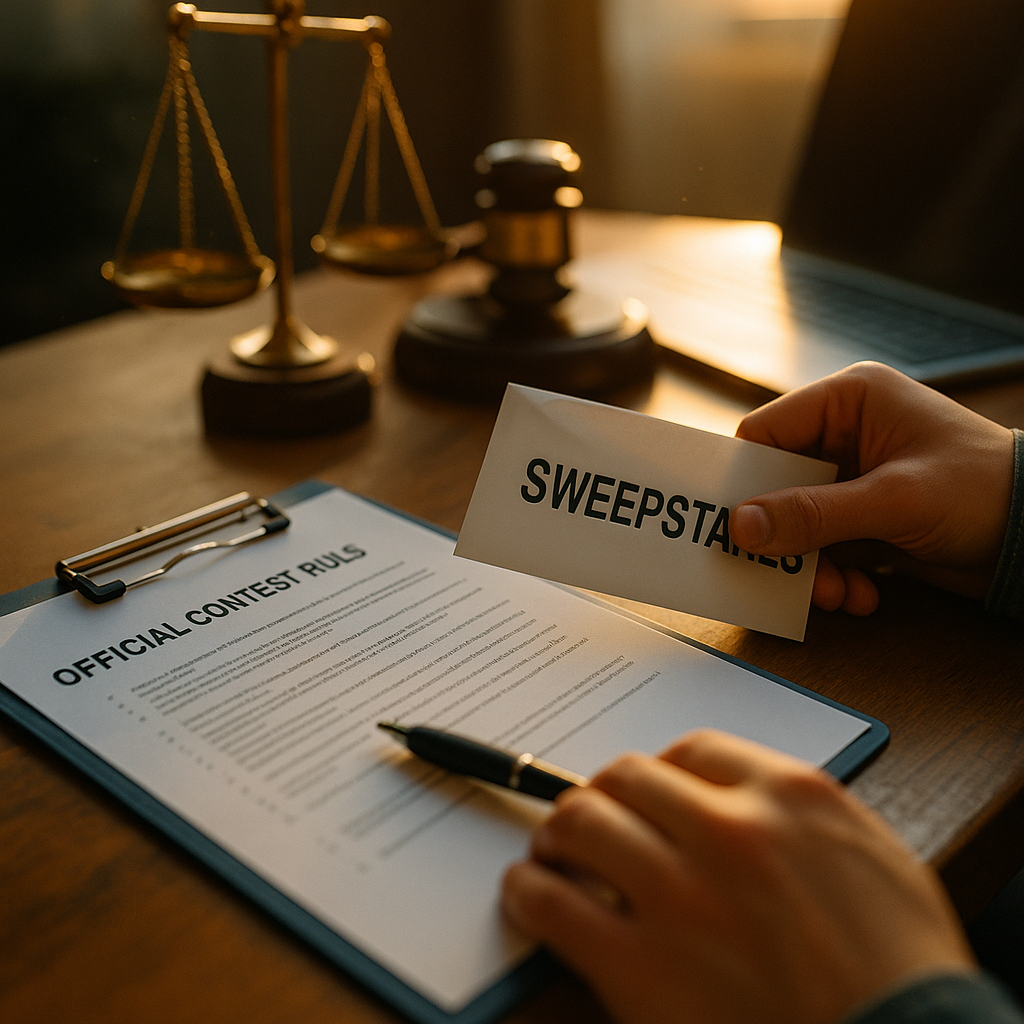
Forty six states have their own sweepstakes statutes, and at least five of them (Florida, New York, Rhode Island, Arizona, and California among the strictest) require bonding, registration, or trust accounts before a brand can legally offer a prize above a certain value. Most marketing teams running state sweepstakes and giveaway laws through their creator campaigns have no idea this patchwork exists until a state attorney general’s office sends a letter. By then, the “quick giveaway” a creator posted has become a legal liability with the brand’s name on it.
The Patchwork Problem: 50 States, 50 Rulebooks
There is no federal sweepstakes law that governs every promotion. What exists instead is a messy stack of state statutes, each with its own thresholds for prize value, registration, and disclosure language. Florida and New York, for example, require registration and a surety bond for sweepstakes with prize pools over $5,000. Rhode Island’s threshold is lower. California has specific rules about how “no purchase necessary” language must appear and how long official rules must remain accessible.
Creator contests rarely account for any of this. A brand ships product to an influencer, tells them to “run a giveaway to drive engagement,” and the creator posts a caption asking followers to like, comment, and tag three friends. That single caption can trigger consumer protection statutes in a dozen states simultaneously, because sweepstakes law follows the entrant, not the platform. If followers in Florida, Illinois, and New York all enter, the brand is potentially subject to all three states’ rules at once.
A campaign doesn’t need to be run by lawyers to be legal, but it does need someone who understands that “tag a friend to win” is not a compliant entry mechanic in several states without a free alternate entry method.
What Counts as an Illegal Lottery?
Here’s the part that trips up even experienced marketing teams. A promotion becomes an illegal lottery under most state laws when it contains three elements: prize, chance, and consideration. Remove any one of the three and it’s legal. Most brands understand “prize” and “chance.” Few understand “consideration.”
Consideration doesn’t just mean money. In many states, requiring someone to follow an account, tag friends, or share a post to enter can be interpreted as consideration, because it confers a measurable marketing benefit on the sponsor. That’s why legitimate sweepstakes always include a “no purchase necessary” alternate entry method, usually a mail in option or a free entry form that doesn’t require social engagement. Skip that step, and a “like and tag to win” contest can technically qualify as an unlicensed lottery in states that treat engagement as consideration.
Brands love to lean on creators to make this simple. “Just tell your followers to comment and follow.” That instruction, repeated across a roster of fifty creators without legal review, is how a single influencer program ends up facing inquiries from multiple state consumer protection offices in the same quarter.
Registration and Bonding: The States That Demand Paperwork
Once prize value crosses certain thresholds, some states require the sponsoring brand to register the promotion and post a bond before it launches. This isn’t optional paperwork you can backfill after the fact. Missing registration in New York or Florida can expose a brand to fines and force the promotion to shut down mid campaign, which is its own PR headache when hundreds of entrants are expecting a winner announcement.
- Florida and New York require registration and bonding for prize pools generally above $5,000.
- Rhode Island has a lower registration threshold that catches smaller regional promotions off guard.
- Several states require official rules to be filed or made available on request, not just posted on a landing page.
- Some states mandate specific disclosure language about odds of winning, even when the odds are effectively “one entry, one chance.”
The compliance burden multiplies when a creator campaign runs across ten or twenty creators simultaneously, each with their own audience geography. A single national campaign might trigger registration obligations in three or four states depending on where the bulk of entrants live, and most brands don’t track that until legal gets involved after launch.
Where Creator Contests Actually Break the Rules
The theory is one thing. Here’s where it plays out in practice, based on patterns showing up across the influencer marketing industry.
The tag to win mechanic. This is the single most common compliance failure in creator giveaways. “Tag three friends to enter” is a staple of organic growth tactics, but in states where tagging is treated as consideration, it can invalidate the entire promotion’s legal standing unless a free alternate entry method exists alongside it.
Missing official rules. A contest without published official rules (prize value, odds, eligibility, entry period, sponsor identity) is a red flag in every state, and it’s astonishingly common in creator led giveaways where the creator just posts a caption with no linked rules page at all.
Undisclosed sponsorship. A giveaway run by a creator on behalf of a brand is a form of sponsored content, and the FTC’s disclosure expectations apply on top of state sweepstakes rules. That’s a compliance double bind: brands have to satisfy both FTC disclosure requirements and state prize law simultaneously. For more on how disclosure enforcement has shifted recently, see our coverage of recent FTC disclosure rulings.
Age and residency gaps. Creator audiences skew younger than brands assume, and running a sweepstakes without an age gate or residency restriction opens the door to minors entering prize contests, which most states restrict or prohibit outright without parental consent. Brands running influencer programs that touch younger audiences should look at how parental consent management intersects with contest eligibility rules.
The Insurance and Contract Gap Nobody Talks About
Most influencer contracts cover content usage rights, payment terms, and disclosure obligations. Very few contain language assigning responsibility for sweepstakes compliance. When a giveaway goes sideways, and a state regulator comes asking questions, brands frequently discover their creator agreements never addressed who is legally the “sponsor” of the promotion, which is the party actually on the hook.
This is where standardized base contracts earn their keep. A contract that explicitly names the brand as sponsor, requires the creator to use pre-approved contest copy, and mandates a link to hosted official rules removes most of the ambiguity before a campaign ever launches. Pair that with errors and omissions insurance that specifically covers promotional liability, not just content disputes, and the brand has a real safety net instead of a hope and a prayer.
Event based giveaways carry an extra layer of exposure too. In person activations where creators hand out prizes on site introduce venue liability and state specific promotion rules simultaneously, a combination covered in more depth in our look at IRL event sweepstakes risk.
Building a Contest Workflow That Doesn’t Blow Up in Legal Review
None of this means brands should abandon creator contests. Giveaways remain one of the highest performing engagement tactics in the creator toolkit, and platforms like TikTok and Instagram reward the comment velocity they generate. According to Sprout Social’s engagement benchmarks, contest and giveaway posts consistently outperform standard promotional content on interaction rate. The fix isn’t fewer giveaways, it’s a repeatable compliance workflow.
- Draft official rules for every promotion, no exceptions, including sponsor name, eligibility, entry period, odds, and a free alternate entry method.
- Run prize value against state thresholds before launch to flag registration or bonding requirements in Florida, New York, and Rhode Island specifically.
- Standardize contest language in creator contracts so influencers can’t freelance their own entry mechanics.
- Require a linked rules page in every contest post, not just a caption mention.
- Loop legal in during campaign planning, not after a state inquiry lands in someone’s inbox.
Brands running high volume affiliate or sub affiliate creator networks face compounded risk here, since a single non compliant contest template can propagate across dozens of creator accounts before anyone notices. That kind of scale problem echoes the audit challenges covered in our piece on multi tier commission chain audits, where one weak link multiplies risk across the entire roster.
For teams building out contest heavy calendars, tracking regulatory shifts through resources like eMarketer’s platform regulation coverage or Meta’s business promotion guidelines is a reasonable baseline, but state law changes faster than platform policy updates, so relying on platform terms alone is not a compliance strategy.
Visible FAQ
Frequently Asked Questions
Do all states require sweepstakes to be registered?
No. Only a handful of states, most notably Florida, New York, and Rhode Island, require registration and bonding, and typically only once prize value crosses a specific dollar threshold. Most states have no registration requirement but still enforce disclosure and “no purchase necessary” rules.
What makes a creator giveaway an illegal lottery?
A promotion becomes an illegal lottery when it combines three elements: a prize, an element of chance, and consideration from entrants. Requiring social actions like tagging or sharing as the only entry method can count as consideration in some states, which is why compliant sweepstakes always offer a free alternate entry path.
Who is legally responsible when a creator runs a non compliant giveaway?
Typically the brand, as the party that supplied the prize and directed the promotion, is considered the legal sponsor regardless of who posted the content. Creator contracts should explicitly name the sponsor and require use of pre-approved contest rules to avoid ambiguity.
Does “no purchase necessary” language actually matter?
Yes. It’s not boilerplate. Including a genuine free alternate entry method removes the “consideration” element that would otherwise classify a promotion as an unlicensed lottery in many states.
How does FTC disclosure interact with state sweepstakes law?
They’re separate obligations that apply simultaneously. FTC rules govern whether the sponsored nature of the giveaway is disclosed to the audience, while state sweepstakes laws govern how the contest itself is structured, registered, and administered. A campaign must satisfy both.
The next creator giveaway on your calendar should have official rules drafted, a state threshold check completed, and sponsor language locked into the creator contract before a single post goes live. Skip that sequence and you’re not running a promotion, you’re running a legal exposure with good engagement numbers.
Top Influencer Marketing Agencies
The leading agencies shaping influencer marketing in 2026
Agencies ranked by campaign performance, client diversity, platform expertise, proven ROI, industry recognition, and client satisfaction. Assessed through verified case studies, reviews, and industry consultations.
Moburst

-
2

The Shelf
Boutique Beauty & Lifestyle Influencer AgencyA data-driven boutique agency specializing exclusively in beauty, wellness, and lifestyle influencer campaigns on Instagram and TikTok. Best for brands already focused on the beauty/personal care space that need curated, aesthetic-driven content.Clients: Pepsi, The Honest Company, Hims, Elf Cosmetics, Pure LeafVisit The Shelf → -
3

Audiencly
Niche Gaming & Esports Influencer AgencyA specialized agency focused exclusively on gaming and esports creators on YouTube, Twitch, and TikTok. Ideal if your campaign is 100% gaming-focused — from game launches to hardware and esports events.Clients: Epic Games, NordVPN, Ubisoft, Wargaming, Tencent GamesVisit Audiencly → -
4

Viral Nation
Global Influencer Marketing & Talent AgencyA dual talent management and marketing agency with proprietary brand safety tools and a global creator network spanning nano-influencers to celebrities across all major platforms.Clients: Meta, Activision Blizzard, Energizer, Aston Martin, WalmartVisit Viral Nation → -
5

The Influencer Marketing Factory
TikTok, Instagram & YouTube CampaignsA full-service agency with strong TikTok expertise, offering end-to-end campaign management from influencer discovery through performance reporting with a focus on platform-native content.Clients: Google, Snapchat, Universal Music, Bumble, YelpVisit TIMF → -
6

NeoReach
Enterprise Analytics & Influencer CampaignsAn enterprise-focused agency combining managed campaigns with a powerful self-service data platform for influencer search, audience analytics, and attribution modeling.Clients: Amazon, Airbnb, Netflix, Honda, The New York TimesVisit NeoReach → -
7

Ubiquitous
Creator-First Marketing PlatformA tech-driven platform combining self-service tools with managed campaign options, emphasizing speed and scalability for brands managing multiple influencer relationships.Clients: Lyft, Disney, Target, American Eagle, NetflixVisit Ubiquitous → -
8

Obviously
Scalable Enterprise Influencer CampaignsA tech-enabled agency built for high-volume campaigns, coordinating hundreds of creators simultaneously with end-to-end logistics, content rights management, and product seeding.Clients: Google, Ulta Beauty, Converse, AmazonVisit Obviously →