


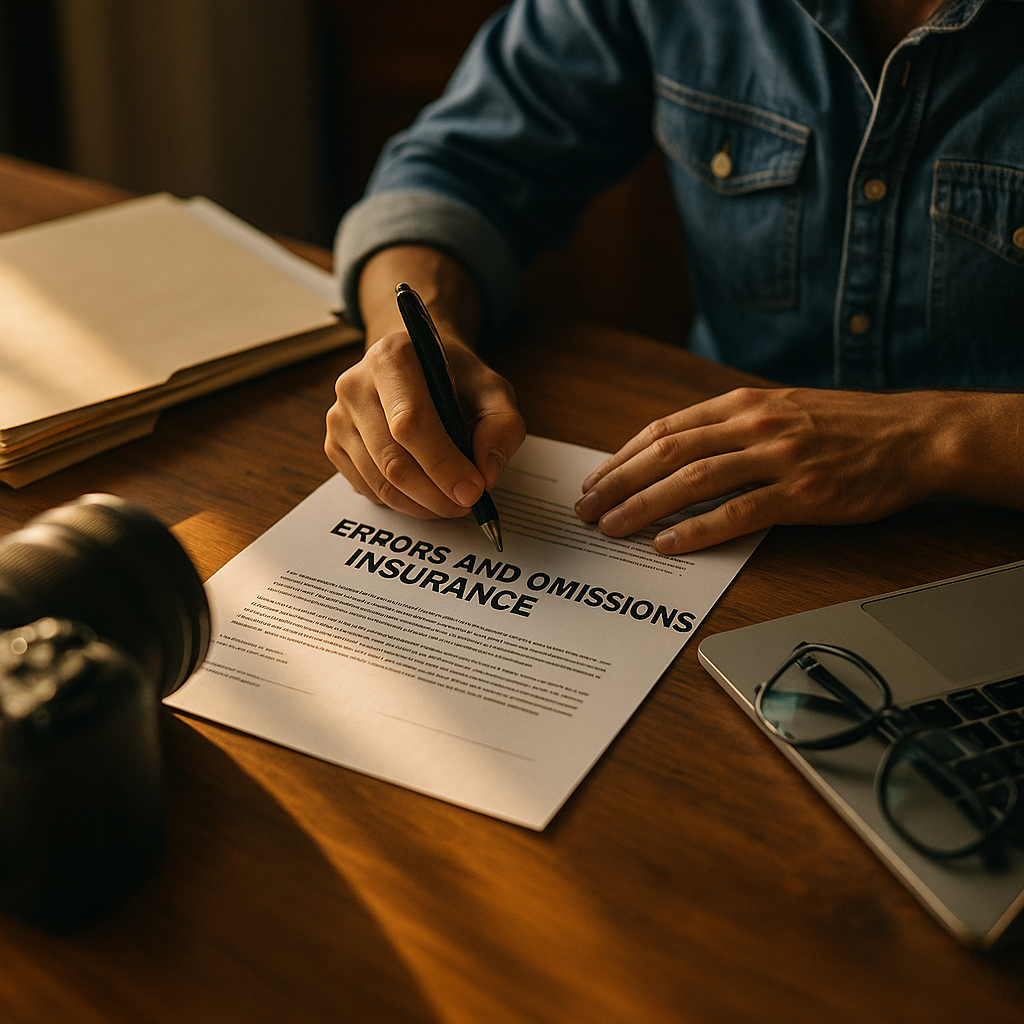
One brand deal gone wrong, a defamation claim, a copyright dispute, an unproven health claim in a TikTok caption, can wipe out a season’s marketing budget in legal fees alone. That’s why errors and omissions coverage has quietly moved from “nice to have” to a non-negotiable line item in creator contracts. If your legal team isn’t asking for proof of E&O insurance before a campaign launches, you’re carrying risk you don’t have to.
Why This Clause Suddenly Matters
Five years ago, nobody asked a creator for insurance. Contracts focused on deliverables, usage rights, and payment terms. Then the lawsuits started piling up: influencers sued for defamatory reviews, brands named as co-defendants in FTC actions, agencies caught in the crossfire of copyright claims over background music or borrowed footage. Errors and omissions (E&O) insurance, long standard in publishing, advertising, and media production, covers exactly this kind of exposure: claims of negligence, inaccurate statements, IP infringement, or reputational harm arising from professional work.
Creators are, functionally, media producers now. Some run studios with editors, scriptwriters, and legal counsel on retainer. Others are a single person with a ring light and a Shopify affiliate link. Either way, the content they publish carries the same legal exposure as a traditional ad, and brands are learning that hard lesson in court.
Brands that once treated influencer content as “just social posts” are discovering that a single unlicensed clip or unverified claim can trigger the same liability as a national TV spot.
What E&O Coverage Actually Protects Against
E&O policies vary, but for creator work they typically cover:
- Copyright and trademark infringement claims (unlicensed music, stock footage, borrowed graphics)
- Defamation or product disparagement allegations
- Inaccurate or misleading claims, especially in health, finance, or beauty verticals
- Invasion of privacy or right of publicity disputes
- Negligence in delivering contracted services
What it does not cover is just as important. Standard E&O policies exclude intentional fraud, criminal acts, and, in many cases, FTC disclosure violations unless a specific rider is added. That gap matters. A creator can carry a $1 million E&O policy and still leave a brand exposed if the underlying claim involves undisclosed material connections, which regulators treat as a distinct enforcement category. Brands should read our breakdown of how FTC enforcement rulings reset disclosure standards before assuming insurance solves compliance problems it was never designed to solve.
Who Pays for the Policy?
This is where negotiations get interesting. Large agencies and full-time creators with six-figure brand deal volume often already carry E&O as part of their business insurance, the same way a freelance photographer or consultant would. Mid-tier and nano creators frequently don’t, and asking them to purchase a policy for a single $2,000 campaign is unrealistic.
Three models have emerged as de facto industry practice:
- Creator-carried policy: The creator maintains their own E&O coverage and provides a certificate of insurance naming the brand as an additional insured. Common with full-time creators and agencies.
- Brand umbrella extension: The brand’s existing media liability or E&O policy is extended to cover contracted creator content, often at a modest premium increase.
- Campaign-specific rider: For one-off activations or high-budget partnerships, brands purchase a short-term policy rider covering the specific campaign period.
None of these is universally “correct.” The right model depends on deal size, creator tier, and how much creative control the brand exercises over final content. The more creative freedom a creator has, the more the liability argument shifts toward requiring their own coverage.
Reading the Fine Print: What to Actually Require
A clause that simply says “creator shall maintain adequate insurance” is functionally useless. It doesn’t define coverage limits, doesn’t specify who’s named as an additional insured, and gives you nothing to enforce if a dispute arises. Contracts should spell out:
- Minimum coverage limits (commonly $1 million per occurrence, $2 million aggregate for mid-tier and above deals)
- A requirement that the brand and its parent/affiliate entities be named as additional insureds
- Proof of coverage delivered before content goes live, not after
- Notice provisions requiring the creator to inform the brand of any policy lapse or cancellation
- Whether the policy is claims-made or occurrence-based, which affects coverage for disputes surfacing after a contract ends
Legal and procurement teams building these requirements from scratch shouldn’t reinvent the wheel every time. This is exactly the kind of clause that belongs in a standardized base contract rather than a one-off negotiation, especially for brands running rosters of 50, 100, or 500 creators where manual review of every insurance certificate isn’t scalable.
Does This Actually Reduce Risk, or Just Shift It?
Fair question. E&O clauses don’t prevent bad content from going live. They also don’t cover every type of exposure a brand faces, worker misclassification claims, for instance, fall entirely outside E&O and require separate scrutiny, which we cover in detail in our piece on ambassador program worker classification risk. What E&O clauses do is create a financial backstop and, just as importantly, a paper trail. When a dispute lands, insurers require documentation: who approved what, what claims were made, what licenses were secured. That documentation habit alone tends to reduce sloppy content practices, because creators and their teams know a claim will trigger an underwriting review.
Where This Intersects With Usage Rights and AI
Insurance requirements are colliding with two other fast-moving contract categories: usage rights and AI-generated content. If a brand repurposes a creator’s organic post into a paid ad or extends it to CTV, the liability profile changes, and so does whose insurance should be on the hook. Our coverage of right to repurpose clauses gets into how licensing scope and liability transfer need to move together, not separately.
AI adds another wrinkle entirely. If a creator uses generative tools to produce a voiceover, a script, or a visual element, and that output infringes someone’s IP or misrepresents a product, does the E&O policy respond? Many legacy policies were written before generative AI was common in creator workflows, and insurers are still catching up with exclusions and endorsements. Brands running AI-assisted creator campaigns should read our analysis of AI generated ad liability gaps before assuming a standard E&O policy has them covered.
A 2026 insurance review should include a plain question to every carrier: does this policy explicitly address AI-generated or AI-assisted content? If the answer is vague, treat the coverage as a gap, not a safety net.
Practical Steps for Brand and Agency Teams
If your organization hasn’t formalized an E&O requirement yet, here’s a reasonable starting sequence:
- Audit current creator contracts to see which ones already reference insurance, and how vague or specific that language is.
- Set tiered minimums based on deal value and content risk (health, finance, and children’s content should carry higher thresholds than lifestyle content).
- Build a certificate collection and tracking process into your creator CRM or contract management tool, similar to how you’d track data processing agreements for creators with backend access.
- Loop in your risk and legal teams to determine whether extending your brand’s existing media liability policy makes more financial sense than requiring every creator to self-insure.
- Revisit the clause annually. Insurance markets shift, and so does the risk profile of your creator mix, especially as programs expand into cross-border activations or live commerce formats.
Industry benchmarking data from sources like eMarketer continues to show creator marketing budgets climbing year over year, which means the dollar value sitting behind each contract, and the potential downside if something goes wrong, is climbing right along with it. Insurance industry primers from providers like HubSpot and general liability resources are useful starting points for marketing teams unfamiliar with the mechanics of E&O coverage, but the specific contract language still needs to be built by counsel familiar with creator economy risk, not adapted wholesale from traditional ad agency templates.
The Bottom Line on Enforcement
A clause is only as good as your willingness to enforce it. Requiring E&O coverage but never actually collecting certificates, or collecting them once and never checking for lapses, gives you paper protection with none of the substance. Build the verification step into your campaign launch checklist the same way you’d verify FTC disclosure compliance, covered in our piece on FTC compliance audit rights. Insurance clauses and disclosure verification are increasingly bundled into the same pre-launch review, because both are ultimately about the same thing: making sure someone else’s liability doesn’t quietly become your balance sheet problem.
Frequently Asked Questions
What is errors and omissions insurance in the context of creator contracts?
Errors and omissions insurance is a professional liability policy that covers claims arising from mistakes in creative or professional work, such as copyright infringement, defamation, or inaccurate product claims. In creator contracts, it protects brands and creators if published content triggers a legal dispute.
Who should pay for a creator’s E&O policy?
It depends on deal size and creative control. Full-time creators and agencies often carry their own policies as a cost of doing business, while brands sometimes extend their existing media liability coverage for smaller or one-off campaigns rather than requiring every creator to self-insure.
Does E&O insurance cover FTC disclosure violations?
Generally, no. Standard E&O policies typically exclude regulatory penalties and intentional violations. Brands need separate compliance verification processes for disclosure requirements rather than relying on insurance to cover those risks.
What coverage limits should brands require from creators?
A common baseline is $1 million per occurrence and $2 million aggregate for mid-tier and above campaigns, though thresholds should scale with content risk category, deal value, and whether the content touches regulated categories like health or finance.
Does E&O insurance cover AI-generated content created by influencers?
Not always. Many existing policies predate widespread generative AI use in creator workflows, so coverage for AI-assisted content varies by carrier. Brands should confirm explicit AI language with the insurer rather than assuming standard coverage applies.
How do brands verify a creator’s insurance before a campaign launches?
Brands typically require a certificate of insurance naming the brand as an additional insured, delivered before content goes live, along with notice provisions requiring the creator to disclose any policy lapse or cancellation during the contract term.
Top Influencer Marketing Agencies
The leading agencies shaping influencer marketing in 2026
Agencies ranked by campaign performance, client diversity, platform expertise, proven ROI, industry recognition, and client satisfaction. Assessed through verified case studies, reviews, and industry consultations.
Moburst

-
2

The Shelf
Boutique Beauty & Lifestyle Influencer AgencyA data-driven boutique agency specializing exclusively in beauty, wellness, and lifestyle influencer campaigns on Instagram and TikTok. Best for brands already focused on the beauty/personal care space that need curated, aesthetic-driven content.Clients: Pepsi, The Honest Company, Hims, Elf Cosmetics, Pure LeafVisit The Shelf → -
3

Audiencly
Niche Gaming & Esports Influencer AgencyA specialized agency focused exclusively on gaming and esports creators on YouTube, Twitch, and TikTok. Ideal if your campaign is 100% gaming-focused — from game launches to hardware and esports events.Clients: Epic Games, NordVPN, Ubisoft, Wargaming, Tencent GamesVisit Audiencly → -
4

Viral Nation
Global Influencer Marketing & Talent AgencyA dual talent management and marketing agency with proprietary brand safety tools and a global creator network spanning nano-influencers to celebrities across all major platforms.Clients: Meta, Activision Blizzard, Energizer, Aston Martin, WalmartVisit Viral Nation → -
5

The Influencer Marketing Factory
TikTok, Instagram & YouTube CampaignsA full-service agency with strong TikTok expertise, offering end-to-end campaign management from influencer discovery through performance reporting with a focus on platform-native content.Clients: Google, Snapchat, Universal Music, Bumble, YelpVisit TIMF → -
6

NeoReach
Enterprise Analytics & Influencer CampaignsAn enterprise-focused agency combining managed campaigns with a powerful self-service data platform for influencer search, audience analytics, and attribution modeling.Clients: Amazon, Airbnb, Netflix, Honda, The New York TimesVisit NeoReach → -
7

Ubiquitous
Creator-First Marketing PlatformA tech-driven platform combining self-service tools with managed campaign options, emphasizing speed and scalability for brands managing multiple influencer relationships.Clients: Lyft, Disney, Target, American Eagle, NetflixVisit Ubiquitous → -
8

Obviously
Scalable Enterprise Influencer CampaignsA tech-enabled agency built for high-volume campaigns, coordinating hundreds of creators simultaneously with end-to-end logistics, content rights management, and product seeding.Clients: Google, Ulta Beauty, Converse, AmazonVisit Obviously →