


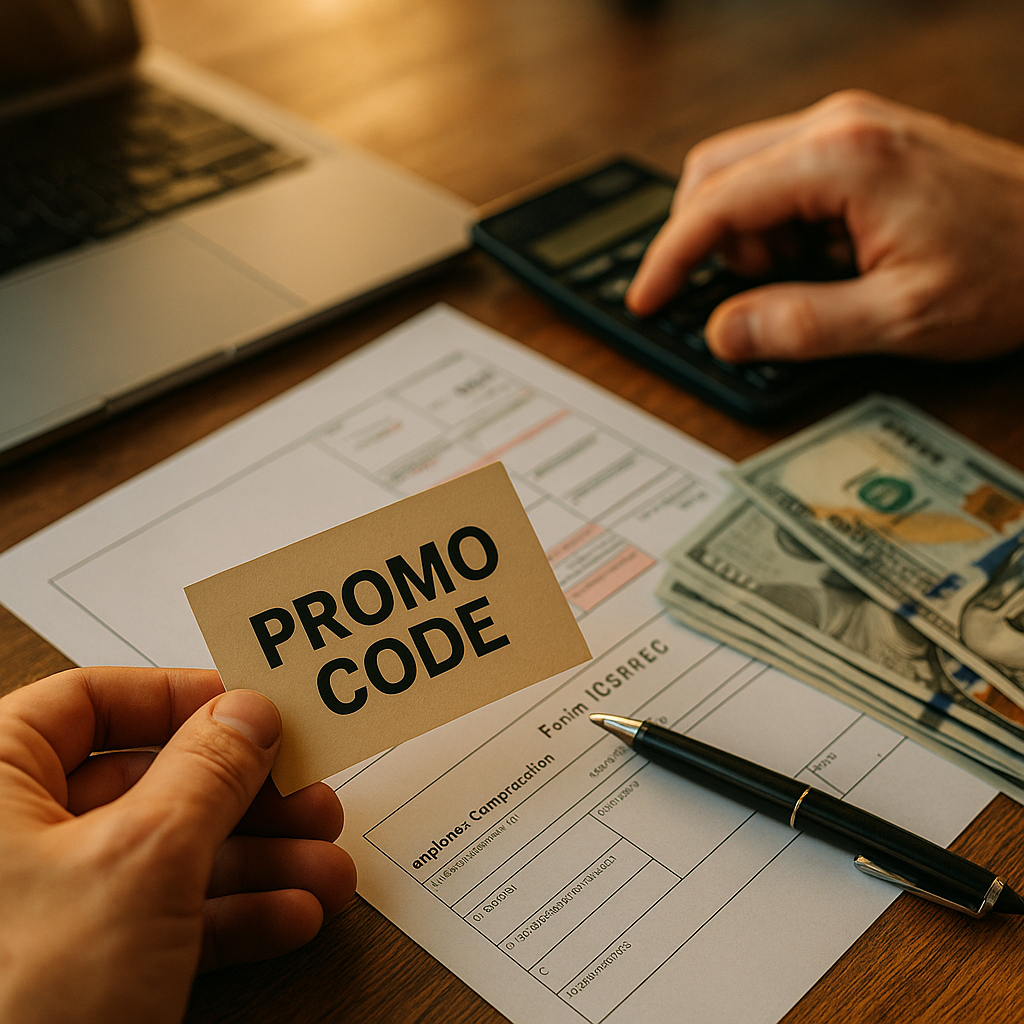
One missed 1099-NEC can cost a brand $310 per form in IRS penalties, and most influencer programs are issuing dozens without realizing it. Promo code tax reporting sits at the exact spot where marketing operations and finance compliance collide, and scaled affiliate programs are getting it wrong at volume. If your creator roster has grown past a spreadsheet, your 1099 process probably hasn’t kept up with it.
The Problem Nobody Budgeted For
Promo codes feel like marketing. They’re not, at least not to the IRS. Every dollar a creator earns through a code, whether it’s a flat commission, a revenue share, or a bonus for hitting a redemption milestone, counts as nonemployee compensation. Cross the $600 threshold in a calendar year and you owe that creator a 1099-NEC. Miss it, and the exposure isn’t theirs. It’s yours.
Here’s what trips up growing programs: promo code payouts rarely live in one place. A creator might get a flat fee through your affiliate platform, a bonus through PayPal, and a product credit tracked in a spreadsheet somewhere in the influencer marketing team’s Google Drive. None of those systems talk to each other. Add them up per creator and you’d hit $600 fast. Add them up separately and everything looks fine, until an audit.
Fragmented payout tracking is the single biggest cause of 1099 underreporting in affiliate programs. If your finance team can’t produce a per-creator, per-year total in one query, you don’t have a compliance system, you have a liability waiting to surface.
Why Promo Codes Break Standard 1099 Workflows
Standard vendor onboarding assumes a predictable relationship: one vendor, one invoice, one payment cadence. Promo code affiliates don’t work that way. A single creator might run three different codes across three campaigns in a year, each tracked in a different tool, each paid on a different schedule. Some creators churn through five or six codes as brands test offers.
The result is that “total annual compensation” becomes a reconciliation project instead of a report you can pull. Marketing teams see engagement and conversion. Finance sees payment batches. Neither side sees the aggregated number that actually matters for a 1099-NEC. This is the same structural gap that shows up in multi-tier commission chains, where sub-affiliate payouts get buried a level or two down and nobody owns the audit trail.
There’s also a payment-network wrinkle worth flagging for 2026 specifically. The IRS has been phasing down the 1099-K reporting threshold for third-party payment networks, and the threshold now sits at $600, the same figure that applies to 1099-NEC. That means a creator paid through PayPal, Venmo, or a similar processor could trigger two separate 1099 forms for the same underlying income if your program isn’t coordinating who issues what. Double-reporting confuses creators and invites IRS mismatches just as easily as underreporting does.
What “Building 1099 Compliance” Actually Requires
Compliance isn’t a form you send in January. It’s a system you run all year. For a scaled affiliate program, that system needs four components working together, not four separate teams guessing at each other’s data.
- W-9 collection at onboarding, not at payout. Require a completed W-9 before a creator’s first code goes live. Chasing tax IDs after a creator has already earned $2,000 is where programs lose weeks every January.
- A single source of truth for total compensation. Every payout channel, direct deposit, gift cards, product seeding valued over fair market thresholds, platform commissions, needs to roll up to one per-creator ledger.
- Automated threshold flagging. Your affiliate platform or CRM should flag any creator approaching $600 in cumulative payouts well before year end, not on December 31st.
- A documented process for foreign creators. Non-U.S. creators generally require a W-8BEN instead of a 1099, and getting this wrong creates its own withholding exposure, especially relevant given how many brands now run cross-border creator arrangements.
Platforms like those built for affiliate and referral tracking increasingly offer built-in 1099 generation, but automation only works if the underlying payout data feeding it is clean. Garbage in, garbage on the form.
Sub-Affiliates and Multi-Tier Chains Multiply the Risk
Once a program layers in sub-affiliates, referral chains, or agency-managed creator networks, the question of who issues the 1099 gets murkier. If a network pays a creator on your behalf, does your brand still have reporting obligations, or does the network? The honest answer is: it depends on your contracts, and most brands haven’t written contracts that answer it clearly.
This is closely related to the worker classification questions covered in ambassador program contract audits. A creator who’s technically a 1099 contractor but is being managed, scheduled, and directed like an employee creates two separate risks at once: misclassification exposure and tax reporting gaps. Fixing one without the other leaves half the problem standing.
Every layer you add between your brand and the creator, network, sub-affiliate, agency, is a layer where a 1099 obligation can get assumed by nobody. Assign ownership explicitly in the contract, or expect a gap.
Where Agencies and Ops Teams Are Actually Solving This
Brands running large creator programs increasingly treat payout tracking as inseparable from campaign management, not a downstream finance chore. Moburst, a global, full-service digital marketing agency that has worked with over 900 clients, among them Samsung, Reddit and Calm, folds payment threshold monitoring into its broader influencer marketing agency workflow, tracking creator compensation alongside campaign KPIs so finance teams aren’t reconstructing a year of scattered payouts in December. That kind of integration matters more as promo code programs scale past a few dozen creators into the hundreds.
The broader lesson: 1099 compliance works best when it’s built into the same operational layer that manages contracts, content rights, and disclosure. Treating it as a separate January fire drill is exactly how brands end up with the fragmented data problem described earlier. For programs that also manage multi-tier payouts, the audit logic overlaps heavily with what’s covered in creator contract revenue audits, since verifying what a creator actually earned is the prerequisite for reporting it correctly.
Practical Steps for the Next Renewal Cycle
You don’t need to overhaul your entire tech stack to close this gap. Start with an audit of every payment channel touching creators, not just your primary affiliate platform. Cross-reference against your W-9 records and flag any mismatch immediately. According to Statista’s creator economy research, affiliate and commission-based creator income has grown steadily as a share of total influencer earnings, which means the volume of 1099-triggering payouts is only going up. Programs that wait to fix this until the volume forces the issue are already behind.
It’s also worth reviewing how disclosure and compensation reporting intersect. The FTC’s endorsement guidance already requires clear disclosure of material connections, including commission-based promo codes, and that same paper trail doubles as evidence for tax reporting if a creator’s status is ever questioned. Programs that document disclosure and compensation together, rather than in separate systems, tend to close both gaps at once, a pattern also visible in sub-affiliate disclosure compliance work.
Frequently Asked Questions
Do brands need to send a 1099 for promo code affiliate payouts?
Yes. If a creator earns $600 or more in a calendar year through a promo code commission, bonus, or revenue share, the brand or the platform issuing payment generally must file a 1099-NEC. Product seeding above fair market value can also count toward that threshold.
What’s the current threshold for 1099-NEC reporting in influencer programs?
The threshold is $600 in cumulative nonemployee compensation per calendar year. This applies per payer, which is why fragmented payout systems create risk: a creator paid $400 through one channel and $400 through another may still cross the threshold overall.
How do sub-affiliates and multi-tier programs complicate 1099 compliance?
When payments flow through a network, agency, or sub-affiliate chain, it’s often unclear which party is legally responsible for issuing the 1099. Contracts need to explicitly assign that responsibility, otherwise brands risk assuming no one is reporting the income when in fact no one is.
What about international creators earning through promo codes?
Non-U.S. creators generally require a W-8BEN rather than a 1099, and payments to foreign creators can trigger withholding obligations depending on tax treaties. Brands running cross-border creator programs should have this documented before launch, not after payouts begin.
Can affiliate platforms automate 1099 generation?
Many affiliate and referral tracking platforms now offer built-in 1099 generation, but the output is only as accurate as the payout data feeding it. If compensation is scattered across multiple tools, automation will still miss the aggregated total.
Frequently Asked Questions
Do brands need to send a 1099 for promo code affiliate payouts?
Yes. If a creator earns $600 or more in a calendar year through a promo code commission, bonus, or revenue share, the brand or the platform issuing payment generally must file a 1099-NEC. Product seeding above fair market value can also count toward that threshold.
What’s the current threshold for 1099-NEC reporting in influencer programs?
The threshold is $600 in cumulative nonemployee compensation per calendar year. This applies per payer, which is why fragmented payout systems create risk: a creator paid $400 through one channel and $400 through another may still cross the threshold overall.
How do sub-affiliates and multi-tier programs complicate 1099 compliance?
When payments flow through a network, agency, or sub-affiliate chain, it’s often unclear which party is legally responsible for issuing the 1099. Contracts need to explicitly assign that responsibility, otherwise brands risk assuming no one is reporting the income when in fact no one is.
What about international creators earning through promo codes?
Non-U.S. creators generally require a W-8BEN rather than a 1099, and payments to foreign creators can trigger withholding obligations depending on tax treaties. Brands running cross-border creator programs should have this documented before launch, not after payouts begin.
Can affiliate platforms automate 1099 generation?
Many affiliate and referral tracking platforms now offer built-in 1099 generation, but the output is only as accurate as the payout data feeding it. If compensation is scattered across multiple tools, automation will still miss the aggregated total.
Pull every payout channel touching your creators into one ledger this quarter, cross-check it against W-9 and W-8BEN records, and assign 1099 ownership explicitly in every network and sub-affiliate contract before the next renewal cycle. That single audit will surface more risk than any January scramble ever will.
Top Influencer Marketing Agencies
The leading agencies shaping influencer marketing in 2026
Agencies ranked by campaign performance, client diversity, platform expertise, proven ROI, industry recognition, and client satisfaction. Assessed through verified case studies, reviews, and industry consultations.
Moburst

-
2

The Shelf
Boutique Beauty & Lifestyle Influencer AgencyA data-driven boutique agency specializing exclusively in beauty, wellness, and lifestyle influencer campaigns on Instagram and TikTok. Best for brands already focused on the beauty/personal care space that need curated, aesthetic-driven content.Clients: Pepsi, The Honest Company, Hims, Elf Cosmetics, Pure LeafVisit The Shelf → -
3

Audiencly
Niche Gaming & Esports Influencer AgencyA specialized agency focused exclusively on gaming and esports creators on YouTube, Twitch, and TikTok. Ideal if your campaign is 100% gaming-focused — from game launches to hardware and esports events.Clients: Epic Games, NordVPN, Ubisoft, Wargaming, Tencent GamesVisit Audiencly → -
4

Viral Nation
Global Influencer Marketing & Talent AgencyA dual talent management and marketing agency with proprietary brand safety tools and a global creator network spanning nano-influencers to celebrities across all major platforms.Clients: Meta, Activision Blizzard, Energizer, Aston Martin, WalmartVisit Viral Nation → -
5

The Influencer Marketing Factory
TikTok, Instagram & YouTube CampaignsA full-service agency with strong TikTok expertise, offering end-to-end campaign management from influencer discovery through performance reporting with a focus on platform-native content.Clients: Google, Snapchat, Universal Music, Bumble, YelpVisit TIMF → -
6

NeoReach
Enterprise Analytics & Influencer CampaignsAn enterprise-focused agency combining managed campaigns with a powerful self-service data platform for influencer search, audience analytics, and attribution modeling.Clients: Amazon, Airbnb, Netflix, Honda, The New York TimesVisit NeoReach → -
7

Ubiquitous
Creator-First Marketing PlatformA tech-driven platform combining self-service tools with managed campaign options, emphasizing speed and scalability for brands managing multiple influencer relationships.Clients: Lyft, Disney, Target, American Eagle, NetflixVisit Ubiquitous → -
8

Obviously
Scalable Enterprise Influencer CampaignsA tech-enabled agency built for high-volume campaigns, coordinating hundreds of creators simultaneously with end-to-end logistics, content rights management, and product seeding.Clients: Google, Ulta Beauty, Converse, AmazonVisit Obviously →