


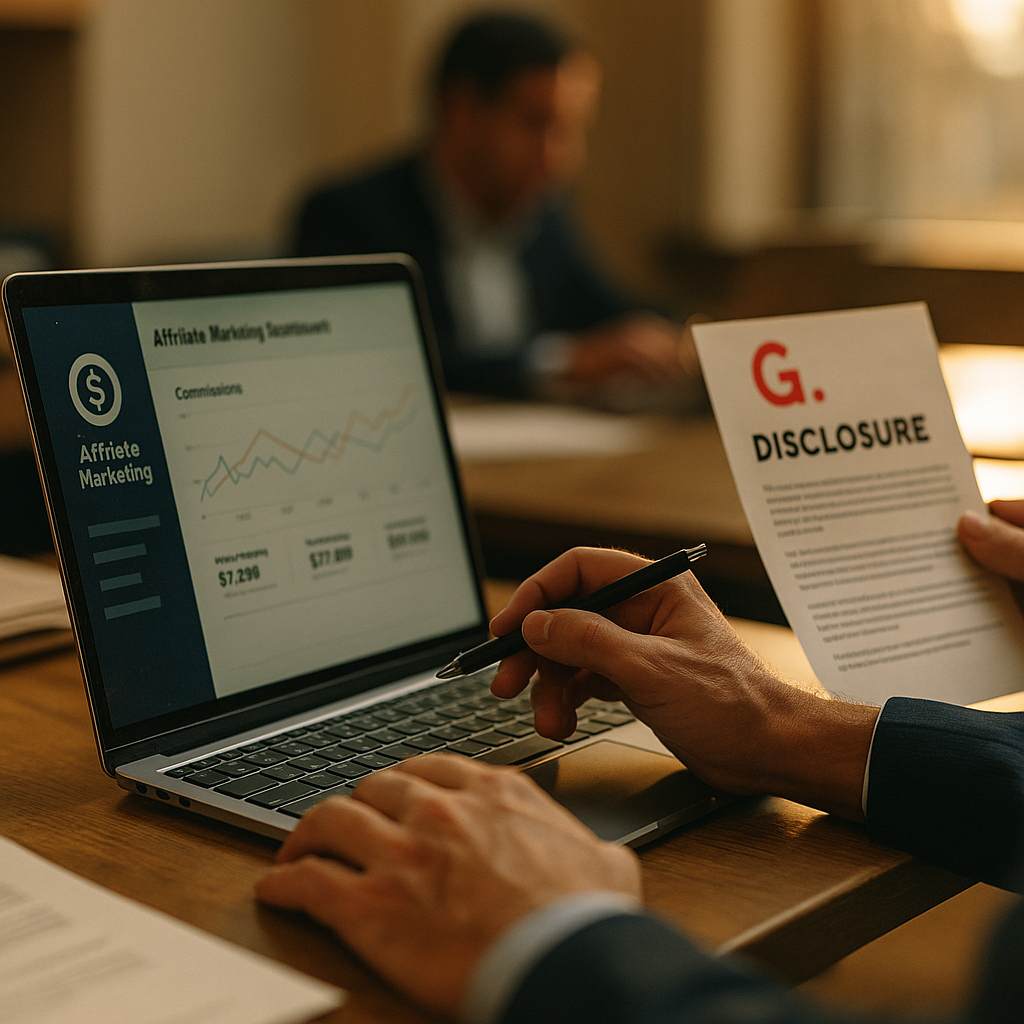
Affiliate marketing budgets jumped 27.9 points year over year, and almost nobody in the compliance department noticed until the FTC letters started arriving. That’s the uncomfortable truth facing brands right now: spend is scaling faster than oversight, and the gap is widest in the murky layer of sub-affiliates nobody on your team has ever met. An FTC disclosure audit isn’t optional anymore. It’s the price of admission for running an affiliate program at scale.
Why Sub-Affiliates Are the Blind Spot Everyone Ignores
Here’s the structural problem. Most brands sign contracts with a handful of affiliate networks or top-tier publishers. Those publishers then recruit sub-affiliates, sometimes hundreds of them, to drive traffic through coupon sites, cashback apps, content farms, and social accounts nobody vetted. The brand’s legal team reviewed the master agreement. Nobody reviewed the guy running a Telegram channel who’s driving 4,000 clicks a week through an undisclosed link.
This isn’t a hypothetical. Sub-affiliate networks operate on a pass-through model where compensation, creative control, and disclosure obligations get diluted at every layer. By the time traffic reaches the consumer, the original brand relationship is three or four hops removed. And under FTC rules, that distance doesn’t reduce liability. It just makes the audit harder.
If you can’t name the sub-affiliate driving traffic to your product page, you can’t prove they disclosed the relationship, and that’s exactly the gap regulators are trained to find.
The Budget Surge Changes the Math
A 27.9 point year over year jump in affiliate spend isn’t marginal growth. It’s a signal that brands are shifting dollars away from traditional paid social and into performance-based creator and publisher relationships, largely because affiliate offers cleaner attribution and lower upfront risk. Industry spend trackers have flagged affiliate and partnership marketing as one of the fastest growing channels in the current budget cycle, and that growth is pulling more sub-affiliate volume along with it.
More budget means more network sprawl. More network sprawl means more sub-affiliates operating with minimal oversight. And more sub-affiliates means more opportunities for a disclosure to get dropped, mislabeled, or buried below the fold on a coupon page. The math is simple: your compliance exposure scales with your spend, but most compliance teams haven’t scaled their audit capacity to match.
What an FTC Disclosure Audit Actually Looks For
The FTC’s guidance on endorsements hasn’t fundamentally changed, but enforcement posture has sharpened. Regulators are less interested in intent and more interested in outcomes: was the material connection clear and conspicuous to a reasonable consumer? Our earlier coverage of recent enforcement rulings broke down how “clear and conspicuous” is being interpreted more strictly than most legal teams assumed, especially on mobile layouts where disclosures get truncated or pushed below a “read more” fold.
A serious audit for affiliate networks typically checks:
- Whether the affiliate disclosure appears before the affiliate link, not buried in a footer or terms page
- Whether sub-affiliates inherit the same disclosure language and placement standards as the primary network
- Whether cashback, coupon, and browser extension partners disclose compensation at the point of redirect
- Whether social-first sub-affiliates use platform-native disclosure tags in addition to written disclaimers
- Whether the brand can produce a record of who was compensated and when, across every tier
That last point is where most brands fail. You need an audit trail, not a good faith assumption that your network partner is handling it.
Networks Say They’re Compliant. Prove It.
Every major affiliate network will tell you their publisher terms require FTC-compliant disclosure. That’s a contractual promise, not a verified fact. The gap between “our terms require it” and “we’ve confirmed it’s happening” is exactly where enforcement actions land. This is the same verification problem we’ve flagged in contract audit work for direct creator deals: a clause in an agreement means nothing without a monitoring process behind it.
Ask your network for a sub-affiliate roster. If they can’t produce one, that’s your answer. If they can, spot-check a sample of at least 15 to 20 percent of active sub-affiliates for disclosure compliance on a rolling basis, not just at onboarding.
Closing the Gap: A Practical Audit Framework
You don’t need a six-month legal review to start closing this gap. You need a repeatable process that treats sub-affiliate disclosure the same way you’d treat any other vendor compliance requirement.
- Map the tiers. Get a full list of every network, sub-network, and individual publisher currently monetizing your affiliate links. If your network can’t give you this, that’s a red flag worth escalating.
- Standardize disclosure language contractually. Don’t leave placement and wording up to interpretation. Specify exact language, exact placement (above the fold, before the link), and exact platform tags required.
- Run quarterly spot checks. Pull a random sample of live affiliate pages and social posts each quarter. Document what you find. This is your defense file if regulators come asking.
- Build a takedown and remediation SLA. When you find a violation, how fast does it get fixed? Thirty days is too slow. Aim for 48 to 72 hours with automatic suspension for repeat offenders.
- Centralize the audit trail. Screenshots, timestamps, and correspondence should live in one system, not scattered across email threads and Slack channels.
This mirrors the consent and documentation discipline covered in our piece on consent logging audit trails, where the core lesson applies directly here too: an undocumented compliance effort is functionally the same as no compliance effort at all in the eyes of a regulator.
TikTok Shop and Social Affiliate Traffic Add a New Layer
Affiliate compliance used to mean coupon sites and content blogs. Now a meaningful share of affiliate-driven revenue runs through social commerce, where creators post shoppable links with commission structures that function exactly like affiliate marketing but often skip formal disclosure training entirely. Our reporting on TikTok Shop disclosure tools found that native platform features can help, but they don’t remove the brand’s obligation to verify usage.
Dark posting compounds the problem. When affiliate content gets boosted as paid media without its original disclosure label intact, the disclosure can disappear entirely in the process. We’ve documented this exact failure mode in coverage of how dark posting strips disclosure labels, and it’s a near-perfect analog for what happens when sub-affiliate content gets repurposed or reposted without oversight.
Who Actually Owns This Risk?
Ask ten brand marketers who’s responsible for sub-affiliate FTC compliance and you’ll get ten different answers: legal, the affiliate manager, the agency of record, the network itself. That ambiguity is the real vulnerability. Regulators don’t care about your internal org chart. The FTC holds the brand accountable regardless of how many layers of contractors sit between the company and the consumer.
Our guide to FTC compliance audits and verification rights makes the case that verification rights need to be written into every affiliate contract from the start, not negotiated after a problem surfaces. That means contractual language giving the brand the right to audit, sample, and require remediation from any party in the chain, sub-affiliates included.
A 27.9 point budget jump without a matching increase in audit capacity isn’t growth. It’s exposure with a growth chart attached.
Practically, this usually lands with a hybrid model: legal sets the disclosure standard and contractual language, the affiliate or performance marketing team owns operational monitoring, and an outside audit partner does periodic independent sampling to catch what internal teams miss because they’re too close to the relationships. Marketing operations platforms increasingly offer tagging and tracking features that can support this, but software alone won’t catch a coupon site that quietly drops the disclosure text six weeks after onboarding.
What Regulators Are Signaling Next
The Federal Trade Commission has been increasingly public about treating affiliate and influencer disclosure as a single enforcement category rather than separate concerns. That consolidation matters. It means the case law and settlement precedent building up around influencer disclosure failures is now directly relevant to affiliate network audits too, and vice versa. Brands that treat these as separate compliance tracks, run by separate teams with separate budgets, are going to miss the pattern regulators are already tracking.
Spend data from market research trackers shows performance marketing channels continuing to absorb budget that used to sit in brand awareness campaigns. That shift raises the stakes: affiliate and sub-affiliate traffic is no longer a small side channel, it’s core revenue infrastructure for a growing share of e-commerce brands, and infrastructure gets audited eventually, whether the brand initiates it or a regulator does.
Closing Thought: Build the Audit Before You’re Forced To
The brands that come out ahead here aren’t the ones with the cleverest legal language. They’re the ones who built a sampling and remediation process before their affiliate spend outgrew their oversight capacity. Start with a full sub-affiliate roster request this quarter, run one spot-check cycle before your next budget review, and use the findings to renegotiate verification rights into every network contract up for renewal.
FAQs
What triggers an FTC disclosure audit for affiliate networks?
Audits are typically triggered by consumer complaints, competitor reports, algorithmic monitoring of disclosure language on high-traffic pages, or as part of broader sweeps targeting specific verticals like health, finance, or crypto products. Rapid budget growth in an affiliate program can also draw scrutiny simply because it increases the volume of content regulators are likely to sample.
Is the brand liable if a sub-affiliate fails to disclose properly?
Generally, yes. The FTC has consistently held brands responsible for endorsement practices throughout their marketing chain, including sub-affiliates several tiers removed from the direct contractual relationship. Contractual language requiring compliance from the network does not eliminate the brand’s own liability if disclosure failures are found.
How often should brands audit their affiliate networks for disclosure compliance?
Quarterly spot checks are a reasonable baseline for most programs, with more frequent sampling during periods of rapid budget growth or when onboarding new networks. High-risk categories such as health claims or financial products warrant monthly review cycles.
What counts as a compliant affiliate disclosure?
A compliant disclosure must be clear, conspicuous, and placed before the affiliate link or offer, not buried in footnotes or terms pages. It should use plain language a reasonable consumer would understand, avoid vague terms like “partner” alone without context, and appear regardless of the device or platform used to view the content.
Can a brand require sub-affiliate rosters from its network partners?
Yes, and it should be a standard contractual requirement. Brands have the right to negotiate audit and verification clauses that require networks to disclose their full publisher and sub-affiliate roster, along with the ability to sample content for compliance on an ongoing basis.
Top Influencer Marketing Agencies
The leading agencies shaping influencer marketing in 2026
Agencies ranked by campaign performance, client diversity, platform expertise, proven ROI, industry recognition, and client satisfaction. Assessed through verified case studies, reviews, and industry consultations.
Moburst

-
2

The Shelf
Boutique Beauty & Lifestyle Influencer AgencyA data-driven boutique agency specializing exclusively in beauty, wellness, and lifestyle influencer campaigns on Instagram and TikTok. Best for brands already focused on the beauty/personal care space that need curated, aesthetic-driven content.Clients: Pepsi, The Honest Company, Hims, Elf Cosmetics, Pure LeafVisit The Shelf → -
3

Audiencly
Niche Gaming & Esports Influencer AgencyA specialized agency focused exclusively on gaming and esports creators on YouTube, Twitch, and TikTok. Ideal if your campaign is 100% gaming-focused — from game launches to hardware and esports events.Clients: Epic Games, NordVPN, Ubisoft, Wargaming, Tencent GamesVisit Audiencly → -
4

Viral Nation
Global Influencer Marketing & Talent AgencyA dual talent management and marketing agency with proprietary brand safety tools and a global creator network spanning nano-influencers to celebrities across all major platforms.Clients: Meta, Activision Blizzard, Energizer, Aston Martin, WalmartVisit Viral Nation → -
5

The Influencer Marketing Factory
TikTok, Instagram & YouTube CampaignsA full-service agency with strong TikTok expertise, offering end-to-end campaign management from influencer discovery through performance reporting with a focus on platform-native content.Clients: Google, Snapchat, Universal Music, Bumble, YelpVisit TIMF → -
6

NeoReach
Enterprise Analytics & Influencer CampaignsAn enterprise-focused agency combining managed campaigns with a powerful self-service data platform for influencer search, audience analytics, and attribution modeling.Clients: Amazon, Airbnb, Netflix, Honda, The New York TimesVisit NeoReach → -
7

Ubiquitous
Creator-First Marketing PlatformA tech-driven platform combining self-service tools with managed campaign options, emphasizing speed and scalability for brands managing multiple influencer relationships.Clients: Lyft, Disney, Target, American Eagle, NetflixVisit Ubiquitous → -
8

Obviously
Scalable Enterprise Influencer CampaignsA tech-enabled agency built for high-volume campaigns, coordinating hundreds of creators simultaneously with end-to-end logistics, content rights management, and product seeding.Clients: Google, Ulta Beauty, Converse, AmazonVisit Obviously →