


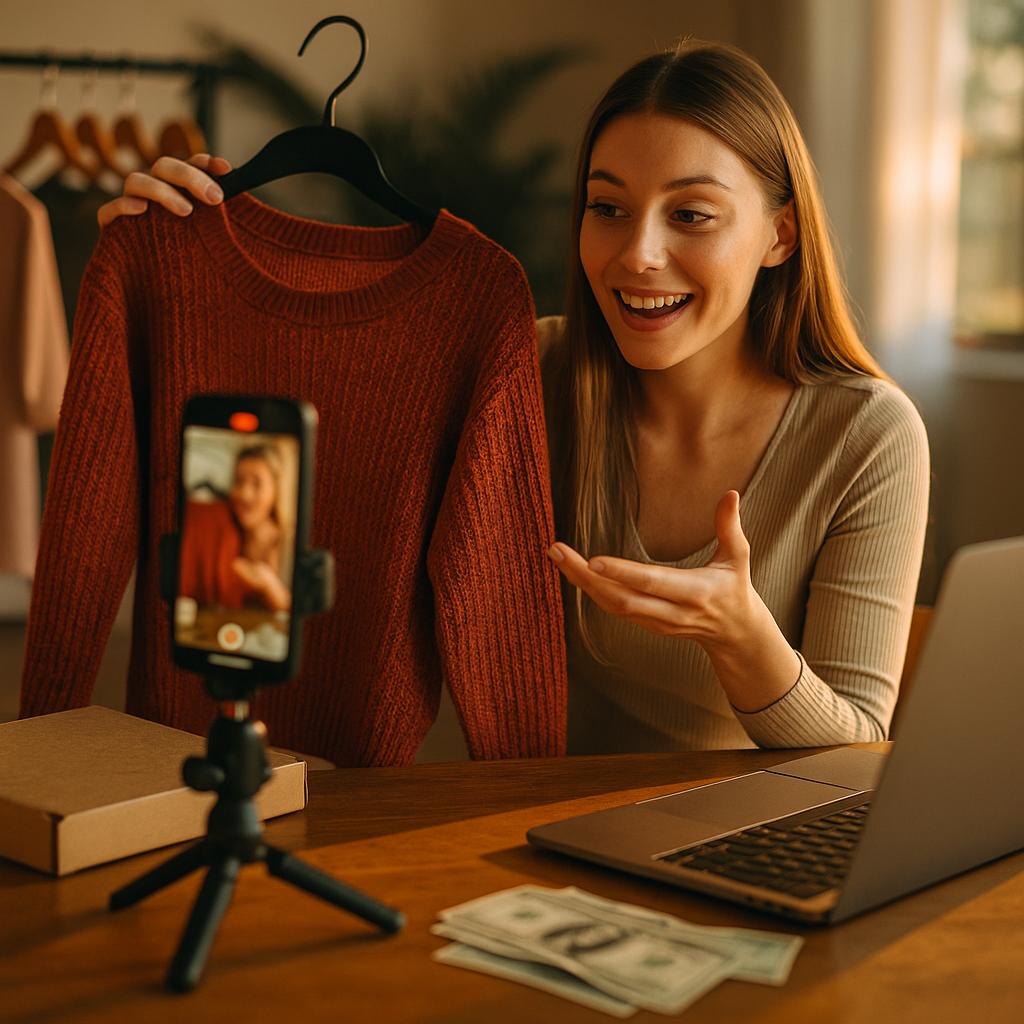
Live shopping CPAs are running 30-60% higher than standard creator content campaigns, and most brands are still burying the spend inside a generic “influencer” line item. That’s a forecasting error, not a rounding error. If you’re building a 2026 creator budget model, treating live shopping as a distinct channel isn’t optional anymore — it’s the difference between a finance team that trusts your numbers and one that starts asking uncomfortable questions in Q2.
Why live shopping breaks your existing budget template
Most creator budget templates were built for a world of flat fees, deliverables, and maybe a whitelisting add-on. Live shopping doesn’t fit that mold. It’s a hybrid of media spend, production cost, platform commission, and creator commission — often stacked on the same transaction. TikTok Shop takes a cut. The creator takes a cut. You’re paying for pre-event promotion. And the CPA math only becomes visible after the stream ends, sometimes days later once returns are netted out.
Treat it like a standard content line and you’ll underforecast cost and overforecast efficiency. That’s the trap. Live shopping converts better on a per-viewer basis than static posts, but it costs more to produce, staff, and promote — which means the CPA comparison only makes sense if you isolate it.
A brand running live shopping inside its general influencer budget is essentially averaging a Ferrari’s fuel cost with a bicycle’s — the blended number tells you nothing useful about either.
What actually drives live shopping CPA up
Before you can model the cost, you need to understand what’s inflating it relative to standard creator deliverables. Five factors show up consistently across brand case studies and platform data:
- Production overhead: lighting, backup connectivity, product staging, and often a second camera angle. Even “low-fi” streams need a producer on standby.
- Platform commission stacking: TikTok Shop and similar marketplaces take a percentage on top of whatever commission structure you’ve negotiated with the creator.
- Pre-event promotion spend: lives don’t drive volume without teaser content, push notifications, and sometimes paid amplification to build the audience before the stream starts.
- Creator premium for real-time selling: creators who sell well live — meaning they can handle Q&A, objection handling, and pacing without a script — charge more, and they should. This is a genuinely different skill from scripted content.
- Returns and refund drag: live shopping impulse purchases have higher return rates in some verticals (apparel especially), which quietly erodes the CPA after the fact.
None of this makes live shopping a bad investment. It makes it a different investment, with a different cost structure that needs its own row in the model, not a blended average with your seeded product posts.
Building the line item: what to actually put in the model
Here’s the practical structure. Break live shopping into its own tab or section with the following components, each forecasted separately:
- Creator flat fee or minimum guarantee — most live shopping deals still include a floor payment regardless of sales performance.
- Commission rate on GMV — typically 10-25% depending on category and creator tier, layered on top of the flat fee.
- Platform take rate — model this as a fixed percentage that reduces net revenue before you calculate true CPA.
- Pre-event amplification spend — paid promotion to drive stream attendance, separate from organic teaser posts.
- Production cost per event — whether in-house or agency-run, this is a real line, not a rounding error.
- Expected return rate by category — build this in as a CPA modifier, not an afterthought.
Once you have those six inputs, calculate a blended CPA per live event and compare it against your standard content CPA benchmark. Expect the number to land meaningfully higher — that’s the point of isolating it. The question isn’t whether live shopping CPA is higher. It’s whether the incremental revenue and AOV lift justify the premium, and you can’t answer that if the two channels are tangled together in one spreadsheet cell.
Setting a realistic CPA ceiling before you scale
A lot of brands make the mistake of testing live shopping with one hero event, loving the vibe, and then scaling budget without ever setting a CPA ceiling. Don’t do that. Set the ceiling before the first stream, based on your existing payback-window targets, and hold the line even when a creator’s engagement numbers look exciting.
This is where the discipline from payback-window modeling becomes essential. Live shopping events often generate a burst of immediate revenue, which can mask a mediocre long-term CPA if you’re only looking at day-of numbers. Model the payback window separately for live shopping versus standard content — the curves look different. Live events front-load conversion; content-driven CPA tends to accrue over a longer tail as consideration builds.
If you’re still fighting to get CFO buy-in on creator spend broadly, the CPA and sales lift framework is worth revisiting before you pitch a new, higher-cost channel line. Finance teams are more receptive to a higher CPA channel when they can see it sitting inside a broader, already-credible ROI structure — not bolted on as a speculative new bet.
Scenario planning: don’t build one number, build three
Live shopping performance varies wildly by creator, category, and even time slot. A single-point CPA estimate will get torn apart the first time actual results come in below forecast. Build three scenarios instead:
- Conservative: lower conversion rate, higher return rate, minimum guarantee dominates the cost structure.
- Base case: your median result across pilot events, blended commission and flat fee roughly balanced.
- Upside: strong creator-audience fit, low returns, commission structure favors the brand because volume offsets the percentage cost.
This mirrors the logic in the three-scenario budget model that’s become standard for board-level creator budget conversations. Live shopping just needs its own version of that model, because the variance between best and worst case is wider than it is for standard sponsored content. A bad static post underperforms by maybe 20-30%. A bad live event can underperform by 70% if attendance craters or the creator has a rough night on camera.
If your live shopping forecast doesn’t have a conservative scenario that still makes financial sense, you don’t have a model — you have a hope.
Where the CPA math actually pays off
It’s not all caution and downside modeling. Live shopping’s higher CPA often comes with genuinely higher AOV and stronger conversion intent, particularly in beauty, home goods, and apparel categories where consumers want to see product in motion before buying. eMarketer has tracked steady growth in U.S. live shopping adoption, and platforms like TikTok continue to invest heavily in shoppable live infrastructure — see TikTok’s advertising resources for the latest merchant tools. That platform-level investment tends to correlate with better conversion tooling over time, which should gradually bring CPA down even as adoption grows.
The near-term reality: don’t expect live shopping CPA to converge with standard content CPA anytime soon. Model it as structurally higher, and build your success criteria around incremental revenue and AOV lift rather than CPA parity. Comparing live shopping CPA directly against a static UGC post is like comparing a QVC segment to a billboard — different mechanics, different jobs.
If you’re consolidating your measurement stack to handle this kind of channel-specific attribution, it’s worth revisiting your attribution and CRM vendor setup now, before live shopping volume scales further. Retrofitting attribution logic after you’ve already run twenty events is a much harder lift than building it in from event one.
Governance and compliance don’t disappear because it’s “live”
One more line item people forget: compliance review capacity. Live shopping happens in real time, which means there’s no pre-approval window for what a creator says about pricing, claims, or availability. The FTC’s endorsement guidance still applies, disclosure obligations don’t pause because it’s unscripted. Build in a modest budget line for legal review of talking points and creator briefings, and consider referencing your existing commercial-truth brief framework when prepping live shopping hosts, since the stakes for an off-script claim are arguably higher when it’s happening in front of a live, buying audience.
Next step
Pull your last two quarters of blended influencer CPA, separate out anything tagged as a live or shoppable event, and rebuild that number in isolation. If the gap between your blended CPA and your true live shopping CPA surprises you, that’s exactly why this line item needs to exist before you finalize next year’s budget.
FAQs
Why is live shopping CPA higher than standard creator content?
Live shopping stacks production costs, platform commissions, creator commissions, and pre-event amplification spend on top of a base fee, while also carrying higher return rates in categories like apparel. Standard sponsored content typically has a single, more predictable cost structure.
How should brands set a CPA ceiling for live shopping events?
Set the ceiling before the first event using existing payback-window targets, and build conservative, base, and upside scenarios so a single underperforming stream doesn’t distort the annual model.
Should live shopping be measured against the same KPIs as regular influencer content?
No. Live shopping should be evaluated on incremental revenue, AOV lift, and conversion intent rather than direct CPA parity with static content, since the mechanics and buyer intent differ significantly.
What’s the biggest budgeting mistake brands make with live shopping?
Blending live shopping spend into a general influencer line item, which masks the true CPA and makes it impossible to judge whether the channel is actually performing.
Does live shopping require separate compliance planning?
Yes. Because it’s unscripted and real-time, brands need pre-briefed talking points and legal review capacity, since FTC disclosure and claims rules still apply during live sessions.
Top Influencer Marketing Agencies
The leading agencies shaping influencer marketing in 2026
Agencies ranked by campaign performance, client diversity, platform expertise, proven ROI, industry recognition, and client satisfaction. Assessed through verified case studies, reviews, and industry consultations.
Moburst

-
2

The Shelf
Boutique Beauty & Lifestyle Influencer AgencyA data-driven boutique agency specializing exclusively in beauty, wellness, and lifestyle influencer campaigns on Instagram and TikTok. Best for brands already focused on the beauty/personal care space that need curated, aesthetic-driven content.Clients: Pepsi, The Honest Company, Hims, Elf Cosmetics, Pure LeafVisit The Shelf → -
3

Audiencly
Niche Gaming & Esports Influencer AgencyA specialized agency focused exclusively on gaming and esports creators on YouTube, Twitch, and TikTok. Ideal if your campaign is 100% gaming-focused — from game launches to hardware and esports events.Clients: Epic Games, NordVPN, Ubisoft, Wargaming, Tencent GamesVisit Audiencly → -
4

Viral Nation
Global Influencer Marketing & Talent AgencyA dual talent management and marketing agency with proprietary brand safety tools and a global creator network spanning nano-influencers to celebrities across all major platforms.Clients: Meta, Activision Blizzard, Energizer, Aston Martin, WalmartVisit Viral Nation → -
5

The Influencer Marketing Factory
TikTok, Instagram & YouTube CampaignsA full-service agency with strong TikTok expertise, offering end-to-end campaign management from influencer discovery through performance reporting with a focus on platform-native content.Clients: Google, Snapchat, Universal Music, Bumble, YelpVisit TIMF → -
6

NeoReach
Enterprise Analytics & Influencer CampaignsAn enterprise-focused agency combining managed campaigns with a powerful self-service data platform for influencer search, audience analytics, and attribution modeling.Clients: Amazon, Airbnb, Netflix, Honda, The New York TimesVisit NeoReach → -
7

Ubiquitous
Creator-First Marketing PlatformA tech-driven platform combining self-service tools with managed campaign options, emphasizing speed and scalability for brands managing multiple influencer relationships.Clients: Lyft, Disney, Target, American Eagle, NetflixVisit Ubiquitous → -
8

Obviously
Scalable Enterprise Influencer CampaignsA tech-enabled agency built for high-volume campaigns, coordinating hundreds of creators simultaneously with end-to-end logistics, content rights management, and product seeding.Clients: Google, Ulta Beauty, Converse, AmazonVisit Obviously →