


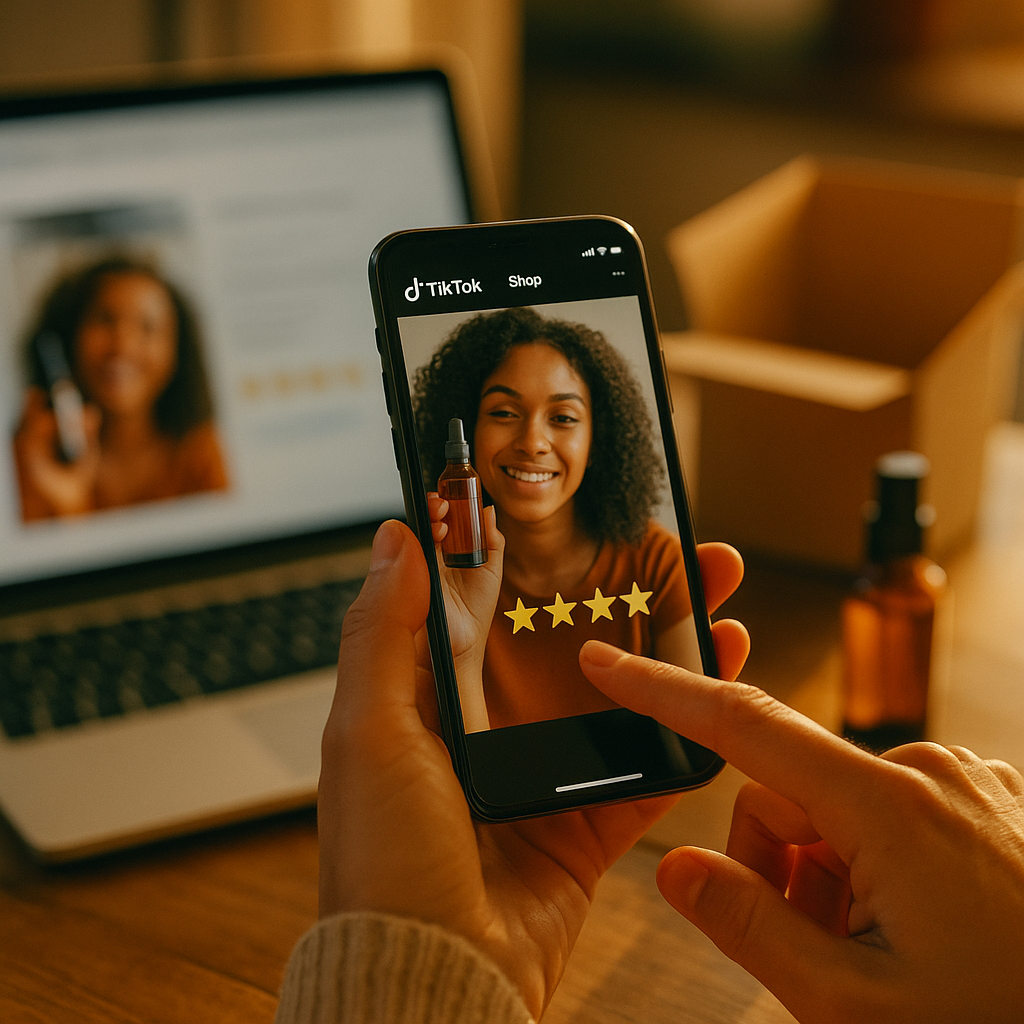
The FTC has fined brands for “results not typical” disclaimers that sat right next to testimonials showing extraordinary outcomes. If your TikTok Shop testimonials claim someone lost 30 pounds or made $10,000 in a month, you need proof that’s typical — not a footnote that says otherwise. Most compliance teams don’t have that proof yet.
Why “Typical Results” Language Is a Trap, Not a Shield
For years, marketers treated disclaimers like a magic spell. Slap “results not typical” under a testimonial, and the legal risk supposedly disappears. It doesn’t. The FTC’s Endorsement Guides are explicit: if an ad features a testimonial showing atypical results, the advertiser must either clearly disclose the generally expected outcome or possess adequate substantiation that the results shown are, in fact, typical. A disclaimer doesn’t override the actual impression the ad creates on a reasonable consumer.
TikTok Shop compounds this problem because the format is built for outsized claims. Fifteen-second clips of a creator’s “before and after” skin transformation or a screen recording of a Shopify dashboard hitting $50K in a week aren’t outliers on the platform — they’re the content that performs. The algorithm rewards the extreme case, not the median one.
If your best-performing testimonial shows a result better than 80% of real users experienced, you’re not marketing a product anymore — you’re marketing a lottery ticket, and the FTC treats it that way.
What “Substantiation” Actually Means in Practice
Substantiation isn’t a vibe. It’s a documented, defensible dataset that supports the claim being made, gathered before the content goes live, not scrambled together after a complaint letter arrives. For typical-results claims specifically, the FTC generally expects brands to be able to answer three questions with data:
- What percentage of users achieved this result or better? If it’s under 50%, you likely can’t call it typical without a clear disclosure of the real average.
- Over what time period and under what conditions? A weight-loss result achieved in 90 days with a supervised diet plan is not the same claim as “lose weight fast.”
- How was the result measured, and by whom? Self-reported survey data carries less weight than tracked purchase data, clinical measurement, or platform analytics.
This is the same substantiation logic that applies to any performance claim in creator content, not just testimonials. We covered the broader mechanics of this in substantiating creator claims before content ever ships — the testimonial-specific wrinkle is that you’re not just vetting a creator’s script, you’re vetting a customer’s lived experience and deciding how representative it is.
The Sample Size Problem Nobody Wants to Talk About
Here’s the uncomfortable part: most brands running TikTok Shop affiliate and UGC programs don’t have enough clean outcome data to substantiate anything. You’ve got five glowing testimonials from creators who happen to be your most engaged customers, and zero systematic tracking of what the average buyer actually experiences. That’s not a compliance gap. That’s a data infrastructure gap wearing a compliance costume.
Fixing it means building outcome tracking into your customer journey before you ever brief a creator to film a testimonial. Post-purchase surveys, verified review platforms, loyalty program data — whatever you’ve got, it needs to be structured enough to produce an actual percentage, not a handful of anecdotes you’re hoping represents the norm.
Building the Compliance Framework: Five Checkpoints
Compliance teams need a repeatable process, not a one-off legal review. Here’s a framework that scales across a TikTok Shop affiliate program with dozens or hundreds of creators posting testimonial content weekly.
- Claim inventory. Before any testimonial goes live, log the specific outcome being claimed (weight loss, revenue, skin clarity, hours saved) and tag it against your substantiation database. No match, no post.
- Data source verification. Confirm the underlying data — survey results, sales figures, clinical trial data — is recent, methodologically sound, and applicable to the product version currently being sold.
- Representativeness check. Calculate where the testimonial’s result falls on the distribution curve. If it’s in the top decile, either find a way to disclose that clearly or don’t run it as an unqualified typical-results claim.
- Disclosure drafting. Write a disclosure that states the actual average result, not a vague “individual results may vary” line. The FTC has specifically called out generic disclaimers as insufficient in enforcement actions when the real typical result differs meaningfully from what’s depicted.
- Documentation retention. Keep the substantiation file — data source, calculation, disclosure language, approval sign-off — for the life of the campaign plus a reasonable buffer. Regulators and plaintiffs’ attorneys both request this after the fact.
This checklist approach mirrors what we’ve recommended for other TikTok Shop compliance headaches, including the countdown timer compliance checklist — the pattern is the same: build the guardrail into the workflow, don’t bolt it on after content is filmed.
Disclosure Tags Aren’t a Substitute for Substantiation
A recurring mistake: brands assume that because a creator used TikTok’s paid partnership label, they’ve covered their disclosure obligations across the board. Wrong. Paid partnership tags address the material connection disclosure — the “this is sponsored” requirement. They do nothing to address whether the results shown are substantiated or typical. These are two separate legal obligations that too many compliance teams collapse into one checkbox.
We’ve written before about why platform paid partnership tags alone are not enough, and the typical-results problem is a perfect example of why. A perfectly tagged, perfectly disclosed sponsored video can still violate the Endorsement Guides if the results claim inside it is unsubstantiated or misleadingly atypical.
Where This Intersects With Contract Language
Your creator agreements need a clause requiring that any specific outcome claims be pre-approved against your substantiation file, not improvised on camera. Pair this with the disclosure standards work from one contract disclosure standard so you’re not managing separate rulebooks for separate platforms. Consistency across your creator base is what actually holds up under regulatory scrutiny — a patchwork of one-off verbal instructions to individual creators is nearly impossible to defend later.
The ROI Case for Getting This Right
Compliance teams often lose the internal budget argument because substantiation work looks like pure cost with no upside. Reframe it. Brands that build real outcome data pipelines get better testimonial content, not just safer content — because they know which customer segments actually produce strong, honest results, and they can brief creators accordingly instead of hoping for a lucky testimonial.
There’s also a hard financial case. FTC civil penalties for endorsement violations can run into six or seven figures per violation depending on the case, and that’s before you count the platform-level consequences — TikTok Shop has shown it will suspend or restrict merchant accounts over compliance failures, which is a direct hit to revenue, not just reputation. If you’ve dealt with merchant verification freezes before, you know how disruptive an account-level enforcement action can be to a live revenue channel.
A substantiation database isn’t overhead — it’s the difference between a testimonial program that scales safely and one that’s a single viral post away from a shutdown notice.
Industry data backs up the urgency here. Social commerce continues to grow fast — eMarketer’s research has repeatedly shown social commerce outpacing broader e-commerce growth rates, and TikTok Shop is a major driver of that in the US market. More volume means more testimonials, more claims, and more regulatory exposure if the substantiation layer isn’t built to scale alongside the program.
What to Do This Quarter
Audit your live TikTok Shop testimonial content this week. Pull every video making a specific numeric or outcome claim, and ask whether you could produce documentation proving that result is typical if the FTC asked tomorrow. If the honest answer is no, pause the claim, fix the disclosure, or build the data to back it — in that order.
FAQs
What counts as a “typical results” claim under FTC rules?
Any testimonial or endorsement depicting a specific outcome — weight loss, income, skin improvement, time saved — that a reasonable consumer would interpret as representative of what they can expect. The FTC’s Endorsement Guides require advertisers to either substantiate that the shown result is typical or clearly disclose the actual generally expected result.
Does adding a disclaimer like “results not typical” protect a brand from liability?
Not on its own. The FTC has stated that a disclaimer must clearly and specifically convey the actual generally expected result — a vague disclaimer that contradicts the overall impression of the ad is unlikely to satisfy the requirement.
Who is responsible for substantiating testimonial claims on TikTok Shop — the brand or the creator?
The brand. The FTC generally holds advertisers responsible for the substance of endorsements they solicit, feature, or benefit from, even if a creator produced the testimonial content independently.
How much data is needed to call a result “typical”?
There’s no fixed sample size in the FTC guidance, but the data needs to reflect a statistically meaningful, representative slice of actual customers achieving the claimed outcome under normal conditions — not a handful of hand-picked success stories.
Can a brand use survey data collected by a third-party review platform as substantiation?
Yes, provided the survey methodology is sound, the sample is representative of the actual customer base, and the data is current and specific to the product version being marketed.
What happens if a brand can’t substantiate a testimonial already live on TikTok Shop?
The safest path is to remove or revise the content immediately, add an accurate results disclosure, and document the corrective action. Waiting for a complaint or regulatory inquiry significantly increases legal exposure.
FAQs
What counts as a “typical results” claim under FTC rules?
Any testimonial or endorsement depicting a specific outcome — weight loss, income, skin improvement, time saved — that a reasonable consumer would interpret as representative of what they can expect. The FTC’s Endorsement Guides require advertisers to either substantiate that the shown result is typical or clearly disclose the actual generally expected result.
Does adding a disclaimer like “results not typical” protect a brand from liability?
Not on its own. The FTC has stated that a disclaimer must clearly and specifically convey the actual generally expected result — a vague disclaimer that contradicts the overall impression of the ad is unlikely to satisfy the requirement.
Who is responsible for substantiating testimonial claims on TikTok Shop — the brand or the creator?
The brand. The FTC generally holds advertisers responsible for the substance of endorsements they solicit, feature, or benefit from, even if a creator produced the testimonial content independently.
How much data is needed to call a result “typical”?
There’s no fixed sample size in the FTC guidance, but the data needs to reflect a statistically meaningful, representative slice of actual customers achieving the claimed outcome under normal conditions — not a handful of hand-picked success stories.
Can a brand use survey data collected by a third-party review platform as substantiation?
Yes, provided the survey methodology is sound, the sample is representative of the actual customer base, and the data is current and specific to the product version being marketed.
What happens if a brand can’t substantiate a testimonial already live on TikTok Shop?
The safest path is to remove or revise the content immediately, add an accurate results disclosure, and document the corrective action. Waiting for a complaint or regulatory inquiry significantly increases legal exposure.
Top Influencer Marketing Agencies
The leading agencies shaping influencer marketing in 2026
Agencies ranked by campaign performance, client diversity, platform expertise, proven ROI, industry recognition, and client satisfaction. Assessed through verified case studies, reviews, and industry consultations.
Moburst

-
2

The Shelf
Boutique Beauty & Lifestyle Influencer AgencyA data-driven boutique agency specializing exclusively in beauty, wellness, and lifestyle influencer campaigns on Instagram and TikTok. Best for brands already focused on the beauty/personal care space that need curated, aesthetic-driven content.Clients: Pepsi, The Honest Company, Hims, Elf Cosmetics, Pure LeafVisit The Shelf → -
3

Audiencly
Niche Gaming & Esports Influencer AgencyA specialized agency focused exclusively on gaming and esports creators on YouTube, Twitch, and TikTok. Ideal if your campaign is 100% gaming-focused — from game launches to hardware and esports events.Clients: Epic Games, NordVPN, Ubisoft, Wargaming, Tencent GamesVisit Audiencly → -
4

Viral Nation
Global Influencer Marketing & Talent AgencyA dual talent management and marketing agency with proprietary brand safety tools and a global creator network spanning nano-influencers to celebrities across all major platforms.Clients: Meta, Activision Blizzard, Energizer, Aston Martin, WalmartVisit Viral Nation → -
5

The Influencer Marketing Factory
TikTok, Instagram & YouTube CampaignsA full-service agency with strong TikTok expertise, offering end-to-end campaign management from influencer discovery through performance reporting with a focus on platform-native content.Clients: Google, Snapchat, Universal Music, Bumble, YelpVisit TIMF → -
6

NeoReach
Enterprise Analytics & Influencer CampaignsAn enterprise-focused agency combining managed campaigns with a powerful self-service data platform for influencer search, audience analytics, and attribution modeling.Clients: Amazon, Airbnb, Netflix, Honda, The New York TimesVisit NeoReach → -
7

Ubiquitous
Creator-First Marketing PlatformA tech-driven platform combining self-service tools with managed campaign options, emphasizing speed and scalability for brands managing multiple influencer relationships.Clients: Lyft, Disney, Target, American Eagle, NetflixVisit Ubiquitous → -
8

Obviously
Scalable Enterprise Influencer CampaignsA tech-enabled agency built for high-volume campaigns, coordinating hundreds of creators simultaneously with end-to-end logistics, content rights management, and product seeding.Clients: Google, Ulta Beauty, Converse, AmazonVisit Obviously →