


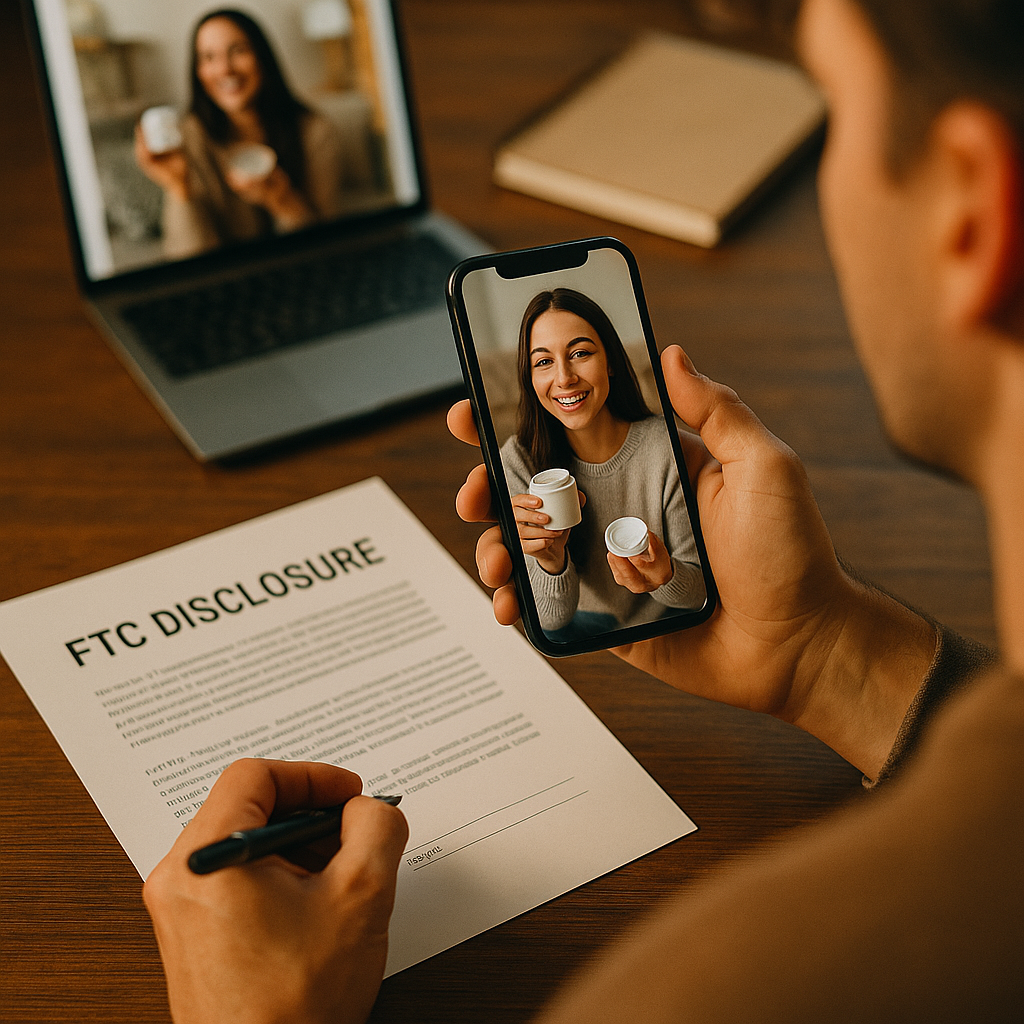
Ninety-one percent of consumers say they’ve seen an influencer post without a disclosure — and the FTC has made clear it doesn’t care whose channel the ad ended up on. If your brand pulls UGC creator content into paid social, embeds it on a landing page, and reposts it organically, a single “#ad” tag from the original post almost never covers you. FTC disclosure obligations travel with the content, not the platform it was born on.
This is the gap tripping up brand teams right now. Legal signs off on disclosure language for the original creator post, marketing repurposes the clip six ways, and nobody re-checks whether the disclosure still reads clearly in each new context. It’s not malicious. It’s just an operational blind spot that scales badly.
Why One Disclosure Tag Doesn’t Travel With the Content
The FTC’s Endorsement Guides don’t recognize a platform-specific exemption. Disclosure has to be “clear and conspicuous” wherever a consumer encounters the endorsement — full stop. A creator’s native TikTok caption disclosure disappears the moment you strip the caption and run the video as a Meta ad with your own copy. Embed that same clip on your homepage without an on-screen disclosure, and you’ve created a third compliance gap, even though it’s technically the “same” content.
Regulators look at each placement as its own disclosure event. So does a plaintiff’s attorney, for that matter, and state-level consumer protection statutes are increasingly modeled on FTC language too.
Repurposing UGC without rebuilding the disclosure for each channel isn’t a minor oversight — it’s the single most common compliance gap in creator programs that scale past their first paid campaign.
We’ve covered how this plays out specifically in paid social contexts in our breakdown of whitelisted creator ad audits, and the same logic extends to owned and earned placements — just with different mechanics.
Map the Three Channels Before You Write a Single Word of Disclosure Copy
Paid, owned, and earned each carry distinct disclosure risk profiles. Treating them identically is how brands end up over-disclosing in low-risk spots and under-disclosing in high-risk ones.
- Paid channels (boosted posts, spark ads, programmatic display): Highest scrutiny. The FTC and platforms like Meta and TikTok both require disclosure, and platform ad-labeling tools (like Meta’s Branded Content tag) don’t automatically satisfy FTC requirements on their own — they’re a supplement, not a substitute.
- Owned channels (your website, email, app): Often overlooked because there’s no “creator relationship” visible to the consumer at point of contact. But if a testimonial or UGC clip on your product page came from a paid or gifted relationship, that connection needs disclosure at the point of display, not just in a footer terms page nobody reads.
- Earned/organic reposts (brand regramming a creator’s tagged content): Lower perceived risk, but still requires disclosure if any material connection existed — free product, payment, discount code, affiliate link. “Earned” doesn’t mean “compensation-free,” and it definitely doesn’t mean “disclosure-free.”
Build your disclosure workflow around this map first. Copy templates come second.
The Repurposing Trigger: When Does Content Need a New Disclosure Pass?
Set a simple internal rule: any time content moves to a new placement, format, or audience context, disclosure gets re-verified — not assumed. That means:
- Vertical video repurposed from TikTok to Instagram Reels: re-check on-screen text placement and caption.
- UGC clip embedded in a paid display ad: disclosure must appear in the ad unit itself, not rely on a linked landing page.
- Testimonial screenshot used in an email campaign: disclosure needs to be in the email body, adjacent to the quote.
- Creator content reposted to brand’s own social account: disclosure carries over and should be restated in the brand’s own caption, not just left in the original creator credit.
This is essentially the same “does the edit trigger new liability” logic we’ve applied to script changes — see our analysis on when script edits trigger liability. Repurposing is a form of editing. Treat it the same way.
Structuring the Disclosure Language Itself
Generic “#ad” or “#sponsored” tags are the floor, not the ceiling — and increasingly, they’re not even a safe floor. The FTC’s guidance leans toward disclosures that use plain language a reasonable consumer would understand instantly: “Paid partnership with [Brand]” reads more clearly than a hashtag buried in a caption block. First-line placement matters too; we’ve written about how first-line disclosure rules have already forced contract rewrites across TikTok creator programs.
For UGC specifically, build modular disclosure language that can adapt without losing legal meaning. A few structural principles:
- Front-load the disclosure. Don’t bury it after three lines of caption copy or at the end of a video. Platforms increasingly cut off captions or only show the first line in feed previews.
- Match disclosure format to content format. Video needs on-screen text held for enough time to be read, not just a verbal mention buried in fast dialogue. Static images need in-image or immediately adjacent text.
- Standardize the phrase, not the placement. Use one approved disclosure phrase brand-wide (“Paid partnership with [Brand Name]”) but allow flexibility in exactly where it sits depending on channel constraints.
- Re-disclose on every repost. If your brand account reposts creator content, your caption needs its own disclosure line. Don’t rely on the original creator’s tag surviving the repost.
Contractually, this needs to be spelled out with the creator up front, not negotiated after the content is already shot. Our guide on fixing licensing duration and renewal terms covers the adjacent issue of how long you can even use repurposed content — disclosure obligations and licensing terms need to be negotiated in the same conversation, not siloed into separate contract clauses that legal and marketing draft independently.
Build a Disclosure Matrix, Not a Single Template
The brands getting this right build what’s essentially a disclosure matrix: content type (video, static, testimonial) crossed with channel (paid, owned, earned) crossed with platform (TikTok, Meta, web, email). Each cell gets a pre-approved disclosure treatment. When a creative or social team member wants to repurpose a piece of UGC, they check the matrix instead of guessing or, worse, copying the last approved example without knowing why it was structured that way.
This matters more as content lifecycles get longer. A piece of UGC shot for a Q1 campaign might get repurposed into a paid ad in Q3, then show up in an earned repost in Q4. Each of those instances is a separate disclosure event, and if your creator agreement’s licensing window has already expired, you’ve got a rights problem stacked on top of a disclosure problem. We go deeper on avoiding that compounding risk in our piece on the 90-day content license standard.
A practical build-out for the matrix:
- Column headers: Paid Social, Owned Web, Owned Email, Earned Repost, Third-Party Syndication
- Row headers: Video UGC, Static UGC, Testimonial Quote, Product Demo, Unboxing Content
- Each cell contains: approved disclosure phrase, required placement, platform label requirement (if any), and licensing expiration flag
Assign ownership. Legal approves the language, but a single operations or compliance lead should own matrix maintenance and sign-off on every repurposing request. Diffuse ownership is how disclosure gaps slip through — everyone assumes someone else checked.
AI Complicates This Further
Brands now use AI tools to auto-generate ad variants from UGC source clips — trimming, recaptioning, dubbing into other languages, even generating new voiceovers. Every one of those AI-modified versions is arguably new content requiring its own disclosure check, and if AI is also touching the script or claims language, you’re layering in substantiation risk on top of disclosure risk. Our coverage of FTC liability for AI-assisted creator scripts and the broader AI disclosure gap both apply directly here. If your team is running UGC through an AI repurposing pipeline, the disclosure matrix needs an AI-modification flag as its own variable, not an afterthought.
Audit Cadence: Don’t Set It and Forget It
Disclosure compliance decays over time. Platform policies change (Meta and TikTok both update branded content tools regularly), creators leave brand programs, and content gets reused by teams who weren’t around when the original agreement was signed. Quarterly audits catch this before it becomes a pattern regulators notice.
Tie the audit to renewal cycles where possible, which is the model we recommend in quarterly compliance audits tied to renewals. Pull a sample of repurposed content across all three channels, check disclosure placement against current FTC guidance and platform rules, and flag anything using expired licenses or outdated disclosure phrasing.
According to FTC enforcement actions, the agency has shown increasing willingness to name both the creator and the brand in settlement actions — brand liability doesn’t stop at the contract’s signature line. Industry data from eMarketer also shows repurposed UGC now accounts for a growing share of paid social spend, which means the compliance surface area is expanding right alongside the budget shift toward creator content.
FAQs
The questions below come up constantly in brand legal and marketing team conversations. Use them as a quick-reference gut check, not a substitute for individual legal review.
Frequently Asked Questions
Does the original creator’s disclosure cover repurposed versions of the content?
No. FTC guidance treats each placement as a separate disclosure event. If a caption, on-screen text, or hashtag disclosure doesn’t carry over when content moves to a new format or channel, the new version needs its own clear and conspicuous disclosure.
Do we need to disclose UGC on our website if the creator wasn’t paid in cash?
Yes, if there was any material connection — free product, discount code, affiliate commission, or even a long-term ambassador relationship. “Material connection” is broader than direct payment, and the FTC has been explicit that gifted product still triggers disclosure obligations.
Is a platform’s branded content tag enough to satisfy FTC requirements?
Not on its own. Tools like Meta’s Branded Content label or TikTok’s paid partnership tag are useful supplements but don’t automatically meet the “clear and conspicuous” standard the FTC requires, especially once content is exported and repurposed outside that platform’s native environment.
How often should we audit our repurposed UGC for disclosure compliance?
Quarterly at minimum, and ideally tied to contract renewal cycles so licensing and disclosure checks happen together. High-volume creator programs with heavy paid repurposing may warrant monthly spot checks on active campaigns.
Who should own disclosure compliance when content moves across teams?
A single compliance or legal operations lead should own final sign-off, even if creative, social, and paid media teams each request repurposing. Diffuse ownership across teams is the most common reason disclosure gaps go unnoticed.
Build the disclosure matrix before your next repurposing cycle, assign one owner to sign off on every cross-channel reuse, and treat each new placement as a fresh compliance check rather than an extension of the original post.
Top Influencer Marketing Agencies
The leading agencies shaping influencer marketing in 2026
Agencies ranked by campaign performance, client diversity, platform expertise, proven ROI, industry recognition, and client satisfaction. Assessed through verified case studies, reviews, and industry consultations.
Moburst

-
2

The Shelf
Boutique Beauty & Lifestyle Influencer AgencyA data-driven boutique agency specializing exclusively in beauty, wellness, and lifestyle influencer campaigns on Instagram and TikTok. Best for brands already focused on the beauty/personal care space that need curated, aesthetic-driven content.Clients: Pepsi, The Honest Company, Hims, Elf Cosmetics, Pure LeafVisit The Shelf → -
3

Audiencly
Niche Gaming & Esports Influencer AgencyA specialized agency focused exclusively on gaming and esports creators on YouTube, Twitch, and TikTok. Ideal if your campaign is 100% gaming-focused — from game launches to hardware and esports events.Clients: Epic Games, NordVPN, Ubisoft, Wargaming, Tencent GamesVisit Audiencly → -
4

Viral Nation
Global Influencer Marketing & Talent AgencyA dual talent management and marketing agency with proprietary brand safety tools and a global creator network spanning nano-influencers to celebrities across all major platforms.Clients: Meta, Activision Blizzard, Energizer, Aston Martin, WalmartVisit Viral Nation → -
5

The Influencer Marketing Factory
TikTok, Instagram & YouTube CampaignsA full-service agency with strong TikTok expertise, offering end-to-end campaign management from influencer discovery through performance reporting with a focus on platform-native content.Clients: Google, Snapchat, Universal Music, Bumble, YelpVisit TIMF → -
6

NeoReach
Enterprise Analytics & Influencer CampaignsAn enterprise-focused agency combining managed campaigns with a powerful self-service data platform for influencer search, audience analytics, and attribution modeling.Clients: Amazon, Airbnb, Netflix, Honda, The New York TimesVisit NeoReach → -
7

Ubiquitous
Creator-First Marketing PlatformA tech-driven platform combining self-service tools with managed campaign options, emphasizing speed and scalability for brands managing multiple influencer relationships.Clients: Lyft, Disney, Target, American Eagle, NetflixVisit Ubiquitous → -
8

Obviously
Scalable Enterprise Influencer CampaignsA tech-enabled agency built for high-volume campaigns, coordinating hundreds of creators simultaneously with end-to-end logistics, content rights management, and product seeding.Clients: Google, Ulta Beauty, Converse, AmazonVisit Obviously →