


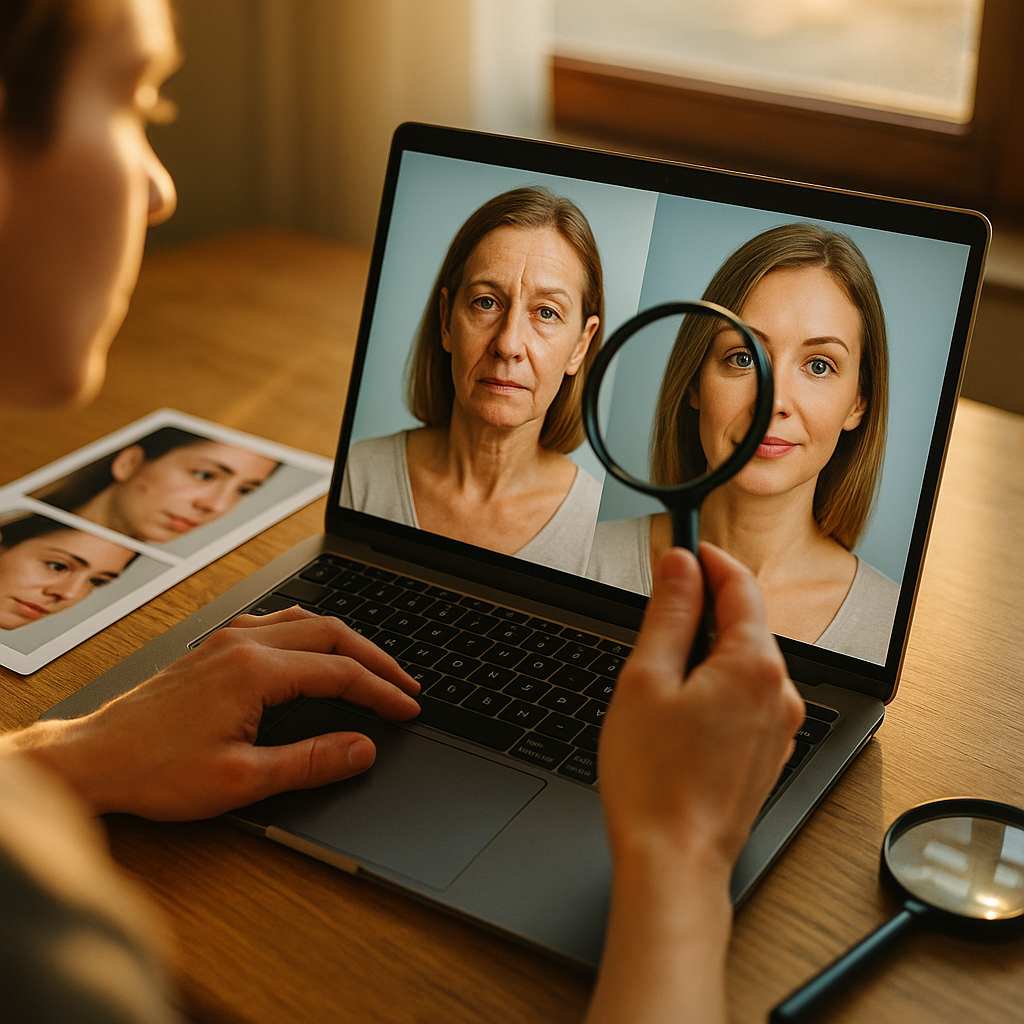
The FTC has fined brands over doctored before-and-after content for decades. Now add AI-generated or AI-enhanced UGC into the mix, and FTC substantiation standards become a minefield most marketing teams haven’t mapped. Is that dramatic transformation in your creator’s video real, filtered, or fabricated? If you can’t answer that instantly, you have a liability problem.
Why Before-and-After Content Is Getting Riskier, Not Safer
Before-and-after demos used to be simple. A creator applies a product, films the result, posts it. The FTC’s job was to check whether the results were typical and whether the claim was substantiated with real evidence. Straightforward enough.
AI has broken that simplicity. Generative editing tools, AI upscalers, and synthetic “enhancement” filters now let creators smooth skin, brighten teeth, or exaggerate muscle definition in ways that look organic but aren’t. A skincare UGC clip showing dramatic pore reduction might be genuine product performance, or it might be a beauty filter stacked on top of a lighting change stacked on top of an editing app’s “glow” preset. The viewer can’t tell the difference. Increasingly, neither can the brand’s own marketing team reviewing submissions.
This matters because the FTC doesn’t grade on intent. It grades on evidence. If your brand publishes or amplifies a before-and-after claim, you’re on the hook for substantiating it, regardless of whether an AI tool, a creator’s editing app, or genuine product performance produced the result.
Under the FTC Act, “reasonable basis” substantiation applies to the claim as perceived by the viewer, not the intent behind the content. An AI-smoothed complexion reads as a product result whether or not that was the creator’s intention.
What “Reasonable Basis” Actually Means for AI-Touched UGC
The FTC’s substantiation standard requires that advertisers have a “reasonable basis” for objective claims before they’re made, not after a complaint rolls in. For before-and-after content, that traditionally means:
- Competent and reliable evidence supporting the depicted result
- Disclosure when results aren’t typical
- No manipulation of imagery that misrepresents actual product performance
Layer AI into the production pipeline and the bar doesn’t move, but the burden of proof gets heavier. You now need to document not just that the result is achievable, but that the visual evidence itself hasn’t been artificially inflated by generative tools. That’s a new category of due diligence most brand compliance checklists don’t yet include.
Consider a fitness supplement brand running a UGC campaign where creators post 30-day transformation clips. If a creator uses an AI body-contouring filter on the “after” shot, even lightly, the claim is no longer just exaggerated. It’s fabricated. And under FTC guidance on endorsement and testimonial standards, the brand that sponsored, reposted, or paid for that content shares liability with the creator.
The Three Failure Points Brands Keep Hitting
1. No AI-disclosure protocol at the creator brief stage. Most influencer contracts still ask creators to disclose paid partnerships. Almost none ask them to disclose which editing or AI tools touched the footage. That gap is where risk lives.
2. Legal review happens after publishing, not before. Marketing teams often greenlight UGC based on engagement potential, not evidentiary strength. By the time legal flags a questionable transformation clip, it’s already been boosted as a paid ad and racked up impressions.
3. No retained substantiation file. If the FTC or a state AG comes knocking, “the creator said it worked” isn’t a defense. Brands need dated, retrievable proof: clinical data, user testing results, or documented typical-use studies that match what’s shown on screen.
These failure points compound quickly in high-volume UGC programs. A brand running fifty creator posts a month doesn’t have bandwidth to manually vet each transformation clip frame-by-frame for filter artifacts. That’s exactly why this needs to be a workflow, not a one-off legal review.
A Practical Substantiation Workflow
Here’s what a defensible pipeline looks like for brands running before-and-after UGC at scale:
- Pre-production disclosure requirement. Contracts should require creators to disclose any editing apps, AI filters, or enhancement tools used in the footage, before it’s submitted for approval.
- Raw footage retention clause. Require unedited source files as a deliverable, not just the polished final cut. This gives your compliance team a baseline to compare against.
- Claim-to-evidence mapping. Every visual claim in the content (visible pore reduction, weight loss, skin brightening) needs a corresponding piece of substantiation on file before the content goes live.
- Script and caption review. Cross-check spoken and written claims against what’s visually depicted. Mismatches here are a common enforcement trigger.
- Quarterly compliance audits. Don’t just review new content. Re-audit older UGC that’s still circulating, especially anything repurposed into paid media.
This is the same discipline brands are having to apply across other AI-touched creator content. The FTC’s AI script review standard already requires similar documentation for AI-assisted copywriting; visual claims deserve no less scrutiny.
Repurposing Makes the Risk Worse
Here’s the part brands underestimate: a before-and-after clip that felt low-risk as organic UGC becomes a much bigger liability once it’s repurposed into paid social, a landing page testimonial, or a TikTok Shop product video. Different placement, different audience, same underlying claim, but now backed by ad spend.
The FTC has been explicit that disclosure and substantiation obligations travel with the content across channels. If you strip context or disclosures when repurposing, you inherit fresh liability. This is covered in depth in our breakdown of FTC disclosure rules for repurposed UGC, and it applies directly to transformation content that gets pulled from organic feeds into paid campaigns.
TikTok Shop adds another layer. Product demo videos with dramatic before-and-afters are common in beauty and wellness categories on the platform, and they frequently function as de facto testimonials. If those testimonials imply typical results without disclosure, you’re exposed under the FTC’s typical-results guidance, which we’ve detailed separately in our piece on TikTok Shop testimonials and typical-results rules.
A 2024 FTC enforcement sweep against deceptive endorsements resulted in settlements exceeding $25 million across multiple brands, several involving manipulated visual evidence in product demonstrations.
Building an AI Disclosure Clause Into Creator Contracts
Most standard influencer agreements were drafted before generative AI tools were mainstream. They cover FTC disclosure hashtags, exclusivity, and usage rights, but rarely address AI-generated or AI-enhanced visual content specifically. That needs to change now.
A workable clause should require creators to:
- Identify any AI editing, filtering, or generation tools used in submitted content
- Warrant that visual “after” results reflect authentic, unedited product performance unless otherwise disclosed
- Grant the brand audit rights to request raw footage on demand
- Acknowledge liability-sharing language consistent with FTC endorsement guidance
This isn’t about distrust of creators. Most don’t realize a built-in phone camera “beauty mode” or an editing app’s default filter can legally qualify as deceptive enhancement. Education and contract language solve most of this before it becomes a legal problem. For teams building out this kind of language, our legal review checklist for AI-scripted creator content is a useful starting template, even though it’s framed around scripts rather than visuals; the underlying documentation logic transfers directly.
What Regulators and Platforms Are Signaling
The FTC isn’t alone here. State attorneys general have shown increasing willingness to pursue deceptive advertising claims independently, particularly in beauty and health categories. Meanwhile, platforms are adding their own guardrails: TikTok and Meta have both expanded synthetic media labeling requirements, which brands should treat as a floor, not a ceiling, for compliance. Consult Meta’s branded content policies and TikTok’s advertising guidelines directly, since these evolve faster than most internal compliance docs get updated.
Industry data reinforces why this is urgent. eMarketer estimates influencer marketing spend continues climbing into double-digit billions annually in the US alone, with UGC-style content now dominating brand social feeds. More volume means more surface area for enforcement risk, especially as AI tools make convincing manipulation accessible to any creator with a smartphone app, not just professional editors.
Where This Intersects With AI Search and Shopping Agents
There’s a newer wrinkle worth flagging. As AI shopping agents and AI-powered search tools start summarizing product claims from UGC and reviews, unsubstantiated before-and-after claims can get amplified into AI-generated summaries without human review catching the exaggeration. That’s a compounding risk layer brands haven’t fully priced in yet.
We’ve covered the mechanics of this in our guide to auditing creator content for substantiation before AI search picks it up, and the compliance framework for AI shopping agent risk management. If your before-and-after UGC isn’t substantiated at the source, it doesn’t just risk an FTC letter. It risks becoming the “evidence” an AI agent cites when recommending your product to a shopper, with your brand name attached to a claim you never actually verified.
Next Step
Don’t wait for an FTC inquiry to discover your before-and-after UGC library has no substantiation file behind it. Run a claim-by-claim audit this quarter, require raw footage retention going forward, and build AI-disclosure language into every new creator contract before the next campaign brief goes out.
FAQs
Does the FTC treat AI-enhanced UGC differently from professionally edited ads?
No. The FTC evaluates the claim as consumers perceive it, not the production method. Whether a misleading before-and-after result came from a professional retoucher or a free AI filter app, the substantiation obligation is identical.
Who is liable if a creator uses an AI filter without telling the brand?
Both parties can face liability. The FTC’s endorsement guidance holds brands responsible for claims made in sponsored content, even if the brand didn’t create the misleading element directly. This is why audit rights and disclosure warranties in creator contracts matter.
What counts as acceptable substantiation for a before-and-after claim?
Competent and reliable evidence, typically clinical testing, controlled user studies, or documented typical-use data, that reasonably supports the specific result shown. Anecdotal creator testimony alone generally isn’t sufficient for objective performance claims.
Do organic, unpaid UGC posts carry the same risk as paid ads?
If the brand solicited, incentivized, or later repurposed the content into paid media, yes. Purely organic posts with no brand involvement carry lower direct liability for the brand, but once you engage with, boost, or feature the content, obligations attach.
How often should brands audit existing UGC libraries for this risk?
Quarterly at minimum, especially for evergreen before-and-after content still circulating in ads or on product pages. Content that seemed compliant a year ago may not hold up against evolving AI-detection scrutiny or updated platform policies.
FAQs
Does the FTC treat AI-enhanced UGC differently from professionally edited ads?
No. The FTC evaluates the claim as consumers perceive it, not the production method. Whether a misleading before-and-after result came from a professional retoucher or a free AI filter app, the substantiation obligation is identical.
Who is liable if a creator uses an AI filter without telling the brand?
Both parties can face liability. The FTC’s endorsement guidance holds brands responsible for claims made in sponsored content, even if the brand didn’t create the misleading element directly. This is why audit rights and disclosure warranties in creator contracts matter.
What counts as acceptable substantiation for a before-and-after claim?
Competent and reliable evidence, typically clinical testing, controlled user studies, or documented typical-use data, that reasonably supports the specific result shown. Anecdotal creator testimony alone generally isn’t sufficient for objective performance claims.
Do organic, unpaid UGC posts carry the same risk as paid ads?
If the brand solicited, incentivized, or later repurposed the content into paid media, yes. Purely organic posts with no brand involvement carry lower direct liability for the brand, but once you engage with, boost, or feature the content, obligations attach.
How often should brands audit existing UGC libraries for this risk?
Quarterly at minimum, especially for evergreen before-and-after content still circulating in ads or on product pages. Content that seemed compliant a year ago may not hold up against evolving AI-detection scrutiny or updated platform policies.
Top Influencer Marketing Agencies
The leading agencies shaping influencer marketing in 2026
Agencies ranked by campaign performance, client diversity, platform expertise, proven ROI, industry recognition, and client satisfaction. Assessed through verified case studies, reviews, and industry consultations.
Moburst

-
2

The Shelf
Boutique Beauty & Lifestyle Influencer AgencyA data-driven boutique agency specializing exclusively in beauty, wellness, and lifestyle influencer campaigns on Instagram and TikTok. Best for brands already focused on the beauty/personal care space that need curated, aesthetic-driven content.Clients: Pepsi, The Honest Company, Hims, Elf Cosmetics, Pure LeafVisit The Shelf → -
3

Audiencly
Niche Gaming & Esports Influencer AgencyA specialized agency focused exclusively on gaming and esports creators on YouTube, Twitch, and TikTok. Ideal if your campaign is 100% gaming-focused — from game launches to hardware and esports events.Clients: Epic Games, NordVPN, Ubisoft, Wargaming, Tencent GamesVisit Audiencly → -
4

Viral Nation
Global Influencer Marketing & Talent AgencyA dual talent management and marketing agency with proprietary brand safety tools and a global creator network spanning nano-influencers to celebrities across all major platforms.Clients: Meta, Activision Blizzard, Energizer, Aston Martin, WalmartVisit Viral Nation → -
5

The Influencer Marketing Factory
TikTok, Instagram & YouTube CampaignsA full-service agency with strong TikTok expertise, offering end-to-end campaign management from influencer discovery through performance reporting with a focus on platform-native content.Clients: Google, Snapchat, Universal Music, Bumble, YelpVisit TIMF → -
6

NeoReach
Enterprise Analytics & Influencer CampaignsAn enterprise-focused agency combining managed campaigns with a powerful self-service data platform for influencer search, audience analytics, and attribution modeling.Clients: Amazon, Airbnb, Netflix, Honda, The New York TimesVisit NeoReach → -
7

Ubiquitous
Creator-First Marketing PlatformA tech-driven platform combining self-service tools with managed campaign options, emphasizing speed and scalability for brands managing multiple influencer relationships.Clients: Lyft, Disney, Target, American Eagle, NetflixVisit Ubiquitous → -
8

Obviously
Scalable Enterprise Influencer CampaignsA tech-enabled agency built for high-volume campaigns, coordinating hundreds of creators simultaneously with end-to-end logistics, content rights management, and product seeding.Clients: Google, Ulta Beauty, Converse, AmazonVisit Obviously →