


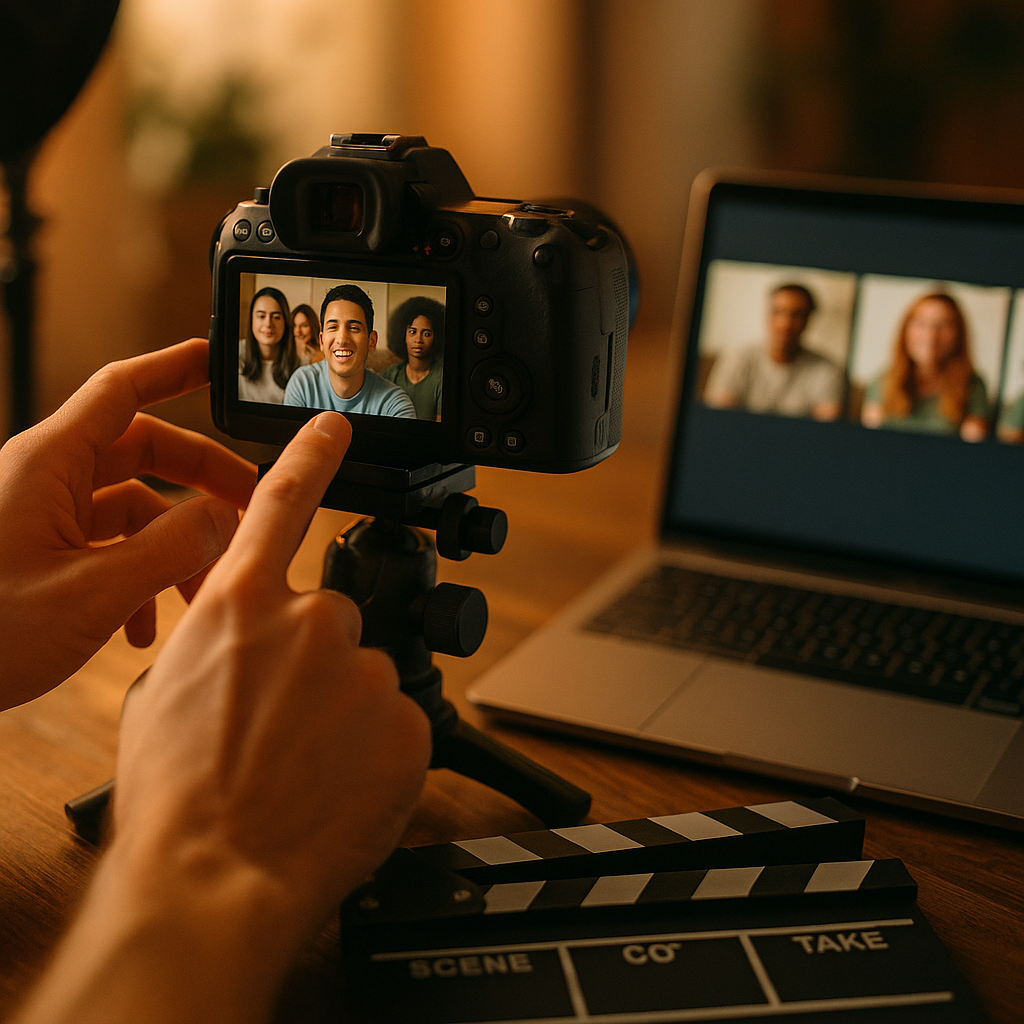
Ninety seconds. That is roughly how long a creator has before a TikTok viewer swipes, a YouTube Shorts watcher taps away, or an Instagram scroller loses interest. Yet most brands still brief long form content first and chop it down as an afterthought. A bite size video series flips that logic: short, repeatable formats built for volume from the first script draft, designed to keep creators shipping across five platforms without burning out or blowing budget.
Why “One Big Shoot” Doesn’t Scale Anymore
The old model was simple, if inefficient. Book a creator, shoot a hero video, then pray the edit team can carve out a few extra cuts for other channels. That worked when brands posted twice a week. It collapses when TikTok’s algorithm rewards accounts posting daily, YouTube Shorts rewards consistency over virality, and Instagram Reels increasingly favors accounts with steady cadence over one-off hits.
Series formats solve the volume problem differently. Instead of one shoot generating one asset, a single session generates a template that can be repeated weekly, biweekly, or even daily with minimal new setup. Think of it as content infrastructure rather than content production.
Brands running a defined bite size series format post 3 to 5 times more frequently per creator relationship than those relying on one-off briefs, without a proportional increase in production spend.
What Counts as a “Series Format,” Exactly?
A series format is a repeatable structural template: fixed length, fixed beat sheet, fixed visual language, but swappable content each episode. Think “60 second spec comparison” or “30 second myth versus fact.” The creator or editor doesn’t reinvent the wheel every time. They plug new information into a proven shell.
This is where a lot of internal teams get it wrong. They treat every video as a fresh creative brief when they should be treating most videos as episode 47 of an ongoing series. The distinction matters for budgeting, for creator relationships, and for how quickly a team can react to trends.
The Formats That Actually Sustain Multi Platform Output
Not every short format survives repetition. Some burn out audiences fast (countdown gimmicks, forced trends) while others age well because they are built on genuine utility or curiosity. Here are the formats brand teams are leaning on heavily this year.
Rapid Comparison Cuts
Split screen or side by side comparisons work because the format itself is the hook. Viewers don’t need context; they see two products, two prices, two results, and lean in. These edits reuse the same visual template across dozens of SKUs, which is why spec comparison reels have become a staple for retail and electronics brands trying to convert on-the-fence shoppers without a full product demo.
Micro Documentary Snippets
Long form product documentaries build trust, but few viewers finish a 10 minute video cold. The fix isn’t abandoning depth, it’s slicing it. Teams are pulling three to five standalone moments from a single documentary shoot and releasing them as their own bite size beats across the week. If you’re already investing in long form product documentaries, this repurposing step should be baked into the original shoot plan, not bolted on after the fact.
Card Style Micro Vlogs
Not every platform rewards motion. Lemon8’s card based format proved that static, text heavy slides can outperform video for certain audiences, especially those researching before a purchase. The card format brands can’t fake works precisely because it feels editorial rather than promotional, which is why it holds up across repeated posting without feeling like an ad.
Q&A Beats
Answering the same five questions customers always ask, one per short video, gives creators an evergreen content bank they can slot into any platform’s algorithm. This is the backbone of product Q&A videos, and it doubles as an SEO play since these clips often get pulled into voice search and AI overview results.
Speed Edit Templates
Tools like CapCut have normalized the idea that an edit template is reusable IP. Once a transition pattern, caption style, and pacing rhythm is locked, swapping footage in and out takes minutes, not hours. That’s the entire premise behind CapCut speed edit templates, and it’s arguably the single biggest lever for cutting per-video production cost.
Reaction Clips
Genuine, unscripted reactions are hard to fake and easy to overproduce into blandness. The best reaction content briefs set up the moment (product reveal, taste test, surprise gift) and then get out of the way, letting the creator’s natural response carry the series across platforms without a heavy script.
Building the Operational Backbone
Formats alone don’t sustain output. Someone still has to brief creators, track deliverables, clear usage rights, and pay invoices on time, every week, across dozens of relationships. This is the unglamorous part of scaling a bite size series, and it’s where most in-house teams quietly fall apart.
A workflow that ties briefs to payment milestones removes a huge amount of friction. If you’re managing a roster of creators producing recurring short-form content on TikTok, the process outlined in TikTok creator ops is worth studying, since it treats the series cadence itself as the unit of operations rather than each individual video.
Rights management deserves equal attention. A series that runs for months generates a library of usage rights that need to be tracked: which cuts can run as paid ads, which expire after 90 days, which creators granted whitelisting. Skipping this step is how brands end up in expensive reshoot cycles. The UGC rights registry approach exists specifically to prevent that scramble.
One Shoot, Five Platforms: The Master Edit Approach
Here’s the uncomfortable math: if every platform requires a separate shoot, a weekly bite size series across TikTok, Reels, Shorts, LinkedIn, and CTV becomes financially unsustainable for all but the biggest budgets. The alternative is shooting once with a multi platform master edit in mind from the start, capturing extra angles, extra silence for captions, and extra headroom for vertical and horizontal crops in the same session.
This is the exact logic behind the multi platform master edit workflow, and it’s arguably the single highest-leverage operational change a brand can make this year. One session, five to seven deliverables, each tuned for its destination platform’s aspect ratio, caption style, and average watch time.
Teams that shoot for master edits report cutting per-asset production costs by roughly 40 percent compared to platform-by-platform shoots, according to workflow benchmarks circulating among mid-market creative agencies.
Don’t Forget the Sound-Off Environments
LinkedIn is the platform brands most often forget when planning a bite size series, largely because it’s assumed to be text-first. That assumption is outdated. Buyers scroll LinkedIn with sound off, in professional settings, which means captions and visual clarity carry the entire message. The sound off brief buyers trust is a useful reference if B2B product marketing is part of the mix, since the pacing and tone differ meaningfully from consumer TikTok content.
CTV and Streaming Cutdowns
Bite size doesn’t mean small screen only. Streaming platforms are increasingly accepting short creator-style spots, and a CTV reformat playbook can turn an existing vertical series into living room ready inventory without a new shoot. It’s a smart way to extend the shelf life of content that’s already proven itself on social.
Measuring What Actually Matters
Volume for its own sake is a vanity metric. The real question is whether a sustained bite size series moves the needle on awareness, consideration, or conversion, and whether it does so more efficiently than fewer, bigger productions. Track completion rate per episode, not just per video, since series formats live or die on whether audiences come back for the next installment. Watch for saves and shares as a proxy for format fatigue; when those numbers dip for two or three episodes in a row, it’s a sign to rotate the format before the whole series loses steam.
Platforms themselves are pushing brands toward this cadence-first mindset. TikTok’s advertising resources increasingly emphasize consistency over one-off virality, and Meta’s business tools now surface frequency metrics that reward accounts posting on a predictable schedule. Third-party data backs this up too: recent social benchmarking from Sprout Social shows engagement rates climbing steadily for accounts that post short-form content five or more times weekly compared to those posting once or twice.
Don’t ignore compliance while you’re scaling. More episodes mean more disclosure checkpoints, more contracts, more chances for a creator to forget an FTC-required tag. The FTC’s endorsement guidance applies to every single episode in a series, not just the first one, and agencies operating in the UK should keep ICO guidance on hand for data and privacy considerations tied to creator content.
Faceless and AI-Assisted Options for True Volume Plays
Some brands simply don’t have the creator bandwidth to sustain five weekly episodes with a live human host. That’s where AI avatar formats are quietly picking up slack. Faceless hosts remove the burnout risk entirely, letting a small team script and produce a daily series without a creator ever needing to be on camera. It’s not a replacement for authentic creator partnerships, but as a volume backstop, faceless formats ending creator burnout are worth testing for at least one channel in the mix.
Localization is the other quiet cost center. If your bite size series is meant to run across regions, dubbing every episode manually is a budget killer. AI voice clone dubbing is increasingly the default for brands trying to stretch one series across four or five language markets without quadrupling production spend.
Next Step
Pick one series format from this list, commit to eight episodes minimum, and build the master edit workflow before you shoot episode one. Momentum, not perfection, is what sustains multi platform creator output.
FAQs
What is a bite size video series in influencer marketing?
It’s a repeatable short-form video template, typically under 90 seconds, that brands and creators reuse episode after episode with swappable content, allowing consistent output across multiple platforms without a full new production each time.
How many episodes should a brand commit to before judging a format’s performance?
Most practitioners recommend at least six to eight episodes. Fewer than that and normal algorithmic variance can make a strong format look weak or a weak format look promising.
Can one shoot really produce content for TikTok, Instagram, YouTube, and LinkedIn simultaneously?
Yes, if the shoot is planned as a master edit from the start, capturing extra footage, caption space, and multiple aspect ratios in one session rather than reshooting per platform.
Do bite size series formats work for B2B brands, or only consumer products?
They work for both. B2B brands typically lean on sound-off, caption-heavy formats suited to LinkedIn, while consumer brands favor comparison, reaction, and unboxing style episodes tuned for TikTok and Reels.
What’s the biggest operational risk when scaling a creator video series?
Usage rights tracking. As episode count grows, so does the complexity of knowing which clips can run as paid media, which have expired usage windows, and which creators require renewed consent.
FAQs
Top Influencer Marketing Agencies
The leading agencies shaping influencer marketing in 2026
Agencies ranked by campaign performance, client diversity, platform expertise, proven ROI, industry recognition, and client satisfaction. Assessed through verified case studies, reviews, and industry consultations.
Moburst

-
2

The Shelf
Boutique Beauty & Lifestyle Influencer AgencyA data-driven boutique agency specializing exclusively in beauty, wellness, and lifestyle influencer campaigns on Instagram and TikTok. Best for brands already focused on the beauty/personal care space that need curated, aesthetic-driven content.Clients: Pepsi, The Honest Company, Hims, Elf Cosmetics, Pure LeafVisit The Shelf → -
3

Audiencly
Niche Gaming & Esports Influencer AgencyA specialized agency focused exclusively on gaming and esports creators on YouTube, Twitch, and TikTok. Ideal if your campaign is 100% gaming-focused — from game launches to hardware and esports events.Clients: Epic Games, NordVPN, Ubisoft, Wargaming, Tencent GamesVisit Audiencly → -
4

Viral Nation
Global Influencer Marketing & Talent AgencyA dual talent management and marketing agency with proprietary brand safety tools and a global creator network spanning nano-influencers to celebrities across all major platforms.Clients: Meta, Activision Blizzard, Energizer, Aston Martin, WalmartVisit Viral Nation → -
5

The Influencer Marketing Factory
TikTok, Instagram & YouTube CampaignsA full-service agency with strong TikTok expertise, offering end-to-end campaign management from influencer discovery through performance reporting with a focus on platform-native content.Clients: Google, Snapchat, Universal Music, Bumble, YelpVisit TIMF → -
6

NeoReach
Enterprise Analytics & Influencer CampaignsAn enterprise-focused agency combining managed campaigns with a powerful self-service data platform for influencer search, audience analytics, and attribution modeling.Clients: Amazon, Airbnb, Netflix, Honda, The New York TimesVisit NeoReach → -
7

Ubiquitous
Creator-First Marketing PlatformA tech-driven platform combining self-service tools with managed campaign options, emphasizing speed and scalability for brands managing multiple influencer relationships.Clients: Lyft, Disney, Target, American Eagle, NetflixVisit Ubiquitous → -
8

Obviously
Scalable Enterprise Influencer CampaignsA tech-enabled agency built for high-volume campaigns, coordinating hundreds of creators simultaneously with end-to-end logistics, content rights management, and product seeding.Clients: Google, Ulta Beauty, Converse, AmazonVisit Obviously →