


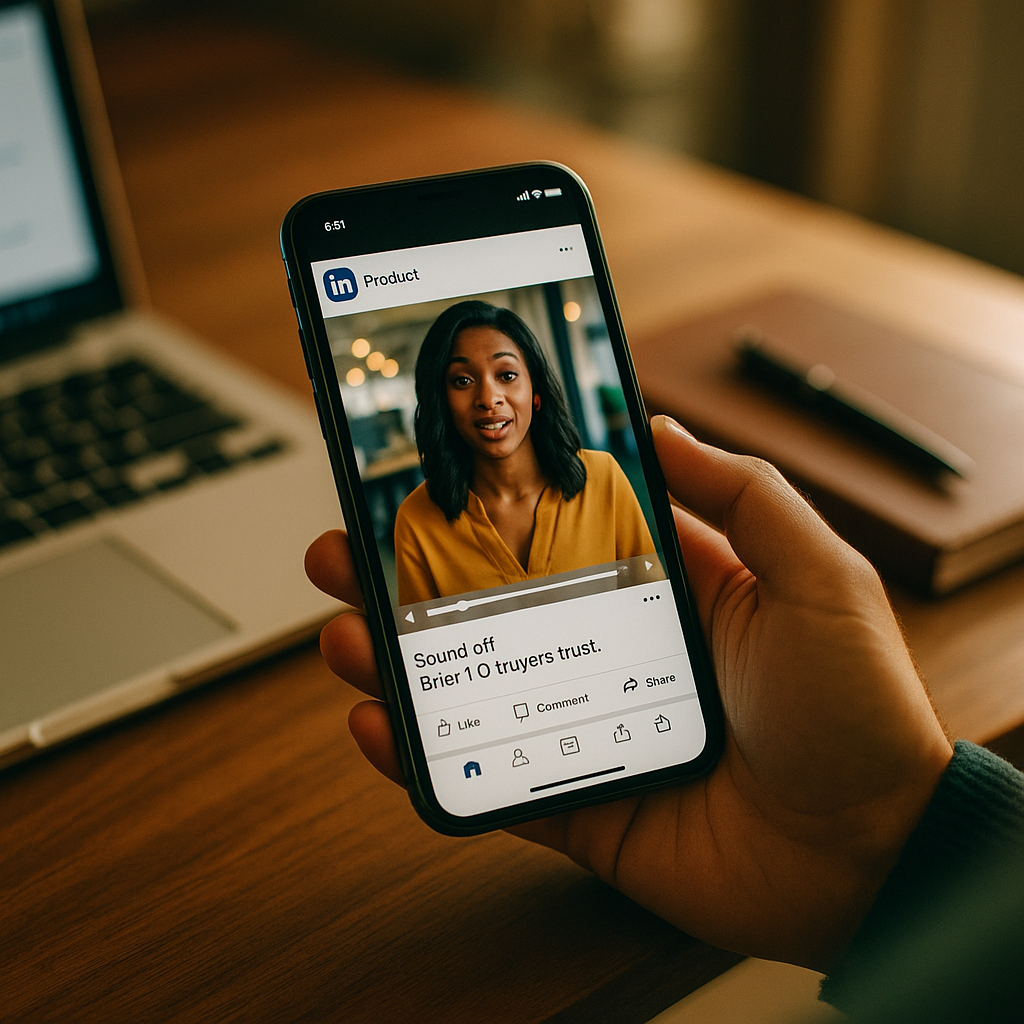
LinkedIn’s Product Showcase feed is quietly becoming one of the highest-intent video placements in B2B marketing, and most brands are feeding it scraps. Repurposed TikTok clips with trending audio and jump cuts don’t convert on a platform where the average viewer is evaluating a purchase, not killing time on a commute. Designing Reels for LinkedIn’s new Product Showcase feed requires a different brief entirely, one built for procurement teams, not Gen Z shoppers.
What Is the Product Showcase Feed, Actually?
LinkedIn rolled out Product Showcase as a dedicated, swipeable video surface that sits inside company pages and select feed placements, letting brands run short-form product demos, feature walkthroughs, and customer proof points in a format that mimics Reels or TikTok’s vertical scroll. The difference is context. Someone landing on this feed has usually clicked through from a company page, a sponsored post, or a search for a specific solution category. They’re not there for entertainment. They’re there to evaluate.
That context changes everything about how you script, shoot, and edit. A format that crushes on Instagram, heavy on personality, light on specs, will feel thin here. Buyers want proof, fast, and they want it without turning on their sound in an open-plan office.
LinkedIn’s own data has repeatedly shown that video content on the platform generates significantly higher engagement than static posts, but engagement on a B2B platform means something different: saves, shares to colleagues, and click-throughs to demos, not just watch time.
Sound Off, Value On: The New Design Rule
Roughly the majority of LinkedIn video views happen with the sound muted, a pattern consistent with what platforms like Meta’s business tools have documented for years across professional and workplace browsing contexts. If your Reel depends on a voiceover to explain the product, you’ve already lost half your audience before the CTA even loads.
Design for silence first. That means:
- Burned-in captions that carry the full narrative, not just supplementary text
- On-screen labels for specs, pricing tiers, or integration logos
- Visual demonstration of the product action itself, not a talking head describing it
- A text-based hook in the first two seconds that states the value prop plainly
This isn’t radically different from good spec comparison discipline used on other platforms, but the stakes are higher here because the audience is actively comparing you against a competitor’s demo in the next swipe.
Format is different too: LinkedIn’s Product Showcase favors a tighter aspect ratio tolerance and shorter runtimes than YouTube Shorts, so a single master edit rarely survives an unmodified export.
Pacing for Skeptics, Not Scrollers
Consumer Reels reward fast cuts and pattern interrupts every second or two, because the goal is to stop a thumb mid-scroll. B2B buyers scrolling Product Showcase are already stopped. They clicked. The job now is to hold attention long enough to deliver proof, which means pacing can breathe a little more than a TikTok edit would allow.
A workable structure for a 30 to 45 second Product Showcase Reel looks like this:
- Zero to three seconds: state the problem or the specific feature in on-screen text
- Three to fifteen seconds: show the product solving it, in real use, not a stylized montage
- Fifteen to thirty seconds: layer in a credibility signal (customer logo, integration count, review score)
- Final five seconds: a clear, single CTA with a link sticker or comment prompt
Notice there’s no room for brand mascots or humor bits unless your ICP genuinely responds to that tone. Enterprise software buyers rarely do. Consumer hardware and dev tools sometimes do. Know your audience before you write a single line.
Reformatting Existing Assets Without Reshooting Everything
Nobody has budget for a bespoke shoot for every feed. The smarter move is building a multi-platform master edit that gets carved into Product Showcase specs during post, rather than treating it as a separate production line.
Pull footage from existing demo videos, webinar recordings, or even product Q&A sessions and re-cut the strongest 20 second segments with new captions and a LinkedIn-native intro card. This is also where speed edit templates earn their keep, letting a lean team push out variations by category or persona without starting from a blank timeline every time.
One caveat: don’t just crop a horizontal demo video into vertical and call it done. Text that was legible at 1920×1080 often disappears at feed thumbnail size, and product UI screenshots need re-framing so the key action stays centered in the safe zone.
Employee and Customer Voices Outperform Polished Brand Reels
This is the part that surprises brand teams. Content featuring an actual employee explaining a feature, or a customer walking through their workflow, consistently outperforms studio-produced brand Reels on Product Showcase. It tracks with what Sprout Social’s research on B2B social trust has shown for years: buyers trust people over logos.
If you already run an employee advocacy program, pull raw clips from that bench and reformat them specifically for Showcase. Same goes for employee generated content already sitting in your library. It’s cheaper than commissioning new work, and it reads as more credible to a buyer who has sat through one too many polished demo videos that oversell the product.
A demo delivered by a real employee, unscripted enough to feel honest but tight enough to respect the viewer’s time, will beat a $15,000 agency shoot on this specific feed almost every time.
Metrics That Actually Matter Here
Vanity view counts mean less on Product Showcase than they do anywhere else in your content mix. Track these instead:
- Completion rate past the ten second mark, which signals whether your hook is doing its job for a skeptical audience
- Click-through to demo request or pricing page, the closest thing to a bottom-funnel signal this format offers
- Save and share rate, since B2B buyers often forward content internally before making a decision
- Comment quality, not volume. A single detailed question from a procurement lead is worth more than fifty emoji reactions
Benchmark data specific to this newer placement is still thin, but eMarketer and Statista both track broader LinkedIn video engagement trends worth reviewing quarterly as your own dataset matures. Set your own baseline in the first month rather than chasing industry averages that don’t reflect your niche.
Rights, Compliance, and the Repost Problem
If your Product Showcase strategy leans on customer or employee-generated footage, sort out usage rights before you publish, not after legal flags it. A UGC rights registry saves you from scrambling to reshoot or pull content when a customer changes jobs or an employee leaves the company mid-campaign. This matters more on LinkedIn than most platforms, since the professional context means real names and real employers are attached to every clip.
Next Step
Pick your three best-performing demo or explainer videos from the last quarter, re-cut them for sound-off viewing with a ten second hook and burned-in captions, and push them to Product Showcase as a controlled test before committing to a full production calendar.
Frequently Asked Questions
What length works best for LinkedIn Product Showcase Reels?
Most brands see the strongest completion rates between 20 and 45 seconds. Shorter clips work for single-feature demos, while customer story formats can stretch closer to 45 seconds if the pacing stays tight.
Do I need native LinkedIn video or can I repost from TikTok and Instagram?
You can repurpose, but reformat first. Adjust captions for silent viewing, reframe UI elements for the vertical safe zone, and swap casual hooks for value-first opening text before publishing.
How is Product Showcase different from regular LinkedIn video posts?
Product Showcase is a dedicated, swipeable feed tied to company pages and product-intent traffic, meaning viewers arrive with higher purchase consideration than someone scrolling a general feed post.
Should employee-generated content replace produced brand videos entirely?
Not entirely, but it should make up a meaningful share of the mix. Blend polished brand assets for top-funnel awareness with raw employee and customer footage for trust-building mid-funnel content.
What’s the biggest mistake brands make with this feed?
Treating it like another consumer social feed. Fast cuts, trending audio, and influencer-style humor tend to underperform against clear, sound-off, proof-driven demos built for a buyer evaluating a purchase decision.
Top Influencer Marketing Agencies
The leading agencies shaping influencer marketing in 2026
Agencies ranked by campaign performance, client diversity, platform expertise, proven ROI, industry recognition, and client satisfaction. Assessed through verified case studies, reviews, and industry consultations.
Moburst

-
2

The Shelf
Boutique Beauty & Lifestyle Influencer AgencyA data-driven boutique agency specializing exclusively in beauty, wellness, and lifestyle influencer campaigns on Instagram and TikTok. Best for brands already focused on the beauty/personal care space that need curated, aesthetic-driven content.Clients: Pepsi, The Honest Company, Hims, Elf Cosmetics, Pure LeafVisit The Shelf → -
3

Audiencly
Niche Gaming & Esports Influencer AgencyA specialized agency focused exclusively on gaming and esports creators on YouTube, Twitch, and TikTok. Ideal if your campaign is 100% gaming-focused — from game launches to hardware and esports events.Clients: Epic Games, NordVPN, Ubisoft, Wargaming, Tencent GamesVisit Audiencly → -
4

Viral Nation
Global Influencer Marketing & Talent AgencyA dual talent management and marketing agency with proprietary brand safety tools and a global creator network spanning nano-influencers to celebrities across all major platforms.Clients: Meta, Activision Blizzard, Energizer, Aston Martin, WalmartVisit Viral Nation → -
5

The Influencer Marketing Factory
TikTok, Instagram & YouTube CampaignsA full-service agency with strong TikTok expertise, offering end-to-end campaign management from influencer discovery through performance reporting with a focus on platform-native content.Clients: Google, Snapchat, Universal Music, Bumble, YelpVisit TIMF → -
6

NeoReach
Enterprise Analytics & Influencer CampaignsAn enterprise-focused agency combining managed campaigns with a powerful self-service data platform for influencer search, audience analytics, and attribution modeling.Clients: Amazon, Airbnb, Netflix, Honda, The New York TimesVisit NeoReach → -
7

Ubiquitous
Creator-First Marketing PlatformA tech-driven platform combining self-service tools with managed campaign options, emphasizing speed and scalability for brands managing multiple influencer relationships.Clients: Lyft, Disney, Target, American Eagle, NetflixVisit Ubiquitous → -
8

Obviously
Scalable Enterprise Influencer CampaignsA tech-enabled agency built for high-volume campaigns, coordinating hundreds of creators simultaneously with end-to-end logistics, content rights management, and product seeding.Clients: Google, Ulta Beauty, Converse, AmazonVisit Obviously →