


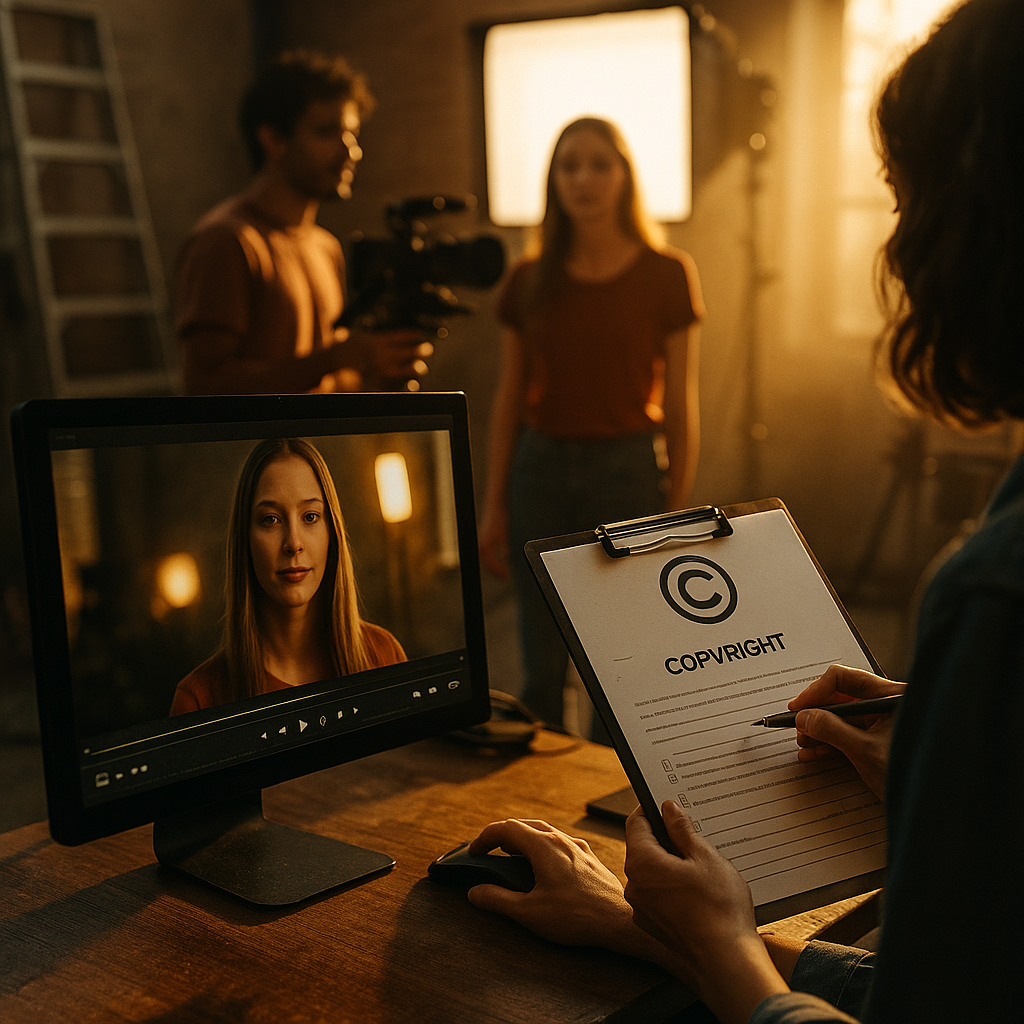
Roughly 62% of brands running influencer programs have paid to license creator content without a documented usage rights agreement, according to industry surveys of marketing operations teams. That gap is not a legal footnote. It is a repeatable creative workflow problem hiding inside your UGC rights management process, and it is quietly costing brands reshoot budgets, takedown notices, and paid media pauses at the worst possible moment.
Most marketing teams treat rights management as a one-off task: get a signature, file a PDF, move on. But when you are running dozens of creator campaigns a quarter across TikTok, Instagram, and CTV, ad hoc rights tracking breaks fast. The teams that scale UGC without legal headaches are the ones that turned rights management into an actual workflow, not a folder of contracts nobody reads until something goes wrong.
Why Rights Management Keeps Falling Through the Cracks
Here is the uncomfortable truth: most brands do not have a rights problem, they have a process problem. The rights language usually exists somewhere in a contract template. What is missing is the operational connective tissue, the system that ties a specific piece of content to a specific usage grant, a specific expiration date, and a specific list of channels where it is legally cleared to run.
Without that connective tissue, three things happen on repeat. Paid media teams boost organic UGC without checking if paid usage rights were ever negotiated. Reshoots happen because nobody can confirm whether last quarter’s top-performing video is still licensed. And legal gets looped in reactively, usually after a creator’s manager sends a cease-and-desist over content running six months past its usage window.
This is not a hypothetical. Brands running creator ops workflows at scale report that rights confusion is one of the top three reasons campaigns stall between briefing and payment. When usage terms live in someone’s inbox instead of a searchable system, every new campaign starts from zero.
A usage rights grant that isn’t tagged to the actual asset file is functionally the same as having no rights agreement at all. Nobody can act on information they can’t find.
What a Repeatable Rights Workflow Actually Looks Like
Forget the idea that rights management means more paperwork. Done right, it means less friction, because the friction gets front-loaded into a system instead of surfacing mid-campaign as a fire drill.
A workflow that actually holds up under volume has four components working together:
- Standardized contract language tiered by usage type. Organic-only, paid social boost, whitelisting, broadcast/CTV, and perpetual buyout each need distinct clauses, not a single catch-all “usage rights” paragraph that leaves room for dispute.
- Asset-level metadata tagging. Every file gets tagged at ingestion with creator name, contract ID, usage tier, geographic restrictions, and expiration date, so the rights information travels with the file wherever it gets pulled into a campaign.
- A centralized rights registry. This is the single source of truth, whether it’s a dedicated digital asset management (DAM) platform or a structured database, that any team member can query before greenlighting an asset for reuse.
- Automated expiration alerts. Nobody should discover an expired license because a customer flagged an ad. Flags should trigger 30, 60, and 90 days out.
Put those four pieces together and rights management stops being a compliance checkbox. It becomes a creative accelerant, because teams can confidently reuse, repurpose, and remix cleared assets instead of defaulting to expensive reshoots out of legal caution.
The DAM Is Not Optional Anymore
If your rights tracking still lives in spreadsheets, you are one departed employee away from losing institutional knowledge about what you can legally run. A proper DAM with metadata fields for usage rights turns rights management into a search function instead of an archaeology project. Platforms built for creator content increasingly bake in rights fields by default, precisely because agencies kept demanding it.
The operational payoff compounds when you are running multi-platform master edits from a single shoot. If the source asset’s rights are cleared and tagged correctly, every cutdown, every CTV reformat, every social repurpose inherits that clearance automatically instead of requiring a fresh legal check for each derivative.
Building Rights Clearance Into the Brief, Not After It
Smart teams do not treat rights negotiation as a post-shoot cleanup task. They build usage scope directly into the creative brief, before a single frame gets shot.
This means the brief specifies not just deliverables and messaging, but exactly which channels the content will run on, for how long, and whether paid amplification is in scope. When creators know upfront that a video might get whitelisted for paid social or reformatted for CTV placements, the rate and rights conversation happens once, not in three separate renegotiations as the campaign scope expands.
This upfront clarity also protects creators, which matters more than brands sometimes acknowledge. Creators increasingly compare notes on rate cards and usage terms through networks and management agencies. A brand known for scope creep, using content beyond agreed terms without renegotiating, burns relationships fast. A brand known for clean, upfront rights conversations gets first access to in-demand creators for future campaigns.
Treating usage rights as a briefing input rather than a contract afterthought cuts renegotiation cycles and builds the kind of creator trust that compounds into better campaign access over time.
Where Compliance Risk Actually Bites
The Federal Trade Commission has made clear that disclosure and endorsement rules apply regardless of who technically owns the content rights. That distinction trips up teams constantly. Owning usage rights to a piece of UGC does not exempt a brand from disclosure obligations when that content runs as paid media. Rights management and compliance are related but separate systems, and conflating them is how brands end up running technically-licensed content that still violates advertising disclosure standards.
The same logic applies internationally. Brands running UGC campaigns across UK and EU markets need to account for guidance from bodies like the Information Commissioner’s Office regarding data and consent, particularly when UGC includes identifiable third parties beyond the contracted creator. A workflow that only tracks “do we have rights to this video” and ignores “who else appears in this video and did they consent” is incomplete.
Build a compliance checklist into your rights workflow that covers disclosure requirements per platform, per market, alongside the usage rights themselves. Two separate checkboxes, one unified review step.
Turning Cleared Assets Into a Reusable Content Library
Here is where rights management stops being defense and starts being offense. Once you have a clean rights registry, you have effectively built a content library that can feed multiple formats without new production spend.
A single cleared UGC asset can become a split-tested thumbnail variant, a CTV trailer cutdown, or a localized version through AI voice dubbing, provided the original usage grant covers derivative works and geographic expansion. That last clause matters enormously. Many standard creator contracts grant rights to the original asset but say nothing about AI-modified derivatives, which is becoming a live dispute area as more brands adopt voice cloning and automated localization tools.
Update your contract templates now to explicitly address derivative and AI-modified usage. Retroactively renegotiating this with creators after the fact is far more expensive and awkward than building it into the initial agreement.
Marketing operations platforms and CRM systems from providers like HubSpot increasingly integrate asset tagging with campaign workflows, letting rights data flow into the same systems that manage briefing and approval. That kind of integration is what separates a brand that treats rights management as a workflow from one that treats it as a filing cabinet.
Metrics That Prove the Workflow Is Working
How do you know your rights workflow is actually paying off, versus just looking tidier? Track a few concrete indicators:
- Asset reuse rate. What percentage of cleared UGC gets repurposed into a second or third format within its usage window? Higher reuse means lower cost per deliverable.
- Time-to-clear. How long does it take a campaign manager to confirm whether an asset is cleared for a new use case? This should be minutes, not days of email chasing.
- Expired-asset incidents. Count of times content ran after its licensed window lapsed. This number should trend to zero.
- Renegotiation frequency. How often does legal get pulled in mid-campaign to expand scope that should have been anticipated at briefing?
Data from platforms like Sprout Social and reporting from eMarketer consistently show that brands with mature creator content operations spend a smaller share of budget on reshoots and legal remediation, redirecting that spend into distribution and testing instead. That is the actual ROI case for treating rights management as infrastructure rather than paperwork.
A Note on Employee and Fan-Generated Content
Rights complexity does not stop at paid creator partnerships. Programs built around employee-generated content and organic fan content need their own tiered consent process, since employees and unpaid fans operate under different expectations than contracted creators. Treat these as a separate lane in your rights registry with its own consent templates, rather than forcing every content source through the same creator contract framework.
The Bottom Line
A repeatable UGC rights management workflow is not a legal nice-to-have. It is the operational backbone that lets creative teams move fast, reuse assets confidently, and avoid the compliance fires that eat entire quarters of goodwill and budget. Start by auditing your last twenty campaigns for expired or undocumented usage rights, then build tiered contract templates and a centralized registry before your next production cycle begins.
Frequently Asked Questions
What is UGC rights management in an influencer marketing context?
It is the process of tracking, documenting, and enforcing the usage permissions a brand holds for creator-generated content, including which channels the content can run on, for how long, and whether paid amplification is included.
How long should a typical UGC usage license last?
Terms vary widely, but many brands standardize on 6 to 12 month usage windows for organic and paid social, with separate negotiated terms for perpetual or broadcast usage, since longer terms typically command higher creator fees.
Do brands need separate rights for paid social boosting versus organic posting?
Yes. Whitelisting or paid amplification usually requires a distinct contractual clause beyond organic usage rights, since it involves running creator content as an ad under the brand’s own account.
What happens if a brand uses UGC after the license expires?
This exposes the brand to takedown requests, renegotiation demands at higher rates, and potential legal claims from the creator or their representation, on top of reputational damage if the dispute becomes public.
Can AI-modified or dubbed versions of UGC be used without additional rights?
Not typically. Standard contracts often do not cover AI-modified derivatives explicitly, so brands should update contract language to address voice cloning, dubbing, and other AI modifications before assuming existing licenses cover them.
What tools help manage UGC rights at scale?
Digital asset management (DAM) platforms with metadata tagging for usage terms, paired with marketing operations systems that flag expiration dates, are the most common infrastructure brands use to manage rights across large content libraries.
Top Influencer Marketing Agencies
The leading agencies shaping influencer marketing in 2026
Agencies ranked by campaign performance, client diversity, platform expertise, proven ROI, industry recognition, and client satisfaction. Assessed through verified case studies, reviews, and industry consultations.
Moburst

-
2

The Shelf
Boutique Beauty & Lifestyle Influencer AgencyA data-driven boutique agency specializing exclusively in beauty, wellness, and lifestyle influencer campaigns on Instagram and TikTok. Best for brands already focused on the beauty/personal care space that need curated, aesthetic-driven content.Clients: Pepsi, The Honest Company, Hims, Elf Cosmetics, Pure LeafVisit The Shelf → -
3

Audiencly
Niche Gaming & Esports Influencer AgencyA specialized agency focused exclusively on gaming and esports creators on YouTube, Twitch, and TikTok. Ideal if your campaign is 100% gaming-focused — from game launches to hardware and esports events.Clients: Epic Games, NordVPN, Ubisoft, Wargaming, Tencent GamesVisit Audiencly → -
4

Viral Nation
Global Influencer Marketing & Talent AgencyA dual talent management and marketing agency with proprietary brand safety tools and a global creator network spanning nano-influencers to celebrities across all major platforms.Clients: Meta, Activision Blizzard, Energizer, Aston Martin, WalmartVisit Viral Nation → -
5

The Influencer Marketing Factory
TikTok, Instagram & YouTube CampaignsA full-service agency with strong TikTok expertise, offering end-to-end campaign management from influencer discovery through performance reporting with a focus on platform-native content.Clients: Google, Snapchat, Universal Music, Bumble, YelpVisit TIMF → -
6

NeoReach
Enterprise Analytics & Influencer CampaignsAn enterprise-focused agency combining managed campaigns with a powerful self-service data platform for influencer search, audience analytics, and attribution modeling.Clients: Amazon, Airbnb, Netflix, Honda, The New York TimesVisit NeoReach → -
7

Ubiquitous
Creator-First Marketing PlatformA tech-driven platform combining self-service tools with managed campaign options, emphasizing speed and scalability for brands managing multiple influencer relationships.Clients: Lyft, Disney, Target, American Eagle, NetflixVisit Ubiquitous → -
8

Obviously
Scalable Enterprise Influencer CampaignsA tech-enabled agency built for high-volume campaigns, coordinating hundreds of creators simultaneously with end-to-end logistics, content rights management, and product seeding.Clients: Google, Ulta Beauty, Converse, AmazonVisit Obviously →