


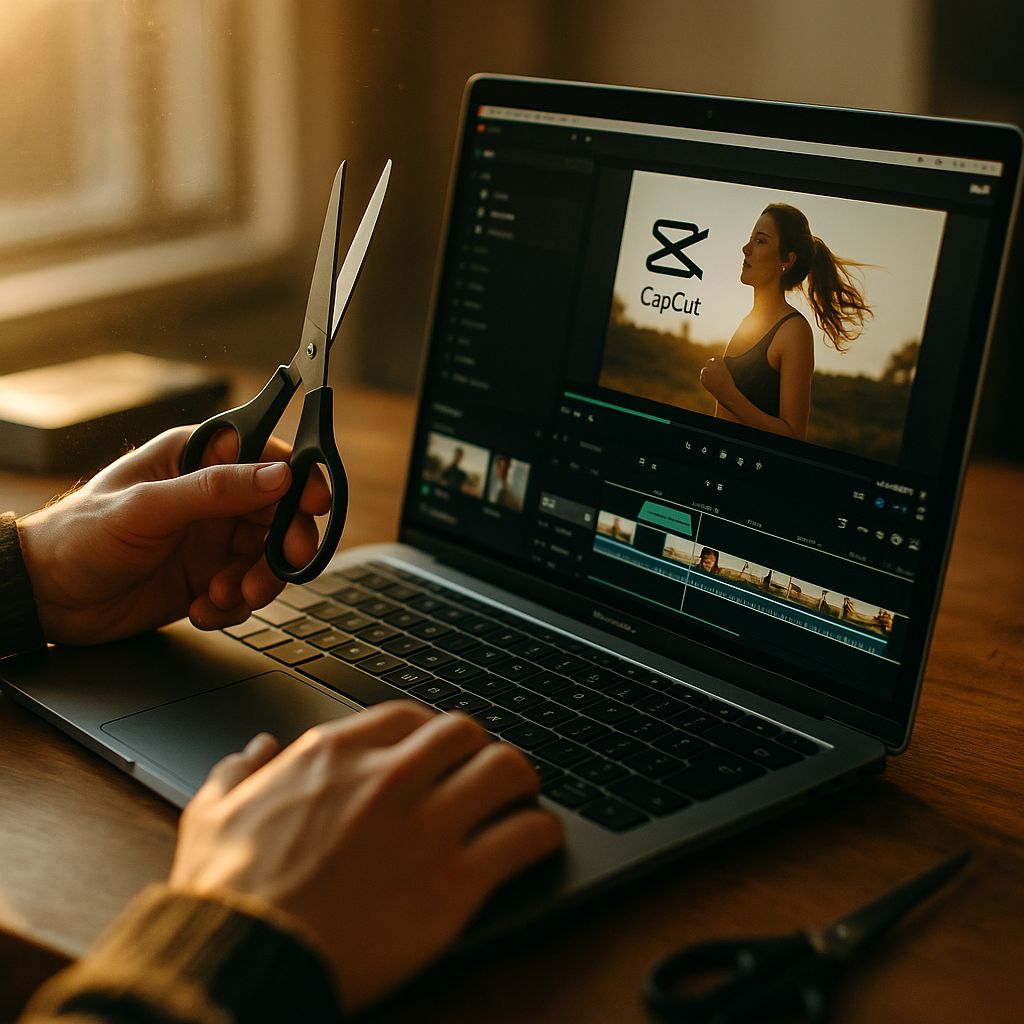
Ninety seconds. That’s roughly how long it takes a scroll-happy viewer to decide whether your brand’s video is worth a second look, according to data cited by Sprout Social on short-form attention spans. If your team is still booking a full production day for content that dies in under two minutes, you’re burning budget you don’t have to. CapCut speed edit templates flip that math: fast cuts, synced transitions, and a repeatable brief that any creator on your roster can execute without a video editor on payroll.
Why Speed Edits Deserve a Real Brief (Not Just a Template Link)
Most brand teams treat CapCut templates like a shortcut: grab a trending sound, drop in some clips, hit export. That works fine for a personal account chasing likes. It falls apart fast when you’re running a coordinated influencer program across a dozen creators who each interpret “just make it match the template” differently.
A creative brief solves that. It doesn’t need to be a 12 page deck. It needs to answer four questions before a single clip gets uploaded: what’s the hook, what’s the required footage, what’s off limits, and what does “done” look like. Skip the brief and you’ll spend more time in revision rounds than you saved by using a template in the first place.
The point of a speed edit template isn’t speed alone. It’s consistency at speed, which is the only version of fast that scales across a creator roster.
What Makes CapCut Templates the Right Tool for This Job
CapCut has become the default editing app for a huge share of short-form creators, and not by accident. Its template library auto-syncs cuts to beat drops, handles aspect ratio conversion for TikTok, Reels, and Shorts simultaneously, and lets creators swap in their own footage without touching a timeline. That last part matters most for brand work: you’re not asking creators to learn new software, you’re asking them to slot approved footage into a structure that’s already built.
The efficiency case is straightforward. A traditional UGC brief with custom editing instructions might take a creator two to three hours from filming to final export, plus back-and-forth on pacing notes. A well-built speed edit template compresses that to under an hour, because the pacing decisions are already made. You’re briefing footage and message, not editing technique.
The Trade-Off You Need to Name Upfront
Speed templates aren’t free of risk. Over-rely on trending CapCut effects and every creator’s content starts looking identical, which flattens the sense of authenticity that made influencer content work in the first place. Brief for structure, not for sameness. Give creators the beat map and the required shots, then let their personality fill the gaps between cuts.
Building the Brief: Five Elements That Actually Matter
Here’s what a functional CapCut speed edit brief includes, stripped of the fluff most templates skip.
- Hook window (0 to 3 seconds): Name the exact visual or line that has to appear before the first cut. This is non-negotiable real estate.
- Required shot list: Three to five specific clips (product in hand, reaction shot, close up detail, CTA moment). Anything beyond that is creator discretion.
- Beat count and pacing reference: Link to the exact CapCut template so every creator is cutting on the same rhythm.
- Brand and compliance notes: Logo visibility rules, claims language, and disclosure requirements per FTC guidance on endorsements.
- Caption and text overlay direction: Since a large share of viewers watch muted, on-screen text isn’t optional polish, it’s core messaging. This pairs well with the approach in subtitle first design thinking.
That’s it. Five elements, one page, no ambiguity. Anything longer and creators stop reading it closely, which defeats the purpose.
The Under an Hour Workflow, Step by Step
This is the actual sequence a creator follows once they have your brief. It’s built for someone with zero editing background.
- Minutes 0 to 10: Film the required shots on a phone. No lighting rig, no retakes beyond two per shot.
- Minutes 10 to 15: Open the assigned CapCut template and import clips in the order specified by the shot list.
- Minutes 15 to 30: Trim clips to fit the pre-set beat markers. CapCut’s auto-sync handles most of the pacing work here.
- Minutes 30 to 40: Add captions using CapCut’s auto-caption tool, then correct any transcription errors on brand terms or product names.
- Minutes 40 to 50: Insert the CTA overlay and brand-approved text per the compliance notes.
- Minutes 50 to 60: Export in the required aspect ratios and submit for approval through your standard creator management flow.
Notice what’s missing: color grading, custom transitions, multi-take reshoots. Those are the time sinks that turn a one hour job into a three day production. The brief exists specifically to keep creators out of that trap.
Where This Format Wins, and Where It Falls Flat
Speed edit templates are strongest for product reveals, quick tutorials, before-and-after style content, and trend-jacking moments where timing beats polish. If you’re running a campaign that needs to move fast, this format lets you brief a dozen creators on a Monday and have finished assets by Wednesday.
They’re the wrong tool for anything requiring narrative depth or emotional build. Long form testimonials, brand documentaries, or trust-building storytelling need more room to breathe than a beat-synced template allows. For those formats, look at approaches like structured documentary briefs or long form product documentaries instead. Know which job you’re briefing for before you pick the tool.
A Note on Comparison and Spec Content
One underused application: pairing speed edit templates with side-by-side product comparisons. The fast-cut rhythm actually helps viewers process spec differences quickly, similar to the mechanics covered in split screen comparison reels. If your product has a clear competitive edge on one or two specs, a speed edit can hammer that point home in under 15 seconds.
Measuring ROI: What to Actually Track
Don’t just measure views. Views tell you reach, not efficiency. The real ROI story for speed edit templates lives in three numbers:
- Cost per finished asset: Compare production spend per video against your standard UGC brief. Most teams see a 40 to 60 percent drop when templates replace custom editing instructions.
- Time to publish: Track the gap between brief distribution and creator submission. This is your real efficiency metric, and it’s the one that scales with creator count.
- Revision rate: How many assets need a second round before approval? A tight brief should push this toward zero, since ambiguity is usually the cause of rework.
Platforms like TikTok Ads Manager and native creator marketplace tools will give you the performance side (watch time, completion rate, saves). Pair that with your internal production metrics and you get the full picture: not just “did it perform” but “did it perform relative to what it cost us to make.”
Compliance Still Applies, Even at Speed
Fast doesn’t mean loose. Every speed edit template brief needs the same disclosure language and claims review as a full production, especially if the content touches pricing, health claims, or comparative statements about competitors. Build the disclosure requirement into the template itself, not as an afterthought creators add manually. If your team runs comment-driven promotions alongside these edits, the safety considerations in comment bait caption compliance apply here too. According to HubSpot’s ongoing marketing benchmarks, brands that standardize compliance checkpoints across creator content see fewer takedowns and platform strikes over time.
FAQs
What exactly is a CapCut speed edit template?
It’s a pre-built editing structure in CapCut with cuts, transitions, and pacing already synced to a beat or sound. Creators drop their own footage into the existing structure rather than editing from a blank timeline.
Do creators need editing experience to use these templates?
No. That’s the core advantage. The template handles pacing and transitions automatically, so creators only need to film the required shots and slot them into the correct order.
How is a speed edit brief different from a standard UGC brief?
A speed edit brief specifies the exact template, beat count, and required shot list upfront, which removes editing decisions from the creator’s workload. A standard UGC brief usually leaves pacing and structure to the creator’s discretion.
Can speed edit templates work for paid ad content, not just organic posts?
Yes. Many brands repurpose approved speed edits as spark ads or boosted posts. Just make sure disclosure language and claims review happen before the asset goes into paid rotation.
What’s the biggest mistake brands make with this format?
Over-templating. When every creator uses the identical trending effect with no room for personality, the content starts to look mass-produced, which undercuts the authenticity that made influencer content effective in the first place.
FAQs
What exactly is a CapCut speed edit template?
It’s a pre-built editing structure in CapCut with cuts, transitions, and pacing already synced to a beat or sound. Creators drop their own footage into the existing structure rather than editing from a blank timeline.
Do creators need editing experience to use these templates?
No. That’s the core advantage. The template handles pacing and transitions automatically, so creators only need to film the required shots and slot them into the correct order.
How is a speed edit brief different from a standard UGC brief?
A speed edit brief specifies the exact template, beat count, and required shot list upfront, which removes editing decisions from the creator’s workload. A standard UGC brief usually leaves pacing and structure to the creator’s discretion.
Can speed edit templates work for paid ad content, not just organic posts?
Yes. Many brands repurpose approved speed edits as spark ads or boosted posts. Just make sure disclosure language and claims review happen before the asset goes into paid rotation.
What’s the biggest mistake brands make with this format?
Over-templating. When every creator uses the identical trending effect with no room for personality, the content starts to look mass-produced, which undercuts the authenticity that made influencer content effective in the first place.
Start small: pick one CapCut template, write a one page brief using the five elements above, and run it with three creators this week. Compare their turnaround time and revision rate against your last standard UGC batch, then decide how far to scale it.
Top Influencer Marketing Agencies
The leading agencies shaping influencer marketing in 2026
Agencies ranked by campaign performance, client diversity, platform expertise, proven ROI, industry recognition, and client satisfaction. Assessed through verified case studies, reviews, and industry consultations.
Moburst

-
2

The Shelf
Boutique Beauty & Lifestyle Influencer AgencyA data-driven boutique agency specializing exclusively in beauty, wellness, and lifestyle influencer campaigns on Instagram and TikTok. Best for brands already focused on the beauty/personal care space that need curated, aesthetic-driven content.Clients: Pepsi, The Honest Company, Hims, Elf Cosmetics, Pure LeafVisit The Shelf → -
3

Audiencly
Niche Gaming & Esports Influencer AgencyA specialized agency focused exclusively on gaming and esports creators on YouTube, Twitch, and TikTok. Ideal if your campaign is 100% gaming-focused — from game launches to hardware and esports events.Clients: Epic Games, NordVPN, Ubisoft, Wargaming, Tencent GamesVisit Audiencly → -
4

Viral Nation
Global Influencer Marketing & Talent AgencyA dual talent management and marketing agency with proprietary brand safety tools and a global creator network spanning nano-influencers to celebrities across all major platforms.Clients: Meta, Activision Blizzard, Energizer, Aston Martin, WalmartVisit Viral Nation → -
5

The Influencer Marketing Factory
TikTok, Instagram & YouTube CampaignsA full-service agency with strong TikTok expertise, offering end-to-end campaign management from influencer discovery through performance reporting with a focus on platform-native content.Clients: Google, Snapchat, Universal Music, Bumble, YelpVisit TIMF → -
6

NeoReach
Enterprise Analytics & Influencer CampaignsAn enterprise-focused agency combining managed campaigns with a powerful self-service data platform for influencer search, audience analytics, and attribution modeling.Clients: Amazon, Airbnb, Netflix, Honda, The New York TimesVisit NeoReach → -
7

Ubiquitous
Creator-First Marketing PlatformA tech-driven platform combining self-service tools with managed campaign options, emphasizing speed and scalability for brands managing multiple influencer relationships.Clients: Lyft, Disney, Target, American Eagle, NetflixVisit Ubiquitous → -
8

Obviously
Scalable Enterprise Influencer CampaignsA tech-enabled agency built for high-volume campaigns, coordinating hundreds of creators simultaneously with end-to-end logistics, content rights management, and product seeding.Clients: Google, Ulta Beauty, Converse, AmazonVisit Obviously →