


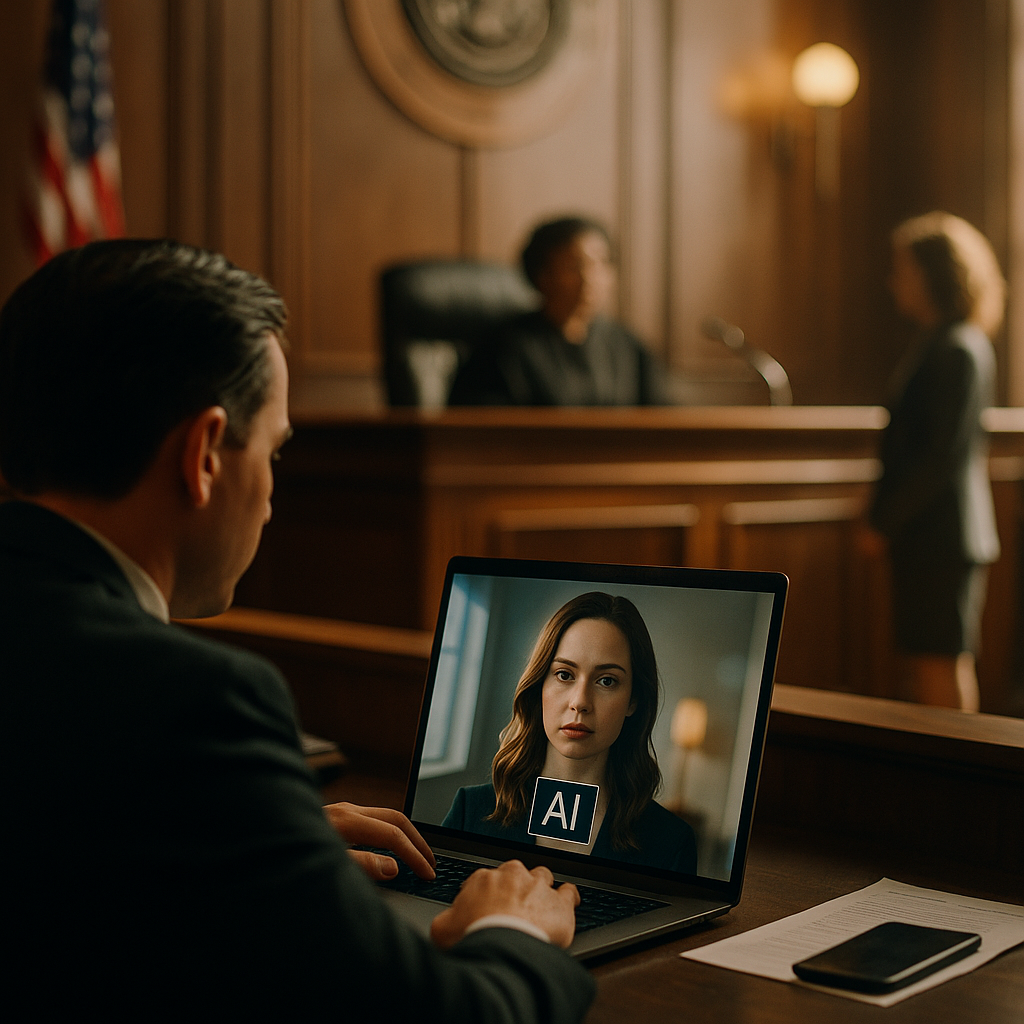
One national campaign. Two disclosure regimes. Zero patience from regulators for “we thought the platform label covered it.” New York’s synthetic performer disclosure law now sits alongside TikTok’s and Meta’s native AI labels, and the two don’t automatically agree with each other. If your brand runs AI-assisted talent in a campaign that touches New York consumers, understanding where these rules overlap — and where they don’t — is now a budget-line issue, not a legal footnote.
Why This Collision Was Inevitable
New York passed its synthetic performer disclosure law to address a narrow but growing problem: digitally created or substantially altered “performers” appearing in ads without audiences knowing they’re not real. The law requires a clear, conspicuous disclosure when a synthetic performer is used in commercial content reaching New York consumers. It’s specific, it’s state-level, and it doesn’t care what label TikTok or Instagram slapped on the post.
Platforms, meanwhile, built their own AI-content labeling systems for entirely different reasons — mostly to manage misinformation risk and satisfy their own trust-and-safety mandates, not to satisfy state advertising law. TikTok’s “AI-generated content” toggle and Meta’s “Made with AI” tag were designed for platform-wide consistency, not jurisdiction-specific legal sufficiency. When a brand assumes the platform label does double duty as legal disclosure, that’s where things fall apart.
A platform’s AI label tells users content was machine-assisted. It does not tell a New York regulator you complied with a state consumer-protection statute. Those are two different jobs, and only one of them is your legal responsibility.
What “Synthetic Performer” Actually Means Here
New York’s statute targets performers, not just visual effects. Think: an AI-generated spokesperson delivering a testimonial, a digitally cloned voice reading ad copy, or a virtual influencer presented as if giving a genuine endorsement. It’s narrower than “any AI in the ad” — background AI-generated imagery or minor touch-ups typically don’t trigger it. But AI-assisted talent, where a real creator’s likeness, voice, or performance is augmented, extended, or partially synthesized, sits squarely in the gray zone brands keep misjudging.
If your campaign uses a creator’s voice clone to localize a script for a regional buy, or an AI tool to generate B-roll of a “creator” who never actually recorded that segment, you’re likely inside the law’s scope. This overlaps heavily with the compliance questions covered in our framework for state synthetic performer laws, which is worth reviewing before you greenlight any AI-assisted talent workflow.
Platform Labels Weren’t Built for Legal Sufficiency
Here’s the operational problem: platform AI labels are often automatic, algorithmically applied, and inconsistent in placement. TikTok might apply an AI label to a clip based on detected generation signals, but it won’t necessarily appear “clearly and conspicuously” in the sense state law requires — it might be buried in an info panel, not overlaid on the video itself. Meta’s label placement varies by surface (feed vs. Stories vs. Reels), and there’s no guarantee it appears at all if the AI tool used isn’t one Meta’s detection systems recognize.
That inconsistency is a liability multiplier. A brand can’t point to a platform label as its compliance shield if that label doesn’t reliably render the way state law demands. Regulators evaluate what the consumer actually saw, not what the platform’s backend classified.
Building a Disclosure Stack That Survives Both Regimes
The fix isn’t choosing one disclosure system over the other. It’s layering them so New York’s requirement is satisfied independently of whatever the platform does. Practically, that means:
- Bake the disclosure into the creative asset itself. Burned-in text or verbal disclosure at the start of the clip survives platform re-uploads, cross-posting, and algorithmic label failures.
- Don’t rely on platform metadata alone. If TikTok’s AI label doesn’t render on a re-shared or downloaded version of the video, your disclosure disappears with it — unless it’s embedded in the content.
- Match language to the statute, not the platform’s phrasing. “Made with AI” satisfies TikTok’s policy. It may not satisfy New York’s “clear and conspicuous” synthetic performer standard, which often requires more specific language about a performer being digitally created or altered.
- Document your compliance logic per asset. Keep a record showing which disclosure mechanism applied, why, and how it was verified to render for New York audiences specifically.
This layered approach mirrors what we’ve recommended for other jurisdiction-vs-platform mismatches, including the disclosure conflicts detailed in FTC livestream rules versus TikTok’s countdown features. The pattern repeats: platform-native tools solve platform problems, not legal ones.
National Campaigns Don’t Get to Pick Their Audience
This is the part that trips up media planners. You can’t geofence virality. A campaign built for a national rollout, running through a mix of paid social, organic creator posts, and syndicated UGC, will reach New York consumers regardless of your targeting settings. Unless you’re deliberately excluding the state from distribution — rare, and usually not worth the reach sacrifice — you need New York-compliant disclosure baked into every asset from day one.
That’s a different posture than “we’ll add disclosure for the states that require it.” With synthetic performer laws, treating New York as the baseline for AI-assisted talent disclosure is simpler and safer than trying to maintain state-by-state creative variants. It’s the same operational logic agencies use for FTC-driven disclosure minimums: build to the strictest standard, apply it everywhere, and you’re covered by default in weaker jurisdictions.
Where AI-Assisted Talent Contracts Need to Catch Up
Most creator agreements still don’t specify who’s responsible for synthetic performer disclosure when AI tools are used mid-production — say, an agency uses an AI voice model to patch a flubbed line, or extends a creator’s video with generative B-roll after the shoot wraps. If the contract doesn’t allocate that disclosure responsibility, brands are left exposed when the creator (or their team) assumes the platform’s automatic label covers it.
Get specific in your talent agreements: who flags AI-assisted segments, who verifies disclosure language before publish, and who owns the liability if a state regulator finds the disclosure insufficient. This is the same contractual gap we’ve flagged in AI remix disclosure indemnification clauses — the tools change, but the underlying question of who eats the compliance risk stays the same. If your current creator contracts predate widespread AI-assisted production, it’s worth running them through a contract audit for script and AI-use risk before your next renewal cycle.
A Practical Compliance Checklist for Mixed AI-Human Campaigns
- Identify every asset in the campaign where AI touched talent — voice, likeness, performance, or scripted delivery.
- Classify each asset: fully synthetic performer, AI-assisted human performer, or AI-adjacent (background/effects only, likely out of scope).
- Draft disclosure language matched to New York’s statutory standard, not platform boilerplate.
- Burn disclosure into the creative asset where feasible, rather than relying solely on platform-applied labels.
- Verify label rendering across platform surfaces — feed, Stories, ads manager previews, and any syndication partners.
- Log compliance decisions per asset for audit defense.
- Update creator and vendor contracts to assign disclosure verification responsibility explicitly.
Brands running high-volume creator programs should treat this like any other recurring compliance workflow — similar to how quarterly livestream compliance audits catch drift before it becomes a pattern regulators notice. A one-time review isn’t enough when your creative pipeline keeps shipping new AI-assisted assets weekly.
The Enforcement Reality Check
New York isn’t alone, and it won’t be the last. State legislators are watching each other’s synthetic performer bills closely, and eMarketer’s tracking of AI-in-advertising sentiment suggests consumer distrust of undisclosed AI talent is rising faster than platform policy can keep pace. The FTC has also signaled continued interest in AI-generated endorsements broadly, meaning brands face pressure from both state and federal directions simultaneously.
Meanwhile, platforms keep evolving their own AI labeling standards — Meta and TikTok both continue refining detection and disclosure UI, according to policy updates published through Meta’s business resources and TikTok’s advertiser hub. Every UI change is a reason to re-check whether your disclosure stack still holds up. Nothing about this space is static, and treating your current setup as “done” is how compliance gaps quietly reopen.
Frequently Asked Questions
Does TikTok’s AI-generated content label satisfy New York’s synthetic performer disclosure law?
Not automatically. TikTok’s label is a platform policy tool, not a legal disclosure calibrated to New York’s statutory language or placement requirements. Brands should treat it as a supplement, not a substitute, for a compliant disclosure embedded in the creative.
What counts as an AI-assisted performer under New York’s law?
Generally, any performer whose likeness, voice, or performance was digitally created or materially altered using AI in a way that misrepresents what was actually captured. Minor editing or standard post-production typically falls outside scope, but voice cloning, likeness synthesis, and AI-extended performances usually fall inside it.
Do brands need different disclosure creative for New York versus other states?
Not necessarily. Most brands find it more efficient to apply New York’s stricter disclosure standard nationally, since it typically satisfies looser requirements elsewhere and avoids managing multiple creative variants per state.
Who is liable if a creator’s AI-assisted content lacks proper disclosure?
Liability often falls on the brand as the advertiser, regardless of whether an agency, creator, or AI vendor produced the asset. Contracts should explicitly allocate disclosure verification responsibility to avoid disputes after the fact.
How often should brands audit AI-assisted campaign content for disclosure compliance?
At minimum, quarterly, and immediately after any platform label or policy change. High-volume creator programs should build disclosure verification into their standard publishing workflow rather than treating it as a periodic check.
Stop treating platform AI labels as legal cover. Build a burned-in, statute-matched disclosure for every AI-assisted talent asset, apply it nationally, and put the verification duty in writing before your next campaign ships.
Top Influencer Marketing Agencies
The leading agencies shaping influencer marketing in 2026
Agencies ranked by campaign performance, client diversity, platform expertise, proven ROI, industry recognition, and client satisfaction. Assessed through verified case studies, reviews, and industry consultations.
Moburst

-
2

The Shelf
Boutique Beauty & Lifestyle Influencer AgencyA data-driven boutique agency specializing exclusively in beauty, wellness, and lifestyle influencer campaigns on Instagram and TikTok. Best for brands already focused on the beauty/personal care space that need curated, aesthetic-driven content.Clients: Pepsi, The Honest Company, Hims, Elf Cosmetics, Pure LeafVisit The Shelf → -
3

Audiencly
Niche Gaming & Esports Influencer AgencyA specialized agency focused exclusively on gaming and esports creators on YouTube, Twitch, and TikTok. Ideal if your campaign is 100% gaming-focused — from game launches to hardware and esports events.Clients: Epic Games, NordVPN, Ubisoft, Wargaming, Tencent GamesVisit Audiencly → -
4

Viral Nation
Global Influencer Marketing & Talent AgencyA dual talent management and marketing agency with proprietary brand safety tools and a global creator network spanning nano-influencers to celebrities across all major platforms.Clients: Meta, Activision Blizzard, Energizer, Aston Martin, WalmartVisit Viral Nation → -
5

The Influencer Marketing Factory
TikTok, Instagram & YouTube CampaignsA full-service agency with strong TikTok expertise, offering end-to-end campaign management from influencer discovery through performance reporting with a focus on platform-native content.Clients: Google, Snapchat, Universal Music, Bumble, YelpVisit TIMF → -
6

NeoReach
Enterprise Analytics & Influencer CampaignsAn enterprise-focused agency combining managed campaigns with a powerful self-service data platform for influencer search, audience analytics, and attribution modeling.Clients: Amazon, Airbnb, Netflix, Honda, The New York TimesVisit NeoReach → -
7

Ubiquitous
Creator-First Marketing PlatformA tech-driven platform combining self-service tools with managed campaign options, emphasizing speed and scalability for brands managing multiple influencer relationships.Clients: Lyft, Disney, Target, American Eagle, NetflixVisit Ubiquitous → -
8

Obviously
Scalable Enterprise Influencer CampaignsA tech-enabled agency built for high-volume campaigns, coordinating hundreds of creators simultaneously with end-to-end logistics, content rights management, and product seeding.Clients: Google, Ulta Beauty, Converse, AmazonVisit Obviously →