


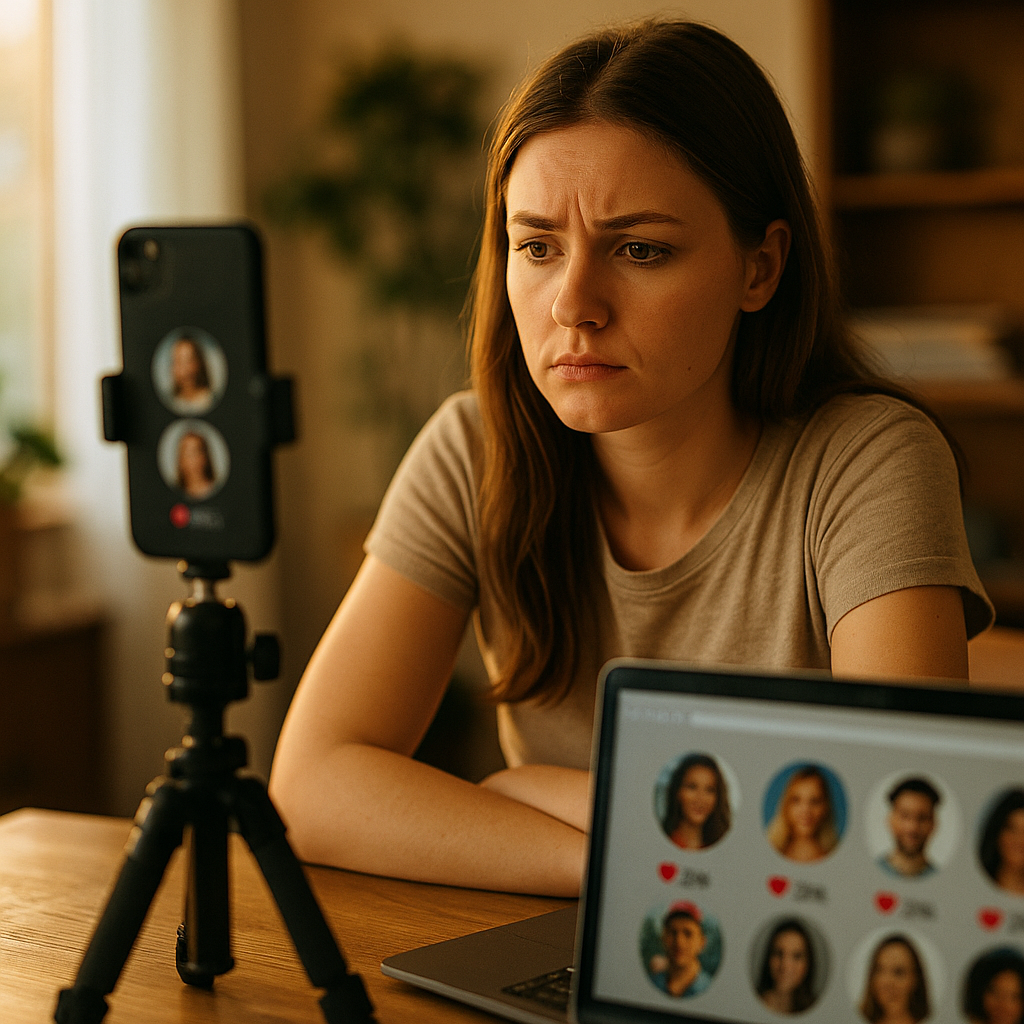
Roughly 68% of marketers say discovering the “right” creator is their biggest influencer marketing challenge, according to eMarketer survey data. Yet the AI tools built to solve that problem all share a blind spot: they’re trained to reward creators who’ve already won. Influencer-matching AI is only as good as the performance history it was fed, and that’s a structural problem, not a feature request.
If your discovery platform is optimizing for past engagement, it’s mathematically incapable of surfacing the creator who blew up three weeks ago. Here’s why that matters for your budget, and what to do about it.
The Cold-Start Problem Never Went Away
Every recommendation system, whether it’s matching influencers to brands or songs to Spotify listeners, has a “cold-start problem.” New entities with no data can’t be scored against entities with years of it. Netflix solved part of this with metadata tagging. Influencer platforms haven’t solved it at all — they’ve mostly just gotten better at hiding it.
Most matching algorithms rank creators using a blend of historical engagement rate, follower growth curve, brand-safety scores, and past campaign conversion data. That’s a sensible approach for reducing risk. It’s also a closed loop. A creator who posted their first viral video last month has no campaign history, no verified conversion data, and often an engagement rate that looks statistically noisy because the sample size is tiny. The algorithm can’t distinguish between “noisy because small” and “noisy because fake.” So it defaults to caution, and caution means it ranks the account lower, or not at all.
An AI model trained on historical winners will always recommend more of the same winners. It cannot recommend a pattern it has never seen.
This isn’t a knock on the vendors. Companies like Grin, CreatorIQ, and Traackr have built genuinely useful infrastructure for vetting, contracting, and measuring creator partnerships. The issue is narrower: the matching layer — the part that says “here are your top 50 candidates” — is fundamentally retrospective. It’s built the same way a lot of AI marketing tooling gets built: strong at pattern-matching what already worked, weak at strategic judgment calls about what’s next. We covered a similar dynamic in why AI marketing tools stall at execution rather than strategy — matching platforms have the same ceiling.
Why “Emerging” Creators Break the Model
Define “emerging creator” and you’ll get a different answer from every vendor. But the practical definition that matters to brands is simple: a creator whose current trajectory is not yet reflected in the dataset the AI is scoring against. That lag is the entire problem.
Consider the mechanics. A typical creator-matching model weighs some combination of:
- Trailing 90-day engagement rate and consistency
- Follower growth velocity, often smoothed over months
- Historical brand-deal performance (clicks, code redemptions, conversions)
- Audience quality signals (bot ratio, geography, demographic match)
- Content categorization via computer vision and NLP tagging
Four of those five signals require history. Only audience quality and content categorization can be assessed in near real-time, and even those need enough posts to generate a confident read. A creator with 40,000 followers gained in six weeks, and a single video that did nine million views, doesn’t fit cleanly into any of these buckets. The growth curve looks anomalous. The conversion history doesn’t exist. The engagement consistency metric is undefined because there isn’t enough data to define “consistent.”
So the platform either excludes them from recommendations or buries them below thousands of creators with duller, safer, more “provable” numbers. Brands relying exclusively on these tools end up recommending the same 200 mid-tier creators to every competitor in their category. That’s not a discovery engine. That’s a popularity contest with an API.
The ROI Case: What Brands Actually Lose
Skip the philosophy for a second and look at the money. Emerging creators are, on average, dramatically cheaper per engagement than established ones, precisely because the market hasn’t priced them correctly yet. That mispricing is the opportunity. Once a creator’s performance history catches up to their actual audience size, rates catch up too, and the arbitrage disappears.
Waiting for an AI matching tool to “discover” a creator after they’ve built six months of trackable history means you’re buying at the top of their pricing curve, not the bottom. You’re also buying into an audience that’s already seen that creator work with three of your competitors.
By the time historical-performance data validates a creator, the pricing advantage of working with them early has usually already evaporated.
There’s a risk-mitigation angle too, and it cuts both ways. Yes, unvetted creators carry more brand-safety uncertainty — no long track record means less certainty about how they’ll behave under pressure, what they’ve said in old posts, or whether their audience is inflated. That’s a legitimate concern, and it’s why synthetic and fabricated engagement matters more, not less, at the emerging tier. Brands should be pairing any early-stage creator vetting with proper authenticity checks; our guide on evaluating synthetic-media detection tools is a useful starting point before you wire a deposit to anyone with a sudden growth spike.
What the Tools Are Actually Good At (Give Credit Where It’s Due)
None of this means historical-performance AI is useless. It’s excellent at the job it was built for: reducing risk on spend for creators with an established track record, and doing it at a scale no human team could match manually. If you’re running a seven-figure always-on ambassador program and need to filter 50,000 candidates down to a shortlist of 200 based on audience overlap and conversion history, that’s exactly the right tool for the job.
The mistake is treating discovery-stage matching AI as your only sourcing channel. It’s a screening tool for known quantities, not a scouting tool for unknown ones. That distinction should shape how you allocate your creator-sourcing budget and headcount, not just which software you buy.
Building a Hybrid Sourcing Model
The brands getting ahead of this aren’t ditching their matching platforms. They’re running a two-track system: AI-driven matching for scaled, lower-risk campaigns, and human-led scouting for the leading edge. A few practical moves worth stealing:
- Set aside a discretionary “emerging creator” budget — even 10-15% of total influencer spend, ring-fenced specifically for accounts with under six months of measurable history. Treat it like a venture allocation: some bets won’t pay off, a few will pay off enormously.
- Task someone (or a small team) with manual trend scouting on TikTok’s Creative Center, Instagram’s Trending Reels, and platform-native discovery feeds. This is unglamorous work, but it’s where the signal actually lives before the data catches up.
- Use short, low-commitment test campaigns — gifted product, small flat fees, single-post deals — to generate your own first-party performance data on a creator before scaling spend. You’re essentially building the training data the platform doesn’t have yet.
- Push vendors on real-time signal ingestion. Ask discovery platforms directly how quickly a viral moment shows up in their scoring, and what proxy signals (share velocity, comment sentiment, audience growth rate) they use to compensate for thin history. Vague answers are a red flag.
- Layer in authenticity verification early, not after the contract is signed. Sudden growth spikes attract both genuine breakout creators and bot-farm operations; the two look identical on a dashboard.
This mirrors a broader pattern across martech right now: agentic and predictive tools are powerful accelerants for known workflows but weak at genuinely novel judgment calls, a gap we’ve tracked in why AI marketing agents fail on tasks requiring contextual judgment rather than pattern replay. Influencer matching is a specific instance of a general limitation.
What “Better” Actually Looks Like
Some vendors are experimenting with velocity-based scoring — weighting the rate of change in engagement rather than the absolute numbers — which is a step toward solving the cold-start issue without requiring months of history. Others are pulling in cross-platform signals (a creator blowing up on TikTok often shows early cross-posting traction on Instagram Reels or YouTube Shorts before the main platform’s own algorithm catches up), giving a earlier read on trajectory.
None of this fully closes the gap yet. Real-time social listening tools and platform-native trend dashboards remain more responsive than third-party matching AI, if slower to translate into a ranked shortlist. Until vendors close that latency gap, the smart move is assuming a 60-90 day lag between “this creator is taking off” and “this creator shows up near the top of your matching platform’s recommendations.” Plan your sourcing calendar around that lag instead of around it. For teams building out formal AI vetting criteria across their broader martech stack, the governance thinking in this diagnostic framework translates reasonably well to evaluating influencer-matching vendors too — ask what data feeds the model, how fresh it is, and where the blind spots live.
Platforms like Sprout Social and native trend tools inside TikTok’s own TikTok Ads ecosystem are worth checking weekly, not quarterly, if breakout-creator sourcing matters to your program.
Next step: Audit your current discovery stack this quarter. Ask your vendor exactly how many days of data a creator needs before they surface in recommendations — then build a manual scouting process to cover that gap, because the algorithm won’t.
FAQs
Why does influencer-matching AI struggle with new or fast-growing creators?
Most matching algorithms weight historical engagement, growth consistency, and past campaign conversion data heavily. A creator without months of that history gets scored as high-risk or low-confidence by default, regardless of current momentum.
Should brands stop using AI-driven creator discovery tools?
No. These tools remain highly effective for vetting creators with an established track record at scale. The fix is supplementing them with manual trend scouting and small test campaigns for emerging talent, not replacing them entirely.
How much budget should go toward untested, emerging creators?
Many brands ring-fence 10-15% of influencer spend for creators with under six months of measurable performance history, treating it as a higher-risk, higher-upside allocation similar to early-stage testing budgets elsewhere in marketing.
How can brands vet an emerging creator without historical performance data?
Run small, low-commitment test campaigns to generate first-party data, check audience authenticity with synthetic-media and bot-detection tools, and review cross-platform traction as an early trajectory signal before committing larger budgets.
What’s the financial risk of waiting for AI tools to validate a creator?
Rates typically rise once a creator’s performance history becomes established and visible to matching platforms. Brands that wait lose the pricing advantage of early access and often end up buying into an audience the creator’s competitors have already reached.
FAQs
Top Influencer Marketing Agencies
The leading agencies shaping influencer marketing in 2026
Agencies ranked by campaign performance, client diversity, platform expertise, proven ROI, industry recognition, and client satisfaction. Assessed through verified case studies, reviews, and industry consultations.
Moburst

-
2

The Shelf
Boutique Beauty & Lifestyle Influencer AgencyA data-driven boutique agency specializing exclusively in beauty, wellness, and lifestyle influencer campaigns on Instagram and TikTok. Best for brands already focused on the beauty/personal care space that need curated, aesthetic-driven content.Clients: Pepsi, The Honest Company, Hims, Elf Cosmetics, Pure LeafVisit The Shelf → -
3

Audiencly
Niche Gaming & Esports Influencer AgencyA specialized agency focused exclusively on gaming and esports creators on YouTube, Twitch, and TikTok. Ideal if your campaign is 100% gaming-focused — from game launches to hardware and esports events.Clients: Epic Games, NordVPN, Ubisoft, Wargaming, Tencent GamesVisit Audiencly → -
4

Viral Nation
Global Influencer Marketing & Talent AgencyA dual talent management and marketing agency with proprietary brand safety tools and a global creator network spanning nano-influencers to celebrities across all major platforms.Clients: Meta, Activision Blizzard, Energizer, Aston Martin, WalmartVisit Viral Nation → -
5

The Influencer Marketing Factory
TikTok, Instagram & YouTube CampaignsA full-service agency with strong TikTok expertise, offering end-to-end campaign management from influencer discovery through performance reporting with a focus on platform-native content.Clients: Google, Snapchat, Universal Music, Bumble, YelpVisit TIMF → -
6

NeoReach
Enterprise Analytics & Influencer CampaignsAn enterprise-focused agency combining managed campaigns with a powerful self-service data platform for influencer search, audience analytics, and attribution modeling.Clients: Amazon, Airbnb, Netflix, Honda, The New York TimesVisit NeoReach → -
7

Ubiquitous
Creator-First Marketing PlatformA tech-driven platform combining self-service tools with managed campaign options, emphasizing speed and scalability for brands managing multiple influencer relationships.Clients: Lyft, Disney, Target, American Eagle, NetflixVisit Ubiquitous → -
8

Obviously
Scalable Enterprise Influencer CampaignsA tech-enabled agency built for high-volume campaigns, coordinating hundreds of creators simultaneously with end-to-end logistics, content rights management, and product seeding.Clients: Google, Ulta Beauty, Converse, AmazonVisit Obviously →