


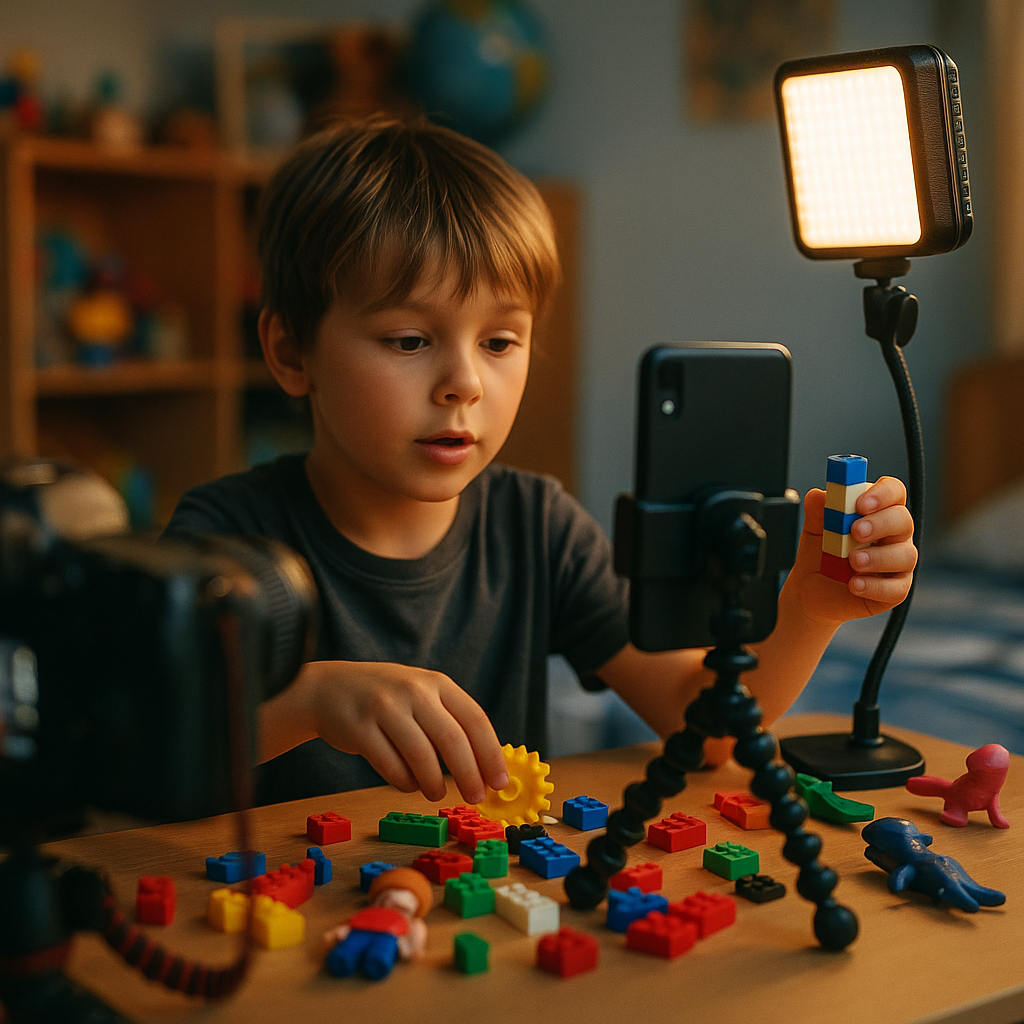
Kids under 12 influence an estimated $500 billion in household spending, yet most brands still cast youth-category creators the same way they cast beauty influencers. That mismatch is exactly what The Toy Association’s Gen Alpha webinar exposed. Circana’s holiday data doesn’t just forecast sales — it’s a blueprint for who should be posting the unboxing video, and why your current creator strategy might be aimed at the wrong audience entirely.
The webinar drew toy marketers, licensing execs, and retail buyers looking for a read on where Gen Alpha spending is headed. But the real story wasn’t the sales forecast. It was the underlying behavioral data on how this generation discovers products, and how little of that discovery happens through traditional advertising channels anymore.
The Data Point Everyone Should Be Repeating
Circana’s holiday research, as presented in the session, reinforced something toy and youth-brand marketers have suspected for a few cycles now: parents are still the purchasers, but kids are increasingly the influencers-in-chief inside the household. That’s not a new dynamic. What’s new is the channel where that influence gets manufactured — short-form video, gaming livestreams, and creator-led unboxings that function less like ads and more like peer recommendations.
Gen Alpha doesn’t ask “what’s cool” from a TV commercial. They ask a fifteen-year-old on YouTube, and that fifteen-year-old’s opinion now carries more household purchase weight than a national media buy.
For brand strategists, that’s both an opportunity and a compliance headache. An opportunity because creator-led discovery converts faster and cheaper than upper-funnel media. A headache because the creators driving that discovery are, in many cases, minors themselves, or are creating content explicitly for minors — a category with its own regulatory scaffolding under COPPA and FTC endorsement guidance.
Why Holiday Forecasting Data Matters for Creator Casting
Most brands treat Circana’s retail forecasts as a supply chain input: how much inventory to stock, which SKUs to prioritize, when to time promotional pushes. That’s table stakes. What’s underused is the demographic and category breakdown inside that data, which tells you exactly which creator archetypes will move product in which windows.
If Circana’s holiday data shows building-and-construction toys outperforming dolls in a given quarter among 8-to-10-year-olds, that’s not just a merchandising signal. It’s a casting brief. It tells you to prioritize creators whose audience skews toward that age band and category, rather than defaulting to whichever “kid influencer” has the biggest subscriber count. Reach without category-fit is wasted spend — a lesson B2B marketers have already learned the hard way, as covered in our piece on creator casting built around trust rather than follower size.
This is where a lot of youth-category brands still get it wrong. They buy against vanity metrics — total views, subscriber count — instead of buying against category resonance and purchase-influence data. Circana’s numbers, cross-referenced with platform-level audience insights, let you correct that.
The Compliance Layer Nobody Wants to Talk About
Here’s the uncomfortable part of the Gen Alpha conversation: youth-category creator marketing sits inside one of the most heavily scrutinized corners of advertising. The FTC has been explicit about endorsement disclosure requirements, and child-directed content triggers additional obligations under the FTC’s guidance on children’s privacy and advertising. Add platform-specific rules — TikTok’s under-13 restrictions, YouTube’s Made for Kids designations — and you have a compliance matrix that most influencer agencies aren’t built to navigate.
This isn’t a hypothetical risk. Regulators in the UK have also sharpened scrutiny of advertising directed at children, and the ICO’s guidance on children’s data is increasingly referenced by brands operating across US and UK markets simultaneously. If your creator program spans both regions, you’re managing two overlapping but distinct compliance frameworks, not one.
The operational fix isn’t complicated, but it does require infrastructure most toy and youth brands haven’t built yet: a vetting layer that checks creator content classification, parental consent documentation (where the creator is a minor), and disclosure language before a single dollar of budget moves. That’s exactly the kind of function agencies are now hiring data analysts to build and monitor at scale.
Family Content Creators Aren’t the Same as Kid Influencers
One distinction The Toy Association’s session should have hammered harder: family vloggers, kid-fronted channels, and parent-run “review” accounts are not interchangeable creator categories. They have different audience compositions, different FTC exposure, and wildly different conversion behavior.
A parent-hosted unboxing channel where an adult narrates while a child reacts carries different disclosure obligations than a channel where a 12-year-old is the sole on-camera talent and de facto brand spokesperson. Circana’s holiday data can tell you which category of toy is trending. It can’t tell you which creator format is legally and reputationally safest for your brand to sponsor. That judgment call still sits with your marketing and legal teams.
Smart youth-category brands are now building creator tiers that mirror this distinction explicitly:
- Parent-narrated family channels — lower regulatory friction, slightly lower “authenticity” perception among older Gen Alpha kids.
- Teen creators (13+) — higher peer credibility, moderate compliance overhead, strong for tween-to-teen crossover categories.
- Adult toy reviewers/collectors — useful for parent-facing purchase validation, less influential on the child’s actual preference.
- Gaming and livestream personalities — increasingly the dominant discovery channel for construction, collectible, and tech-adjacent toy categories.
Matching Circana’s category forecasts against this tiered structure is the actual work. The webinar gave attendees the “what.” The tiering is the “how.”
Budget Allocation: Stop Front-Loading Q4
Here’s a pattern that shows up in nearly every Circana holiday readout: toy category demand doesn’t spike cold in November. It builds through Q3 via search behavior, wishlist creation, and — increasingly — creator content that seeds product awareness weeks before the “holiday shopping” window opens in earnest.
Brands that concentrate 80% of creator spend into a four-week holiday sprint are leaving discovery-stage influence on the table. The kids (and parents) who end up buying in December often formed their preference in September or October, based on back-to-school-adjacent content or early gift-guide creator posts. This mirrors a broader shift documented in continuous growth models replacing campaign bursts across martech generally — youth categories are simply a more extreme version of that pattern, because kids’ preferences solidify early and hold firm through the buying window.
If your creator calendar only lights up in November, you’re advertising to a decision that’s already been made.
The practical shift: allocate a “seeding” budget for Q3 creator content — lower production value, higher volume, aimed at preference formation — then reserve Q4 budget for conversion-focused formats: retailer-tagged shoppable posts, countdown content, and direct-response creative that pushes toward purchase in the final decision window. This two-phase model also gives your team cleaner attribution data, since you can separate discovery-stage engagement from purchase-stage conversion rather than lumping it all into one holiday metric.
Testing Discipline Still Applies to Kids’ Content
One thing the webinar underplayed: the same testing rigor agencies apply to adult-facing influencer campaigns needs to apply here too. Creative that performs on a gaming-focused teen channel won’t necessarily translate to a preschool-toy family channel, and youth-category marketers can’t assume historical intuition (this creator “feels right”) substitutes for actual performance testing.
The same logic our team laid out in testing frequency as a core agency KPI applies directly to toy and youth brands running Circana-informed campaigns. Test hook formats across age-segmented creator tiers. Test disclosure placement for legibility and compliance simultaneously. Test whether parent-facing or child-facing framing drives more add-to-cart activity for a given category. Circana gives you the macro signal. Testing gives you the micro-optimization that actually protects ROI.
Platforms and interactive formats are shifting fast enough that static creative testing is already outdated for most youth-category use cases — a trend covered in interactive video formats replacing static ad tests, which is especially relevant given how much of Gen Alpha’s toy discovery now happens inside interactive or gamified content environments rather than passive video.
What This Means Heading Into Next Holiday Cycle
Pull the threads together and the strategic shift is clear. Circana’s holiday data isn’t a forecasting tool anymore — it’s a creator-casting input. The Toy Association’s webinar was useful precisely because it forced marketers to connect retail-level demand signals to platform-level creator behavior, something most brands still handle in separate silos with separate teams.
The brands that win the next holiday cycle in youth categories won’t be the ones with the biggest creator budgets. They’ll be the ones who used Circana’s category data to build tiered, compliance-checked creator rosters months before Q4, tested creative discipline across age segments, and stopped treating “kid influencer” as a single, interchangeable category.
Start now: audit your current creator roster against Circana’s latest category forecast, flag any compliance gaps in minor-fronted content, and shift at least 20% of Q4 budget into Q3 seeding before the next planning cycle locks in.
FAQs
What is Circana’s role in toy industry forecasting?
Circana provides retail point-of-sale and consumer behavior data used by toy manufacturers, retailers, and marketers to forecast category demand, track holiday sales trends, and identify which product segments are gaining or losing share among specific age groups.
Why does Gen Alpha creator strategy require different compliance handling?
Content aimed at or featuring children under 13 triggers additional regulatory obligations, including COPPA-related privacy rules and FTC endorsement disclosure requirements. Brands working with minor creators or child-directed content need documented parental consent and clear disclosure practices beyond standard influencer marketing compliance.
How should brands segment youth-category creators?
Effective segmentation separates parent-narrated family channels, teen creators, adult toy reviewers, and gaming/livestream personalities, since each carries different audience influence, compliance exposure, and conversion behavior for different toy categories and age bands.
When should toy brands start creator campaigns for the holiday season?
Preference formation for holiday toy purchases typically begins in Q3, well before the traditional November-December shopping window. Brands relying solely on Q4 creator spend miss the discovery stage where many purchase decisions are already effectively made.
Does Circana’s holiday data replace the need for creative testing?
No. Circana’s data identifies which categories and demographics are trending, but brands still need to test creative formats, hooks, and disclosure placements across different creator tiers to confirm what actually converts within those trending categories.
FAQs
What is Circana’s role in toy industry forecasting?
Circana provides retail point-of-sale and consumer behavior data used by toy manufacturers, retailers, and marketers to forecast category demand, track holiday sales trends, and identify which product segments are gaining or losing share among specific age groups.
Why does Gen Alpha creator strategy require different compliance handling?
Content aimed at or featuring children under 13 triggers additional regulatory obligations, including COPPA-related privacy rules and FTC endorsement disclosure requirements. Brands working with minor creators or child-directed content need documented parental consent and clear disclosure practices beyond standard influencer marketing compliance.
How should brands segment youth-category creators?
Effective segmentation separates parent-narrated family channels, teen creators, adult toy reviewers, and gaming/livestream personalities, since each carries different audience influence, compliance exposure, and conversion behavior for different toy categories and age bands.
When should toy brands start creator campaigns for the holiday season?
Preference formation for holiday toy purchases typically begins in Q3, well before the traditional November-December shopping window. Brands relying solely on Q4 creator spend miss the discovery stage where many purchase decisions are already effectively made.
Does Circana’s holiday data replace the need for creative testing?
No. Circana’s data identifies which categories and demographics are trending, but brands still need to test creative formats, hooks, and disclosure placements across different creator tiers to confirm what actually converts within those trending categories.
Top Influencer Marketing Agencies
The leading agencies shaping influencer marketing in 2026
Agencies ranked by campaign performance, client diversity, platform expertise, proven ROI, industry recognition, and client satisfaction. Assessed through verified case studies, reviews, and industry consultations.
Moburst

-
2

The Shelf
Boutique Beauty & Lifestyle Influencer AgencyA data-driven boutique agency specializing exclusively in beauty, wellness, and lifestyle influencer campaigns on Instagram and TikTok. Best for brands already focused on the beauty/personal care space that need curated, aesthetic-driven content.Clients: Pepsi, The Honest Company, Hims, Elf Cosmetics, Pure LeafVisit The Shelf → -
3

Audiencly
Niche Gaming & Esports Influencer AgencyA specialized agency focused exclusively on gaming and esports creators on YouTube, Twitch, and TikTok. Ideal if your campaign is 100% gaming-focused — from game launches to hardware and esports events.Clients: Epic Games, NordVPN, Ubisoft, Wargaming, Tencent GamesVisit Audiencly → -
4

Viral Nation
Global Influencer Marketing & Talent AgencyA dual talent management and marketing agency with proprietary brand safety tools and a global creator network spanning nano-influencers to celebrities across all major platforms.Clients: Meta, Activision Blizzard, Energizer, Aston Martin, WalmartVisit Viral Nation → -
5

The Influencer Marketing Factory
TikTok, Instagram & YouTube CampaignsA full-service agency with strong TikTok expertise, offering end-to-end campaign management from influencer discovery through performance reporting with a focus on platform-native content.Clients: Google, Snapchat, Universal Music, Bumble, YelpVisit TIMF → -
6

NeoReach
Enterprise Analytics & Influencer CampaignsAn enterprise-focused agency combining managed campaigns with a powerful self-service data platform for influencer search, audience analytics, and attribution modeling.Clients: Amazon, Airbnb, Netflix, Honda, The New York TimesVisit NeoReach → -
7

Ubiquitous
Creator-First Marketing PlatformA tech-driven platform combining self-service tools with managed campaign options, emphasizing speed and scalability for brands managing multiple influencer relationships.Clients: Lyft, Disney, Target, American Eagle, NetflixVisit Ubiquitous → -
8

Obviously
Scalable Enterprise Influencer CampaignsA tech-enabled agency built for high-volume campaigns, coordinating hundreds of creators simultaneously with end-to-end logistics, content rights management, and product seeding.Clients: Google, Ulta Beauty, Converse, AmazonVisit Obviously →