


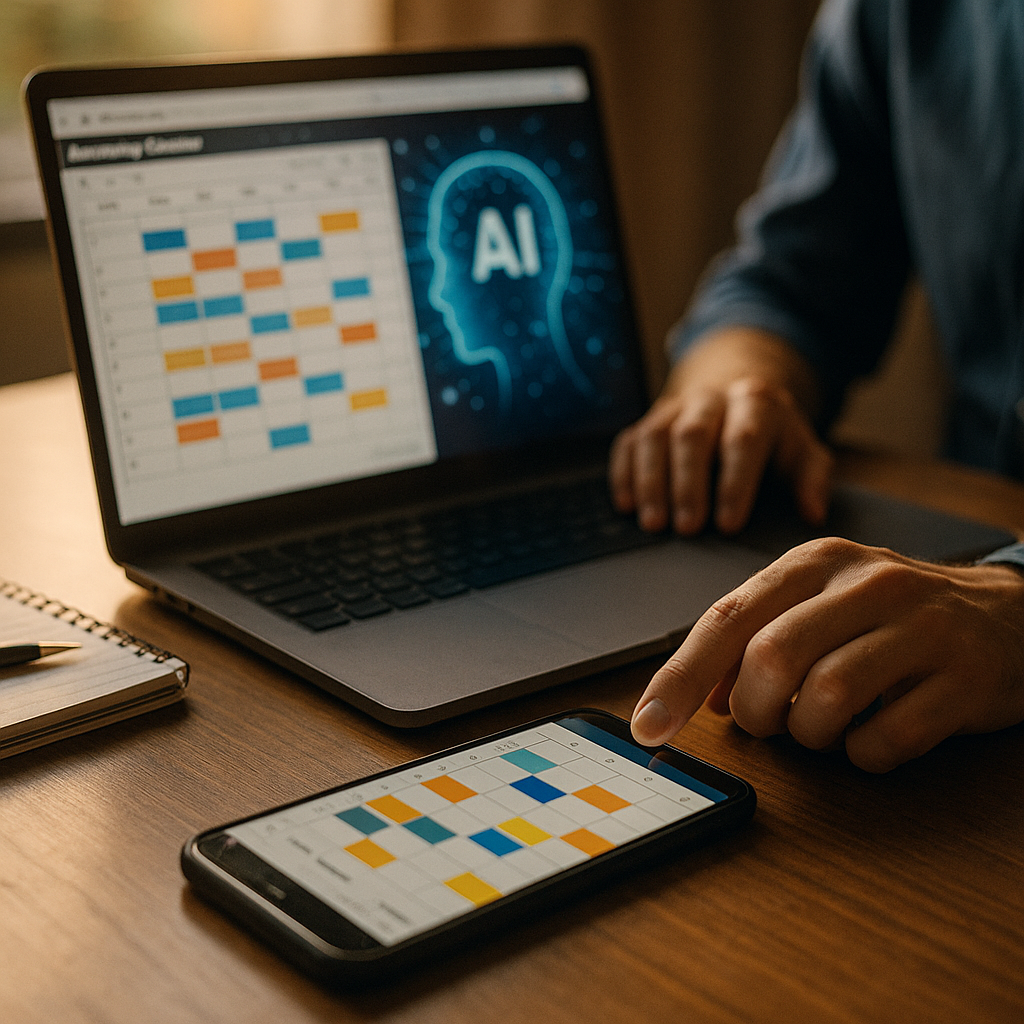
Roughly 41% of marketers say they miss key retail and cultural moments because campaign planning happens too late to react, according to recent martech surveys. That gap is exactly what an AI-powered marketing calendar claims to close. But does auto-sequencing campaigns around Diwali, Black Friday, and Pride Month actually work, or is it another dashboard that looks smart in a demo and falls apart in Q3?
Vendors in this space promise a lot: ingest a retail calendar, layer in cultural and regional events, then auto-generate a campaign sequence with recommended creative themes, budget pacing, and channel mix. Some even claim to predict which events will matter to your specific audience before your competitors notice. The pitch is seductive. The execution is uneven. Here’s how to evaluate these tools without getting burned.
What “Auto-Sequencing” Actually Means
Strip away the marketing language and auto-sequencing tools do three things: pull event data from a calendar database, apply rules (or a model) to decide which events matter to your brand, then generate a timeline of campaign touchpoints with suggested lead times.
The good ones layer historical performance on top. If your Diwali campaign last year outperformed your generic autumn push by 3x, the tool should weight that signal and recommend similar sequencing again. The bad ones just regurgitate a static holiday calendar with a fresh coat of AI branding. That’s not intelligence. That’s a spreadsheet with better fonts.
Ask any vendor directly: is the sequencing logic based on a trained model reacting to your first-party data, or a rules engine sitting on top of a licensed events database? Both can work. Only one should be marketed as “AI.”
If a tool can’t explain why it sequenced a campaign the way it did, treat its recommendations as a starting draft, not a plan you execute unreviewed.
Retail Calendars Are the Easy Part. Cultural Events Are Where Tools Break.
Retail moments are structured, dated, and well-documented. Black Friday, Prime Day, back-to-school. Any calendar tool can slot those in correctly. The real test is cultural and religious events, which shift by lunar calendar, vary by region, and carry reputational risk if handled poorly.
Lunar New Year dates move every year. Ramadan shifts roughly 10-11 days earlier annually. Regional festivals like Songkran or Diwali have observance variations by country and even by state within a country. A tool that hardcodes these dates without a dynamic recalculation engine will eventually schedule a campaign into the wrong week, or worse, into a period where promotional messaging reads as tone-deaf.
This is where brand safety and cultural sequencing intersect. A miscalculated Ramadan campaign isn’t just a scheduling error, it’s a trust problem. If your team has already built out brand-safety review processes, this is a natural extension. See how teams approach brand-safety scanning tools for a parallel framework on vetting AI outputs before they go live.
Questions to Ask Before You Trust the Sequencing
- Does the tool pull cultural event dates from a licensed, regularly updated source, or a static dataset last refreshed a year ago?
- Can it flag regional variance (e.g., Diwali dates and regional customs differing between North and South India)?
- Does it factor in past campaign sentiment data, or only calendar dates?
- Who reviews the auto-generated sequence before it goes live, and how much time does that review add back to your timeline?
If the vendor can’t answer these clearly, you’re buying a calendar with extra steps.
The ROI Question Nobody Wants to Answer Directly
Vendors love to cite time savings. “Cut campaign planning time by 60%.” Fine, but planning time saved doesn’t automatically translate to better campaign performance. The real ROI questions are different:
Did the tool’s sequencing recommendations outperform your team’s manual planning in a head-to-head test? Did lead times it suggested actually give creative and legal enough runway, or did it compress review cycles to hit an auto-generated launch date? Did the pacing recommendations align with your actual budget cadence, or did they assume unlimited spend flexibility?
Run a controlled pilot. Pick two comparable markets or product lines. Let the AI tool sequence one, let your planners sequence the other manually, and measure engagement, conversion, and creative approval friction across both. Three months of data will tell you more than any vendor case study.
According to eMarketer, brands that formalize campaign calendars around retail and cultural moments see meaningfully higher engagement during those windows compared to always-on generic messaging. That’s the baseline the AI tool needs to beat, not just match.
Integration Reality: Does It Talk to Your Existing Stack?
A sequencing tool that lives in isolation is a liability. If it can’t push its output into your existing project management, media buying, or CRM systems, someone on your team becomes a manual translator, copying dates and briefs from one tool into another. That’s not efficiency. That’s a new bottleneck with a fancier name.
Check for native integrations with your CDP, your DAM, and your media planning tools. If your organization has already gone through a martech stack audit for agentic readiness, run this tool through the same lens. Does it expose an API? Does it support MCP or similar agent-to-agent protocols increasingly common in 2026 martech stacks? Tools without this are already behind, regardless of how good their sequencing logic looks in isolation.
Also worth checking: does it integrate with your identity resolution or CDP layer to personalize sequencing by segment, not just by broad calendar event? Some vendors treat all “Black Friday shoppers” as one audience. That’s a missed opportunity. For a deeper look at how identity data should feed campaign timing decisions, see this piece on identity resolution and campaign unity.
A Quick Vendor Comparison Framework
Rather than evaluating tools on features alone, score each candidate across five dimensions:
- Data freshness: How often is the cultural/retail event database updated, and by whom?
- Explainability: Can the tool show its reasoning for a given sequence, or is it a black box?
- Regional granularity: Does it differentiate at the country, state, or even city level?
- Integration depth: Native API, MCP support, or manual export only?
- Human-in-the-loop controls: Can planners edit, override, and approve before publish, with an audit trail?
Score each vendor 1-5 on these dimensions before you touch a pricing conversation. Most procurement conversations start with cost. They should start with risk and fit.
Where This Overlaps With Agentic Workflows
The more advanced tools in this category aren’t just generating a calendar, they’re starting to act on it. Auto-drafting briefs, auto-notifying creative teams, even auto-adjusting budget pacing based on early campaign signals. That’s a meaningful shift from “planning assistant” to “agentic function,” and it changes the governance conversation entirely.
If a tool is going to autonomously trigger downstream actions, like reallocating spend or pushing a live brief to an agency, your organization needs the same guardrails you’d apply to any other agentic system. That includes kill-switch protocols and clear escalation paths. Teams building this out should reference the kill-switch certification checklist for media budgets before granting any calendar tool write-access to spend or creative systems.
This isn’t paranoia. It’s the same due diligence marketing ops teams already apply when testing new vendor tools in a controlled environment. If you haven’t built one yet, the framework in internal AI sandboxes for vetting vendor tools is a solid starting point for testing a calendar tool’s autonomy claims before production rollout.
The moment a calendar tool starts triggering actions instead of just recommending dates, it stops being a planning tool and becomes an agentic system that needs governance, not just a login.
Pricing Models and the Fine Print
Most vendors in this category price by seat count or by number of managed calendars/regions. Watch for tiers that gate cultural-event granularity behind an enterprise plan. It’s a common tactic: the base tier gives you US retail holidays, and you pay significantly more to unlock nuanced regional and religious calendars.
Ask for a trial period long enough to span at least one major cultural event cycle relevant to your markets. A two-week trial tells you nothing about how the tool handles Ramadan sequencing or Lunar New Year regional variance. Push for 60-90 days minimum, ideally overlapping with a real event on your calendar.
Also clarify data ownership. If the tool learns from your campaign performance data to refine future sequencing, does that model improvement stay proprietary to your account, or does it get pooled across the vendor’s client base? For brands in competitive categories, that’s not a minor detail, it’s a strategic risk. Similar diligence applies when evaluating data residency for brand AI tools more broadly.
The Practical Verdict
AI-powered marketing calendars earn their keep when they reduce planning lead time without sacrificing cultural accuracy or creative review rigor. They fail when they’re static databases wearing an AI label, or when they push automation into territory that needs human judgment, like nuanced cultural messaging.
Treat the sequencing output as a first draft from a very well-read intern, not a finished plan from a senior strategist. Verify. Localize. Review. Then automate the parts that are genuinely repetitive, like reminder cadences and internal notifications, not the parts that carry brand risk.
Next step: before signing any contract, run a 90-day pilot against one real cultural event and one real retail event in your actual markets, score the output against your five-dimension framework, and require human sign-off on every cultural campaign the tool sequences. If it can’t survive that test, it’s not ready for your calendar.
FAQs
What is an AI-powered marketing calendar tool?
It’s software that ingests retail and cultural event data, then uses rules-based logic or machine learning to auto-generate a sequenced campaign timeline, including suggested lead times, themes, and budget pacing recommendations.
How accurate are these tools with cultural and religious events?
Accuracy varies significantly by vendor. Tools relying on static, infrequently updated datasets often miscalculate lunar-based events like Ramadan or Lunar New Year, which shift annually. Always verify the data source’s update frequency and regional granularity before trusting the output.
Can these tools replace a human marketing planner?
No. They’re best used to accelerate first-draft sequencing and reduce manual research time. Cultural nuance, brand risk assessment, and final campaign approval should remain human-reviewed, especially for sensitive religious or regional events.
How do I test ROI before committing to a contract?
Run a pilot comparing AI-sequenced campaigns against manually planned ones across two comparable markets or product lines, ideally spanning at least one full cultural event cycle, and measure engagement, conversion, and creative approval friction on both sides.
What integration capabilities should I require?
Look for native API access, compatibility with your CDP and DAM, and increasingly, support for agent-to-agent protocols like MCP. Tools that require manual export/import into your planning stack create bottlenecks rather than removing them.
What governance controls matter most for agentic calendar tools?
If the tool can autonomously trigger actions, like notifying agencies or adjusting budget pacing, it needs the same governance as any agentic system: audit trails, human approval gates, and a documented kill-switch process before granting it write-access to spend or creative systems.
FAQs
What is an AI-powered marketing calendar tool?
It’s software that ingests retail and cultural event data, then uses rules-based logic or machine learning to auto-generate a sequenced campaign timeline, including suggested lead times, themes, and budget pacing recommendations.
How accurate are these tools with cultural and religious events?
Accuracy varies significantly by vendor. Tools relying on static, infrequently updated datasets often miscalculate lunar-based events like Ramadan or Lunar New Year, which shift annually. Always verify the data source’s update frequency and regional granularity before trusting the output.
Can these tools replace a human marketing planner?
No. They’re best used to accelerate first-draft sequencing and reduce manual research time. Cultural nuance, brand risk assessment, and final campaign approval should remain human-reviewed, especially for sensitive religious or regional events.
How do I test ROI before committing to a contract?
Run a pilot comparing AI-sequenced campaigns against manually planned ones across two comparable markets or product lines, ideally spanning at least one full cultural event cycle, and measure engagement, conversion, and creative approval friction on both sides.
What integration capabilities should I require?
Look for native API access, compatibility with your CDP and DAM, and increasingly, support for agent-to-agent protocols like MCP. Tools that require manual export/import into your planning stack create bottlenecks rather than removing them.
What governance controls matter most for agentic calendar tools?
If the tool can autonomously trigger actions, like notifying agencies or adjusting budget pacing, it needs the same governance as any agentic system: audit trails, human approval gates, and a documented kill-switch process before granting it write-access to spend or creative systems.
Top Influencer Marketing Agencies
The leading agencies shaping influencer marketing in 2026
Agencies ranked by campaign performance, client diversity, platform expertise, proven ROI, industry recognition, and client satisfaction. Assessed through verified case studies, reviews, and industry consultations.
Moburst

-
2

The Shelf
Boutique Beauty & Lifestyle Influencer AgencyA data-driven boutique agency specializing exclusively in beauty, wellness, and lifestyle influencer campaigns on Instagram and TikTok. Best for brands already focused on the beauty/personal care space that need curated, aesthetic-driven content.Clients: Pepsi, The Honest Company, Hims, Elf Cosmetics, Pure LeafVisit The Shelf → -
3

Audiencly
Niche Gaming & Esports Influencer AgencyA specialized agency focused exclusively on gaming and esports creators on YouTube, Twitch, and TikTok. Ideal if your campaign is 100% gaming-focused — from game launches to hardware and esports events.Clients: Epic Games, NordVPN, Ubisoft, Wargaming, Tencent GamesVisit Audiencly → -
4

Viral Nation
Global Influencer Marketing & Talent AgencyA dual talent management and marketing agency with proprietary brand safety tools and a global creator network spanning nano-influencers to celebrities across all major platforms.Clients: Meta, Activision Blizzard, Energizer, Aston Martin, WalmartVisit Viral Nation → -
5

The Influencer Marketing Factory
TikTok, Instagram & YouTube CampaignsA full-service agency with strong TikTok expertise, offering end-to-end campaign management from influencer discovery through performance reporting with a focus on platform-native content.Clients: Google, Snapchat, Universal Music, Bumble, YelpVisit TIMF → -
6

NeoReach
Enterprise Analytics & Influencer CampaignsAn enterprise-focused agency combining managed campaigns with a powerful self-service data platform for influencer search, audience analytics, and attribution modeling.Clients: Amazon, Airbnb, Netflix, Honda, The New York TimesVisit NeoReach → -
7

Ubiquitous
Creator-First Marketing PlatformA tech-driven platform combining self-service tools with managed campaign options, emphasizing speed and scalability for brands managing multiple influencer relationships.Clients: Lyft, Disney, Target, American Eagle, NetflixVisit Ubiquitous → -
8

Obviously
Scalable Enterprise Influencer CampaignsA tech-enabled agency built for high-volume campaigns, coordinating hundreds of creators simultaneously with end-to-end logistics, content rights management, and product seeding.Clients: Google, Ulta Beauty, Converse, AmazonVisit Obviously →