


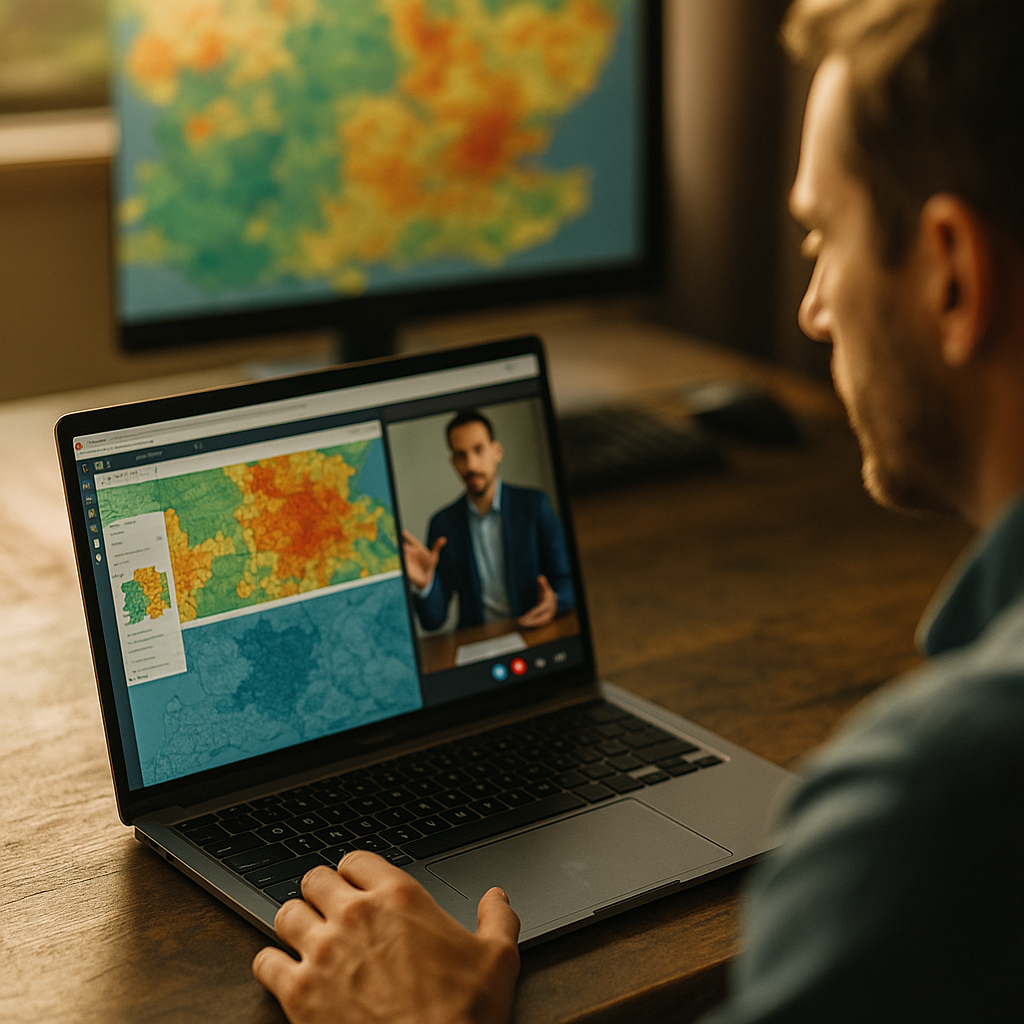
Every week, another webinar promises to reveal “the definitive way to measure your brand’s presence in ChatGPT.” Search LinkedIn for GEO analytics webinar invites and you’ll find dozens, most hosted by vendors selling the exact tool they’re demoing. So which sessions are actually teaching measurement methodology, and which are 45-minute product demos wearing an educational disguise? For marketers evaluating GEO analytics webinars as a legitimate measurement category, that distinction matters more than the content itself.
The Category Problem: GEO Measurement Doesn’t Have Standards Yet
Search engine optimization took two decades to develop shared measurement conventions. Click-through rate, impressions, ranking position, domain authority — flawed, but universally understood. Generative Engine Optimization has none of that. There’s no agreed-upon definition of a “citation,” no standard for what counts as brand “visibility” inside an LLM response, and no third-party auditing body checking vendor claims against reality.
That vacuum is exactly why webinars have become the dominant format for GEO education. Written content gets outdated fast as models update. Webinars let vendors show live demos, real-time citation pulls, and “look what we found” moments that feel more credible than a static blog post. The format itself isn’t the problem. The problem is that almost every session is funded, scripted, and staffed by companies with a product to sell.
If a GEO analytics webinar can’t explain how it defines a “citation” or a “mention,” it isn’t teaching measurement — it’s demonstrating a dashboard.
Vendor Marketing Wearing a Lab Coat
Here’s the tell most marketers miss: legitimate measurement education spends more time on methodology limitations than on results. Vendor-funded webinars do the opposite. They lead with a dramatic screenshot (“we found our brand mentioned 340 times in AI Overviews last month!”) and rush past the harder questions — how was that number generated, how many prompts were sampled, was the sample representative of real user queries, and does the tool differentiate between a passing mention and a genuine recommendation?
Ask yourself who benefits if you walk away impressed rather than informed. If the answer is “the company presenting,” treat the session as marketing collateral, not research.
This isn’t a knock on vendors doing product education. Selling software through demonstration is a legitimate go-to-market motion. The issue is when that motion gets mislabeled as objective industry education, and marketers make budget decisions based on it without realizing they watched a sales pitch. This same pattern shows up in evaluating whether an AI vendor is offering proprietary measurement technology or repackaging a general-purpose model with a nicer front end.
Five Questions to Ask Before Trusting a GEO Webinar’s Data
- Who funded the session, and does the host sell a competing or complementary product? Sponsorship isn’t disqualifying, but it must be disclosed and factored into how you weigh the claims.
- Is the methodology reproducible? Can you run the same prompt set through the same models and get comparable results, or is the data proprietary and unverifiable?
- Does the presenter address model variance? ChatGPT, Gemini, Perplexity, and Copilot don’t return consistent answers to identical prompts, even hours apart. A credible session acknowledges this instability rather than presenting one snapshot as a trend.
- Are they measuring citations or measuring outcomes? Appearing in an AI answer is not the same as driving traffic, conversions, or brand lift. Watch for webinars that conflate the two.
- What happens after the pitch? If the Q&A pivots hard into “book a demo,” the education was the funnel, not the destination.
Why This Matters for Budget Allocation, Not Just Curiosity
GEO measurement claims are increasingly showing up in board decks and budget justifications. That’s the real risk. A marketing leader who sat through a persuasive vendor webinar might walk into a planning meeting citing a “40% share of AI voice” figure that has no external validation behind it. According to eMarketer, brand spend on AI-search visibility tools has grown sharply, but measurement standardization has lagged far behind adoption. Analysts at Statista have similarly noted that generative AI referral traffic is still a small fraction of total search-driven traffic for most sites, which should temper how much weight any single vendor metric deserves in a budget conversation.
This is the same governance gap marketers are already wrestling with elsewhere in the AI stack. Enterprise teams increasingly build their own LLM evaluation benchmarks precisely because vendor-supplied numbers can’t be trusted at face value. GEO measurement deserves the same skepticism. If you wouldn’t approve a media buy based on one agency’s self-reported performance data without an audit, don’t approve a GEO tool subscription based on one vendor’s self-reported visibility scores.
There’s also a budgeting dimension worth flagging directly. Plenty of marketers are still lumping GEO spend into general AI or SEO line items, which makes ROI tracking nearly impossible. The case for separate budget lines for GEO gets stronger the more you realize how differently it needs to be measured, staffed, and audited compared to traditional search work.
What Legitimate GEO Measurement Education Actually Looks Like
Not every webinar is vendor theater. The credible ones share a few traits worth recognizing.
First, they’re hosted by independent analysts, academic researchers, or practitioners without a product to sell in the room. Second, they show their prompt sets and sampling methodology openly, inviting scrutiny rather than avoiding it. Third, they talk about failure modes — hallucinated citations, model drift between versions, the fact that Perplexity and ChatGPT often cite completely different source sets for the same query. Fourth, they connect GEO visibility to a downstream business metric, not just a vanity count of mentions.
Fifth, and this is the subtle one: they don’t promise you can “win” GEO the way you win a keyword ranking. Anyone selling certainty in a probabilistic, constantly-updating model environment is selling something.
The best GEO measurement sessions spend as much time explaining what they can’t measure as what they can. That humility is the single most reliable signal of credibility in this space.
Building an Internal Filter Instead of Relying on Vendor Claims
Rather than treating each webinar as a one-off decision, build a standing internal checklist your team applies to every GEO session you attend. Assign someone — not the most enthusiastic person in the room, ideally someone with a measurement or analytics background — to fact-check claims against your own brand’s data after the session ends. If a vendor claims your brand is cited in 60% of category-relevant prompts, run your own sample of thirty prompts across ChatGPT, Gemini, and Perplexity and see if that number holds up even directionally.
This is also where cross-functional governance earns its keep. The same discipline marketing teams apply to vendor renewal negotiations — documenting claims, testing them against actual usage, and refusing to renew based on sales-deck promises alone — should apply to GEO analytics tools from day one, not just at renewal time.
It’s also worth remembering that AI-driven attribution claims aren’t unique to GEO. Marketers have already been burned evaluating whether AI-attributed conversion data can be trusted at face value. The same caution applies here: treat vendor dashboards as a starting hypothesis, not a finished conclusion. Pair that with guidance from established industry bodies — HubSpot and Sprout Social have both published frameworks on separating AI-search visibility hype from measurable outcomes, and they’re useful benchmarks precisely because they aren’t selling a GEO-specific product.
A Simple Test Before You Approve Spend
Before allocating budget based on anything you learned in a webinar, ask your team to answer one question in writing: “If we removed the vendor’s name from this data, would we still believe it?” If the answer is no, you haven’t evaluated a measurement category. You’ve watched an advertisement.
FAQs
Frequently Asked Questions
Are GEO analytics webinars a reliable source of measurement data?
Some are, but many are vendor-funded product demonstrations presented as educational content. Reliability depends on whether the presenter discloses funding, shows reproducible methodology, and acknowledges the limitations of measuring visibility inside generative AI models.
How is GEO measurement different from traditional SEO measurement?
SEO has decades-old shared conventions like click-through rate and ranking position. GEO has no standardized definitions for citations, mentions, or visibility, and results vary significantly between models like ChatGPT, Gemini, and Perplexity, even for identical prompts.
What red flags suggest a GEO webinar is really a sales pitch?
Watch for undisclosed vendor sponsorship, dramatic results without methodology explanation, no discussion of model variance or measurement limitations, and a hard pivot to demo bookings during Q&A.
Should marketers budget separately for GEO tools versus general AI or SEO spend?
Yes. Because GEO requires distinct measurement approaches, sampling methods, and audit processes, tracking it under a generic AI or SEO line item makes it difficult to evaluate ROI or vendor performance accurately over time.
How can a marketing team verify vendor claims made in a GEO webinar?
Run an independent sample of prompts across the same AI models the vendor referenced and compare results directly against your own brand’s actual presence, rather than accepting the vendor’s self-reported figures at face value.
The next time a GEO analytics webinar lands in your inbox, don’t ask what the vendor found — ask how they’d let you check their work. If they can’t answer that clearly, keep your budget out of the room.
Top Influencer Marketing Agencies
The leading agencies shaping influencer marketing in 2026
Agencies ranked by campaign performance, client diversity, platform expertise, proven ROI, industry recognition, and client satisfaction. Assessed through verified case studies, reviews, and industry consultations.
Moburst

-
2

The Shelf
Boutique Beauty & Lifestyle Influencer AgencyA data-driven boutique agency specializing exclusively in beauty, wellness, and lifestyle influencer campaigns on Instagram and TikTok. Best for brands already focused on the beauty/personal care space that need curated, aesthetic-driven content.Clients: Pepsi, The Honest Company, Hims, Elf Cosmetics, Pure LeafVisit The Shelf → -
3

Audiencly
Niche Gaming & Esports Influencer AgencyA specialized agency focused exclusively on gaming and esports creators on YouTube, Twitch, and TikTok. Ideal if your campaign is 100% gaming-focused — from game launches to hardware and esports events.Clients: Epic Games, NordVPN, Ubisoft, Wargaming, Tencent GamesVisit Audiencly → -
4

Viral Nation
Global Influencer Marketing & Talent AgencyA dual talent management and marketing agency with proprietary brand safety tools and a global creator network spanning nano-influencers to celebrities across all major platforms.Clients: Meta, Activision Blizzard, Energizer, Aston Martin, WalmartVisit Viral Nation → -
5

The Influencer Marketing Factory
TikTok, Instagram & YouTube CampaignsA full-service agency with strong TikTok expertise, offering end-to-end campaign management from influencer discovery through performance reporting with a focus on platform-native content.Clients: Google, Snapchat, Universal Music, Bumble, YelpVisit TIMF → -
6

NeoReach
Enterprise Analytics & Influencer CampaignsAn enterprise-focused agency combining managed campaigns with a powerful self-service data platform for influencer search, audience analytics, and attribution modeling.Clients: Amazon, Airbnb, Netflix, Honda, The New York TimesVisit NeoReach → -
7

Ubiquitous
Creator-First Marketing PlatformA tech-driven platform combining self-service tools with managed campaign options, emphasizing speed and scalability for brands managing multiple influencer relationships.Clients: Lyft, Disney, Target, American Eagle, NetflixVisit Ubiquitous → -
8

Obviously
Scalable Enterprise Influencer CampaignsA tech-enabled agency built for high-volume campaigns, coordinating hundreds of creators simultaneously with end-to-end logistics, content rights management, and product seeding.Clients: Google, Ulta Beauty, Converse, AmazonVisit Obviously →