


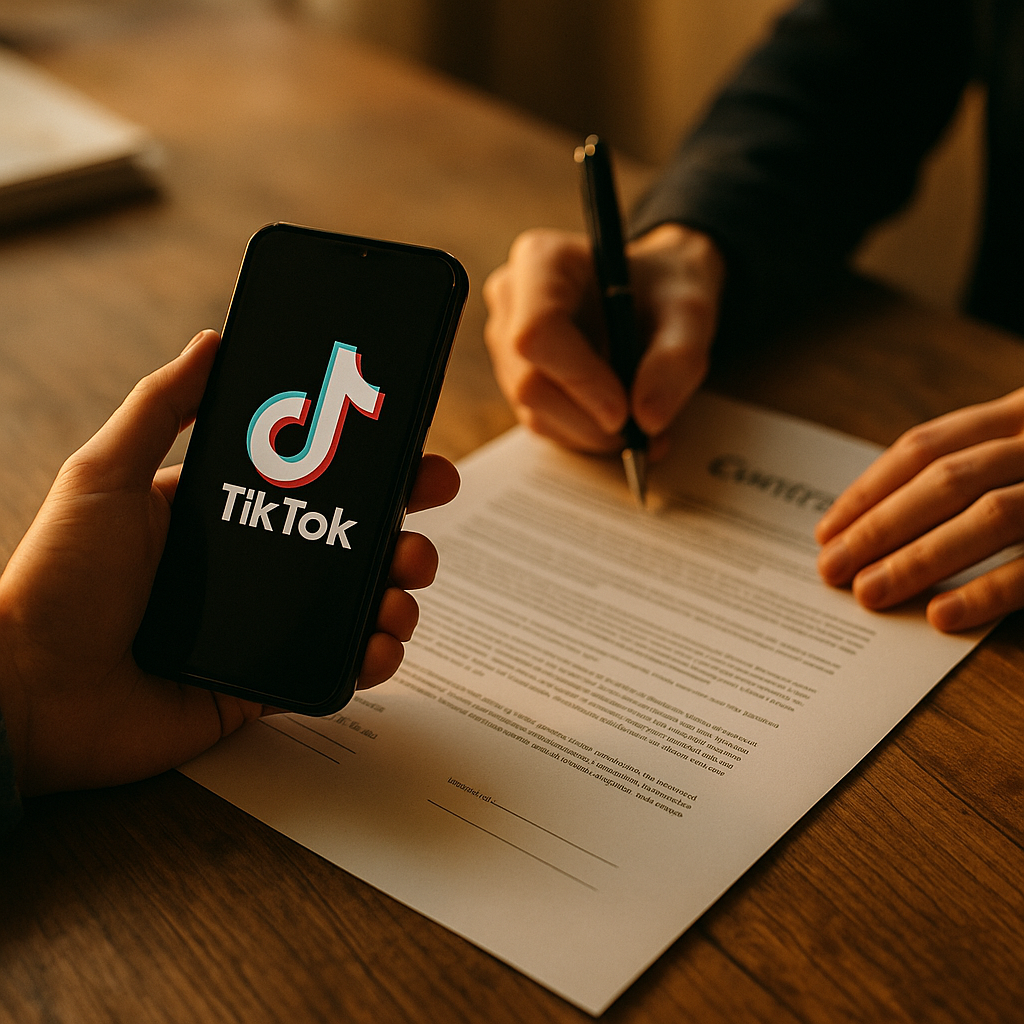
TikTok’s recommendation engine can resurface a sponsored post six months after it first ran — no new caption, no refreshed #ad tag, no context. If the FTC comes knocking, whose problem is that? A well-drafted creator contract clause answers that question before it becomes a six-figure liability. Most brand agreements never touch it.
That gap is not theoretical. Algorithmic redistribution is one of the fastest-growing compliance blind spots in influencer marketing, and almost nobody has written it into their paper.
Why Algorithmic Redistribution Breaks Traditional Disclosure Assumptions
Every standard influencer agreement assumes a linear lifecycle: post goes up, disclosure is attached, campaign ends, content eventually fades from feeds. TikTok doesn’t work that way anymore. The For You Page algorithm can pluck a video from a creator’s archive and push it to a fresh audience segment weeks or months after the original flight window closed — sometimes because the sound trended, sometimes because engagement patterns shifted, sometimes for reasons TikTok itself won’t fully explain.
The problem: the FTC’s disclosure standard is tied to the viewer’s experience at the moment of viewing, not the moment of posting. If a disclosure was baked into a caption that’s since been edited, or if the sponsorship tag expired, or if TikTok’s own paid-partnership label didn’t persist through a duet or remix chain, a brand-new audience may see sponsored content with zero indication it’s an ad. That’s a fresh violation, even though nobody touched the post.
The FTC doesn’t care that the algorithm — not the creator — decided to resurface your ad. Liability follows the disclosure gap, not the intent behind it.
We’ve covered how this plays out with labeling decay in TikTok AI Labels Can Vanish, Leaving Brands FTC Exposed, and remix-specific exposure in TikTok Remix Risk: Draft a Platform Indemnification Clause. Redistribution liability is the third leg of that stool, and it’s the one most legal teams haven’t drafted for yet.
Who’s Actually on the Hook?
Ask ten brand counsel teams this question and you’ll get ten different answers. Some assume the platform bears responsibility since it’s the one algorithmically resurfacing content. Others assume the creator owns it since they control the account and caption. Most brands assume, incorrectly, that they’re insulated because the original post was compliant when published.
None of those assumptions hold up under FTC scrutiny. The Commission’s enforcement posture — reinforced by its updated Endorsement Guides — treats the advertiser as ultimately responsible for ensuring disclosures are clear and conspicuous, regardless of which party’s technical failure caused the gap. TikTok isn’t named in FTC complaints. Brands are. That’s the uncomfortable truth agencies need to communicate to clients before signing anything.
This mirrors the attribution confusion we’ve seen with Meta’s ad systems, detailed in Meta’s Attribution Model Meets FTC Disclosure Rules. Platform mechanics keep outrunning platform accountability, and brands keep absorbing the difference.
The Three Redistribution Scenarios Your Clause Needs to Cover
- Organic algorithmic resurfacing: TikTok’s FYP re-promotes an old sponsored post to new viewers without creator action.
- Remix and duet propagation: A third party remixes the sponsored content, and the paid-partnership label doesn’t carry through to the derivative.
- Sound or trend-driven revival: The original audio trends again, pulling the sponsored video back into rotation months later under a different discovery context.
Each scenario has a different failure point, and your clause should address them separately rather than lumping them into a single vague “platform issue” carve-out.
Drafting the Clause: Core Components
A liability-assignment clause for algorithmic redistribution needs five structural elements. Skip any one of them and you’ve left a hole big enough for a plaintiff’s attorney to drive through.
1. Definition of “redistribution event.” Define precisely what triggers the clause — algorithmic resurfacing after a specified dormancy period (say, 30 days post-campaign), third-party remix/duet activity, or platform-driven re-promotion outside the original flight dates. Vague language like “any subsequent platform activity” invites disputes over scope.
2. Ongoing disclosure maintenance obligation. Require the creator to maintain disclosure integrity for a defined tail period — 12 months is becoming the informal industry standard — including monitoring for redistribution and refreshing captions or labels if the platform’s native tools fail to persist them.
3. Notification triggers. Specify how quickly the creator must flag a detected redistribution event to the brand (48-72 hours is reasonable) and what documentation they must provide: screenshots, view counts, timestamp of resurfacing.
4. Cure period and remedy hierarchy. Before liability shifts, give the responsible party a defined window to fix the disclosure gap — re-caption, re-tag, or request platform-level correction. Liability assignment should only kick in if the cure window is missed or ignored.
5. Liability allocation formula. This is the heart of the clause. Rather than a binary “creator is liable” or “brand is liable” structure, tie allocation to control and knowledge: whoever had the technical ability to cure the gap and failed to act within the notice period bears primary liability, with the other party retaining secondary indemnification exposure.
Binary liability clauses (“creator is solely responsible”) rarely survive negotiation or litigation. Allocation formulas tied to control and response time hold up far better because they mirror how FTC enforcement actually assesses fault.
Sample Clause Language
Below is a starting template. Customize it with your legal counsel — this is a drafting foundation, not a plug-and-play contract.
“In the event that Sponsored Content is redistributed, resurfaced, or algorithmically re-promoted by the Platform more than thirty (30) days following the conclusion of the original Campaign Flight Period, without a current and platform-compliant disclosure (a ‘Redistribution Event’), Creator shall: (a) notify Brand in writing within seventy-two (72) hours of becoming aware of such Redistribution Event; (b) take commercially reasonable steps to restore compliant disclosure, including re-application of paid partnership labels and caption updates, within five (5) business days of notice or discovery; and (c) provide documentation of remediation to Brand upon request. Liability for regulatory exposure arising from a Redistribution Event shall rest with the party possessing the technical capability to cure the disclosure gap and failing to do so within the cure period defined herein, provided that Brand retains the right to independently remediate and seek reimbursement of associated costs where Creator’s inaction creates imminent regulatory risk.”
Notice what this does: it doesn’t try to eliminate liability, because you can’t contract your way out of FTC jurisdiction. It creates a clear, evidence-based process for determining who pays when the algorithm does something nobody scripted.
Don’t Forget the Indemnification Backstop
Your redistribution clause should reference — not duplicate — a broader indemnification section. If you’ve already got platform-related indemnification language for other TikTok risks, like the frameworks in TikTok Shop Real IP Freeze: Indemnification Clause Guide, extend that structure rather than building a parallel system. Redundant indemnification clauses that don’t cross-reference each other are a common source of contract disputes when multiple failures overlap.
Monitoring: The Clause Is Only as Good as Your Enforcement
Here’s the part most brands skip. You can draft the tightest liability clause in the industry, but if nobody’s actually watching for redistribution events, the clause is decorative. Set up quarterly (at minimum) audits of previously sponsored content still live on creator accounts. Check whether paid-partnership tags persist, whether captions still reference the disclosure, and whether view/engagement spikes suggest algorithmic resurfacing.
Tools like Sprout Social and native TikTok analytics can flag unusual engagement patterns on older posts — a practical signal that redistribution may be happening. Pair that with a documented audit cadence, similar to the approach outlined in TikTok Shop Real IP Verification: The Compliance Checklist, and you’ve got an enforceable, defensible compliance trail — which matters enormously if the FTC ever asks what steps you took.
According to eMarketer, brand spend on TikTok creator partnerships continues to climb year over year, which means the volume of legacy sponsored content sitting dormant in creator archives — and available for algorithmic revival — is growing right alongside it. This isn’t a shrinking risk. It’s compounding.
Where This Intersects With Broader Disclosure Strategy
Redistribution liability doesn’t live in isolation. It connects directly to how your organization handles disclosure across platforms generally. If your team already maintains a cross-platform disclosure framework, like the one in Cross-Platform Disclosure Playbook for TikTok, YouTube, and Instagram, the redistribution clause should slot into that existing architecture rather than operate as a standalone TikTok-specific carve-out. Consistency across your contract library matters when regulators or plaintiffs start comparing your agreements against each other.
It’s also worth checking your clause language against the FTC’s own Endorsement Guides periodically. The Commission updates guidance faster than most legal teams update templates, and a clause built on outdated assumptions about “clear and conspicuous” standards won’t protect anyone.
FAQs
Frequently Asked Questions
What is a redistribution liability clause in a creator contract?
It’s a contract provision that defines responsibility when a platform’s algorithm resurfaces previously sponsored content to new audiences without a current, compliant disclosure. It assigns liability based on who had the ability and obligation to fix the gap.
Can brands really be held liable for something TikTok’s algorithm did?
Yes. The FTC evaluates disclosure adequacy from the viewer’s perspective at the time of viewing, not the platform mechanics behind how content reached them. Advertisers remain responsible for ensuring endorsements are properly disclosed regardless of algorithmic redistribution.
How long should the disclosure maintenance obligation last after a campaign ends?
Many brands are now using a 12-month tail period, though this should be calibrated to the product category, campaign scale, and historical redistribution patterns observed on the account.
What should a creator do if they discover their old sponsored post is trending again?
Notify the brand within the contractually defined window (typically 48-72 hours), verify whether the paid-partnership label and disclosure language are still intact, and re-apply or update them immediately if not.
Does this clause replace standard indemnification language?
No. It should reference and integrate with your broader indemnification section rather than function as a standalone protection. Redundant, non-cross-referenced clauses create confusion during disputes.
How do brands monitor for algorithmic redistribution in practice?
Quarterly audits of previously sponsored content, engagement-spike monitoring through social analytics tools, and periodic checks that paid-partnership tags and captions remain intact are the current industry baseline.
Pull your current creator contract template right now and search for the word “redistribution.” If it’s not there, that’s your next legal review item — before the algorithm makes the decision for you.
Top Influencer Marketing Agencies
The leading agencies shaping influencer marketing in 2026
Agencies ranked by campaign performance, client diversity, platform expertise, proven ROI, industry recognition, and client satisfaction. Assessed through verified case studies, reviews, and industry consultations.
Moburst

-
2

The Shelf
Boutique Beauty & Lifestyle Influencer AgencyA data-driven boutique agency specializing exclusively in beauty, wellness, and lifestyle influencer campaigns on Instagram and TikTok. Best for brands already focused on the beauty/personal care space that need curated, aesthetic-driven content.Clients: Pepsi, The Honest Company, Hims, Elf Cosmetics, Pure LeafVisit The Shelf → -
3

Audiencly
Niche Gaming & Esports Influencer AgencyA specialized agency focused exclusively on gaming and esports creators on YouTube, Twitch, and TikTok. Ideal if your campaign is 100% gaming-focused — from game launches to hardware and esports events.Clients: Epic Games, NordVPN, Ubisoft, Wargaming, Tencent GamesVisit Audiencly → -
4

Viral Nation
Global Influencer Marketing & Talent AgencyA dual talent management and marketing agency with proprietary brand safety tools and a global creator network spanning nano-influencers to celebrities across all major platforms.Clients: Meta, Activision Blizzard, Energizer, Aston Martin, WalmartVisit Viral Nation → -
5

The Influencer Marketing Factory
TikTok, Instagram & YouTube CampaignsA full-service agency with strong TikTok expertise, offering end-to-end campaign management from influencer discovery through performance reporting with a focus on platform-native content.Clients: Google, Snapchat, Universal Music, Bumble, YelpVisit TIMF → -
6

NeoReach
Enterprise Analytics & Influencer CampaignsAn enterprise-focused agency combining managed campaigns with a powerful self-service data platform for influencer search, audience analytics, and attribution modeling.Clients: Amazon, Airbnb, Netflix, Honda, The New York TimesVisit NeoReach → -
7

Ubiquitous
Creator-First Marketing PlatformA tech-driven platform combining self-service tools with managed campaign options, emphasizing speed and scalability for brands managing multiple influencer relationships.Clients: Lyft, Disney, Target, American Eagle, NetflixVisit Ubiquitous → -
8

Obviously
Scalable Enterprise Influencer CampaignsA tech-enabled agency built for high-volume campaigns, coordinating hundreds of creators simultaneously with end-to-end logistics, content rights management, and product seeding.Clients: Google, Ulta Beauty, Converse, AmazonVisit Obviously →